Product Overview
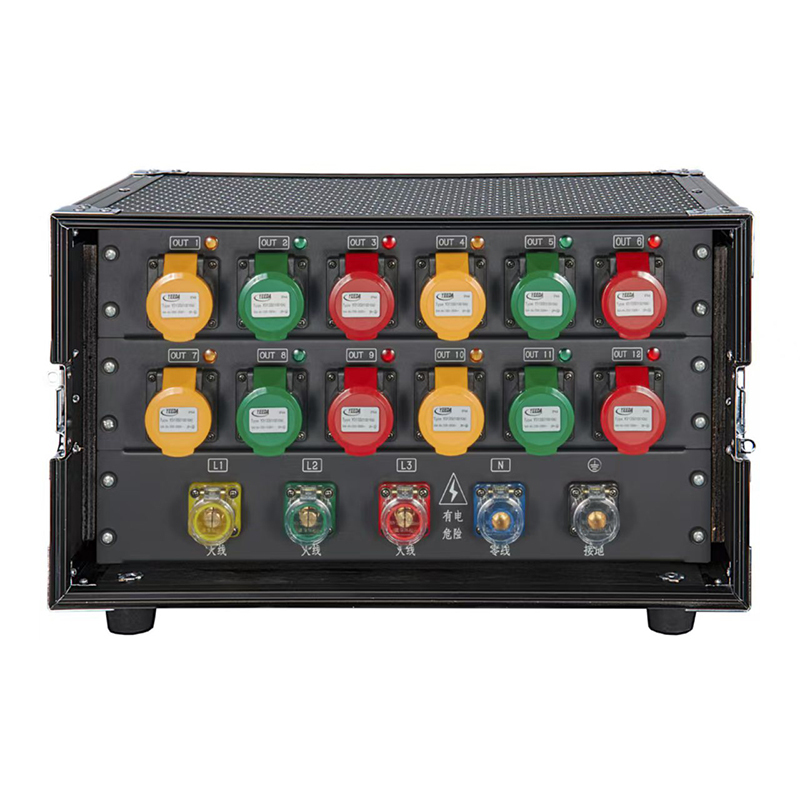
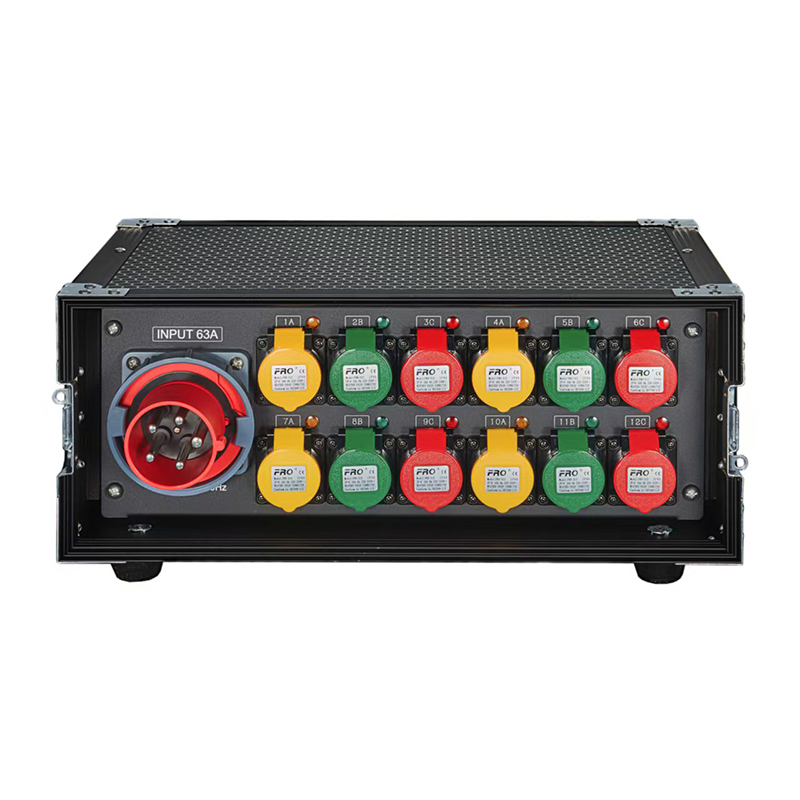
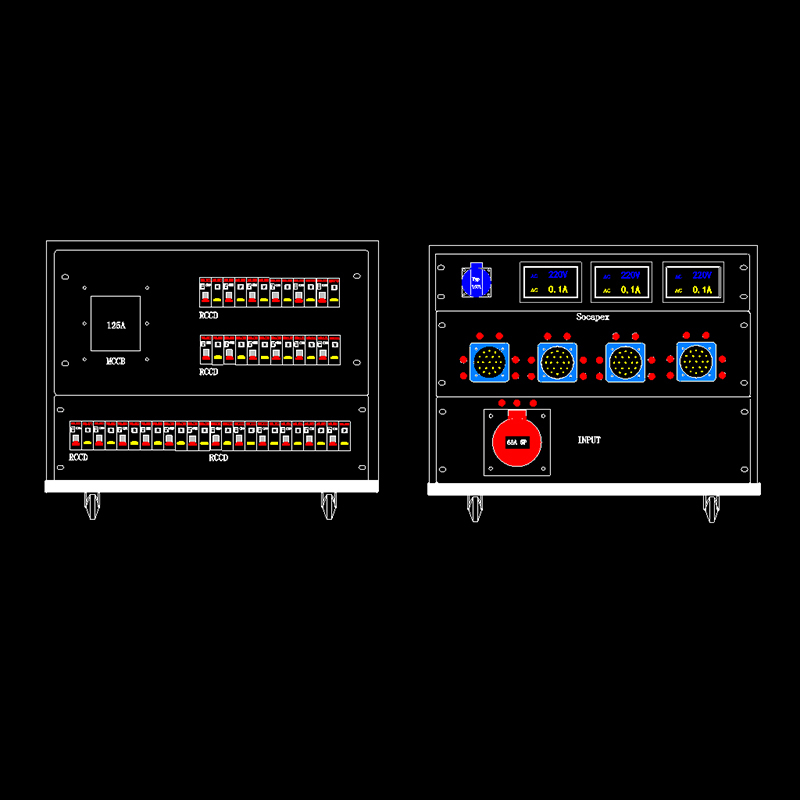
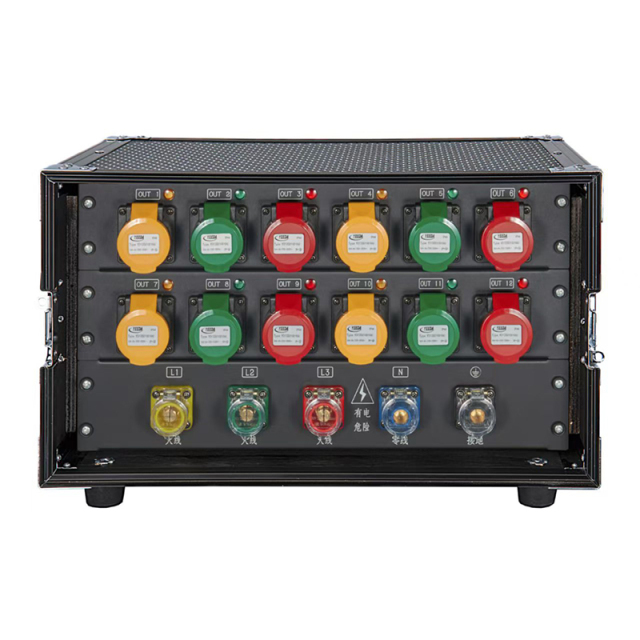
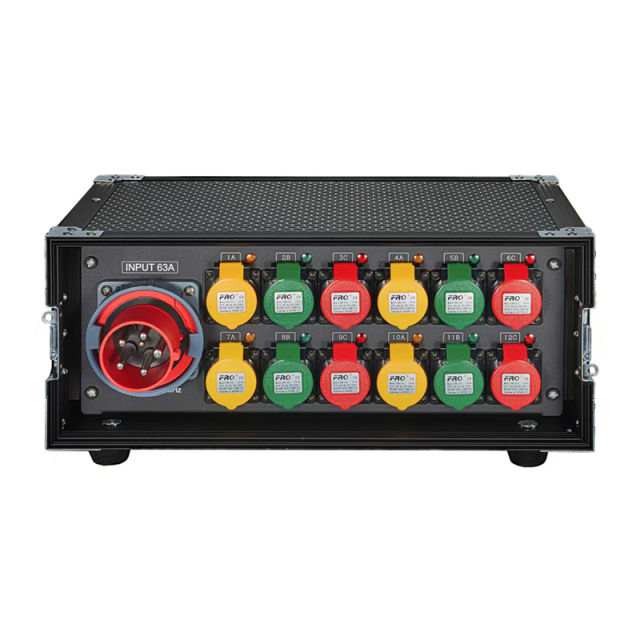
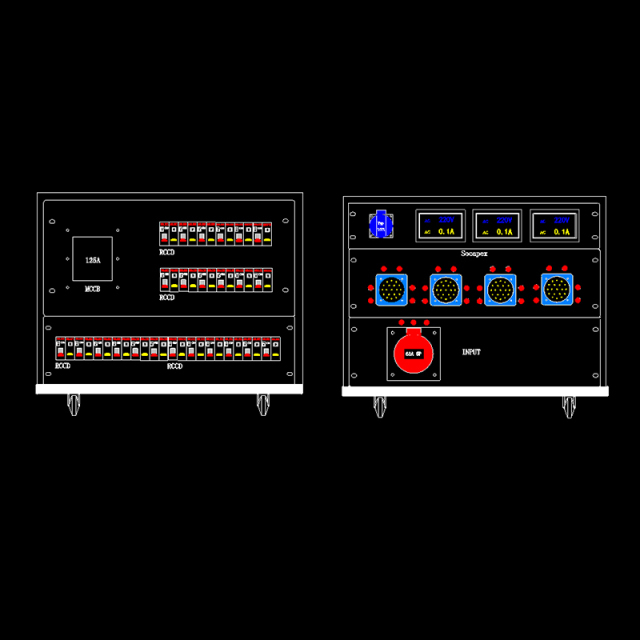
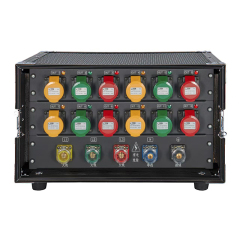
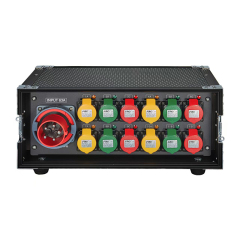
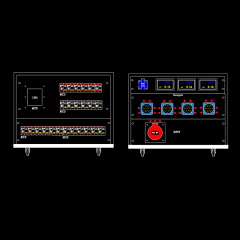
For stage lighting installations requiring centralized power distribution, LITEVISION’s customized 4U and 6U DB power boxes provide a defined connection point between the venue supply and individual lighting circuits. The listed configuration includes a three-phase five-wire supply, 24-way 16A waterproof outputs, a 250A main air breaker and C20A independent branch air breakers, with overload and short-circuit protection. Independent A.B.C LCD current and voltage displays, individual output indicators, colour-coded outlet covers and a blue LED work light support monitoring and circuit identification at the panel. The finished assembly depends on the agreed cabinet, incoming connection and circuit arrangement, so all configuration-dependent ratings must be verified against the approved electrical schedule before installation planning.
Stage Power Distribution
stage lighting fixtures need an organized power path from the venue supply to their individual circuits. Centralized distribution gives the installation a defined connection point and lets technicians assign outgoing feeds to the lighting layout rather than assembling an unplanned chain of connections.
LITEVISION supplies customized 4U and 6U DB power-box builds as a stage lighting manufacturer. The finished assembly depends on the agreed cabinet, incoming connection and circuit arrangement; customization applies to this product's approved build.
A stage lighting system needs both mains distribution and control cabling. Plan these together while keeping their functions separate: electrical supply compatibility does not establish console, data-protocol or fixture-library compatibility.
Existing power cables and connected equipment need matching voltage, connector configuration and protective-earth arrangements. A familiar connector shape or matching equipment brand does not establish a suitable electrical connection.
All configuration-dependent values below require verification against the finished unit's approved electrical schedule. The inlet, protective devices, internal wiring and outlets must be reviewed as one assembly before any individual rating is used for installation planning.
Electrical Configuration
| Property | Configuration Value |
|---|
| Power supply | Three-phase five-wire AC380±10% |
| Frequency | 50Hz/60Hz±5% |
| Input connector | Self-locking staggered zero-fire 400A rhino plug |
| Output configuration | 24-way 16A waterproof output |
| Main protection | 250A main air breaker |
| Branch protection | C20A independent air breaker |
| Protection functions | Overload and short circuit |
| Ambient temperature | 0-±45C |
| Relative humidity | 40%-80% |
Monitoring & Circuit Identification
- Independent A.B.C LCD current and voltage displays make the phases readable without switching between them. During operation of a stage lighting system, technicians can observe the electrical readings together rather than relying on a single selected-phase view.
- Each output has an indicator light for local circuit-status checks. An illuminated or unlit indicator is an operating aid; it does not replace testing for absence of voltage before electrical work.
- Hinged protective outlet caps and colour-coded covers help distinguish connection positions at the panel. Use the electrical labels and wiring schedule to establish circuit identity, because cover colour alone does not verify a phase or conductor assignment.
- A circuit schedule from the stage lighting equipment supplier should use identifiers that remain readable at the panel and cable ends. Consistent naming lets a technician follow a feed through the installation without relying on memory.
- In theatrical stage lighting, phase readings can be compared as different lighting cues run. A current difference may reflect the cue's connected loads, so interpret the readings alongside the circuit schedule rather than assuming that every difference indicates a fault.
- Startup and normal operation can produce different readings with professional stage lighting equipment. Observing both conditions helps the electrical technician investigate unexpected changes without treating the panel display as a substitute for the fixture's own electrical data.
- The LED blue light work light provides local working illumination near the distribution controls. Detailed conductor identification and maintenance still require adequate task lighting and a safe working condition.
Cabinet & Build Dimensions
4U and 6U cabinet builds require their own approved dimensional drawing. The designation 14U standard cabinet and Product size (mm): L670×W600×H880 require build-specific verification; neither establishes the fitting dimensions of a 4U or 6U unit.
Double-layer shockproof hexagonal pattern plate construction forms the cabinet body. The protective transport-case form surrounds the panel for handling between locations, without establishing a tested impact rating or a particular enclosure material grade.
For portable stage lighting, allow room to connect and release the incoming cable without forcing it against adjacent equipment. The space occupied in use includes the connected cables and their bend clearance, not just the cabinet outline.
The cabinet drawing agreed with the stage lighting manufacturer needs to identify fixing positions, usable mounting depth and the support arrangement. Obtain the finished assembly's mass and mounting details before assigning it to a rack, platform or other support; the U designation alone does not establish mechanical fit or a lifting provision.
In theatrical stage lighting areas, panel access needs to remain practical after the surrounding equipment is installed. Check the space for reading labels, operating controls and opening outlet caps, while retaining any ventilation clearances required by the approved build.
External case trim and panel edges are not suspension points. Any suspended installation requires purpose-designed provisions and an approved support arrangement for the finished assembly.
Installation & Commissioning
- Have a qualified electrician isolate the incoming supply and compare the site connection with the approved wiring diagram from the stage lighting equipment supplier. Verify the actual inlet type and pin assignment before making a connection; physical mating alone does not establish electrical compatibility.
- Establish the phase, neutral and protective-earth connections from the finished assembly's markings and wiring diagram. Accessible connection terminals and inlet pins must be protected against contact during operation, and connections must follow the applicable local installation requirements.
- For concert stage lighting, calculate the demand on each phase using the connected equipment's electrical data, including startup behaviour where relevant. Available load is limited by the lowest applicable rating across the supply, wiring, connectors and protective devices; adding outlet ratings together does not establish the usable assembly capacity.
- Coordinate branch protection with the outlet, cable and connected-load ratings. A branch breaker's designation does not authorize loading a lower-rated outlet beyond its own limit, and protective-device settings or substitutions require electrical review.
- Keep portable stage lighting distribution in a suitably protected location unless the complete assembly has an approved exposure rating for the conditions. Waterproof output connectors do not establish whole-box weather protection; condensation and water reaching the inlet or terminals also need to be addressed. Obtain clarification of the stated ambient-temperature notation before use near either temperature extreme.
- Commission professional stage lighting equipment progressively after the electrician has completed the required connection, protective-earth and protective-device checks. Inspect for abnormal heating, damaged connections and unexpected operation before putting the complete connected load into normal service.
- Maintain the stage lighting system with routine visual checks of cables, connector engagement, cap condition and signs of heat damage. Remove damaged circuits from use and have repairs completed with components matched to the approved assembly; a recurring trip needs investigation rather than repeated resetting.
Stage & Venue Applications
- concert stage lighting layouts can group outgoing feeds by stage zone, such as overhead positions, floor-mounted effects and audience-facing fixtures. Zone-based cable routing keeps feeds associated with the physical lighting layout and helps crews identify which area a circuit serves.
- theatrical stage lighting installations can organize feeds around working positions such as electrics, side-light locations and practical-light circuits. The venue's operating plan determines which loads need continuous mains power and which require a separate, suitably rated dimming arrangement; a distribution breaker is not a dimming control.
- portable stage lighting used by rental crews benefits from a repeatable panel-to-cable naming convention across successive events. Reusing an organized circuit schedule helps crews rebuild a layout consistently while still reviewing the electrical demand whenever the connected equipment changes.
- TV studios using professional stage lighting equipment can route mains feeds separately from camera, audio and control connections. Cable routes should follow the studio's own installation practices; the distribution box does not establish flicker, noise or broadcast suitability for the connected luminaires.
- Nightclubs and performance venues can assign stage lighting fixtures to documented groups, such as moving heads, wash lights and effect lighting. Electrical compatibility remains specific to each connected model, so these are layout examples rather than pre-validated combinations.
Technical Data & Downloads
- Start with a build-specific specification sheet from the stage lighting equipment supplier and check its revision against the finished unit. Establish which files are available before relying on them for installation; a general brochure does not replace the technical record for the particular assembly.
- Review the operating manual for normal switching, fault response and access restrictions. The manual needs to apply to the controls and protective devices actually fitted, rather than another cabinet arrangement with a similar appearance.
- Match the electrical schematic and circuit schedule to the physical panel, then retain the dimensional drawing with the installation records. These documents serve different tasks: the schematic identifies electrical connections, while the drawing establishes the mechanical arrangement.
- Keep DMX channel tables, console libraries and photometric files with the documentation for the connected stage lighting fixtures. Those files describe fixture control and light output; they do not replace the power box's electrical schematic or operating instructions.
- For concert stage lighting installations, obtain the applicable standards information, assembly test documentation and market-specific compliance records for the finished build. The document scope must identify the relevant assembly and intended installation market; a component marking alone does not establish compliance of the complete box.
- Retain the finished-unit identification and document revisions together so the stage lighting manufacturer can distinguish this build from another circuit or cabinet arrangement during technical discussions. Updated drawings should accompany any approved electrical modification.
Technical Support & Model Matching
LITEVISION brings together more than 30 engineers who have worked in the industry for an average of 15+ years. Share your purchasing requirements and the models you are considering to discuss the available options with our team. We provide product maintenance and technical support, with customer service staff available to answer your questions and help address issues. Whether you are comparing options before ordering or need assistance after purchase, contact us with your technical questions and maintenance concerns.
FAQ
What power supply and protection configuration is listed for this DB power box?
The listed configuration uses a three-phase five-wire AC380±10% supply, a 250A main air breaker and C20A independent branch air breakers, with overload and short-circuit protection. It also lists 24-way 16A waterproof outputs. These configuration-dependent ratings must be checked against the finished unit’s approved electrical schedule, with the inlet, protective devices, internal wiring and outlets reviewed as one assembly before installation planning.
Can the power box connect to our existing venue supply and lighting cables?
Existing power cables and connected equipment must match the unit’s voltage, connector configuration and protective-earth arrangements. The listed input connector is a self-locking staggered zero-fire 400A rhino plug, but the finished incoming connection depends on the agreed build. A familiar connector shape or matching equipment brand does not establish compatibility; verify the complete connection arrangement against the approved electrical schedule.
Can technicians monitor all three phases and identify individual output circuits at the panel?
Independent A.B.C LCD current and voltage displays allow technicians to read the phases without switching between them. Each output also has an indicator light, while colour-coded covers help distinguish connection positions. Use electrical labels and the wiring schedule to confirm circuit identity, not cover colour alone. Output indicators are operating aids and do not replace testing for absence of voltage before electrical work.
Are the 4U and 6U versions fixed configurations or customized builds?
LITEVISION supplies customized 4U and 6U DB power-box builds, with the finished assembly determined by the agreed cabinet, incoming connection and circuit arrangement. Customization applies to the product’s approved build rather than establishing one universal configuration for both sizes. Before installation planning, verify all configuration-dependent ratings against the finished unit’s approved electrical schedule instead of treating the listed values as automatically applicable to either cabinet.