Product Overview
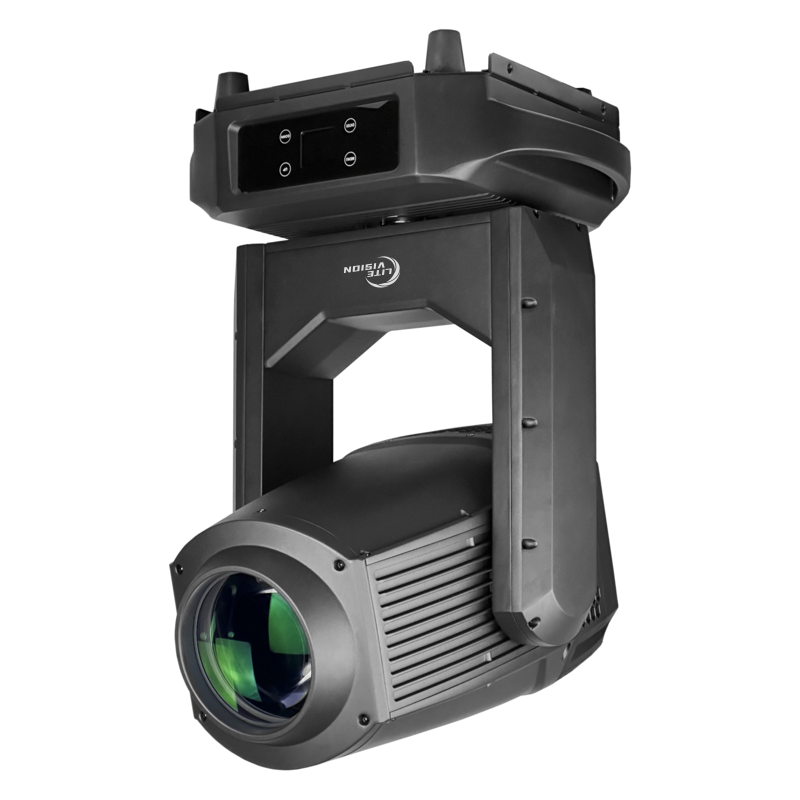
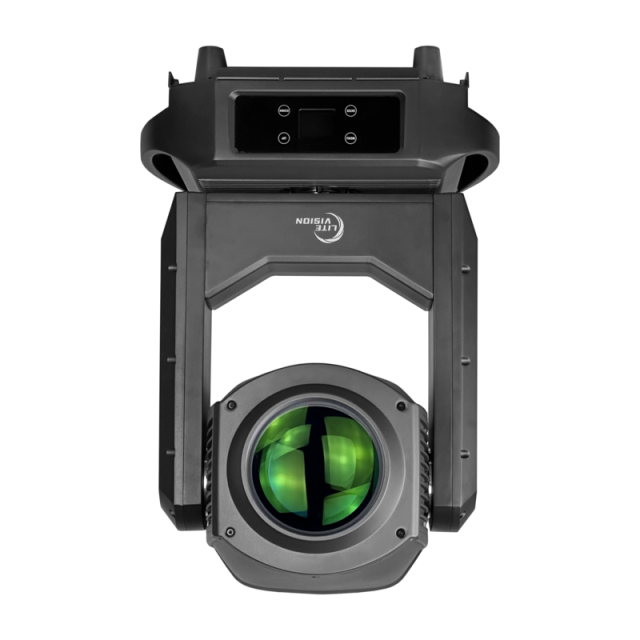
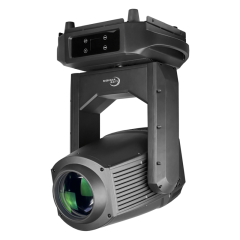
A 450 W USHIO lamp and 1.6°–27° zoom give the Archi IP650BSW Outdoor 450 W Lamp BSW Moving Head a range from concentrated beam accents to wider projected effects. Electric focus sharpens patterns as projection distance changes, while a homogenizer mirror provides frost for softer colour coverage and smooth 0–100% dimming controls fades. Linear CMY mixing, CTO adjustment from 3200K to 6700K and two palettes of six fixed colours support colour programming across beam, spot and wash applications. For pattern effects, the fixture combines 14 fixed patterns, seven interchangeable rotating pattern pieces, a six-facet linear prism and an eight-facet circular prism, with multiple-speed strobe effects adding rhythmic intensity changes.
Beam, Focus & Frost
A 1.6°-27° zoom gives this beam moving head light a narrow end for concentrated beam accents and a wider end for larger projected effects. Adjusting the angle changes the spread on the stage or scenery, so the working throw remains an important part of every lighting plot.
Electric focus lets the operator sharpen a moving head spot light from the console as projection distance changes. Focus and zoom perform different jobs: zoom sets the spread, while focus brings a projected pattern into definition at its receiving surface.
A homogenizer mirror provides frost for moving head wash light operation. Engaging frost softens the output for colour coverage; its spread still follows the fixture's optical range, so broad-area coverage needs to be checked against the actual stage dimensions.
Smooth 0-100% dimming provides intensity control for fades and transitions. Programme the fade with the surrounding fixtures so changes in brightness follow the intended cue rather than relying on matching console values alone.
Multiple-speed strobe effects add rhythmic intensity changes. Their use should follow the venue's operating rules and the production's audience requirements.
LITEVISION brings these functions together as a beam spot wash moving head manufacturer for designers who need several optical treatments from the same rigging position. For an outdoor moving head light installation, the environmental checks in Installation & Care form part of the setup.
Colour & Pattern Effects
- Linear CMY colour mixing allows gradual colour changes rather than limiting every transition to a fixed wheel position. Programme the colour path deliberately when a cue passes through intermediate shades.
- Linear CTO adjustment covers 3200K-6700K for warming the output. Treat this adjustment separately from the lamp's native colour temperature when matching the fixture with other sources.
- Colour palette 1 contains 6 fixed colours, and colour palette 2 contains 6 fixed colours. These give the operator indexed colour choices alongside the mixing system.
- A fixed pattern plate carries 14 different patterns for moving head spot light projection. Reviewing the actual pattern artwork helps establish which textures suit scenery, stage surfaces or abstract visual looks.
- A rotating pattern disc holds 7 interchangeable pattern pieces for gobo moving head light effects. Replacement patterns need the correct outer diameter, image diameter, thickness and material specification; these fitting details are required before a replacement is made.
- Two prisms provide different multiplication geometries: a 6-facet linear prism produces a directional arrangement, while an 8-facet circular prism produces a radial arrangement. The required prism combination and movement behaviour should be checked in the channel definitions before programming a composite effect.
- Colour cues shared with a moving head wash light elsewhere in the rig benefit from a visual match on the stage surface. Identical colour commands across different optical systems do not necessarily produce the same appearance; LITEVISION, your beam spot wash moving head supplier, can discuss the intended effect.
Electrical & Physical Specifications
| Property | Specification |
|---|
| AC input voltage | 100–240 V |
| Input supply frequency | 50/60 Hz |
| Complete-fixture power consumption | 650 W |
| Lamp manufacturer | USHIO |
| Lamp power | 450 W |
| Native lamp colour temperature | 7900 K |
| Output lens diameter | 138 mm |
| Overall fixture dimensions | 705 × 375 × 300 mm |
| Net fixture weight | 30 kg |
| Shipping carton dimensions | 81 × 43 × 55 cm |
Control & Movement
DMX512 and RDM support connect this dmx moving head light to a professional control system, with a 27-channel operating mode. Allocate the complete channel footprint when patching the fixture and keep its address clear of neighbouring fixtures.
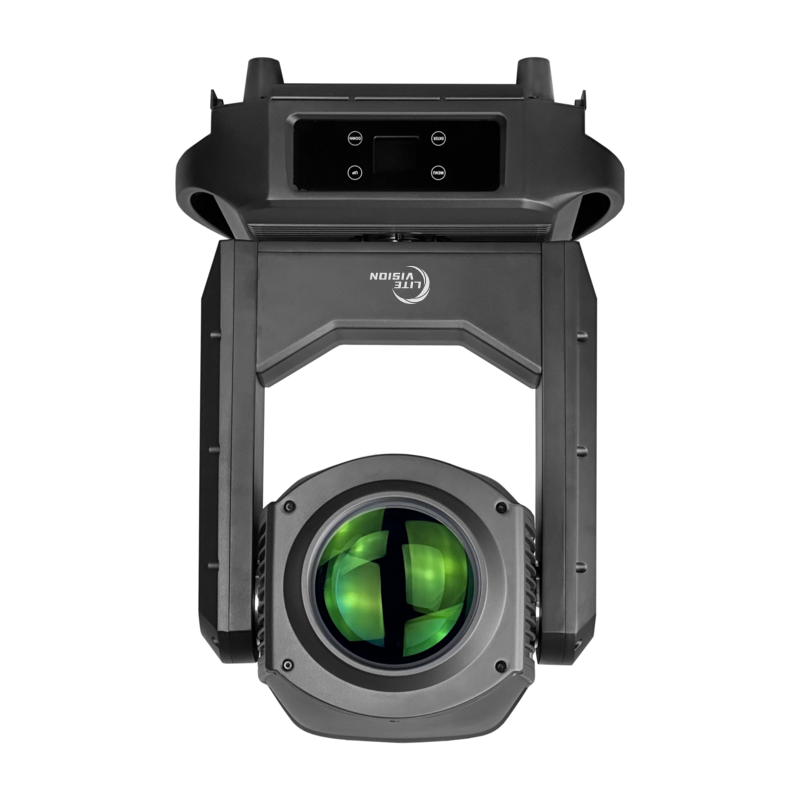
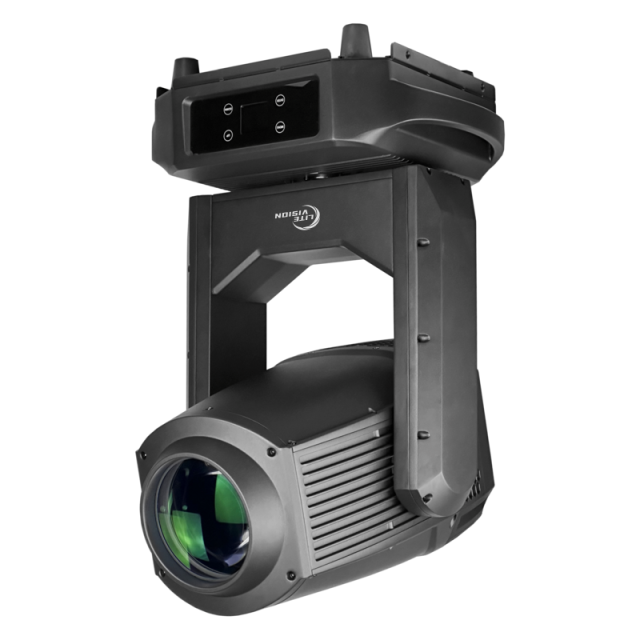
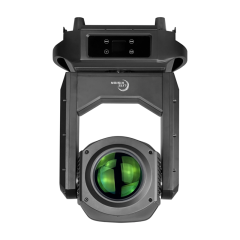
Four touch buttons provide local menu operation. During setup, establish a consistent naming and addressing record so the physical fixture can be traced back to its console patch.
Pan covers 540° and tilt covers 270°, with 16-bit precision scanning. Build position palettes around the installed orientation and check travel through the intended cue sequence before opening the venue.
Automatic correction restores the X-axis or Y-axis position after a loss of step. Persistent misalignment still calls for inspection rather than repeatedly relying on correction during a performance.
A gobo moving head light profile needs the correct definitions for the effect wheels as well as movement. Use the channel chart issued by LITEVISION, your beam spot wash moving head manufacturer, and match the console personality to the installed firmware; protocol support alone does not establish compatibility with every console or visualizer.
RDM command support needs to be checked against the intended controller and task. For a rig requiring unattended playback, establish the available operating modes before designing the control arrangement; automatic, sound-active and master/slave operation are not included in this model's stated control specification.
Multiple units should be checked together for firmware revision, channel interpretation, home positions and repeatable cues. Keep those settings in the show records so a replacement unit can be brought into the rig without changing the intended programming.
Installation & Care
- Outdoor installation starts with unit-specific verification of the IP65 or IP66 rating and the permitted operating conditions. Use the rating documented for the supplied fixture, and establish the allowed ambient conditions, installation orientation and exposure limits before operating an outdoor moving head light in the intended location.
- A qualified installer should check the supporting structure, mounting interfaces, clamp arrangement and independent secondary retention against the fixture's installation instructions. Leave clearance for the full movement envelope, nearby equipment and service access.
- Power wiring must follow the unit's electrical instructions and local installation requirements. Use the complete-fixture rating in the specification table for circuit planning, and verify earthing, connector ratings and any permitted power-output linking limit before connecting further equipment.
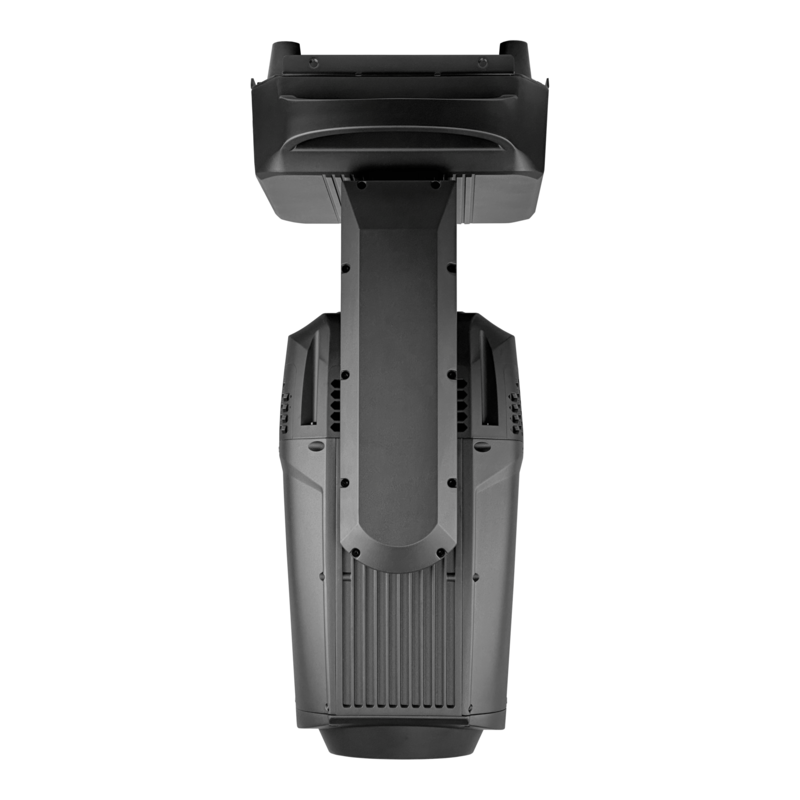
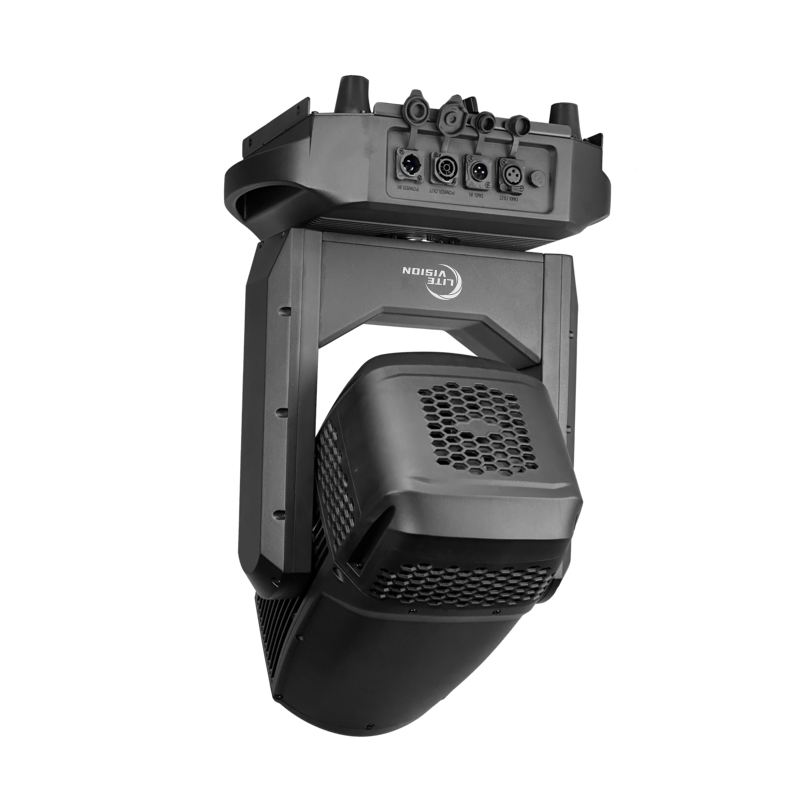
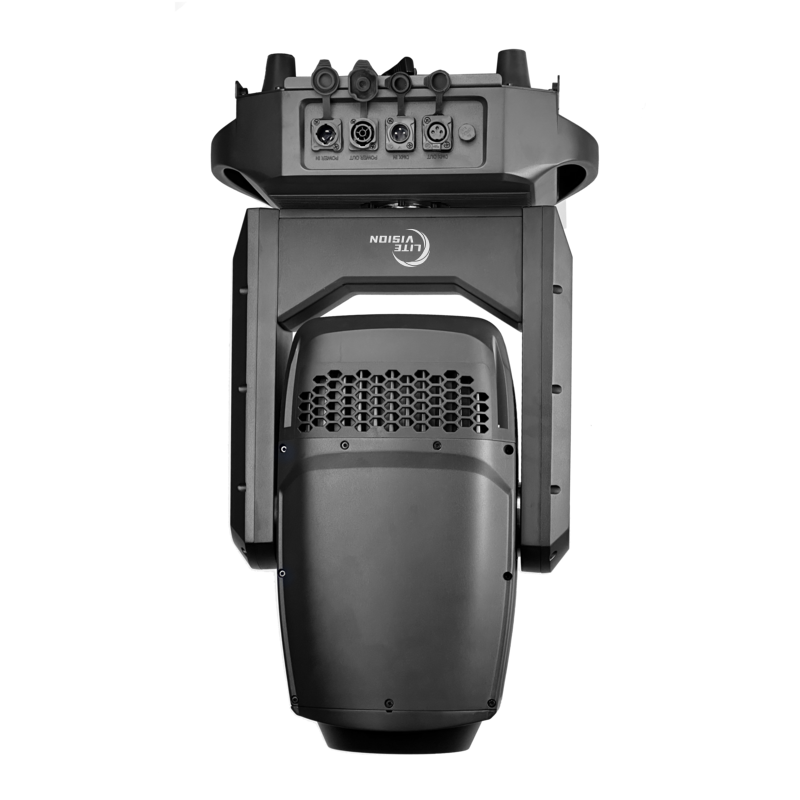
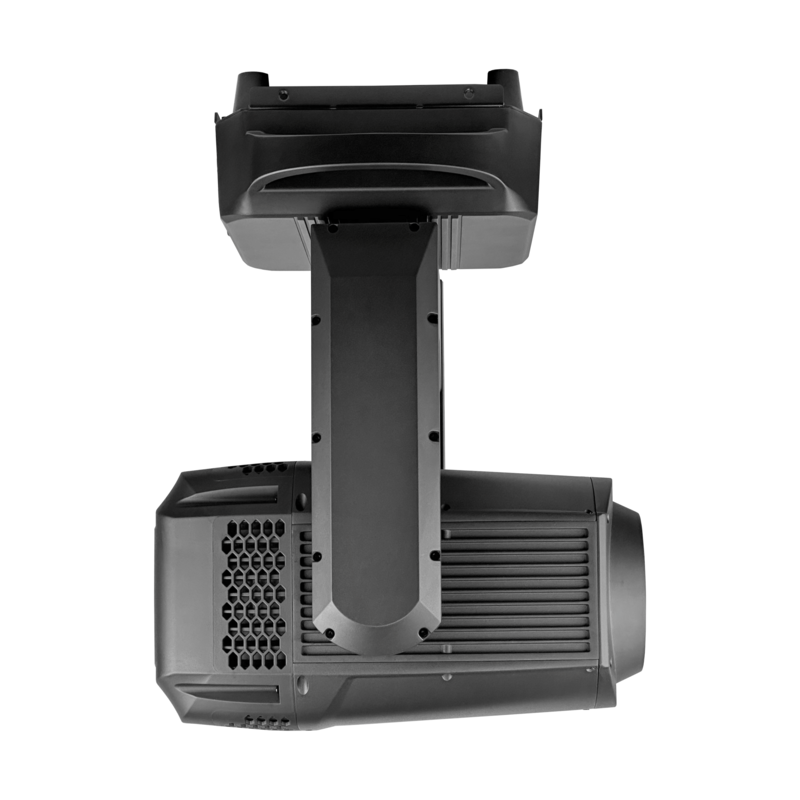
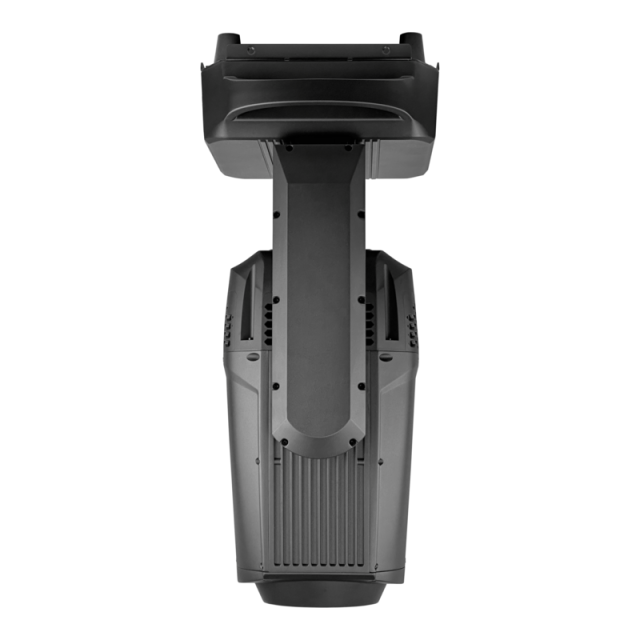
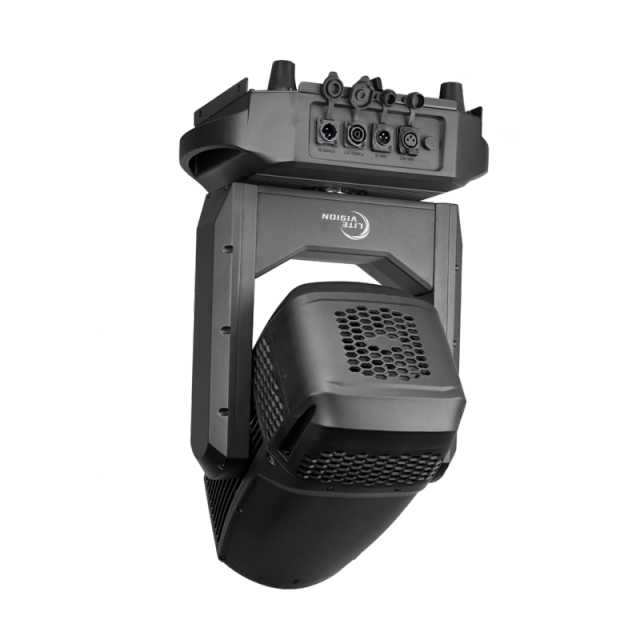
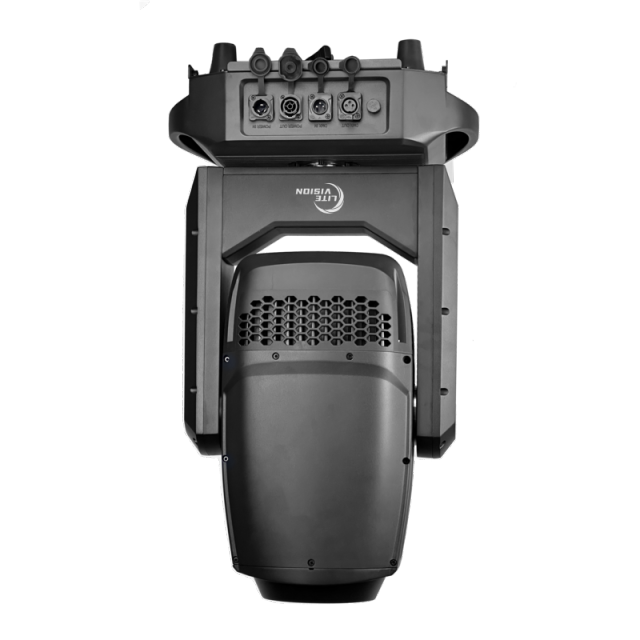
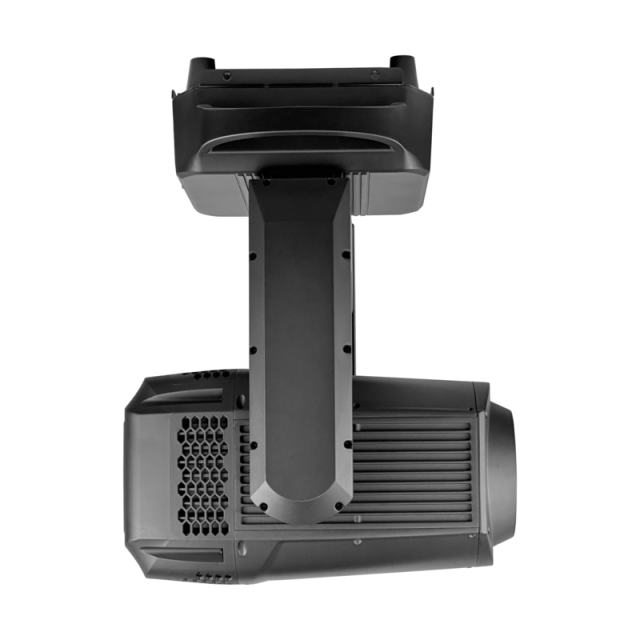
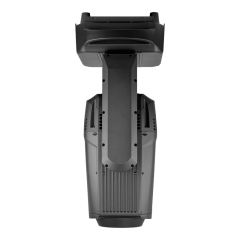
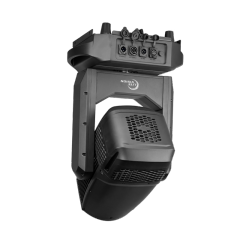
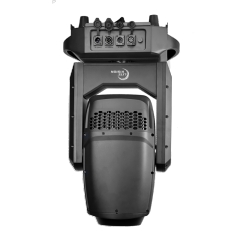
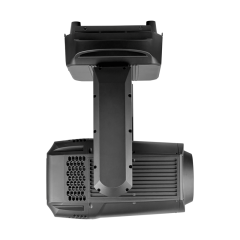
- The integrated carrying handle, vented dark housing and covered power and signal connectors help identify the handling and connection areas. Move the fixture by its designated handles, keep ventilation paths clear and secure connector covers as instructed for the installation.
- Connect the dmx moving head light through a suitable data path, observing input/output direction and the controller's requirements for cable, distribution and termination. Check signal stability before the fixture is raised to an inaccessible position.
- Run a commissioning check after mounting: inspect cable movement, mechanical clearance and response through the intended show cues. Record the result with the fixture identification so later faults can be compared with the original setup.
- Isolate the electrical supply and allow the lamp assembly to cool before cleaning or service. Follow the manual's approved method for optics and ventilation surfaces, avoid directing water into openings, and leave internal work to qualified personnel.
- Maintenance planning with a beam spot wash moving head supplier should identify the exact replacement lamp designation, approved service procedure and any user-serviceable components. Record operating symptoms, affected functions and installed part references before replacing components; no replacement interval should be assumed without the applicable instructions.
Downloads & Technical Records
- Start the technical file with the current specification sheet for Archi IP650BSW. Request the applicable revision from LITEVISION, your beam spot wash moving head manufacturer, and retain it with the fixture identification; downloadable file availability needs to be established for the required documents.
- Obtain the operating manual and installation drawing before the equipment reaches the mounting position. Read the mounting, electrical, lamp-handling and service instructions together so the installation team works from a complete set of requirements.
- Match the DMX channel chart and console personality to the firmware on the dmx moving head light. For a gobo moving head light, the chart also needs to identify wheel positions and effect-control ranges so the programmer can build usable palettes.
- Review photometric files or measured output data for the beam moving head light at the intended throw and optical settings. Beam angle alone does not establish illuminance on a distant surface, and a visual demonstration cannot replace the required measurement conditions.
- Add colour-rendering, dimming, camera and acoustic test records when the venue or production requires them. Recording frame rate, exposure settings, operating state and measurement conditions makes those results useful for the actual installation rather than assuming performance from the lamp rating.
- Complete the technical file with the compliance documents applicable to the exact fixture version and destination market. Check model identification and the scope of each report before using it for a project submission; no particular certification is claimed here.
Applications & Complementary Fixtures
- Concert stages can place a beam moving head light along a rear or side truss to add aerial structure around performers. Keep the intended beam paths coordinated with video screens, audience sightlines and the rest of the lighting plot.
- Touring productions can use this model across successive cue types from a shared hanging position. A clearly documented plot helps visiting operators reproduce those looks when the stage dimensions or fixture spacing change.
- Themed entertainment sequences can use a moving head spot light for decorative projection on suitable scenic surfaces. Surface colour, texture and viewing distance influence the visible pattern, so a sample scene is useful before committing to the final layout.
- Festival and open-air event rigs can incorporate an outdoor moving head light where the verified operating conditions suit the site. Event planning should include a weather response procedure and access for inspection between performances.
- Dedicated wash fixtures can provide base coverage while this model handles visual accents. A moving head wash light with the required coverage angle can support stage areas that need more spread than an effects fixture provides.
- Framing fixtures are useful companions where scenery or presenter areas need controlled shuttered boundaries; strobes can handle separate rhythmic accents. Discuss those distinct tasks with LITEVISION, your beam spot wash moving head supplier, so the fixtures complement each other without assuming shared channel maps or accessories.
Technical Support & Model Matching
LITEVISION brings together more than 30 engineers who have worked in the industry for an average of 15+ years. Share your purchasing requirements and the models you are considering to discuss the available options with our team. We provide product maintenance and technical support, with customer service staff available to answer your questions and help address issues. Whether you are comparing options before ordering or need assistance after purchase, contact us with your technical questions and maintenance concerns.
The Archi IP650BSW has an IP65 protection rating.
FAQ
Can the Archi IP650BSW handle beam, spot and wash effects from one rigging position?
The Archi IP650BSW combines a 1.6°–27° zoom, electric focus and a homogenizer mirror for frost to support beam, spot and wash applications. Zoom sets the spread, electric focus sharpens projected patterns as projection distance changes, and frost softens the output for colour coverage. Coverage should be assessed against the working throw and actual stage dimensions because the frosted output still follows the fixture’s optical range.
What colour controls are available for matching this fixture with other lights?
The fixture provides linear CMY colour mixing, linear CTO adjustment from 3200K to 6700K and two palettes containing six fixed colours each. CMY supports gradual colour transitions, while the fixed palettes provide indexed choices. Treat CTO adjustment separately from the lamp’s native colour temperature, and visually check shared colour cues on the stage surface: identical commands across different optical systems do not necessarily produce the same appearance.
What pattern options are included, and can the rotating patterns be replaced?
The fixture includes 14 fixed patterns and seven interchangeable rotating pattern pieces. The fixed pattern plate provides projection textures, while the rotating pattern disc supports rotating gobo effects. Before selecting replacement pieces, confirm the required outer diameter, image diameter, thickness and material specification. Reviewing the actual pattern artwork also helps determine which included patterns suit your scenery, stage surfaces or intended abstract effects.
Which prism effects are available, and what should we check before programming them?
The Archi IP650BSW has a six-facet linear prism and an eight-facet circular prism. The linear prism produces a directional arrangement, while the circular prism produces a radial arrangement. Before programming a composite effect, check the channel definitions for the required prism combination and movement behaviour. This establishes how to programme the intended multiplication effect using the fixture’s available prism controls.