Optics & Colour Output
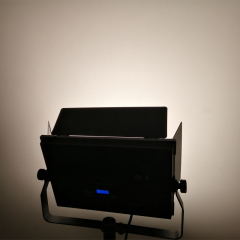
- Two banks of emitters in one panel. 912 LEDs — 456 warm white and 456 cool white — sit behind a single diffuser, so the colour mix happens in the fixture rather than in post-production.
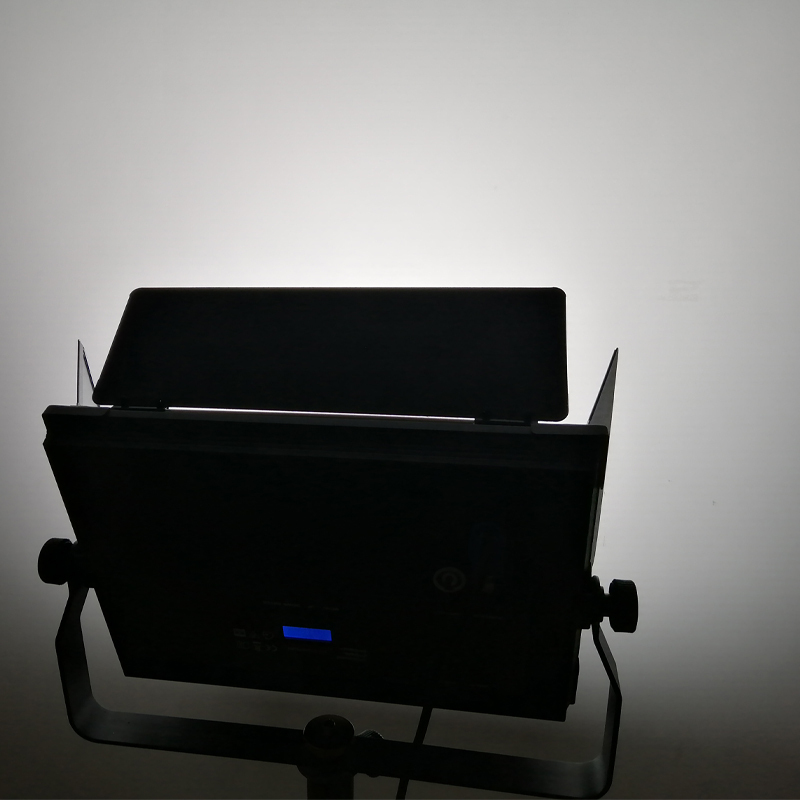
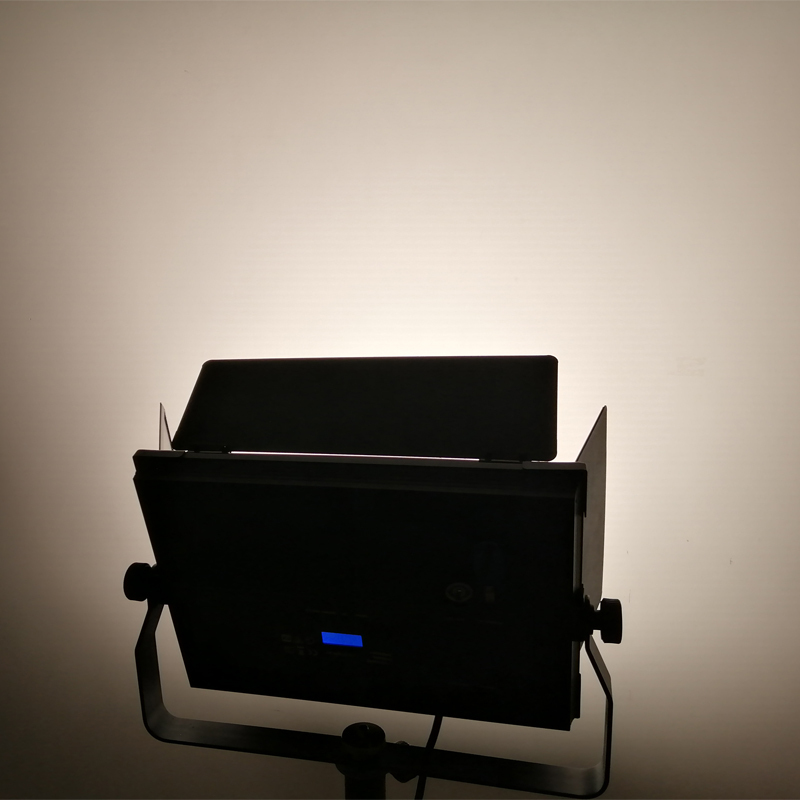
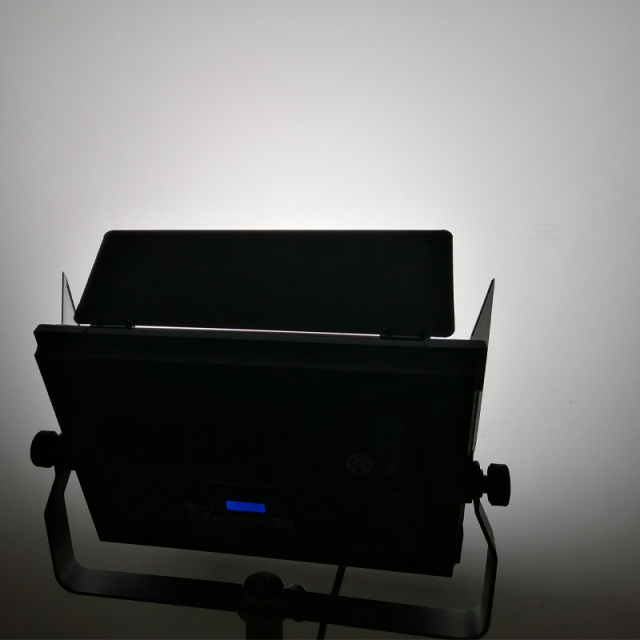
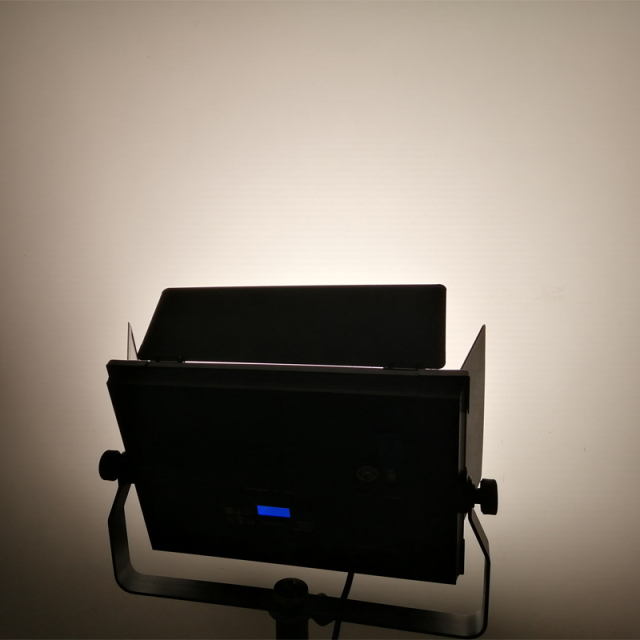
- 3000–6000 K, continuously adjustable. Dial the panel to tungsten, to daylight, or to anything in between, and match the practical lamps already in the room without a gel pack.
- Colour Rendering Index Ra≥95. Skin, costume fabric and product colour read close to how they look to the eye, which is what separates a working led panel video light from one that has to be fixed later in the grade.
- Fixed 120° lens. The wide, even spread covers a subject at close range and feathers out at the edges — closer in behaviour to a led wash light than to a beam fixture.
- One panel covers both ends of the scale. Warm for wood-panelled interiors and evening services, cool for daylight-balanced studios, with every step in between available on the dial.
- No shutters, no gobo, no zoom. Where a theater stage lighting profile carves a defined pool, this panel fills the space in front of the camera. Use it for coverage and softness, not for cutting shapes.
- Consistency when you add a second unit. The array is set at build, so a panel ordered months later should sit easily next to the first — test the two side by side on camera before a shoot and you will know in a couple of minutes. In professional led stage lighting, a mismatched pair is worse than a single panel.
Light Body & Mounting
| Property | Detail |
|---|
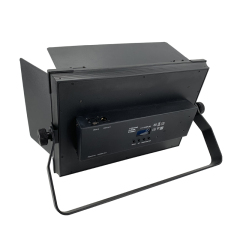
| Housing | Die-cast aluminium |
| Finish | Matte black, low reflection on camera |
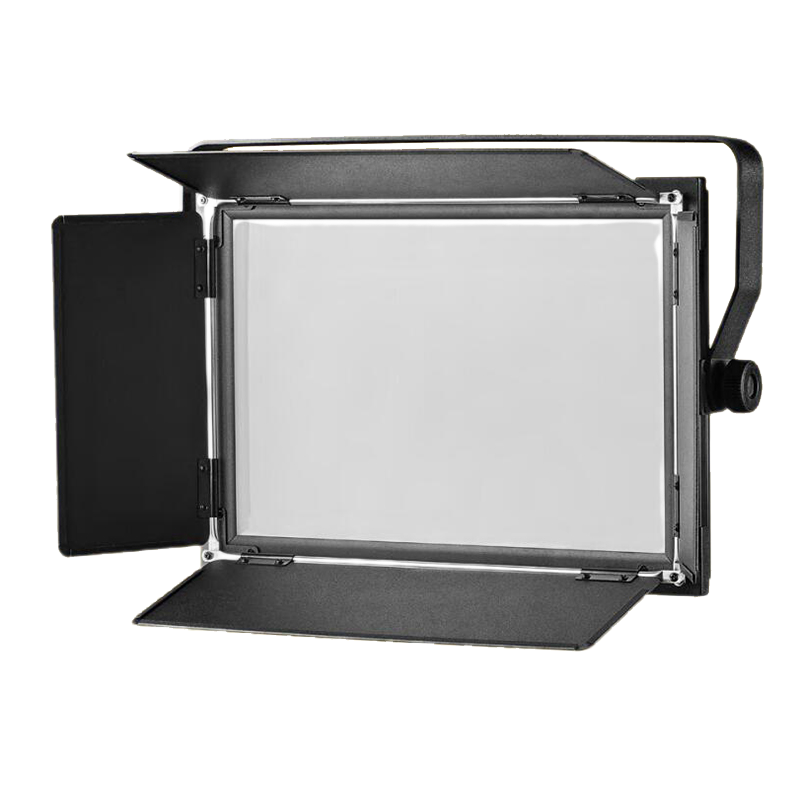
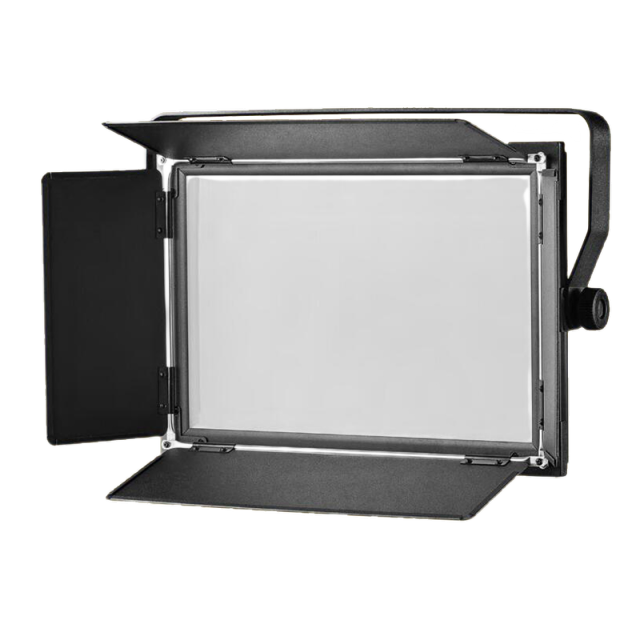
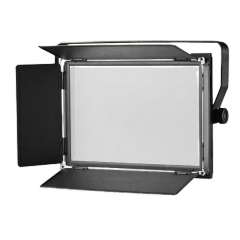
| Front | White diffuser panel |
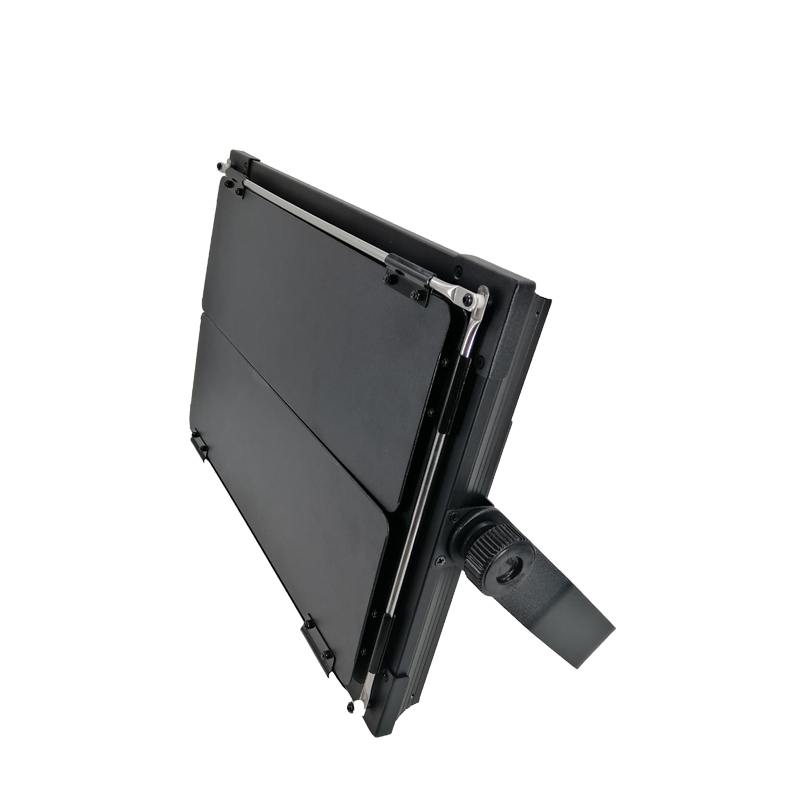
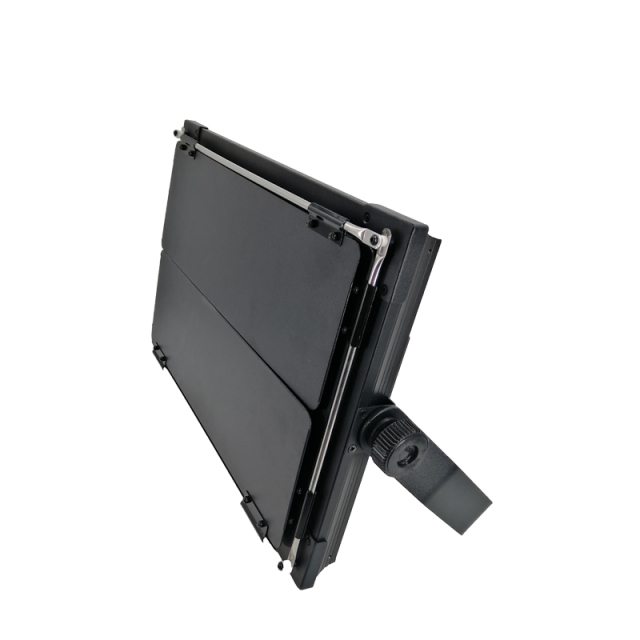
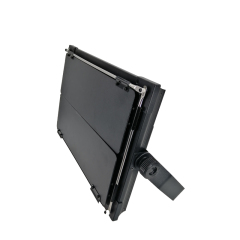
| Barndoors | Four-leaf set, fitted as standard |
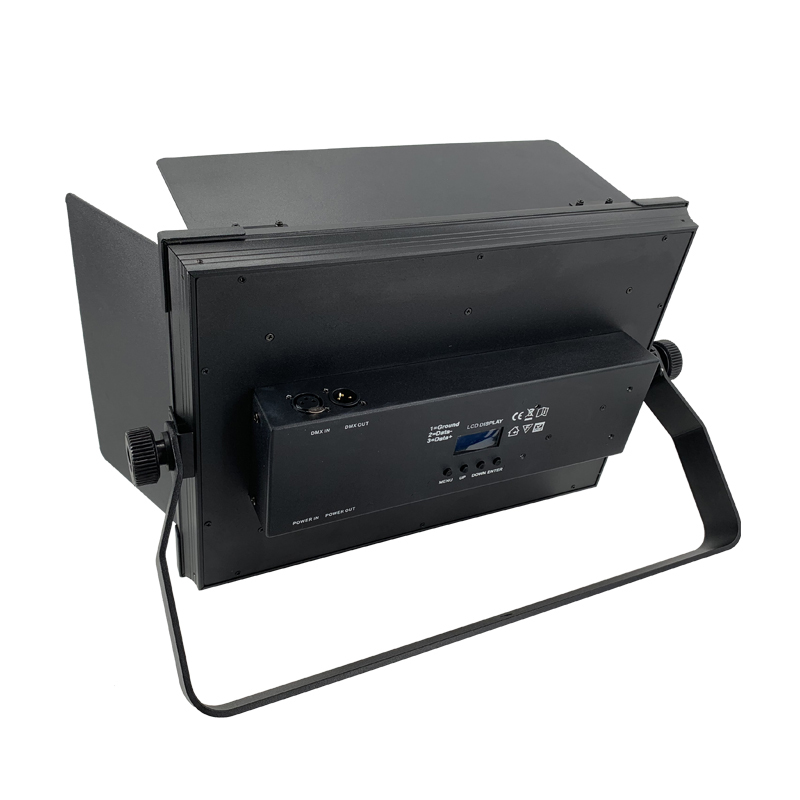
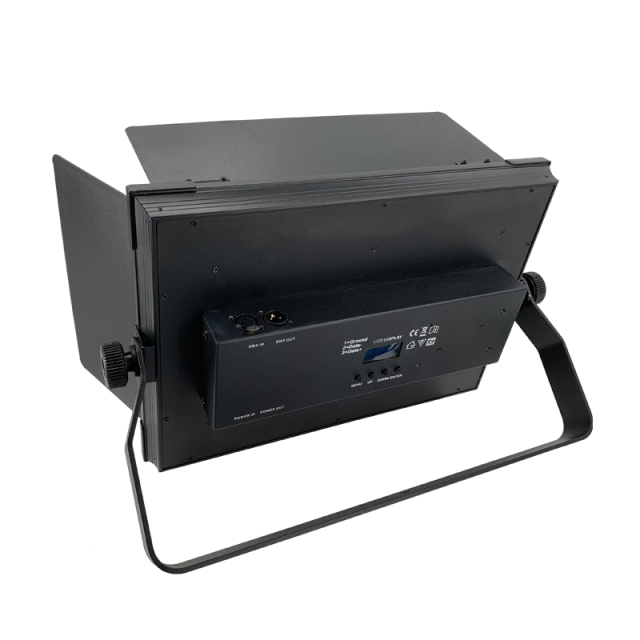
| Display | LCD screen on the rear panel |
| Mounting | U-shaped yoke bracket with locking knobs |
| Rear panel | DMX in/out and power in/out |
| Adjustment | Tilt on the yoke and lock at the angle you need |
| Application | Professional led stage lighting, studio and broadcast |
DMX Control & Setup
- Set the address first. The rear LCD and its four buttons (menu, up, down, enter) let you choose the DMX address and the operating mode before the panel goes on the rig.
- Pick how it will be driven. DMX for console control, auto run for a stand-alone look, or master/slave when several panels should follow one another.
- Patch three channels. Three DMX channels is a small footprint, so the panel drops into an existing rig without eating a block of your universe.
- Wire it in and carry on. DMX in and DMX out on the rear panel mean one cable from your dmx light controller, then straight on to the next fixture.
- Label the channels on the console. Three channels is easy to remember and easy to forget; label them and the next operator inherits a show file that makes sense.
- Run it without a console where you need to. Auto run and master/slave are how a lot of led stage lighting for churches installs are set up: one panel is configured as master and the others follow it from power-up.
- Write the address inside the case lid. Note the address and mode on a strip of tape; the next crew resets the panel in seconds instead of working it out from the menu. It is a small habit led spot light manufacturers and rental houses share.
Power Supply
Universal input. AC 100–240 V means the same panel travels: a unit bought for a European studio runs unchanged in a US or an Asian venue, with no voltage tap to set and no step-down transformer to carry.
100 W at maximum. Modest for the amount of light it puts out, which matters when you are adding a panel to a busy ring main or running several units from one distribution board.
Power in and power out on the back panel. Both sockets sit next to the DMX connections, so cable dressing stays tidy behind the fixture. If you plan to link panels from a single supply, confirm the arrangement for your unit with us before you build it into a rig.
Plug and lead for your market. Tell your sales contact which country the panel is going to and confirm the plug and lead type on the order. Dealers who buy from led spot light manufacturers across several regions know that the connector matters as much as the fixture — an adapter in the chain is one more thing to lose on site.
Dimming, Frequency & Strobe
- Linear dimming from 0 to 100%. Fades run smoothly down to black with no visible step, which is what you want at the end of a service or a scene change.
- Adjustable dimming frequency, 500 Hz to 25,000 Hz. Raise it when a camera shows banding or when you are shooting high frame rates; the lower settings are fine for eye-side work where no camera is involved.
- Strobe from 1 to 25 flashes per second. There when a scene calls for it, untouched through most interview, worship and corporate work.
- Electronic dimming instead of gels. Bring the level down on the panel rather than adding scrim or neutral density — one less thing in the case and nothing to lose on set.
- Over 50,000 hours of LED life. At normal working levels that is years of use before the emitters need attention, which keeps maintenance budgeting predictable for a rental fleet.
- Set the frequency once and leave it. Choose the setting that suits the cameras you shoot with, and the dimmer behaves the same way at every level from then on.
Working Environment & Cooling
- Keep the room between -10 °C and 40 °C. That is the panel's working range; if a venue has been closed up in the cold or in the sun, let the room come back towards normal before you power up.
- There is no fan to feed. The die-cast body is the heat path, so leave air around the housing rather than boxing the panel into a closed cabinet.
- Expect silence. With no fan running, the panel adds nothing to the room's noise floor — the reason it works for mic-heavy sessions such as interviews, sermons and acoustic recordings.
- Indoor rooms by default. Damp cellars, dusty halls and covered outdoor stages are a different brief; ask us about protection for the specific venue before you install, because the standard panel is not sealed against weather.
- Let it cool before it is packed. A few minutes after power-down, before it goes back in the case, keeps the diffuser and housing in good order.
- Watch the ambient on long summer days. A glass-fronted booth or a sunlit hall can push past 40 °C by mid-afternoon; ventilate the space or move the panel rather than running it hot.
Typical Applications
Studio interviews and talking heads. This led panel video light sits just off camera as key or fill for seated subjects, podcast sets and remote-guest desks, keeping faces evenly lit through a long recording day. Nothing needs swapping between takes, so the look holds from the first session to the last.
Church sanctuaries and broadcast rooms. Pulpits, worship teams and livestream cameras all need soft front light that does not blow out a white shirt. It is the kind of fixture that suits led stage lighting for churches well: quiet in the room, easy on the power, and simple enough for a volunteer team to leave on a preset week after week.
Small theaters and school halls. In rooms with a low grid and a short throw to the stage, a hard-edged theater stage lighting profile can cut a visible circle across the actors. This panel lifts the whole front of the scene evenly instead, which is why schools book it for assemblies, drama and dance recitals.
Corporate video and streaming rooms. Desk lighting for webinars, product demos and training videos: dial the panel warmer or cooler until the presenter's face matches the background, then leave it alone. It behaves like a soft led wash light behind the camera rather than a hard source pointed at the talent.
Dealer stock and rental fleets. Compact enough for a shelf and simple enough to hand to a freelance crew. Dealers and led spot light suppliers keep a unit or two for the "we need something soft next week" job, and rental houses send it out as part of a standard interview kit.
Packing, Documents & Delivery
| Property | Detail |
|---|
| Net weight | 5 kg |
| Gross weight | 7 kg |
| Packing dimensions | Confirmed on your order confirmation |
| Units per carton | Confirmed on your order confirmation |
| In the box | Panel, four-leaf barndoors, yoke bracket, power cable |
| Manufacturer | LITEVISION, Guangzhou — led spot light manufacturers since 2016 |
| Documentation | Specification sheet, user manual and photometric files on request |
| DMX channel chart | Available on request, for mapping into your dmx light controller |
| Dealer orders | Single units and stock orders for led spot light suppliers, confirmed at quotation |
| Warranty | Terms confirmed at quotation |
| Lead time | Confirmed against your delivery date |
| Payment and trade terms | Confirmed at quotation |
| Returns and quality claims | Procedure confirmed before shipping |
Technical Support & Model Matching
More than 30 engineers with an average of 15+ years in professional lighting stand behind every order — the same people who answer your technical questions. Tell us your venue, rigging height, throw distance and existing control setup; we help match models, check protocol and channel fit, and build a package that works as one system. If a fixture misbehaves on site, we work through the fault with you and sort out spares. Installation and commissioning guidance come with the order. Founded in 2016, exporting since 2022, LITEVISION serves buyers in more than 80 countries from offices in the USA, Taiwan, Mexico and China.
FAQ
Can one panel light a two-person interview?
For two people seated side by side, most crews use two panels — one as key on the nearer face and one as fill — and that is how rental houses and led spot light suppliers usually package an interview kit. A single panel works when the two subjects sit close together, or when you only need an even lift on the background behind them.
How does this differ from the Opera fresnels and profiles?
Those fixtures throw a beam you can focus and shape. A profile gives you a hard edge for cutting an actor out of the background, and a fresnel gives you a soft but directional wash across a stage — both are the tools of theater stage lighting. This panel does the opposite job: it floods an area with even, wraparound light for a camera, and there is nothing to focus.
What do I need at the console to run it?
Three DMX channels and a standard cable run. The panel takes DMX in and passes it out to the next fixture, so it can sit anywhere in a daisy chain, and it will answer to any dmx light controller that speaks DMX-512. If you would rather not use a console at all, auto run and master/slave are both available.
Will it match the tungsten lamps already in the room?
That is exactly what the 3000–6000 K dial is for — bring the panel down to the room's warm lamps or up to daylight, then check the result on a monitor rather than by eye. In professional led stage lighting the mixed sources are usually what spoil a shot, so set the panel against the practicals before the talent sits down.
Can it stay installed in a church or school hall?
It can — the yoke bracket lets you lock the angle and leave it, and with no fan there is nothing to clean or replace. That is a common reason it turns up in led stage lighting for churches, where volunteers switch the room on each week rather than operating a console. Before a permanent install, check the ambient temperature of the space and confirm the mounting point with whoever is doing the rigging.
Can it replace a softbox in a small studio?
For many small studios it does the job a softbox does — broad, even light on a face with no hot centre — without a modifier or a stand full of diffusion. It is still a led wash light rather than a shaped source: if you need the light to fall off sharply at the edge of a backdrop, the barndoors will only take you so far.