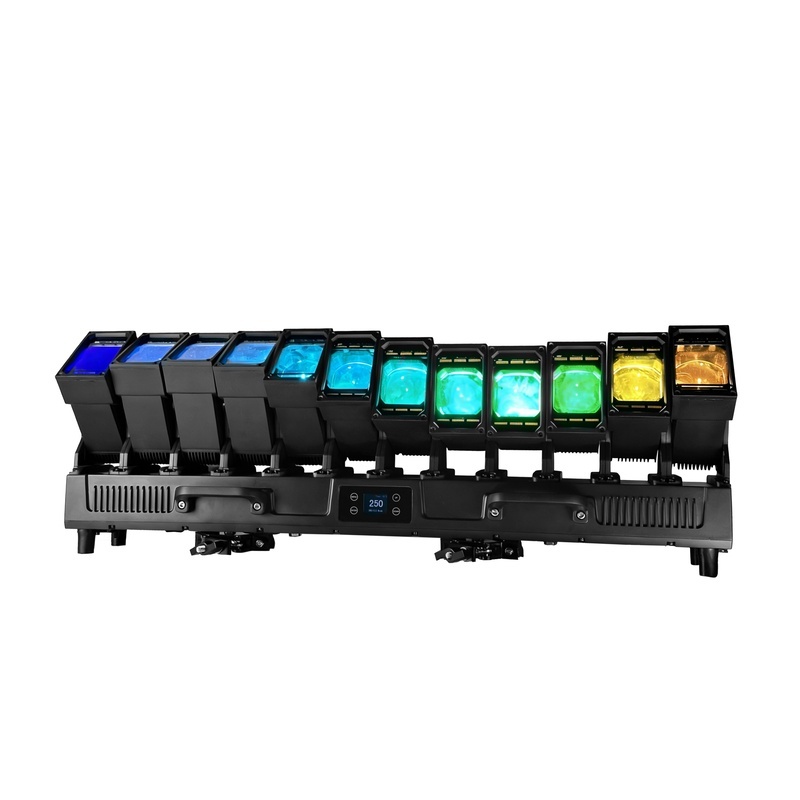
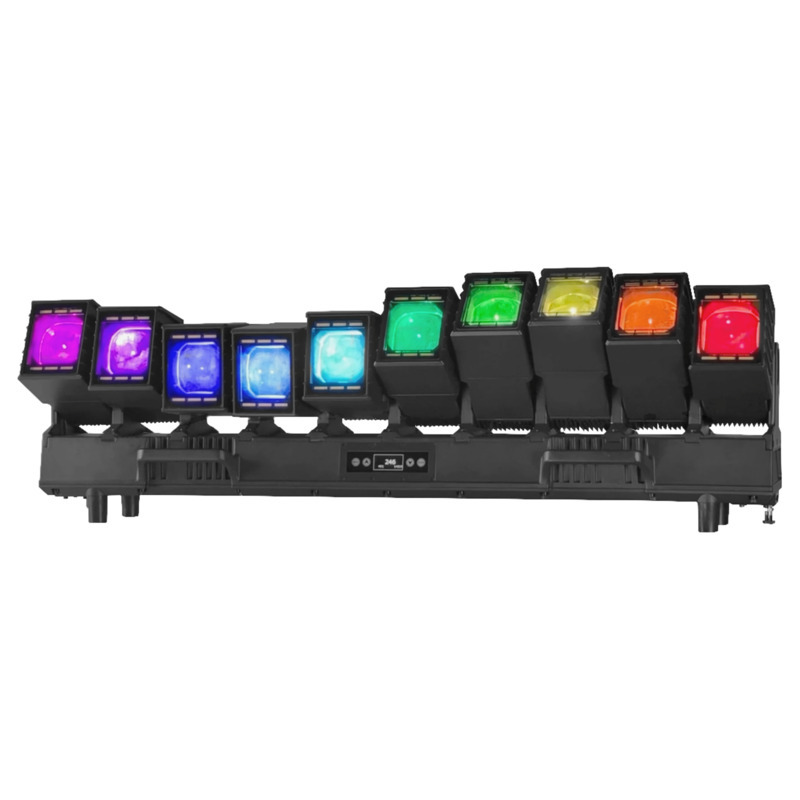
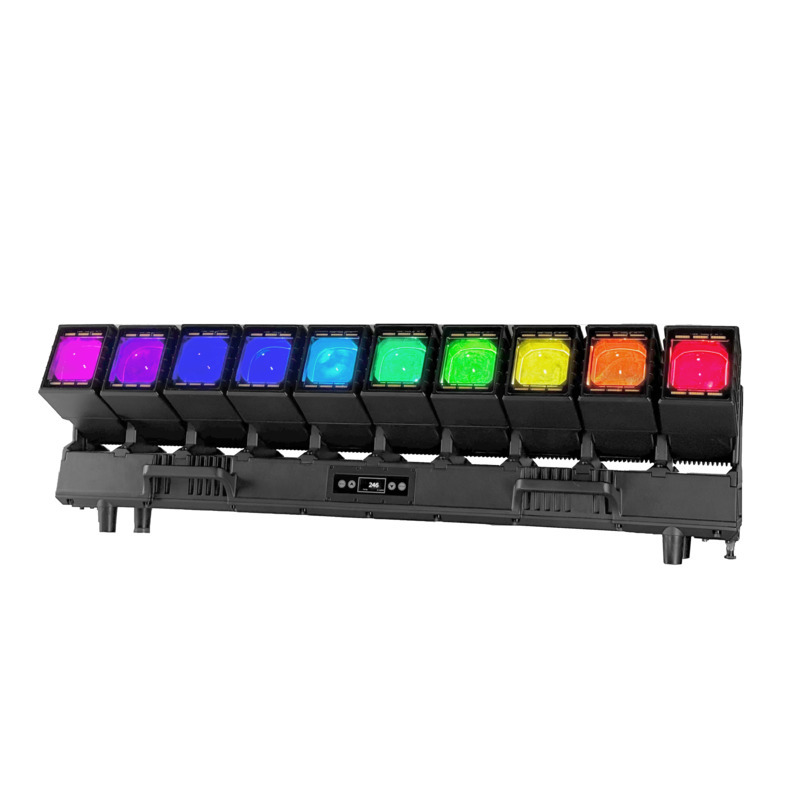
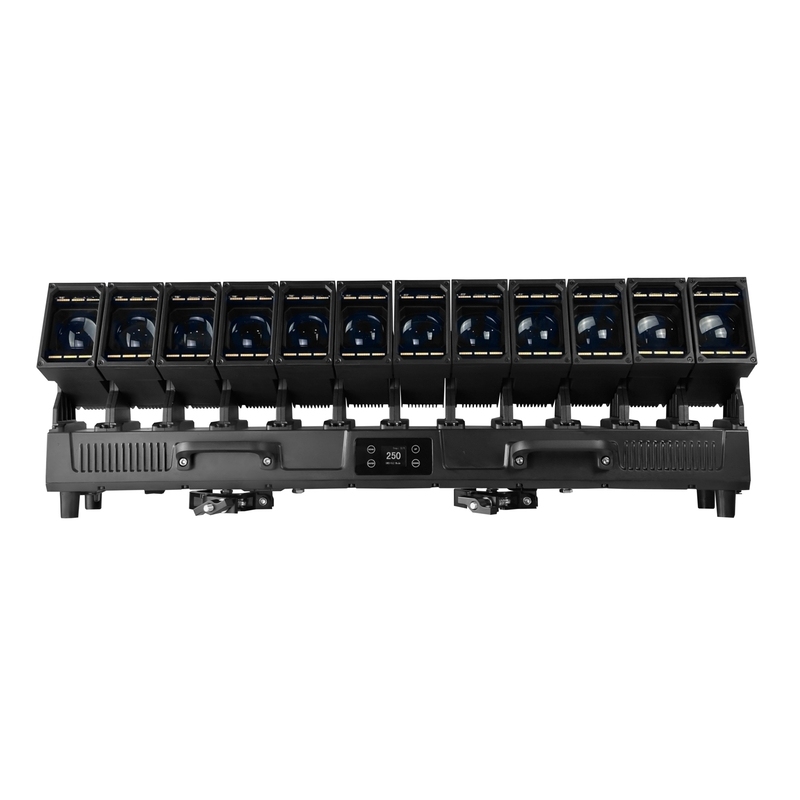
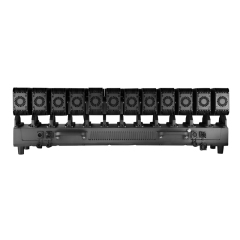
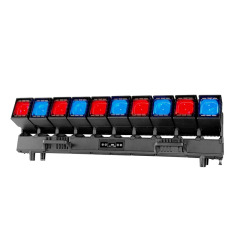
Product Overview
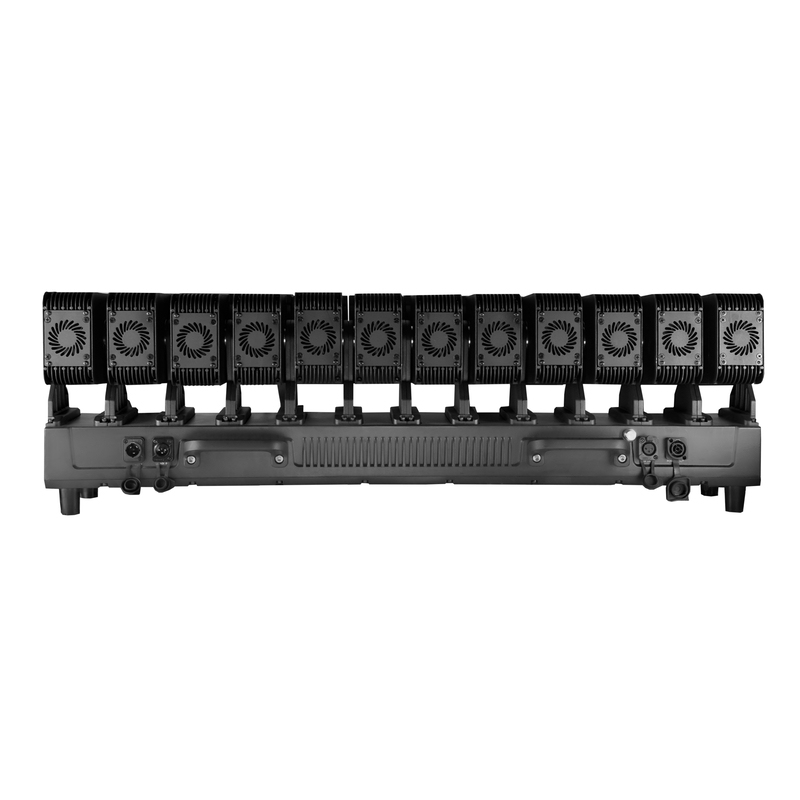
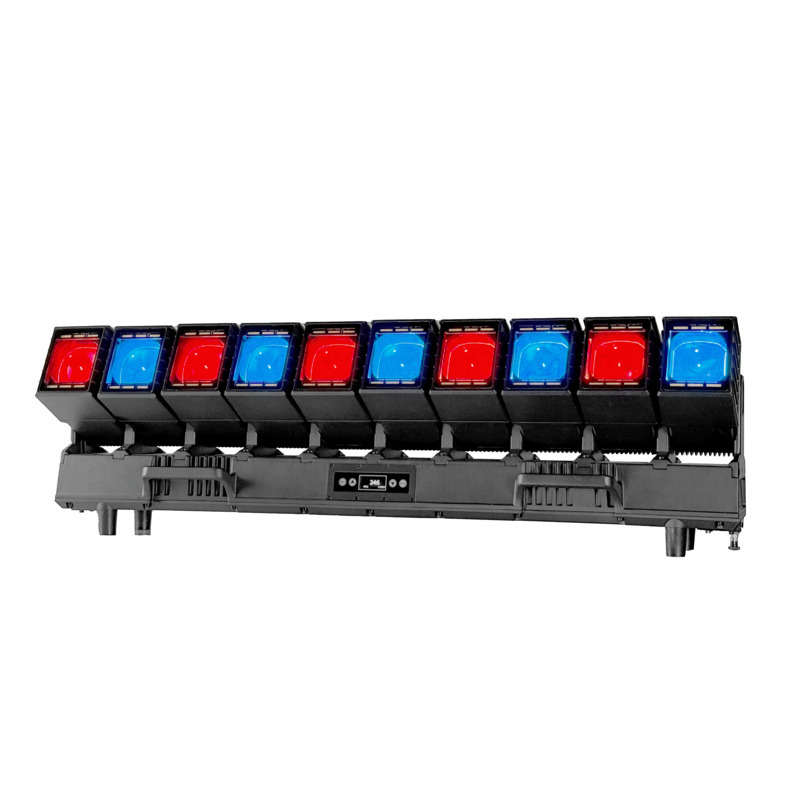
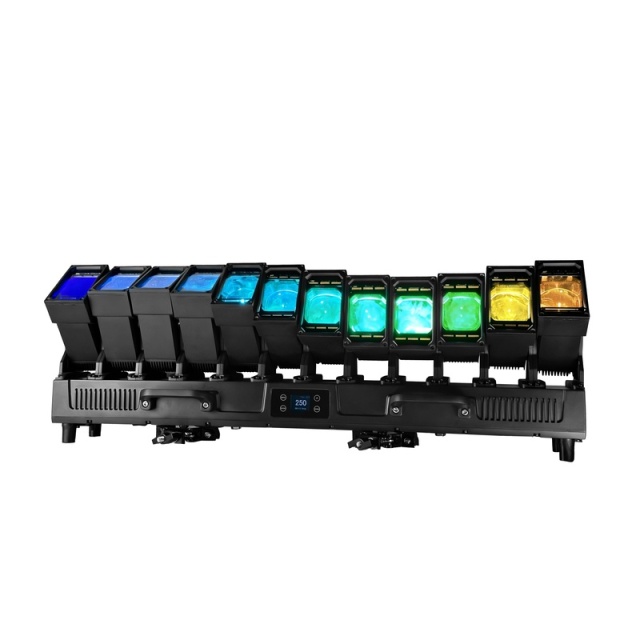
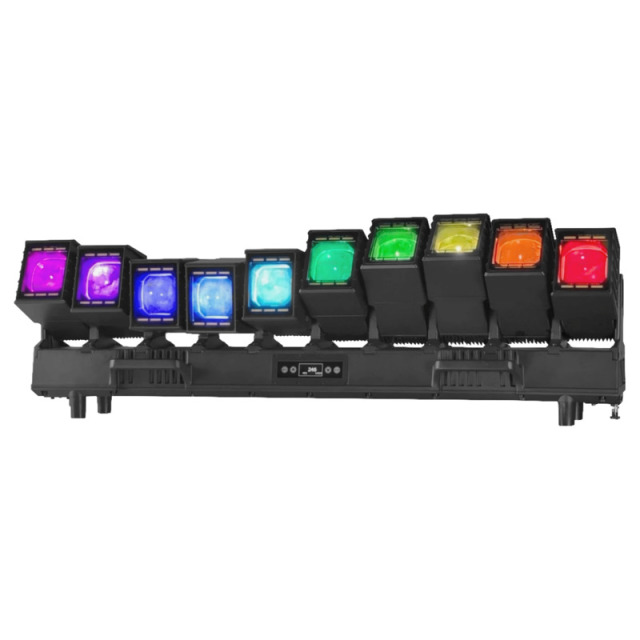
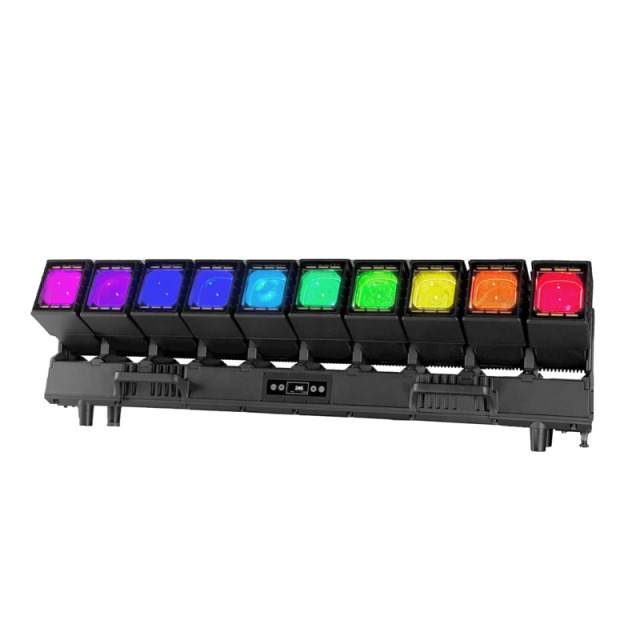
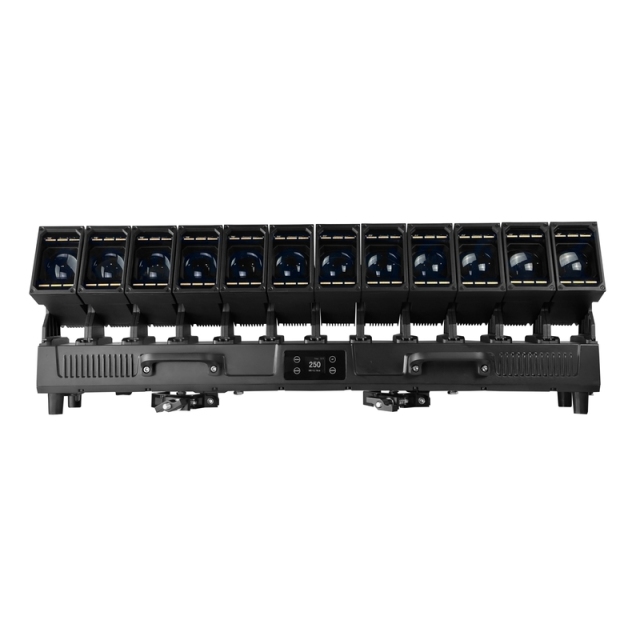
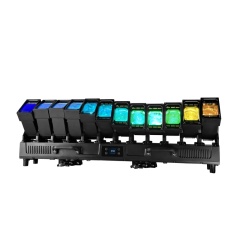
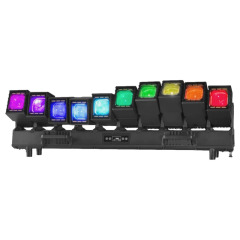
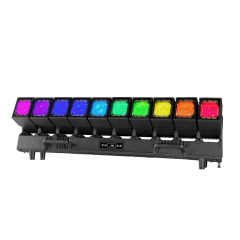
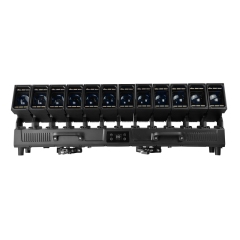
With 12 × 60W RGBW 4-in-1 LEDs and single-point pixel control, the Tornado IP1000D 12X60W Pixel Wash With LED Strip gives lighting designers a main wash layer alongside separate warm and cool white LED-strip accents. Its electrically adjustable 4.5°–36° main-light beam supports transitions from defined shafts to broader coverage, while the auxiliary sources provide a 120° beam angle and a separate strobe layer with adjustable speed. RGBW mixing, CMY color-mixing effects and 0–100% linear dimming support changes in color, intensity and visual texture within a cue. DMX512, Master-Slave, Auto Run, RDM and Manual control modes accommodate console-based programming and standalone operation, with multiple channel modes available to match the intended control setup.
Pixel & Strobe Effects
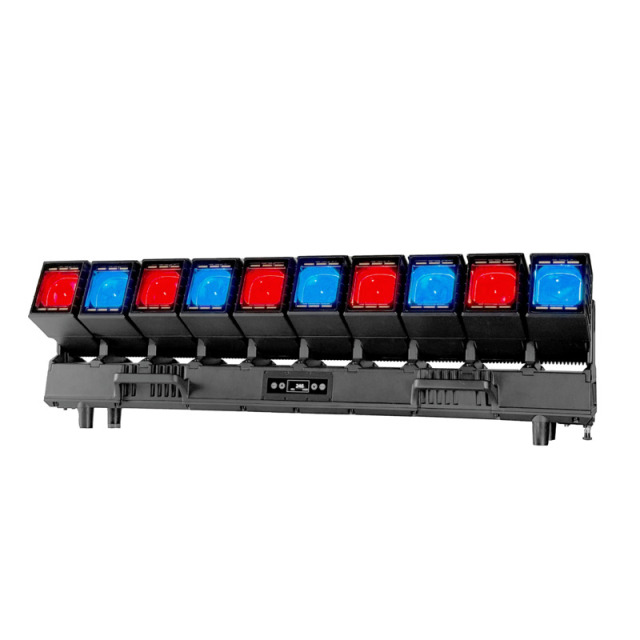
RGBW main light and separate warm and cool white LED-strip accents give this fixture distinct visual layers. Build a cue around colored light, then introduce white accents to change its character without replacing the entire look. Pixel LED programming adds detail to the illuminated pattern. Alternating colors, progressive changes and contrasting groups can create texture within a cue, rather than relying on every emitter showing the same color at the same moment. Motorized beam shaping shifts the visual emphasis from defined shafts toward broader coverage. During a transition, the relationship between beam width, intensity and color determines whether the result feels sharp and graphic or softer and more atmospheric. A separate LED strobe layer adds a different kind of emphasis. Warm white can sit comfortably beside amber scenery and warm practical lighting, while cool white creates a crisper contrast against saturated color. Their different characters give the designer more than a simple bright flash. RGBW mixing and CMY color-mixing effects provide different ways to approach the color palette. The CMY wording refers to a color effect; it does not establish a mechanical CMY filter system. For this fixture, judge transitions as well as static colors, especially when a cue moves between white and a saturated look. A supplier demonstration of this fixture is most useful when it isolates the main light, each auxiliary white source and their combined output. Viewing those layers separately makes their interaction easier to judge than a montage of rapidly changing scenes.
Technical Specifications
| Input voltage range | AC100~240V 50 /60 HZ |
| Whole-fixture power | 1000W |
| led wash light source | 12X60W RGBW 4-in-1 LEDs |
| led strobe light source 1 | 120X1W 6500K white LEDs |
| Auxiliary strobe source 2 | 120X1W 3000K white LEDs |
| pixel led light control | Single-point control |
| Main-light beam angle | 4.5° -36° |
| Auxiliary-light beam angle | 120° |
| Channel modes | 29/56/216/262/282/142/ 247CH |
| Control modes | DMX512/Master-Slave/Auto Run/RDM/Manual |
| Dimming | 0-100% linear dimming |
| Strobe | 0-25Hz; multiple effects; adjustable speed |
| Zoom | Electric magnification |
| Color mixing | RGBW color mixing or CMY color-mixing effect |
Programming & Control
- dmx moving head light programming starts with matching the fixture's selected personality to the console patch. Allocate addresses using that personality's actual channel footprint and keep enough capacity for the complete installation.
- Channel count alone does not reveal which controls a personality exposes. Use the channel definitions to determine how colors, pixels, zoom and auxiliary effects are mapped before building reusable palettes or effects.
- Firmware and fixture-profile revisions from the led moving head light manufacturer need to correspond to the units in use. Record those revisions with the show file so later changes do not silently alter parameter behavior.
- A moving head wash light operating without a console still needs a deliberate setup. Establish the intended leader and follower arrangement or local operating mode, then check startup and signal-loss behavior before leaving the system to run.
- RDM operation depends on the commands implemented by the fixture and the devices in the signal path. Test the required discovery and configuration tasks on the actual system; Ethernet control also needs separate verification rather than an assumption based on DMX support.
- Cross-unit checks should use identical settings and a shared sequence of static colors, fades and blackout cues. Differences are easier to trace when firmware, personality and local settings are recorded before programming begins.
Installation & Connections
- A mounting drawing from your moving head wash light supplier must establish the fixture dimensions, net weight, mounting points and permitted orientation before rigging begins. Have a qualified installer use that information to assess the supporting structure and attachment hardware.
- Moving parts need clearance throughout their permitted travel. Check the operating envelope, cable slack, access for adjustment and an approved secondary suspension arrangement before lifting the fixture into its working position.
- Electrical preparation must use the complete fixture's input requirements rather than the sum of its LED-source ratings. A qualified electrician should establish circuit loading, protective earthing and the appropriate protective devices for the installation.
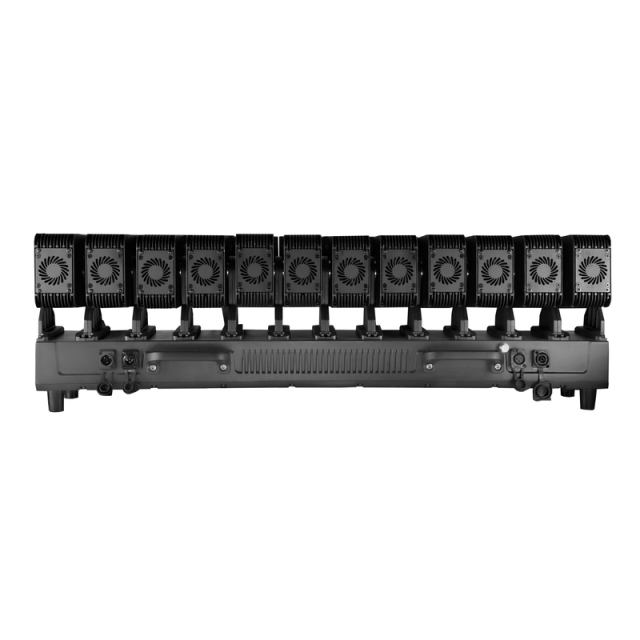
- Power and data connections require the exact connector layout and wiring instructions. Verify connector types, pin assignments, cable suitability and any permitted power-link arrangement before making connections; do not assume that a matching shell means a matching connection.
- A dmx moving head light needs a deliberate data route from the controller through the installation. Follow the wiring instructions for cable routing and termination, and use suitable distribution equipment where the system branches.
- An IP65 or IP66 requirement must be matched to the exact unit's test report and installation instructions before outdoor use. Check exposure limits, connector sealing and drainage requirements, and assess condensation, salt exposure and ambient conditions separately rather than treating an ingress rating as approval for every environment.
Stage Applications
Concert backlines give a moving head wash light a clear task: extend the lighting composition behind the performers. Position the effect around scenic gaps and stage sightlines so it adds depth without competing with the main performance area.
Club stages and DJ booths can use an effect light as a visible part of the set. Keep its sightline distinct from video content and decorative lighting, and build restrained looks for quieter moments as well as high-energy sections.
Dance productions can use an led wash light to connect groups of performers with the surrounding scenery. Where crisp masking around a doorway, projection surface or scenic edge is needed, pair it with a dedicated framing fixture for that separate task.
Musical accents give an led strobe light a specific place in the cue stack. Keep strobe cues deliberate, follow the venue's audience-notification policy and provide suitable alternatives where photosensitive viewers may be present.
Filmed performances need a camera test at the production's actual frame rate, shutter setting and working intensity. Check for banding, exposure clipping and the appearance of transitions on the recorded image before committing the fixture to an important shot.
Theater and studio scenes may also need dedicated high-color-rendering key lighting or equipment verified for quiet operation. Assess those requirements separately from visual effects, and use dedicated atmosphere lighting where scenery needs a consistent background independent of the programmed stage cues.
Cleaning & Maintenance
- After use, isolate the fixture from power and allow it to cool before inspection. Treat cleaning as a planned maintenance task, with access controlled so the unit cannot be energized while it is being handled.
- Lens surfaces on an led wash light need gentle cleaning with a soft, lint-free cloth and a cleaning method approved for the optical surface. Avoid abrasive materials, unapproved solvents and spraying liquid into the assembly.
- Cooling openings need to remain clear of dust and debris. Inspect them during routine care, and use the approved cleaning method rather than forcing dirt farther into the housing or obstructing airflow with covers during operation.
- Cable jackets, connector seals and protective caps need a visual check after handling. Remove the unit from use if connections are damaged, and keep unused sockets closed as instructed in the operating manual.
- Service instructions from the led moving head light manufacturer should govern internal access and component replacement. Leave electrical, drive-system and sealed-housing work to qualified personnel using the correct model-specific procedures.
- A repeatable function check helps return an effect light to service after maintenance. Check for abnormal movement, unusual sound, error indications and intermittent output, then record any unresolved symptom before the fixture is used in another production.
Downloads & Technical Documents
- Tornado IP1000D documentation should match the exact fixture configuration and revision. Request availability of the model-specific specification sheet from your moving head wash light supplier for inclusion with the installation records.
- The operating manual should cover menu navigation, local settings, operating limits and fault indications. Keep the applicable revision accessible to technicians who operate or maintain the fixture.
- A dmx moving head light channel table needs parameter names, channel order, value ranges and default values for the chosen personality. Keep that table alongside the console show file rather than relying only on a channel-count label.
- A pixel led light console profile needs the correct emitter order and parameter grouping for effects programming. Obtain the matching library file where available, and check its pixel arrangement against the physical fixture before creating a mapped layout.
- Photometric files and measurement records should identify the tested beam setting, color state, distance and operating conditions. Those details allow meaningful comparisons between a narrow-beam demonstration and the coverage required in the venue.
- Destination-market compliance questions require records that identify the exact model and applicable requirements. Request the relevant test reports or declarations from the led moving head light manufacturer; a general company statement does not replace model-specific documentation.
Technical Support & Model Matching
LITEVISION brings together more than 30 engineers who have worked in the industry for an average of 15+ years. Share your purchasing requirements and the models you are considering to discuss the available options with our team. We provide product maintenance and technical support, with customer service staff available to answer your questions and help address issues. Whether you are comparing options before ordering or need assistance after purchase, contact us with your technical questions and maintenance concerns.
The Tornado IP1000D waterproof pixel moving head wash light has an IP65 protection rating.
FAQ
Can this fixture provide both narrow beams and broad wash coverage?
The main-light beam is electrically adjustable from 4.5° to 36°, supporting transitions from defined shafts to broader wash coverage. The auxiliary warm and cool white sources have a separate 120° beam angle. This gives designers a variable main-light layer alongside wider white accents. When evaluating a demonstration, compare beam width, intensity and color together to judge both graphic looks and softer coverage.
Does the CMY specification mean the fixture has mechanical CMY filters?
The fixture provides RGBW color mixing and CMY color-mixing effects; the CMY wording does not establish a mechanical CMY filter system. Its main light uses 12 × 60W RGBW 4-in-1 LEDs with single-point pixel control. For color-critical programming, evaluate transitions as well as static colors, particularly when moving between white and saturated looks, rather than treating the CMY description as confirmation of a filter mechanism.
Which DMX channel modes are available, and how should we choose one?
The available channel modes are 29, 56, 216, 262, 282, 142 and 247 channels. Select the fixture personality to match your console patch, then allocate addresses using its actual channel footprint. Channel count alone does not identify the controls exposed, so consult the channel definitions for color, pixel, zoom and auxiliary-effect mapping before building palettes or effects for the installation.
What white strobe sources does the fixture include?
The fixture includes 120 × 1W 6500K white LEDs and 120 × 1W 3000K white LEDs as auxiliary strobe sources. These cool and warm white layers complement the RGBW main light, with a 120° auxiliary beam angle and a specified strobe range of 0–25Hz, multiple effects and adjustable speed. A demonstration that isolates each white source and the main light makes their individual character and combined output easier to assess.