Product Overview
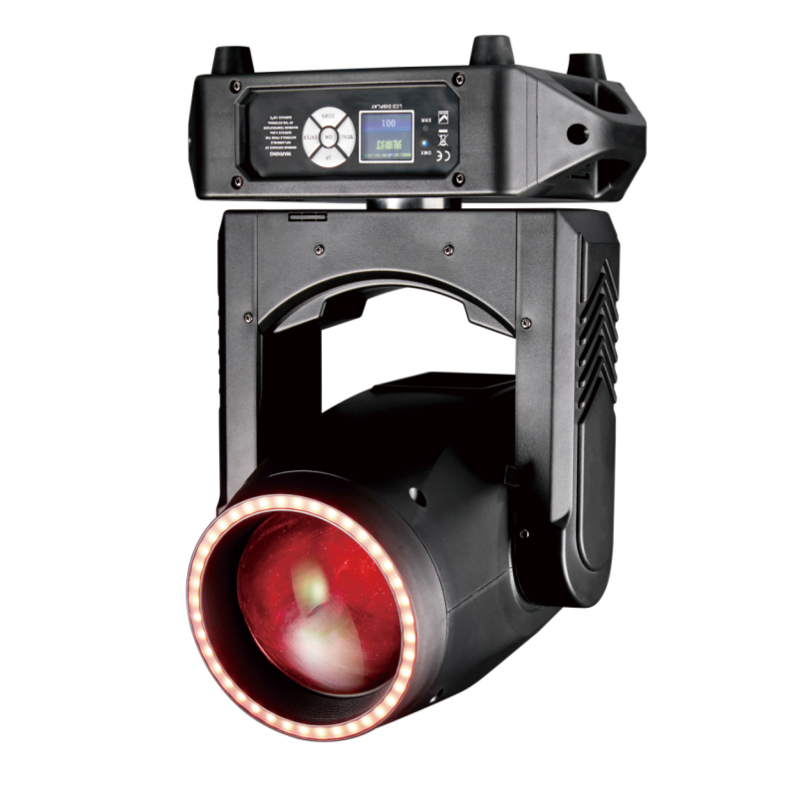
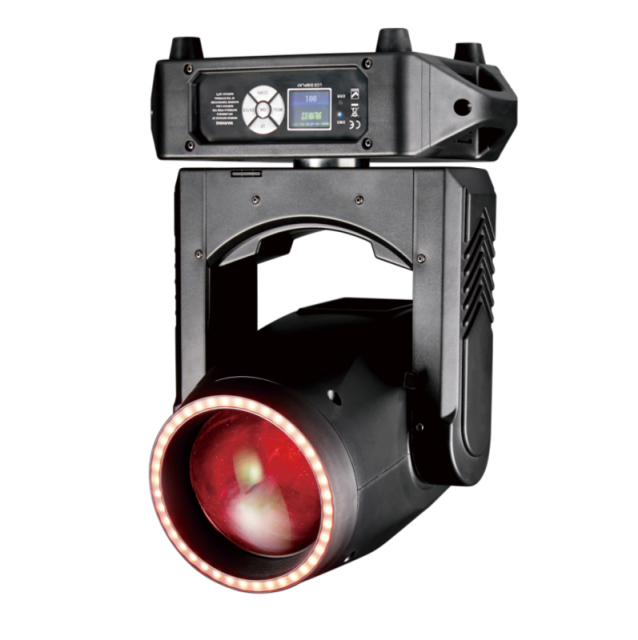
Inside the housing sit a 14-colour wheel, five glass and nine fixed gobos, an 8-facet and 16-facet prism, a 6-facet linear prism, frost and a rainbow effect, all on 22 DMX channels. It is the mini moving head light for rooms that cannot take a full-size beam, with a yoke that clamps straight onto truss or a T-bar. One person can carry it up a ladder, and that single fact is what decides the rig in a small theatre, a school hall or a bar that gets re-hung between events. If you already run older compact beams, this is the same class of dj moving head light with a cleaner gobo set and a mechanical dimmer that fades to black rather than snapping off. Rental desks tend to buy several at a time, so one case of beams can cover a club night, a marquee and a small festival stage on the same programming. That matters most months later, when a question comes up about channel mapping or service: the answer comes from the beam moving head light manufacturer that built the unit. One planning note before you buy. That is the look this fixture is made for, and it is worth checking the room can give it.
Beam Optics & Lens System
- Lens optical system — the front lens group is matched to the lamp so the column stays dense instead of washing out at the edges, which is the difference between a beam and a narrow spot.
- Mechanical dimming — the 0–100% mechanical dimmer closes the beam down smoothly, and free dimming is available when the cue calls for a slow fade rather than a snap to black.
- Gobo capacity in a small body — as a mini gobo moving head light it carries five glass gobos, nine fixed gobos and white, so fine glass detail and hard-wearing gobos live on the same fixture instead of two.
- Keeping the column centred — if the moving head beam light looks soft or off-centre after a lamp change, re-seat the lamp in its holder and check it sits square before you touch anything else in the optical path.
Color, Gobo & Effect Wheel
The colour wheel carries 14 colours plus white. Changes snap through at console speed, and the white slot is what you use when the beam should read as a clean column rather than a tinted one.
Stack the effects and the moving head beam light changes character completely: the 8-facet and 16-facet prisms fan the single column out into a bundle, the 6-facet linear prism stretches it into a bar of light, and running 8 + 16 together multiplies the beam a second time.
Two gobo wheels sit behind the colour wheel — nine fixed gobos plus white on one, five glass gobos on the other. Fixed gobos take the knocks of nightly rotation, while glass gobos hold fine structure and are the ones you reach for when a look has to be recognisable from the back of the room.
Gobo choice is what turns a mini gobo moving head light into a signature look. A glass gobo rotating slowly over a dance floor reads as texture, while a bold fixed gobo cuts harder when the beam is sweeping across the audience.
Frost softens the edge of the beam into something closer to a wash for the moments when a hard pencil is too much, the rainbow effect adds colour fringing to the column, and the strobe with macro control handles hits and drops without extra programming.
Rigging, Power & DMX Hookup
- Check the delivery before anything goes in the air: fixture, yoke and bracket, plus the clamps and leads you ordered. If a part is missing, tell your moving head light supplier the same day — it is a far easier conversation the day before the show than the hour before. Bolt a clamp to the yoke's hanging bracket, hang the moving head stage light square to the truss and fit a safety bond through the bracket before you let go.
- Set height and bracket angle first.
- Add up how many of these beam moving head lights a circuit will carry before you plug anything in, and keep audio feeds off the same leg as the lighting draw.
- Run DMX as one chain per universe, address each head before it goes up, and put a splitter in once the run gets long or the head count climbs.
- A clean star layout saves an hour of fault-finding at six in the evening.
Applications & Venue Fit
- Small theatres and school halls — a moving head stage light works here because the beam can be trimmed short and aimed over the front rows rather than into them, and the fixture fits ceilings where a bigger head would not go.
- Rental stock — one case of these covers a club night, a wedding marquee and a small festival stage, and the 22-channel layout means the same show file travels with them instead of being rebuilt per job.
- Mobile and DJ work — a dj moving head light has to survive the van, the stairs and a low T-bar; this one packs into a car boot and goes up without a second pair of hands.
- Live music — placed as a backlight behind the band, the narrow beam punches through stage haze and gives the drummer and the backline a silhouette instead of a flat wash across the riser.
- Rehearsal rooms and teaching studios — one or two mini moving head lights are enough to teach gobo, prism and chase programming without booking a full rig for the session.
Specifications
| Lamp | 230 W 7R discharge |
| Total power consumption | 270 W |
| Power input | 100–240 V, 50/60 Hz |
| Ballast and power supply | Magnetic ballast with AC/DC switching power supply; over-heat protection fitted |
| Beam angle | 0–4° |
| Colour wheel | 14 colours + white |
| Gobo wheels | 5 glass gobos + 9 fixed gobos + white |
| Prisms | 8-facet, 16-facet, 6-facet linear and 8 + 16 combination |
| Dimming, strobe and effects | 0–100% mechanical dimming with free dimming; strobe with macro control; frost and rainbow effects |
| DMX channels | 22 CH (DMX512) |
| Pan and tilt | 540° / 270°, 16-bit with electric correction |
| IP rating | IP20 |
| Product size | 246 × 185 × 460 mm |
| Net weight | 8.5 kg |
Ordering & Delivery
- Start with the room: ceiling height, throw distance, what the truss is fixed to and the console you already run. As a moving head light supplier working with clubs, rental desks and schools, we can say quickly whether a 0–4° beam is the right tool for the space.
- Confirm the quantity and what ships with it — heads only, or heads with clamps, safety bonds and DMX leads — and say whether the order is for stock or for one install.
- Confirm the commercial terms for the order: price, minimum order quantity, any volume steps, payment method and the trade terms you want to buy on. These are quoted per order, so ask your sales contact for the current figures.
- Confirm the production window and the shipping method. Units are built to order in Huadu, Guangzhou, and as a beam moving head light manufacturer we schedule production by quantity and season, so get the ship date in writing before you commit a show to it.
- Confirm what the warranty covers and how long it runs, how a faulty unit is handled, and who arranges and pays for return freight.
- Ask for the after-sales process in writing alongside the quotation.
- Confirm the paperwork: packing list, test report and the documents listed above, so customs clearance and your own service desk both have what they need on arrival.
| Document | What it covers |
|---|
| Specification sheet | Full figure set for this fixture, sent as a PDF on request |
| DMX channel chart | 22-channel map matched to the batch you receive |
| User manual | Installation, menu, addressing and maintenance notes |
| Photometric data | Photometric file for lighting-design and layout work, on request |
| Outline drawing | 2D outline for rigging plans and truss loading checks, on request |
| Console fixture profile | Ask before programming so the profile matches your desk |
| Compliance documents | Test reports for your market, confirmed for each order |
| Spare parts list | Current parts list for this model, on request |
Technical Support & Model Matching
More than 30 engineers with an average of 15+ years in professional lighting stand behind every order — the same people who answer your technical questions. Tell us your venue, rigging height, throw distance and existing control setup; we help match models, check protocol and channel fit, and build a package that works as one system. If a fixture misbehaves on site, we work through the fault with you and sort out spares. Installation and commissioning guidance come with the order. Founded in 2016, exporting since 2022, LITEVISION serves buyers in more than 80 countries from offices in the USA, Taiwan, Mexico and China.
FAQ
What kind of beam does the 230 W 7R lamp produce?
A tight one. The beam angle is 0–4°, so the beam moving head light throws a hard-edged column that holds its shape across a room instead of blooming into a wash. Aim it into haze above the audience for the classic look, or open it toward 4° and aim it at a stage when the throw is short.
How many DMX channels does the moving head beam light need?
22 channels on DMX512, covering colour, both gobo wheels, the prisms, frost, rainbow, dimming, strobe, pan and tilt. One 512-channel universe carries several heads, so a small rig usually runs from a single output. Pan and tilt are 16-bit with electric correction, which keeps long sweeps smooth and holds position when the cue stops.
Can it be used outdoors?
No — the rating is IP20, which is an indoor rating. Keep a moving head stage light of this type under a roof, away from rain, sprinklers and heavy condensation, and let it come up to room temperature before powering on after a cold transit.
Can one person hang it?
Yes. This mini moving head light is a one-person lift onto a ladder or a T-bar, and the yoke bracket takes a standard clamp. Fit a safety bond as well, and set the bracket angle before the unit is powered.
What gobos are fitted, and can I check a specific look before ordering?
The wheels carry five glass gobos, nine fixed gobos and white. If a particular look matters for a show, ask us to confirm what is on the current production run first — gobo content is the one part of a mini gobo moving head light that buyers most often want to check against a reference before building a cue around it.
Will units from different batches program the same way?
The control layout is fixed at 22 DMX channels, so a show file built on one unit maps onto the next. As a beam moving head light manufacturer we can send the channel chart for the batch you receive; check it against the existing file before you clone a tour program across new stock.
How many do I need for a small room?
Most small rooms start with a pair, spaced across a truss so the two columns cross above the audience rather than running parallel. A dj moving head light setup usually grows from two to four once the room has haze and enough ceiling height for the beams to open out before they reach the floor.