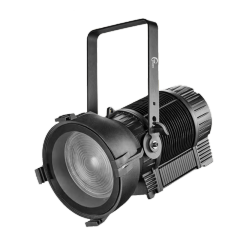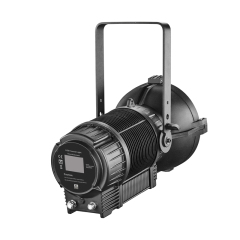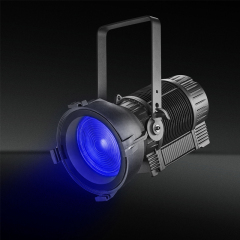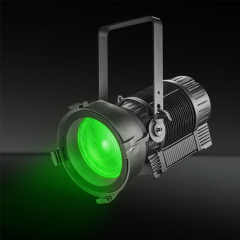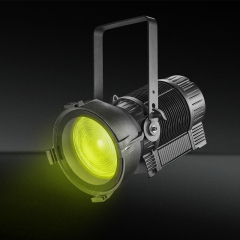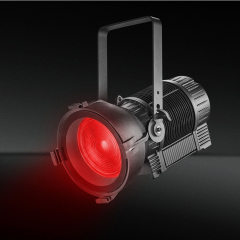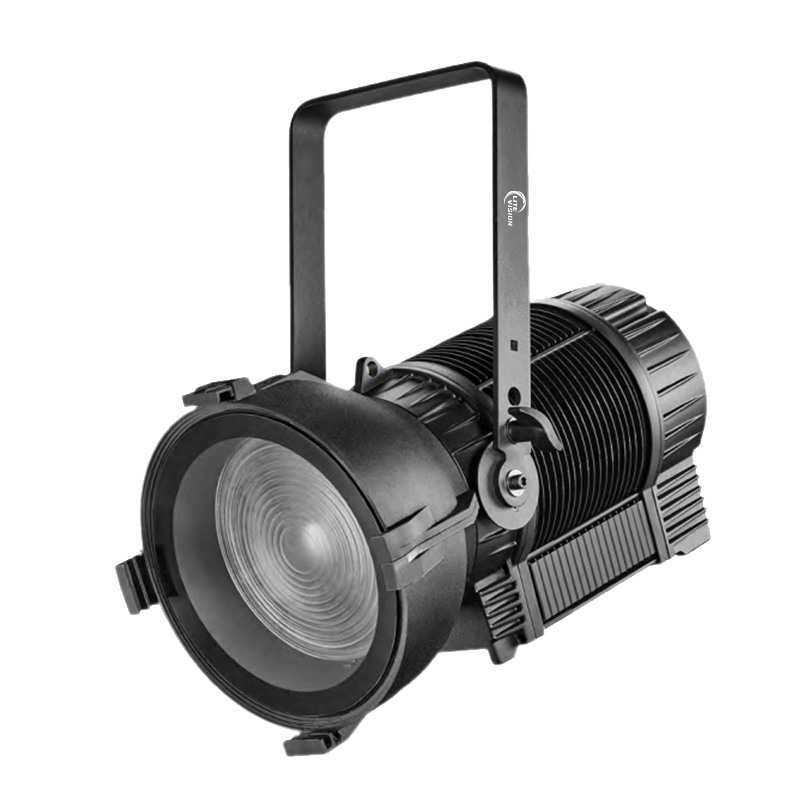
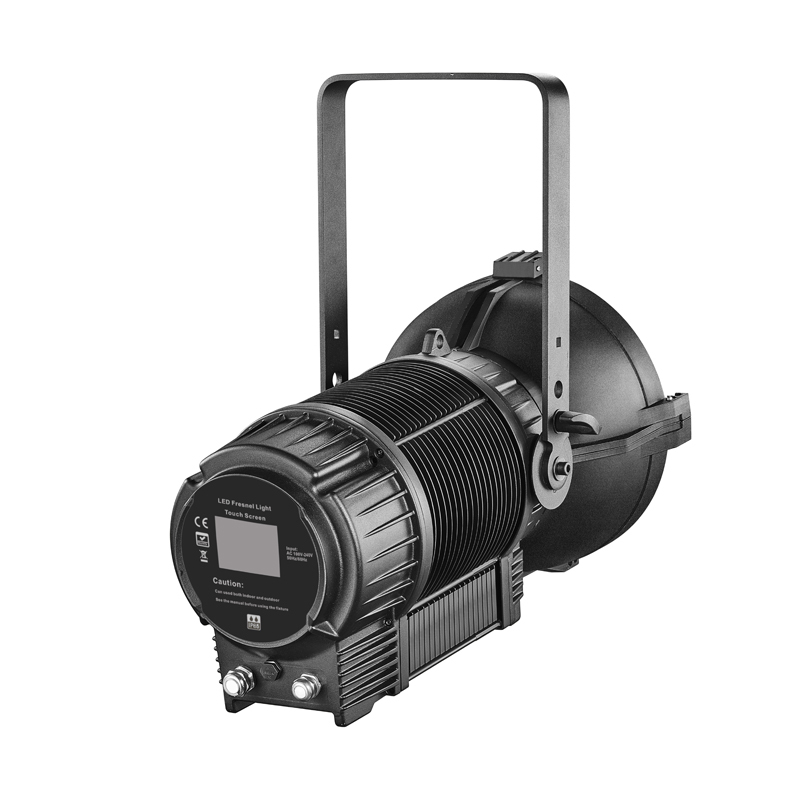
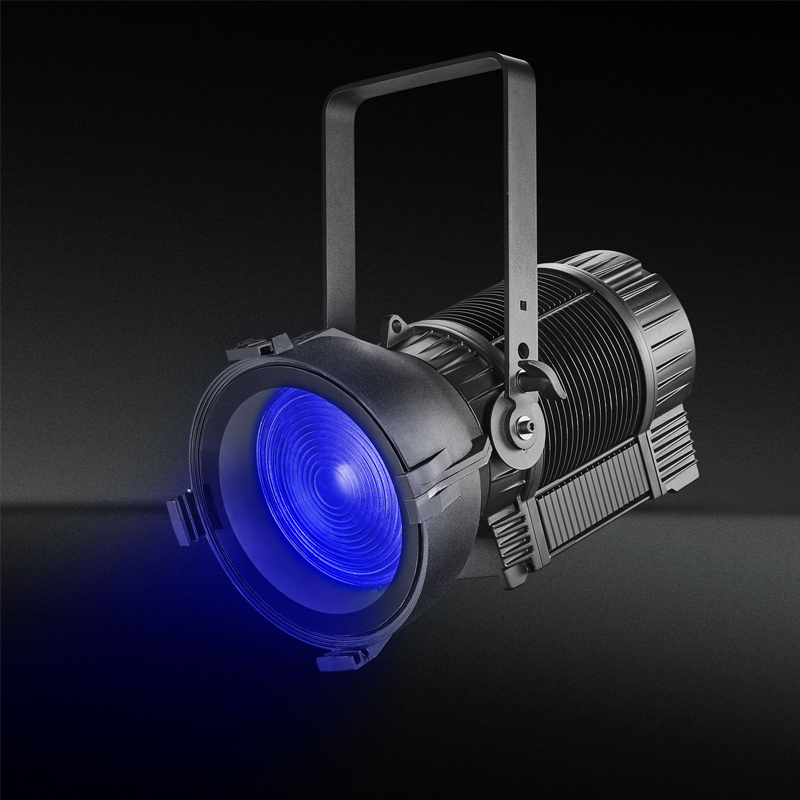
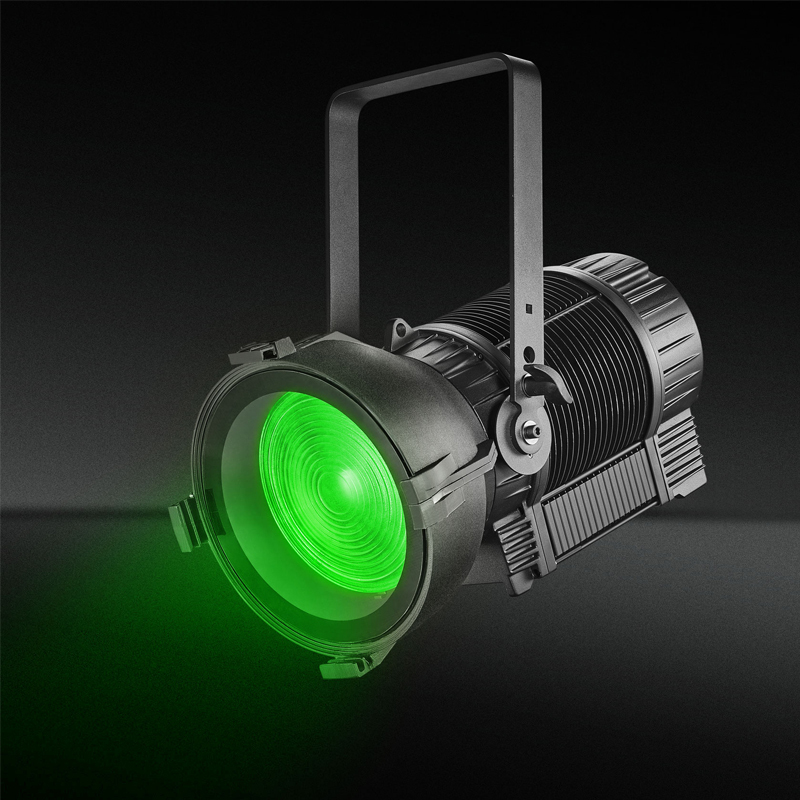
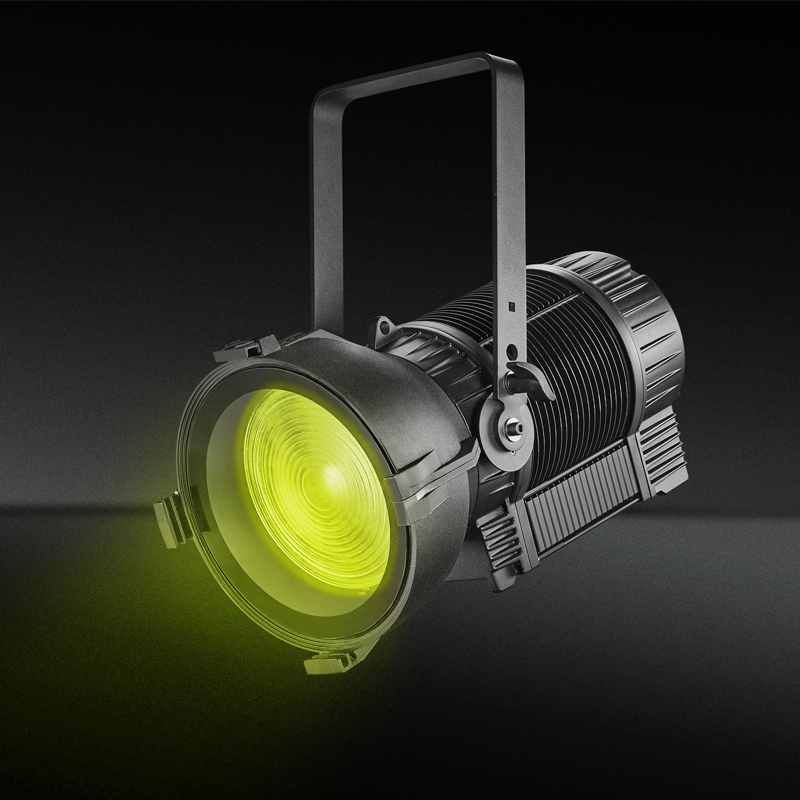
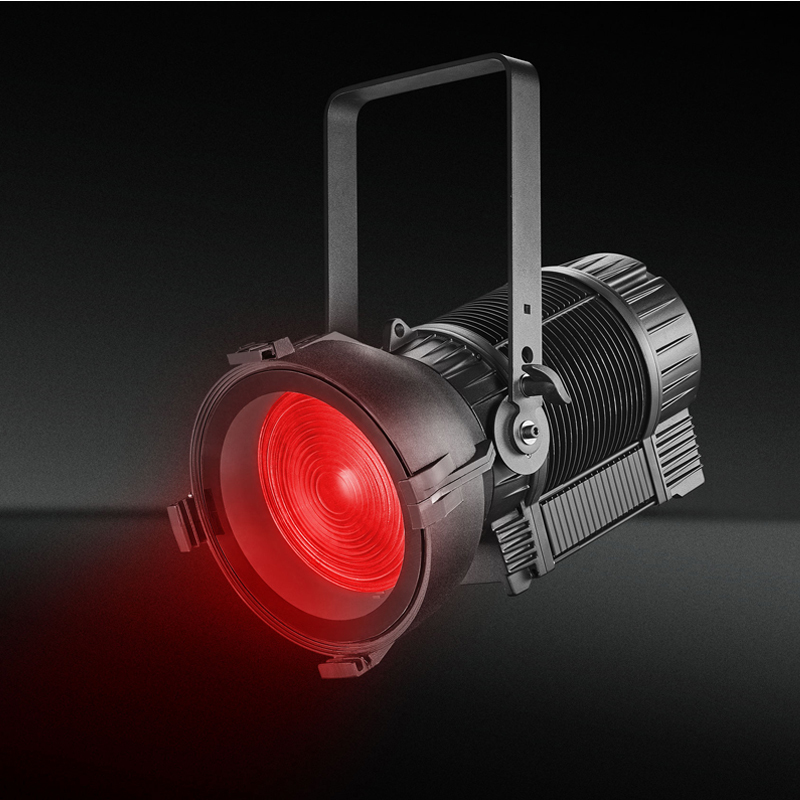
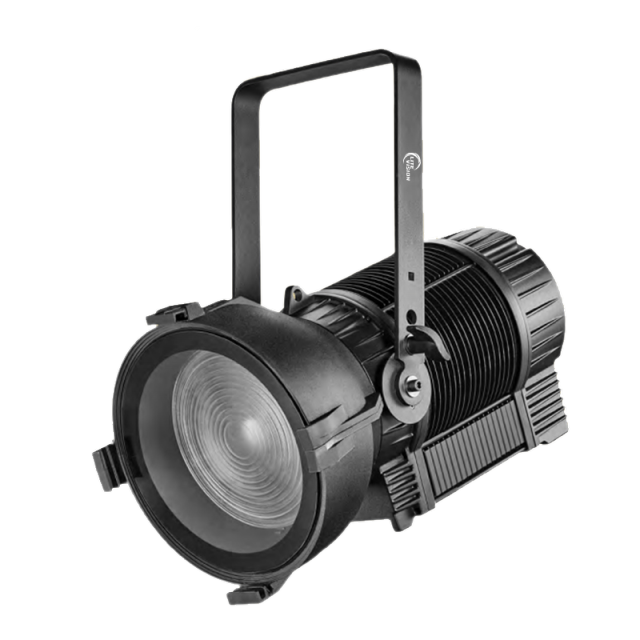
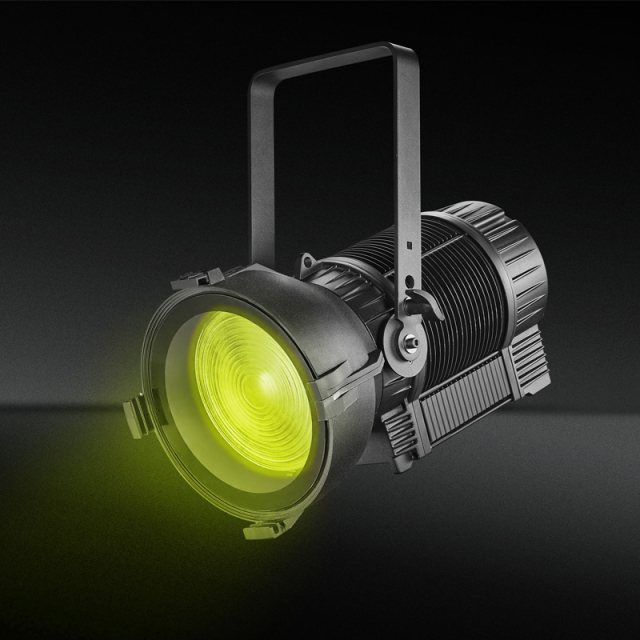
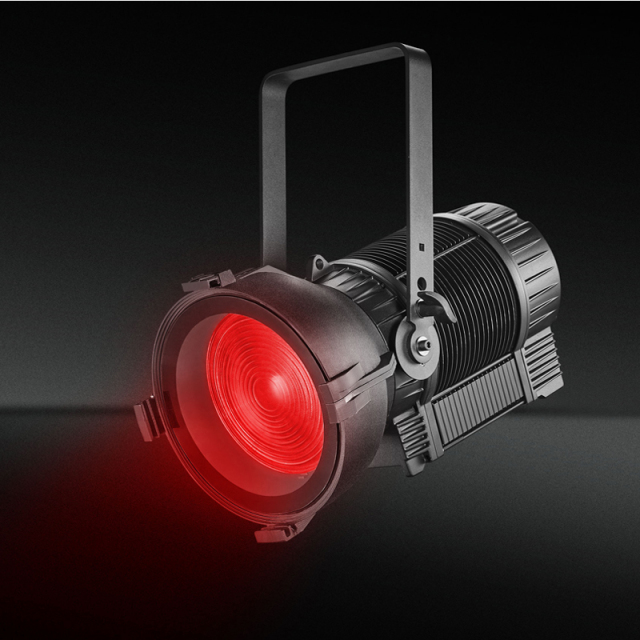
The Opera TFR300C5P is a 300 W LED fresnel in a sealed die-cast aluminium body rated IP65, built for outdoor LED stage lighting where the weather decides whether the show goes on. A glass reflector and a precision fresnel lens shape a soft, even pool of light, and the beam runs from 15° to 55° on a DMX-controlled zoom.
Open-air amphitheatres, festival stages, theme-park plazas and covered pavilions put a fixture through conditions that indoor fresnels were never designed for. This one stays rigged through dust, wind and rain, so outdoor stage lighting plots can be planned with the same fixture count and the same positions you would use indoors, without rain hoods or a last-minute reshuffle.
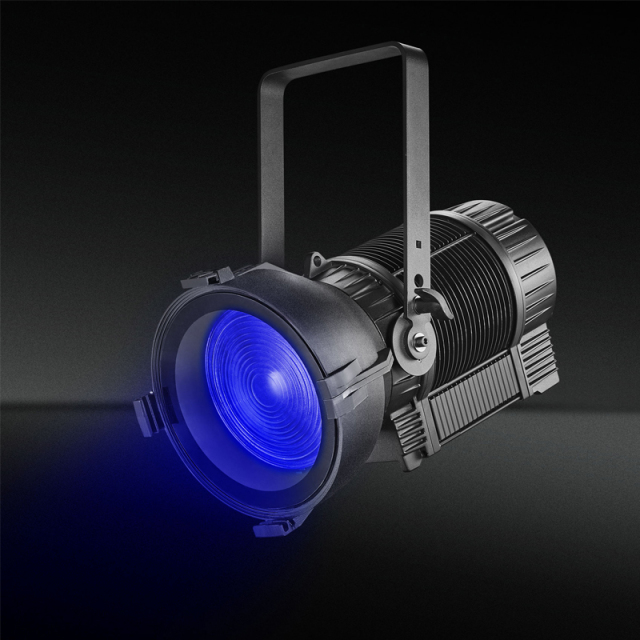
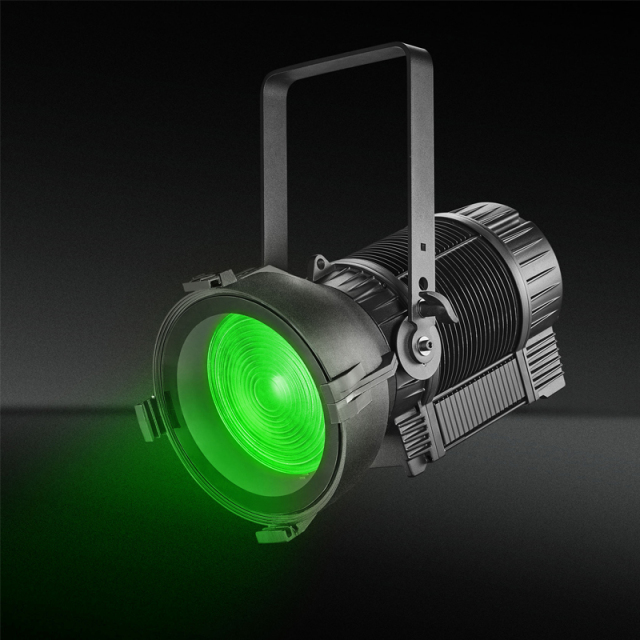
Two light engines share the housing: an RGBAL 5-in-1 version that tunes from 2,700 K to 12,000 K, and a single colour version in warm white or cool white. Bracket, menu logic and DMX layout are identical across both — a deliberate choice from a fresnel stage light manufacturer that expects a rental fleet to stay interchangeable.
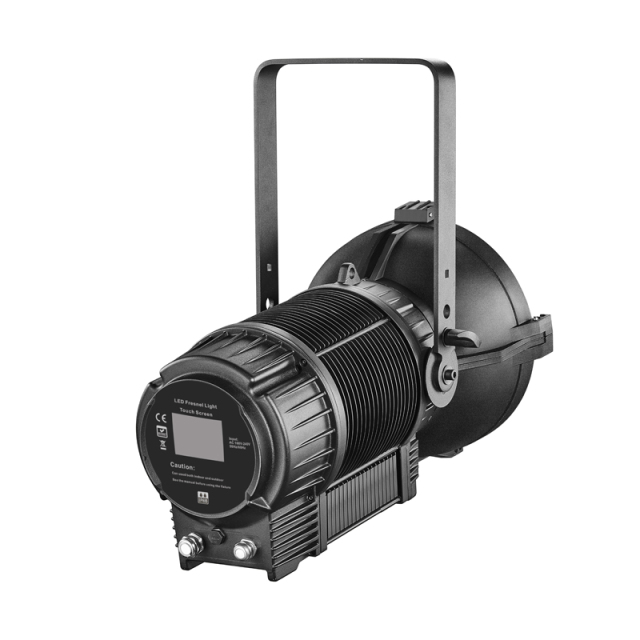
In use the fixture is addressed over DMX or RDM, focused from the LCD touch screen on the rear panel, and can run in auto or master/slave mode when no console is on site. Fan-less cooling keeps it silent during acoustic sets and on camera, which is why it sits comfortably in rigs that cover theatre, broadcast and live music.
IP65 sealed housing. The die-cast body, rear panel and connectors keep dust out and shrug off water jets, so the fixture can stay flown when the weather turns instead of being struck at the first dark cloud. 300 W LED with two colour systems. Choose the RGBAL 5-in-1 engine with tuning across 2,700–12,000 K, or a single colour WW / CW engine when a fixed white is all the plot needs. 15–55° zoom on DMX. One fixture covers a tight special on a principal and a broad stage wash, so fewer lens options have to travel with the rig. Fan-less and genuinely silent. There is no cooling fan to hear in quiet scenes; a thermal sensor watches the head and brings in over-temperature protection if it runs hot. Clean output for professional LED stage lighting. Four dimming curves — Standard, Incandescent, Quick and Linear — plus a selectable 500 Hz–25,000 Hz dimming frequency keep camera footage free of banding and keep the bottom of a fade smooth. HSIC colour management. On the 5-in-1 engine the mix holds its position as the fixture dims, so a cue that fades out does not drift through green or magenta on the way down. Fits the rest of the rig. Yoke bracket, clamp pattern and menu structure match the LED stage lighting fixtures around it, so a crew is not learning a new interface for every position on the bar. LCD touch screen plus RDM. Address, patch and configure from the rear panel, or push the address over RDM from the desk without sending anyone up a ladder.
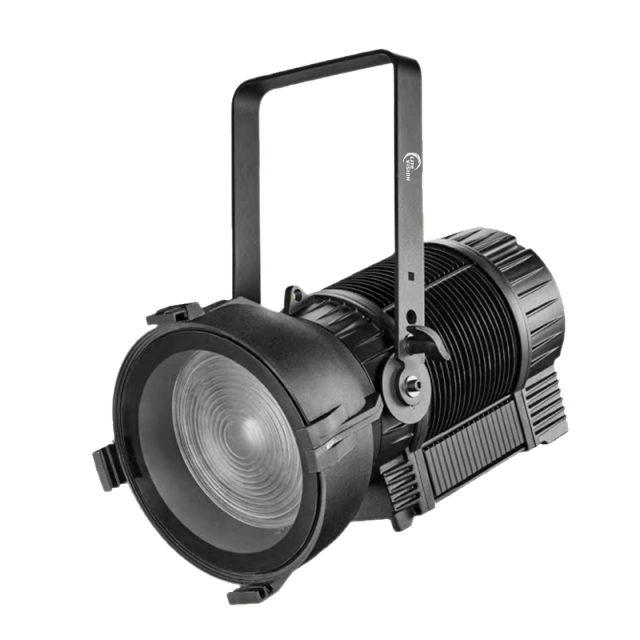
A fresnel lens in front of a glass reflector produces a soft-edged pool with a gentle falloff — the opposite of the hard cut a profile gives you. That is the shape most professional LED stage lighting plots want for face light, side light and general cover, because overlapping edges blend instead of drawing lines across the floor.
Choose the engine by how you work. The RGBAL 5-in-1 runs from 2,700 K to 12,000 K and mixes inside the fixture, which suits rental stock that has to become warm candlelight one night and a cold 9,000 K wash the next. The single colour WW / CW version is the more direct choice for a fixed look and covers most theater stage lighting front-light positions without asking anyone to think about colour mixing.
HSIC colour management keeps the mix stable through a dimmer move, and the four curves — Standard, Incandescent, Quick and Linear — let an operator match the response of older tungsten stock or keep the fade dead linear for cue-heavy shows.
Dimming frequency is selectable from 500 Hz to 25,000 Hz. Raise it when a camera is in the room and banding appears in the viewfinder, and drop it back for straight theatrical use. Strobe runs from 1 to 25 flashes per second when a scene asks for it.
Control is deliberately simple. RDM lets the desk read and set the address remotely, the 6/12-channel 5-in-1 mode carries full colour, zoom and dimming resolution, and the 2/4-channel single colour mode keeps the patch small. The fixture behaves like any other unit on your DMX lighting controller, and auto-run or master/slave covers the days when no desk is plugged in.
| Light source | 300 W LED |
| Colour options | RGBAL 5-in-1 (300 W) or single colour WW / CW (300 W) |
| Colour temperature | 2,700–12,000 K, 5-in-1 version |
| Beam angle | 15–55°, zoom controlled by DMX |
| Dimming | 4 curves, 500 Hz–25,000 Hz frequency range |
| Strobe | 1–25 times per second |
| Control | RDM / DMX, auto run and master/slave |
| DMX channels | 6 / 12 ch (5-in-1); 2 / 4 ch (single colour) |
| Optics | Glass reflector, fresnel lens, HSIC colour management |
| Body and display | Die-cast aluminium housing with LCD touch screen |
| Cooling | Fan-less, thermal sensor with over-temperature protection |
| IP rating | IP65 |
| Power supply | AC 100–240 V, 300 W maximum |
| Working temperature | -10 °C to 40 °C |
| Specification sheet | Power, optics, control, weight and packing for this model |
| DMX channel chart | Channel layout for the 6/12-channel 5-in-1 and 2/4-channel single colour modes |
| Photometric data | Beam angle and illuminance reference for throw and position planning |
| User manual | Menu navigation, DMX addressing, zoom and dimming setup |
| Fixture library profile | Console and visualiser profile for this model |
| CAD drawing | Body dimensions and rigging points for venue and truss drawings |
| Certification documents | CE, RoHS and UL paperwork for tender and customs files |
| Spare parts list | Front accessory frame, yoke bracket, control panel and other service items |
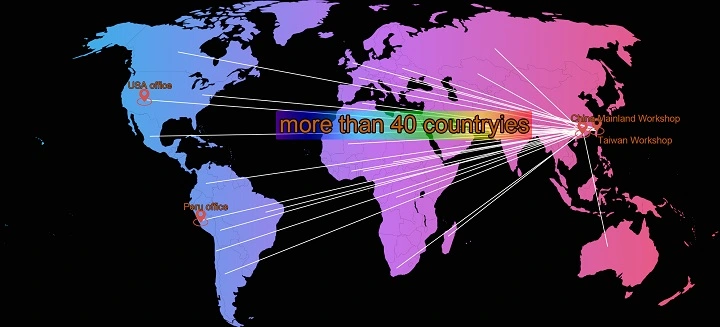
More than 30 engineers with an average of 15+ years in professional lighting stand behind every order — the same people who answer your technical questions. Tell us your venue, rigging height, throw distance and existing control setup; we help match models, check protocol and channel fit, and build a package that works as one system. If a fixture misbehaves on site, we work through the fault with you and sort out spares. Installation and commissioning guidance come with the order. Founded in 2016, exporting since 2022, LITEVISION serves buyers in more than 80 countries from offices in the USA, Taiwan, Mexico and China.
This fixture is built in our own plant in Huadu, Guangzhou. We work as an LED fresnel light manufacturer rather than a reseller: optics, die-cast housings and electronics are assembled and tested under one roof, so a replacement unit behaves like the one it replaces instead of like a different product wearing the same name. Quality control is a process here, not a final glance. Every unit goes through thermal, electrical and longevity testing, then an independent QC team inspects each machine and issues a qualification report before it is released to the warehouse. The same routine covers our other LED stage lighting fixtures, so a mixed order arrives to one standard. Our products hold CE, RoHS, UL and ISO 9001 certification. Because each market asks for a different set of paperwork, our QC department keeps the test reports and certificates and issues the combination your tender or customs file needs. The range around this fixture is deliberately broad. Opera static lights cover theatre, broadcast and studio work — profiles, soft panels and indoor fresnels — while the Archi outdoor family handles city colour, laser beams and strobe. Annual output runs above 50,000 units, so a fresnel stage light manufacturer can supply a whole rig rather than one position, and keep supplying it season after season. Custom work goes through the same engineers. If a project needs a modified control layout, a different bracket or a version built to your specification, our design team works from your drawings and R&D builds the sample. After delivery, technical support and spare parts come from the team that built the fixture.