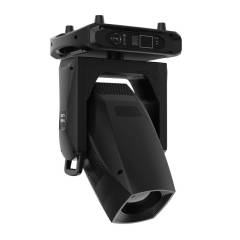
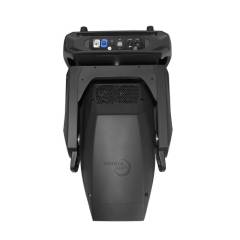
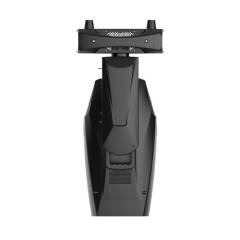
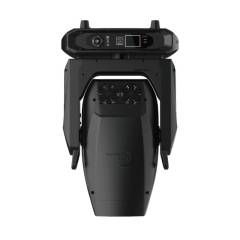
Product Overview
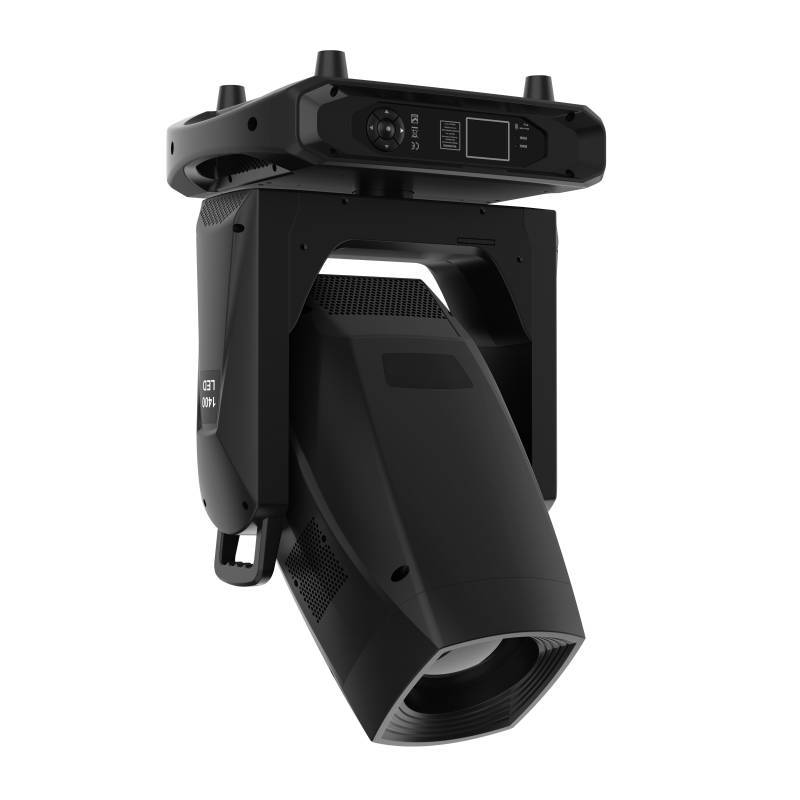
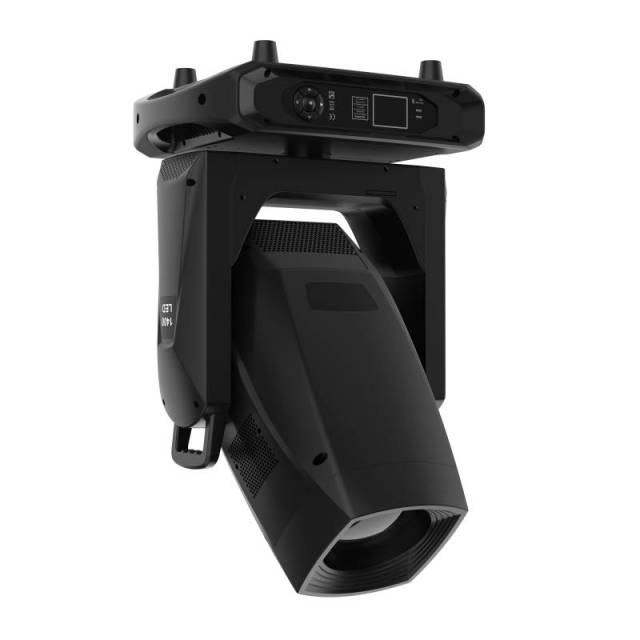
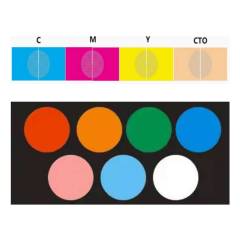
For theatre and school-stage productions, the Framing L1400 LED 1400W BSWF Moving Head combines beam, spot, wash and framing functions in a fixture rated at 1400 W with a 1200 W LED module. Four independently positionable shutter blades with ±90° rotation shape light around scenery and performance zones, while motorized linear zoom from 5.5°–60° adjusts coverage for tightly directed cues or wider stage looks. A 6%–100% iris controls circular pools of light, and a dual frost system softens projection for wash work. Independent CMY mixing, linear CTO adjustment from 2800–6500 K and six fixed colours support varied colour cues, with Ra >70 in standard mode and Ra >90 in high-CRI mode.
Framing & Beam Control
- Four independently positionable shutter blades shape the illuminated area around scenery, stage openings and performance zones. Each blade can close separately, giving the moving head spot light control over individual edges rather than requiring every side to move together.
- Blade rotation of +/- 90° supports angled cuts for sloping set pieces and diagonal stage compositions. During theatre and school-stage rehearsals, check the cut against the actual scenery from the intended hanging position.
- Fast motorized linear zoom spans 5.5°–60°, moving from a concentrated beam towards broad coverage. Zoom changes the field size, so it can support both tightly directed cues and wider stage looks within the same production.
- Smooth iris adjustment from 6%–100% reduces or opens the circular aperture. Use this control on the led profile light when a round pool of light suits the scene, while reserving the shutters for shaped edges.
- A dual frost system softens projection for wash work. The moving head wash light function suits transitions into blended scenic colour where a sharply defined pattern would distract from the performance.
- Beam, spot, wash and framing functions can be programmed as distinct cue states. Build the required look from its separate optical controls, then rehearse transitions so changes in coverage and edge treatment happen at the intended moment.
Light Source Specifications
| Fixture type | LED moving head stage light |
| Rated fixture power | 1400 W |
| Light source | 1200 W LED module |
| Rated LED service life | 20,000 hours |
| Source colour temperature | 6500 K |
| Specified luminous flux | 38,000 lm |
| Front lens diameter | 150 mm |
| Dimming range and response | 0–100% with linear adjustment |
| Maximum strobe frequency | 25 Hz |
| Selectable strobe effects | Random strobe and pulse strobe |
| AC supply voltage | 100–240 V |
| Supply frequency | 50/60 Hz |
Colour & Rendering
Standard mode provides Ra >70, while high-CRI mode provides Ra >90. For costume, skin-tone and scenic-material work, the led profile light offers a separate rendering mode rather than applying the higher rating to every operating condition.
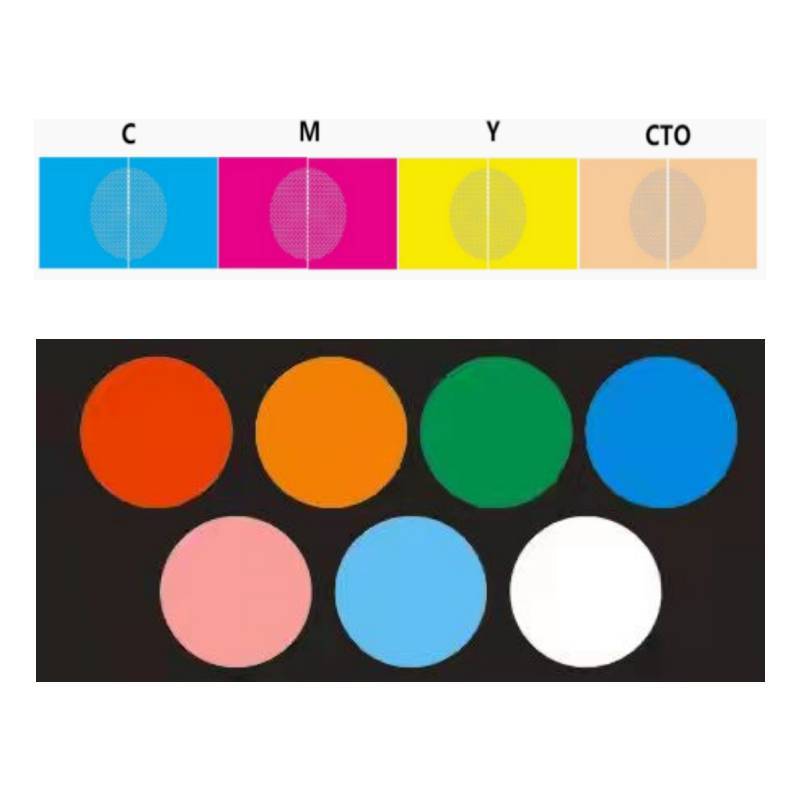
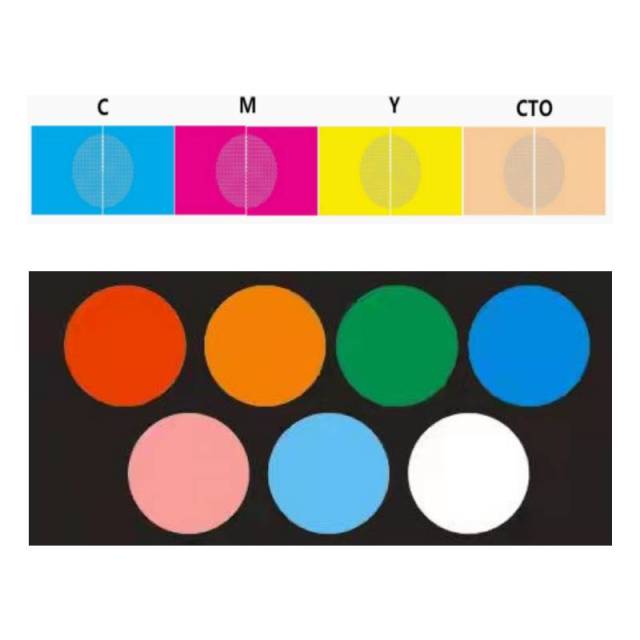
Independent CMY colour mixing supports continuous changes between programmed colours. For moving head wash light cues, gradual mixing is useful when a scene needs to change mood without a sudden jump between fixed filter positions.
Independent CTO adjustment runs linearly from 2800–6500 K. This gives the designer a warmer-to-cooler range for coordinating the fixture with other stage sources or changing the apparent warmth of a scene.
Six fixed colours plus an open position provide another route to repeatable colour cues. The open position removes the fixed-colour filter from that wheel; the final appearance still depends on the other optical settings in use.
Colour mixing and colour-temperature adjustment serve different purposes. Establish the required white tone before building coloured looks, and check important costume and scenery colours under the finished cue rather than relying on a console colour swatch.
Rendering ratings apply to their named modes. Ask your led moving head light supplier or moving head light factory for a mode-specific test report covering output in high-CRI operation and the measurement conditions for rendering; do not assume identical brightness across both modes.
Gobos & Effects
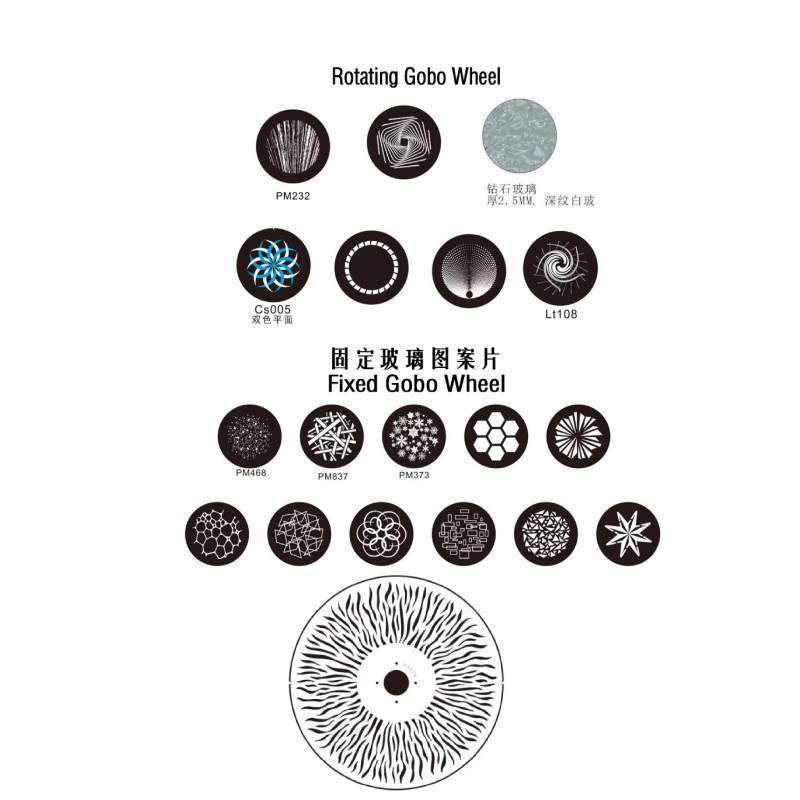
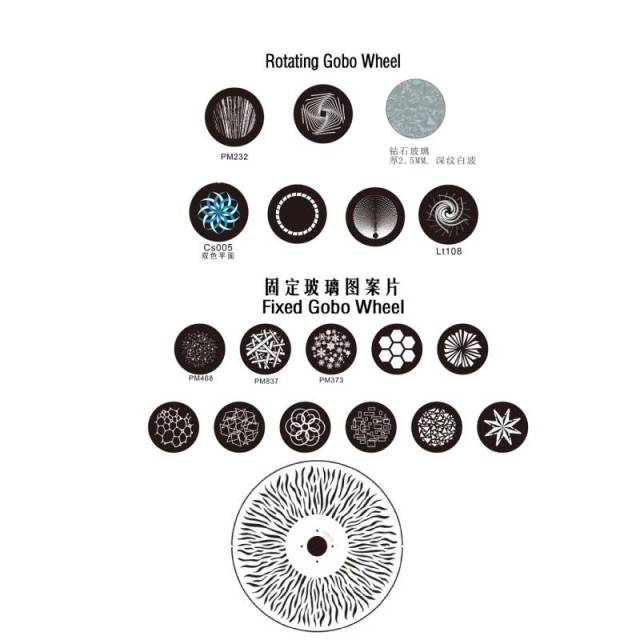
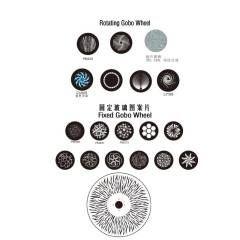
- Eleven plug-in fixed gobos, each with a 25.4 mm outer diameter, are fitted alongside an open position. This wheel gives the moving head spot light a range of static projected patterns for scenic texture and graphic stage looks.
- Seven pluggable rotating gobos have a 26.9 mm outer diameter, 16.5 mm effective diameter and 1.1 mm thickness, with an open position also available. Ask your led moving head light supplier to confirm with the moving head light factory that replacement elements for the gobo moving head light match the full fitting requirements, not just the outer diameter.
- A rotating three-faced prism multiplies the projected image for broader, repeated compositions. It provides a different visual structure from a single projected pattern and suits cues where repetition is part of the design.
- A six-faced linear prism produces a linear multiplication effect. Its arrangement offers a contrasting pattern layout for stage compositions that need a more directional spread.
- Both prisms can be overlaid, allowing their effects to combine. Rehearse the combined look on the actual projection surface, since overlapping images can change the visibility of the original pattern.
- A dynamic effect wheel creates moving textures such as simulated flames and flowing water. These effects suit scenic sequences in which an animated surface treatment contributes more than a static image.
Dimensions & Operating Limits
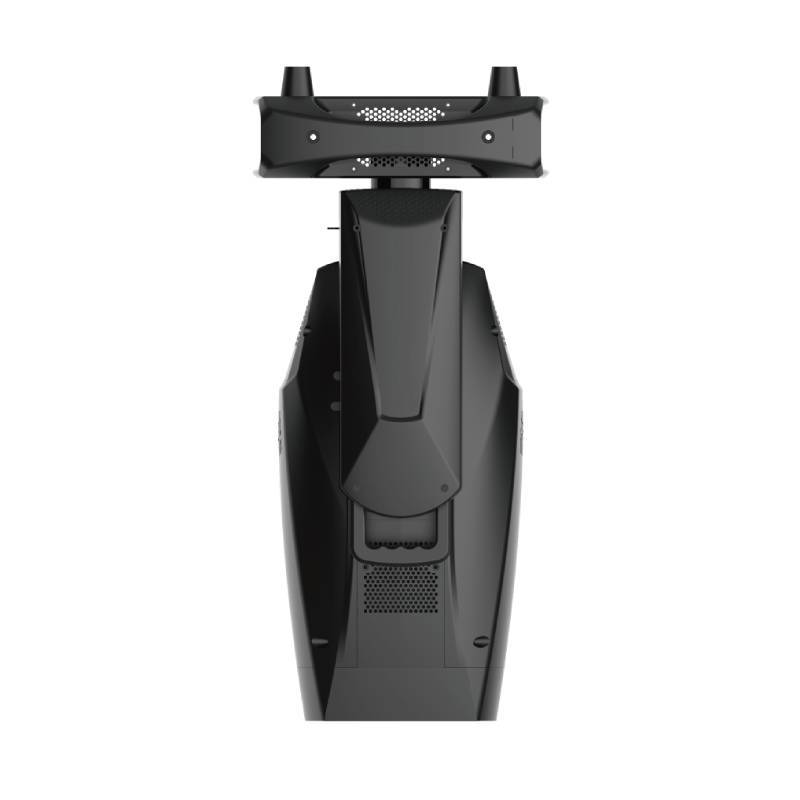
| Product dimensions | 510 × 345 × 800 mm |
| Product net weight | 43 kg |
| Carton dimensions | 730 × 690 × 590 mm |
| Gross weight with carton | 51.5 kg |
| Flight-case dimensions | 950 × 580 × 830 mm |
| Flight-case gross weight | 96 kg |
| Housing properties | Flame retardant and resistant to high temperatures |
| Housing finish | Black |
| Mounting hardware | Foldable integrated light hook |
| Ingress protection rating | IP20 |
| Operating location | Dry indoor environments |
| Operating ambient temperature | 0–45 °C |
Installation & Connections
- Before raising the yoke-mounted head, have a qualified installer check the supporting structure and the complete suspended load, including mounting hardware and cabling. Body dimensions do not describe the full moving clearance, so allow space for the head and yoke throughout their travel.
- The foldable integrated light hook provides the fixture's mounting arrangement. Use the approved attachment method and an appropriate secondary safety attachment specified by the operating instructions; never use a ventilation opening or a moving part as an attachment point.
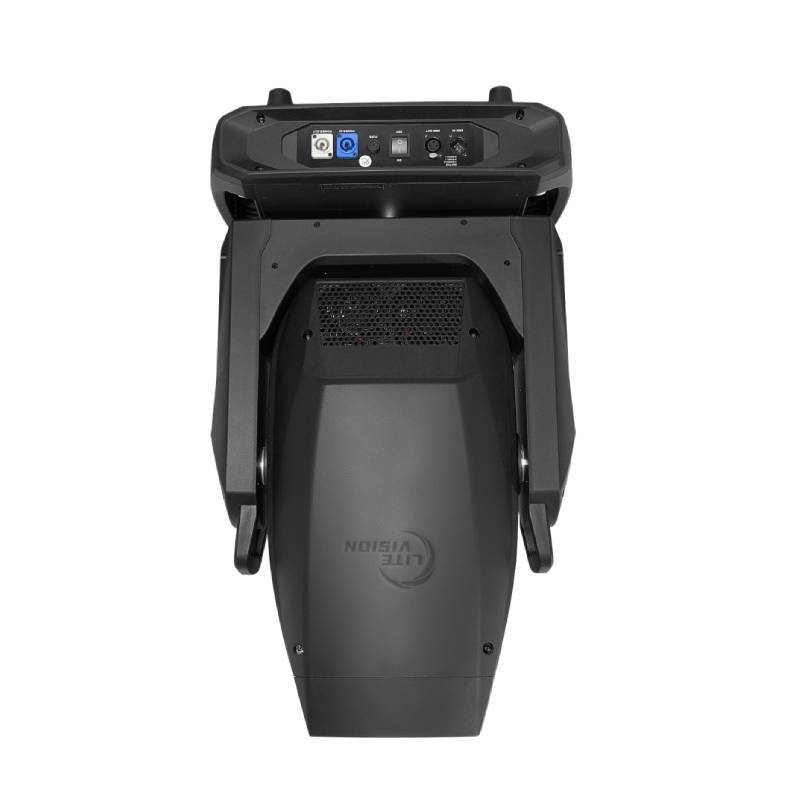
- AC100-240V, 50/60Hz is the specified supply range. Before connection, verify the power inlet type, protective-earth connection, cable requirements, operating current and inrush information against the fixture label and electrical instructions; use these details to size the circuit and protective devices.
- Route power and signal cables so the dmx moving head light can move without pulling, trapping or sharply bending them. Keep connections accessible for inspection and use suitable DMX cable and termination for the installed data line.
- IP20 operation requires a dry indoor location protected from rain and splashing. Keep the ventilated housing and rear grille clear of drapes, loose material and other obstructions, and follow the manual's clearance requirements rather than judging airflow from appearance alone.
- After mechanical and electrical checks, run a controlled commissioning sequence before an audience enters the space. Check movement clearance, cable behaviour and the programmed output, then record any abnormal movement, connection fault or operating warning for correction before normal use.
Movement & Control
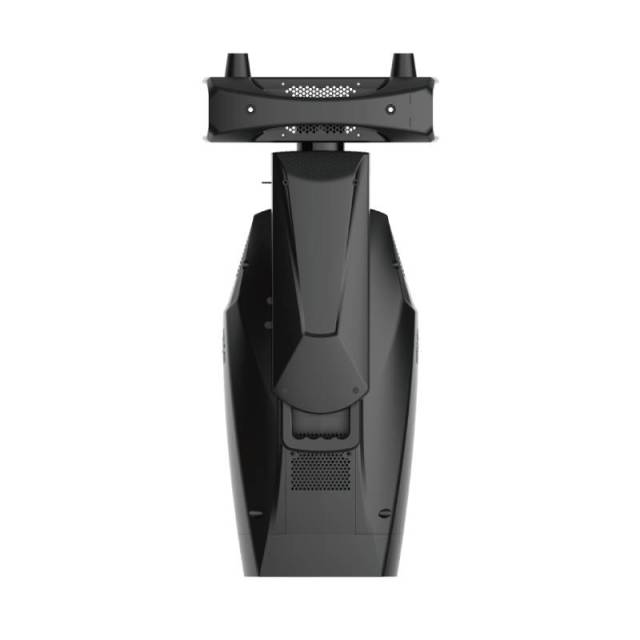
540° pan and 270° tilt provide the movement range, with 16-bit precision scanning on both axes. A five-phase motor with magnetic-encoding role supports the moving head stage light's programmed movement; build travel paths around the physical set and audience sightlines.
DMX512 and RDM are supported, and the channel mode is 36CHs. Patch the dmx moving head light using the matching personality so the console's controls correspond to the fixture's actual channel definitions.
Auto mode, master-slave operation and sound activation provide alternatives to continuous console playback. Auto operation suits a prepared standalone look, master-slave operation coordinates linked fixtures, and sound activation follows an audio-responsive operating approach rather than a precisely timed theatrical cue stack.
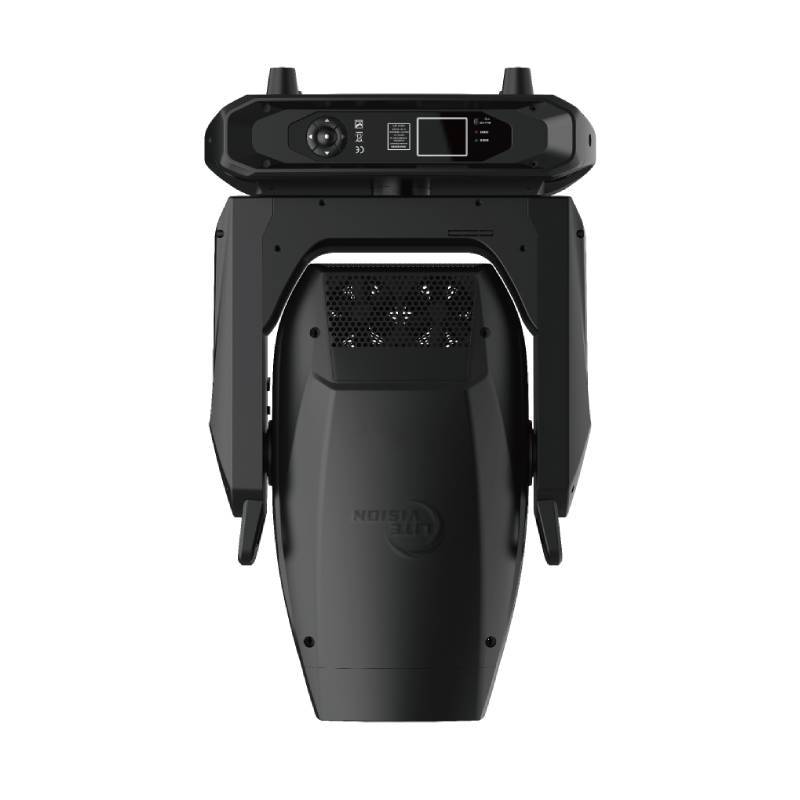
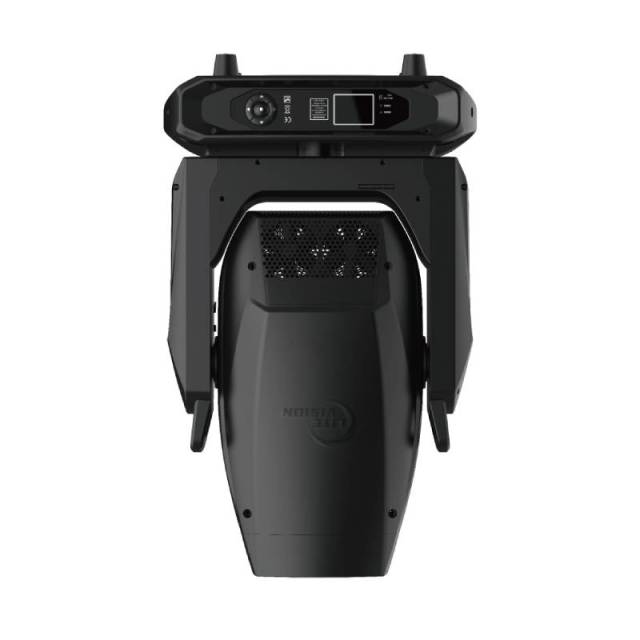
A 2.8-inch touch LCD provides Chinese and English menus, with 180° display rotation for reading the interface in different mounting orientations. Local setup remains useful for checking the operating mode and fixture settings during installation or fault diagnosis.
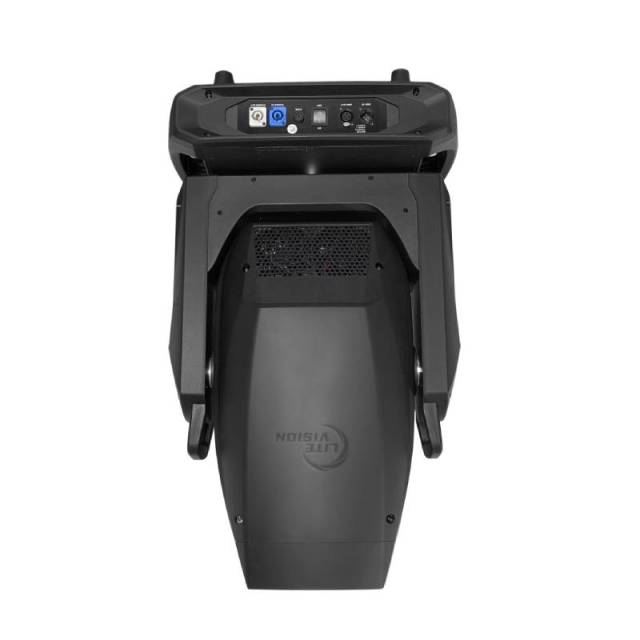
The signal interface uses three-pin XLR, with five-pin XLR optional. Match the actual fitted connector to the venue's data cabling; a connector adapter alone does not establish that the console personality is correct.
Console libraries, visualizer personalities and firmware revisions need to agree with the fixtures in use. For multi-unit systems, keep a record of firmware and channel definitions, and verify indexed effects, dimming behaviour and movement commands before copying programming across the entire rig.
Stage Fixture Pairings
- Theatre and school-stage rigs: pair Framing L1400 with dedicated front lights. Let the front lights maintain performer visibility while L1400 handles changing scenic areas and special cues. Rehearse entrances and exits so a moving effect does not leave a performer without the intended front light.
- Broad stage colour: our 7×60W RGBW Bee Eye zoom wash light is a complementary option for general colour coverage and visible Aura effects. Assign the wash fixtures to sustained colour layers and reserve L1400 for selected areas within the scene. Compare both fixtures on the actual scenery before saving shared colour presets; matching console values alone does not guarantee a visual match.
- Pixel and rhythmic effects: Tornado IP1000D can add individually controlled LED patterns and auxiliary white-light accents around L1400's scenic work. Keep pixel chases in separate programming groups so you can adjust their intensity and timing without changing the main illumination.
- Concert and club accents: our LED dual-tube strobe can provide dedicated rhythmic hits while L1400 maintains the underlying scenic cue. Programme those accents separately and check the combined look from audience positions, particularly when projected detail needs to remain visible.
- Additional beam and pattern effects: Archi IP650BSW offers a lamp-based BSW option alongside the LED framing fixture. Use the two models for separate visual tasks, and compare brightness, white tone and projected pattern scale at the intended throw distance before treating their cues as interchangeable.
- Mixed-fixture show control: build separate fixture groups and palettes for each model, then combine them into shared scenes. Check each model's console personality and test crossfades together; complementary stage use does not establish interchangeable channel maps, accessories or replacement components.
Technical Downloads
- For a theatre lighting plot, obtain the model-specific specification sheet for the moving head stage light and retain its revision with the design documents. Direct-download availability for the required files needs confirmation; a document title alone does not establish that the correct revision is available.
- For mounting, servicing and replacement work, obtain the complete operating manual, installation drawing and electrical connection diagram. The gobo moving head light also needs component-fitting instructions before any internal optical element is changed.
- For console programming, obtain the full DMX channel chart and the corresponding fixture personality. The dmx moving head light's chart should identify channel functions, value ranges, reset commands and any restrictions that affect playback.
- For coverage calculations, obtain photometric files or measured illuminance data at relevant throw distances and zoom settings. Reports should identify the rendering mode and optical configuration, so comparisons do not mix open output with filtered or effect-modified output.
- For recorded performance or quiet theatre, obtain camera and acoustic test results under stated conditions. Camera checks should identify frame rate, shutter settings and dimming behaviour; acoustic measurements should identify measurement distance, ambient noise and fan operating conditions.
- For the destination market, obtain applicable model-specific safety and environmental documentation before final installation approval. Reports and declarations should identify the actual fixture and electrical configuration; a mark visible on a housing photograph does not replace those documents.
Care & Fault Handling
Between hires or production runs, inspect Framing L1400 with the power disconnected and the fixture fully cooled. Check the external lens, ventilation surfaces, cables, connectors and mounting hardware for dirt, damage or looseness. Base the inspection schedule on operating hours, transport frequency and venue conditions rather than assuming every installation needs the same interval.
Clean accessible external optics with materials approved in the operating manual. Remove loose dust gently before wiping, and avoid abrasive cloths, unapproved solvents or liquid sprayed directly onto the fixture. Keep internal optical cleaning, alignment and access behind covers with a qualified service technician.
During equipment preparation, check for obstructed ventilation, damaged cable jackets and bent connector contacts. Remove a fixture with damaged electrical connections or mounting hardware from service. Do not force the head or an optical mechanism to overcome resistance; report the affected movement or function for inspection.
For storage and transport, let the fixture cool and dry before packing it. Support it in a suitable protective case, secure loose accessories separately and keep pressure off the front lens and moving assemblies. After transport, inspect the fixture before returning it to the rig, especially if the case shows signs of impact.
For a repeatable fault, record the model identification, serial number, firmware version if accessible, affected function, displayed message and the cue or command that triggers it. Include whether the problem appears at startup, after warming up or only during particular movements. A short video showing both the symptom and the relevant control settings helps our technical team understand the issue.
For unexpected control behaviour, have your technician compare the affected fixture with a working unit using a known working signal cable and the same intended settings. Change one variable at a time and record the result. Stop operation if there is an unusual smell, visible damage or abnormal mechanical noise; repeated resets are not a repair.
Replacement parts need to match the actual assembly and revision fitted to your fixture. Provide photographs of the component label and its connections before ordering, and ask us to establish the correct part reference, availability and fitting instructions. Similar appearance alone does not establish interchangeability, and internal electrical or optical replacement work belongs with a qualified technician.
Before authorising repair or returning a fixture, request the written warranty duration, covered components, exclusions and responsibility for labour and freight. For a delivery defect or quality concern, retain the packaging and provide photographs, identification details and a description of the problem. Agree the inspection, repair, replacement or return arrangement with us before dispatch; coverage and the appropriate remedy depend on the agreed terms.
Technical Support & Model Matching
LITEVISION brings together more than 30 engineers who have worked in the industry for an average of 15+ years. Share your purchasing requirements and the models you are considering to discuss the available options with our team. We provide product maintenance and technical support, with customer service staff available to answer your questions and help address issues. Whether you are comparing options before ordering or need assistance after purchase, contact us with your technical questions and maintenance concerns.
FAQ
Can the gobo moving head light add depth to a flat stage set?
Projected texture can break up an otherwise uniform surface and help separate foreground scenery from the backdrop. Try an oblique projection angle and keep the pattern scale appropriate to the set detail. For the moving head spot light, a textured cue can complement scenic paint without covering every visible surface with the same pattern.
How can I balance the moving head wash light with separate backdrop fixtures?
Give the backdrop fixtures responsibility for an even background, then use this model for selected scenic or performance cues. Balance their levels from the audience's viewing position so the background supports the subject. Separate effect fixtures can add accents while the main lighting cue stays readable; shared control wiring still requires each fixture to have its own correct console personality.
What routine care does the led profile light need?
Dust on external optics and ventilation surfaces needs regular attention according to the operating manual and the venue's conditions. Isolate the power and let the fixture cool before cleaning, use suitable optical-cleaning materials, and avoid spraying liquid into the housing. Leave internal cleaning and alignment to a qualified technician.
What details help diagnose a movement or optical fault?
Record the affected function, the command that triggers the fault, any displayed message and whether the behaviour changes after a normal restart. A short recording of the repeatable symptom helps distinguish a control problem from a mechanical or optical issue. Internal replacement work requires the correct component identification and service instructions; no universal replacement interval applies to every operating environment.