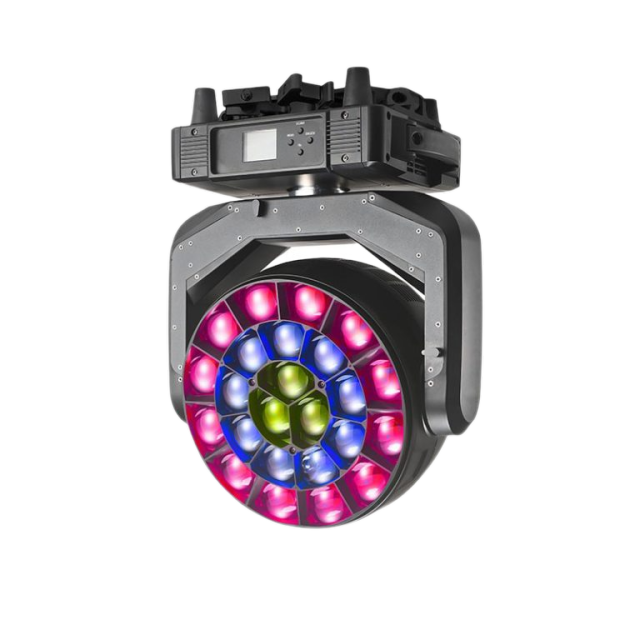
Product Overview
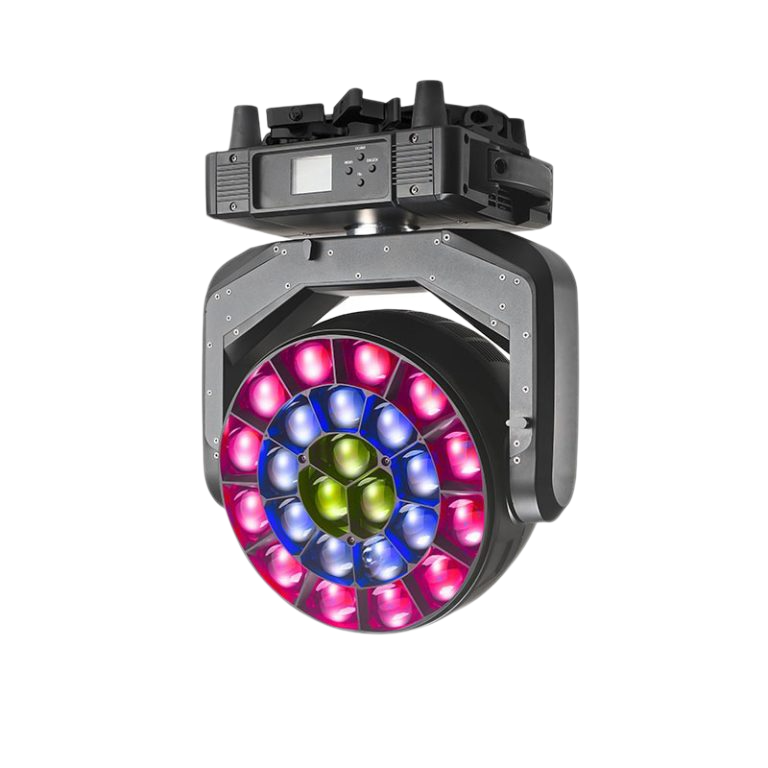
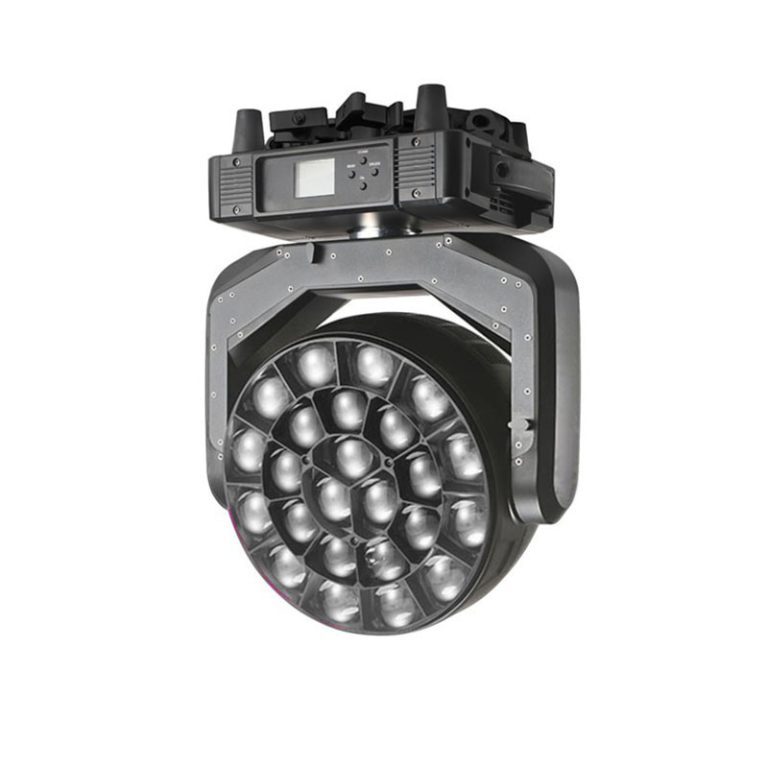
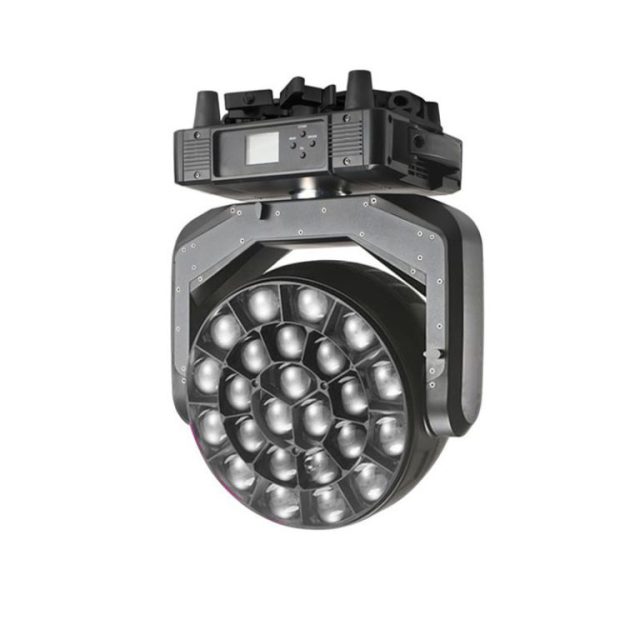
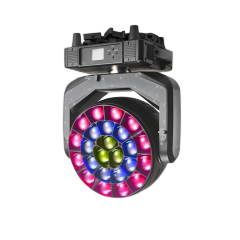
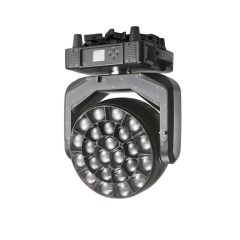
It is aimed at arena floors, touring stages and broadcast studios where a single hang has to serve beams, washes and colour effects inside the same cue list. The head is a circular LED array behind a glass light guide and a PMMA lens. Close the zoom and the array collapses into a defined shaft that holds together over a long throw; open it and the same fixture lays an even colour field across a stage. Lens rotation is continuous, so the light keeps moving instead of stepping between fixed positions. As an LED moving head light manufacturer, we build this model for rental companies, distributors and project contractors rather than for demo rooms. Dimming resolution, strobe behaviour, channel maps, power draw and thermal management are each covered in the sections that follow, because those are the details that decide whether a fixture survives a season.
Arena and stadium floors: a hang of these covers the floor in colour and still produces narrow aerial shafts for the wide camera shots. Use the wide end for the audience wash and the narrow end for beam moments.
Touring productions: five channel maps and Art-Net keep the same inventory line usable across different console packages, so a tour does not need a second fixture type to satisfy a new venue's desk.
TV and broadcast studios: dimming resolution is what holds low-level looks together on camera. Plan positions with the lighting director so zoom and lens effects can be trimmed on the monitor rather than on the floor.
Large clubs and live venues: one row of these as the main moving head wash light on a big floor, with the narrow end used for hits over the crowd.
Theatre and opera houses with a deep stage: where the trims are high, the wide end covers the full stage and the narrow end gives you a beam moving head light for the big numbers.
Rental fleets: the 2-in-1 flight case keeps pairs together and protects the yoke in transit, which matters when the same units go out week after week.
Where it does not fit: low rooms with tight budgets waste a fixture this size. The smaller Ommatea bee eye models are the better match — tell us the room and we will point you at the right one.
Optical System & Zoom Range
- 24 x 60 W RGBW 4-in-1 array: four colours sit under every lens and mix behind a single circular aperture, so a colour change happens at the source and the beam stays one colour from edge to edge.
- 3.5°–45° zoom: the narrow end builds a defined shaft for aerial looks and long throws; the wide end covers a full stage in colour from a front truss. Both ends come from the same fixture, so a rig can change role between numbers.
- Glass light guide rod and PMMA lens: the glass rod gathers the array's output and the PMMA lens shapes it into the zoom. Glass is used where transmission matters; PMMA keeps the front optic light and holds the beam shape.
- Infinite lens wheel rotation: the lens wheel turns continuously instead of indexing between fixed stops, which is where this LED moving head light gets its rotating beam and moving-lens effects.
- Zoom against trim height: a narrow setting from a high trim lands as a small, dense circle; the same moving head stage light wide open covers a large area with far less intensity per square metre, so wider looks need more fixtures or a higher position.
- Colour mixing at short distances: as a moving head wash light manufacturer, we mix all four colours under a single lens, so close front-truss work does not throw the separate colour shadows that individual emitters can produce.
- Changing the zoom between looks: opening up for the chorus and closing down for the aerial moment is how most shows get two roles out of one fixture position.
Control Modes & Channel Planning
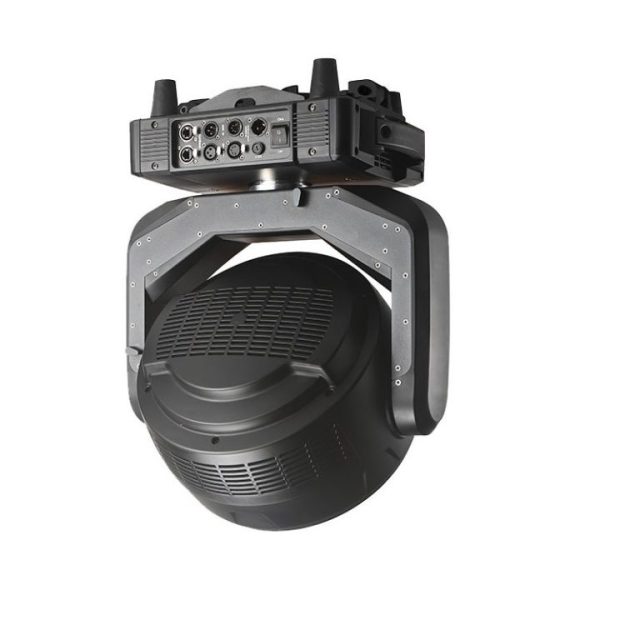
DMX512 is the base control layer, and the fixture also speaks RDM and Art-Net. On a touring LED stage lighting rig that combination matters at load-in: Art-Net lets you drop a data line into a network switch instead of pulling another DMX run to the truss, RDM lets the console find and address fixtures without climbing, and plain DMX512 is still there as the fallback when a node fails at four in the morning.
Five channel maps are published for this moving head stage light: 21, 25, 33, 106 and 129 channels. The short maps suit busking, small rigs and any position where you only need pan, tilt, colour, zoom and dimmer. The long maps open the full parameter set for programmed shows. Keep every fixture in a rig on the same map — mixed modes between units are the usual reason one position behaves differently from its mirror.
The fixture also runs without a console. Master-slave, auto run and music modes are built in, which is what a bar, a showroom or a venue with nobody on the desk actually needs, and the automatic programs are the fastest way to test a rig during install.
Before you patch, ask for the channel chart that matches the firmware on your units and write the mode number next to it. A channel map is the one document programmers read at two in the morning, and the wrong version costs half a day.
Pan/Tilt Coverage
- 540° pan: one and a half turns of travel means units hung on opposite sides of a stage can still cross the centre line without being re-rigged between shows.
- 270° tilt: enough travel to point straight down for floor pools and straight out for aerial shafts from the same bracket position.
- Coverage before rigging: a fixture on the front truss needs far less pan to reach the full stage width than one on a side boom. Check the angle you actually need before truss positions are locked.
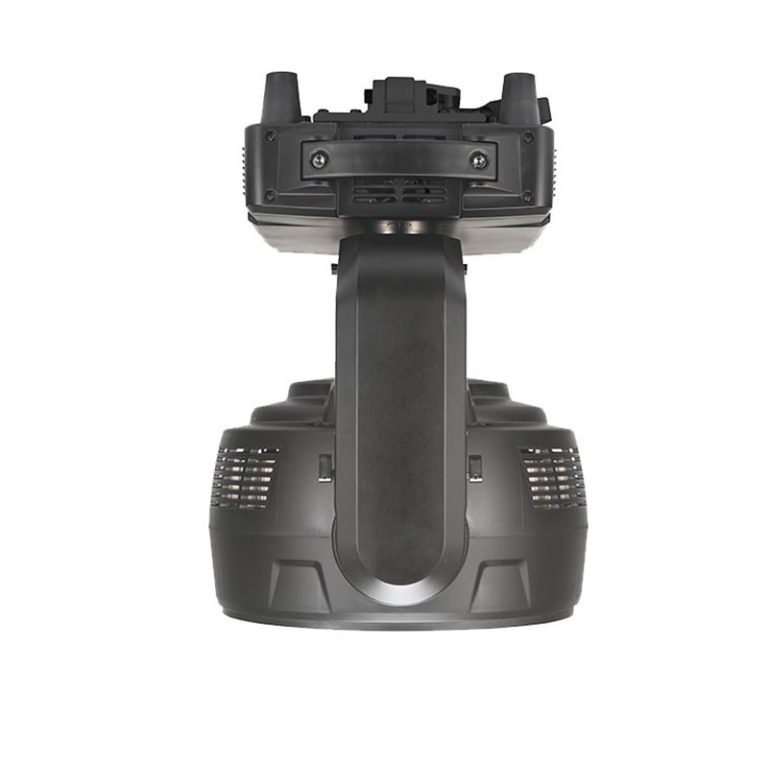
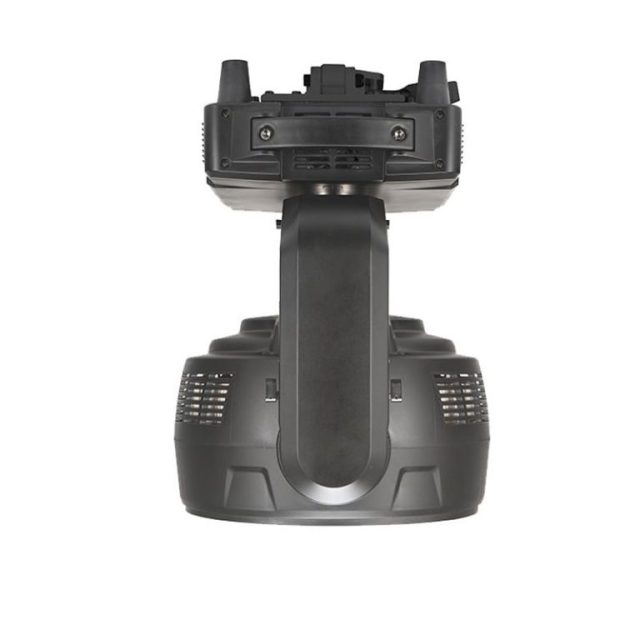
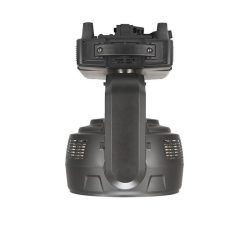
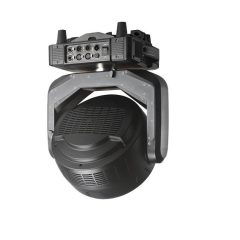
- Yoke clearance: the U-shaped yoke decides how close the head can sit to the pipe. Leave room behind the fixture so the housing does not foul the truss at full tilt.
- Home position: store pan centre and tilt down as a preset so every position in the rig starts from the same reference when you build a cue stack.
- Mirroring: matched pan and tilt values keep symmetrical looks symmetrical. If the left and right hangs resolve to different values, they were hung at different angles — fix it at the truss, not at the desk.
- Aerial work: a moving head stage light hung on a side boom can sweep both the audience and the stage from one position, which is often cheaper than adding a second fixture to the plot.
Dimming, Strobe & Effect Macros
This LED moving head light dims across the full light domain at 65,536 levels. That resolution is what keeps a fade to black smooth instead of stepping through visible bands, and it shows up most clearly where the eye is most sensitive — the bottom of the fade. On a professional LED stage lighting rig, a slow twenty-second fade on a quiet number is exactly the moment coarse dimming gives itself away.
Strobe runs from 1 to 25 Hz. The slow end gives a rhythmic pulse you can land on a beat; the top is a hard, fast strobe for accents. Because it is a single parameter, it maps cleanly to a fader and can be ridden live.
Two preset sets come with the fixture: colour macros and effect macros. Colour macros give fixed mixes without building them from four channels at a time, which speeds up busking and gives a rental company a usable look straight out of the case. Effect macros do the same for movement and lens effects, so a venue with no programmer still gets something that looks designed.
Treat the macros as a starting point. Programmed shows will normally override them with their own palettes, but the presets stay useful for testing, for stand-alone modes and for the operator who has ten seconds to make the room look right.
Power Draw & Thermal Behaviour
- 1500 W total power, PF ≥ 0.98: a power factor close to unity keeps the fixture drawing close to its rated wattage in phase with the supply, which is what makes a loaded distro behave predictably.
- AC 100–240 V, 50/60 Hz: universal input, so the same fixture works on a European, North American or Asian supply without a voltage changeover.
- Circuit planning: 1500 W per head adds up quickly across a truss. Count fixtures per circuit and check breaker ratings before the distro is built, and leave headroom for start-up current.
- Temperature sensing: as an LED moving head light manufacturer, we fit onboard sensors that read the head's temperature and adjust light source power automatically — output steps down before the fixture overheats rather than cutting out mid-show.
- Thermal-controlled fan speed: fan speed follows the thermal load instead of running flat out. Quiet passages stay quieter; heavy output gets the airflow it needs.
- Working temperature -10 °C to 45 °C: the fixture is rated across that band. Outside it, plan extra care — after a cold load-in, let the head reach room temperature before powering up.
- Lamp information query: the menu reports light source information, which is how you check a unit that has come back from a tour.
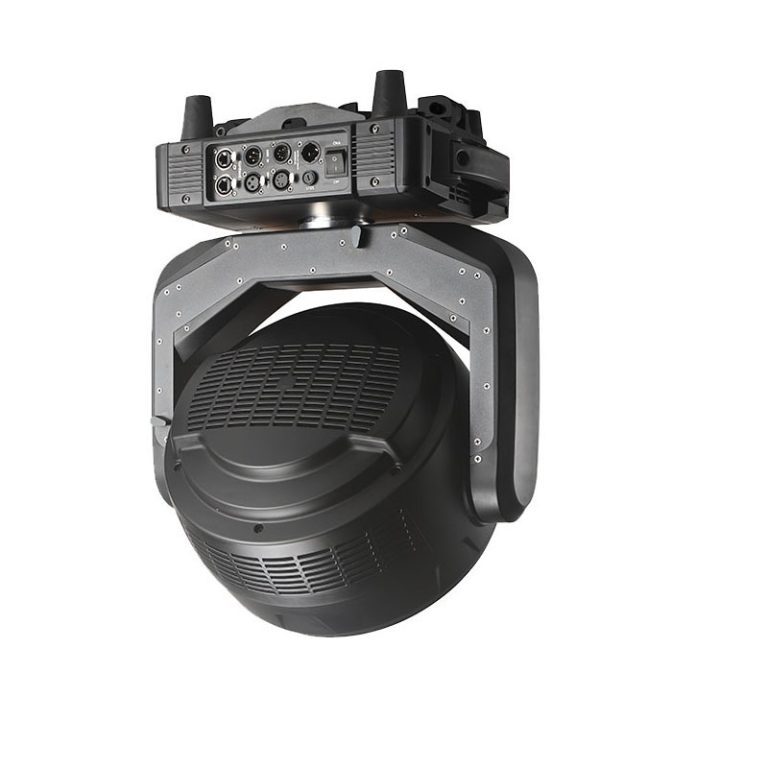
- IP20 boundary: IP20 protects against solid objects but not against water. Hang it in covered LED stage lighting positions — an indoor stage, a roofed venue, or a stage with a properly built weather cover. It is not a fixture for open-air use in rain, and the vents on the head and the rear panel need clear air around them.
Size, Weight & Packing
| Net weight | 26 kg |
| Gross weight, single carton | 30.5 kg |
| Fixture dimensions | 354 × 444 × 477 mm |
| Carton dimensions | 65 × 48 × 59 cm |
| 2-in-1 flight case dimensions | 92 × 52 × 76 cm |
| 2-in-1 flight case gross weight | 93 kg |
| Housing | Matte black metal body |
| Mounting | U-shaped yoke with bracket |
Installation, Rigging & Wiring
- Check the structure first. Confirm the truss or pipe is rated for the fixture, its clamp and its cable, and that the position gives the pan and tilt coverage you planned for that side of the stage.
- Fit a clamp to the bracket on the U-shaped yoke and hang the fixture. At this weight it is a two-person lift onto a tall truss — one supports the housing while the other tightens the clamp.
- Add a safety cable through the yoke and around the truss, independent of the clamp. Never rely on the clamp alone on an overhead position.
- Set the angle before you address the unit. Tilt the head down, run it through the tilt travel to check the yoke clears the pipe, and confirm the vents are not blocked by the truss or by neighbouring fixtures.
- Connect power and data. Feed the fixture from the distro, then daisy-chain DMX512 from unit to unit and terminate the last fixture in the line. For network control, bring Art-Net to the truss on a switch.
- Address and record. Set the DMX address and channel mode on the display, or address remotely over RDM, then write the address and mode down for every position.
- Test before doors. Run pan, tilt, zoom, dimmer, strobe and every colour through its full range, and check the effect macros against the cue list.
Documentation & Downloads
A short summary is enough to open a conversation; the documents behind it are what a programmer, a rigger and a venue's technical manager actually ask for. Ask us for the specification sheet, the user manual and the DMX channel chart for the firmware version running on your units, and check the mode number in the chart against the mode you have patched.
If your console library does not list this model, request the fixture personality file instead of building one by hand. A hand-built profile is the most common reason a fixture tests correctly in the workshop and behaves oddly in the show.
Photometric data and 2D drawings are available on request for design work. Designers need the beam angle against distance and the fixture outline against the truss to place positions on a plot, so ask for both before the drawing is issued.
If your LED stage lighting package is going into a tender, ask for a fixture schedule in the format the project expects. For markets that require compliance documentation, tell us the destination country at enquiry stage and we will confirm which documents we can supply for that market. Have the model, the firmware and the DMX mode ready when you write — it saves a round trip.
Ordering & Delivery
- Quantities: send the fixture count per position, the venue type and the target date, and the quotation is built around that rig. Minimum order quantities are agreed per order — confirm what applies to yours with your sales contact.
- Lead time: production and delivery schedules depend on quantity and season. Ask for the current lead time for your date before the show is confirmed, and re-confirm it when the order is placed.
- Payment and trade terms: payment method, currency and Incoterms are agreed on the order. Check them on the proforma invoice before production starts. Tell us which format you want — the case changes the shipping volume and the total gross weight.
- Spares and service: ask about spare parts availability and the service route for your region while the order is being built, not after the first failure.
- Warranty and returns: the warranty period, what it covers and how a quality claim is handled are set out in the order documents. Confirm the terms for your market with your sales contact.
- Compliance documents: if your market needs specific test reports or declarations, raise it at enquiry stage so they travel with the shipment.
- Multi-phase projects: for a professional LED stage lighting package that runs over several phases, share the full schedule up front so every batch is built to the same specification.
Technical Support & Model Matching
More than 30 engineers with an average of 15+ years in professional lighting stand behind every order — the same people who answer your technical questions. Tell us your venue, rigging height, throw distance and existing control setup; we help match models, check protocol and channel fit, and build a package that works as one system. If a fixture misbehaves on site, we work through the fault with you and sort out spares. Installation and commissioning guidance come with the order. Founded in 2016, exporting since 2022, LITEVISION serves buyers in more than 80 countries from offices in the USA, Taiwan, Mexico and China.
FAQ
Will this moving head wash light work alongside the beam and spot fixtures we already run?
Yes. It speaks DMX512, RDM and Art-Net, so it sits on the same data line and the same network as the rest of the rig, and the five channel maps let you keep the patch light if that is how the rest of the show is built. Colour is mixed under a single lens rather than from separate emitters, which makes it easier to match against existing units on stage. Build a colour palette by eye on stage rather than at the desk, and save it — that palette is what keeps the rig looking like one system.
What routine maintenance does this LED moving head light need between tours?
Wipe the front lens with a soft dry cloth at every load-out; dust on the lens scatters light and shows up first at the narrow end of the zoom. Clear dust from the vents on the head and the rear panel, and check that nothing has been packed against them inside the case. Inspect the yoke, the clamp and the safety cable, and store the fixture in its carton or the 2-in-1 flight case so the yoke is not carrying the weight of the head in transit.
Is it realistic to spec this on a professional LED stage lighting tour?
Yes, provided the stages are indoor or covered — the fixture is IP20 and should not be rained on. It is built for arena scale: the draw per head needs planning at the distro, the zoom covers both aerial beams and full-stage colour, and the five channel maps mean the same inventory line can move between console packages on different legs of a tour. For open-air festivals, plan a covered stage or choose a weather-rated fixture instead.
How is this different from a dedicated beam moving head light?
A dedicated beam fixture is built around one narrow angle and does that single job. This is a bee eye wash head whose zoom closes to 3.5°: at that end it produces a defined shaft for aerial and long-throw work, and the same unit opens to 45° for colour coverage from the same trim height. Where a show is almost entirely aerial beams, a fixed-angle beam is the more obvious tool; where a position has to deliver both, this one covers it without a second fixture.
How many moving head stage lights will a wide stage need?
Work backwards from the throw distance and the zoom angle. Wide open, one fixture covers a large area, but intensity per square metre drops as the angle opens, so coverage usually costs more units than people expect. Front truss positions at 20°–45° give the colour wash; narrower settings from the same positions give the beam looks. Send us the stage plot, the trim heights and the positions you have in mind and we will work through the count with you.