Product Overview
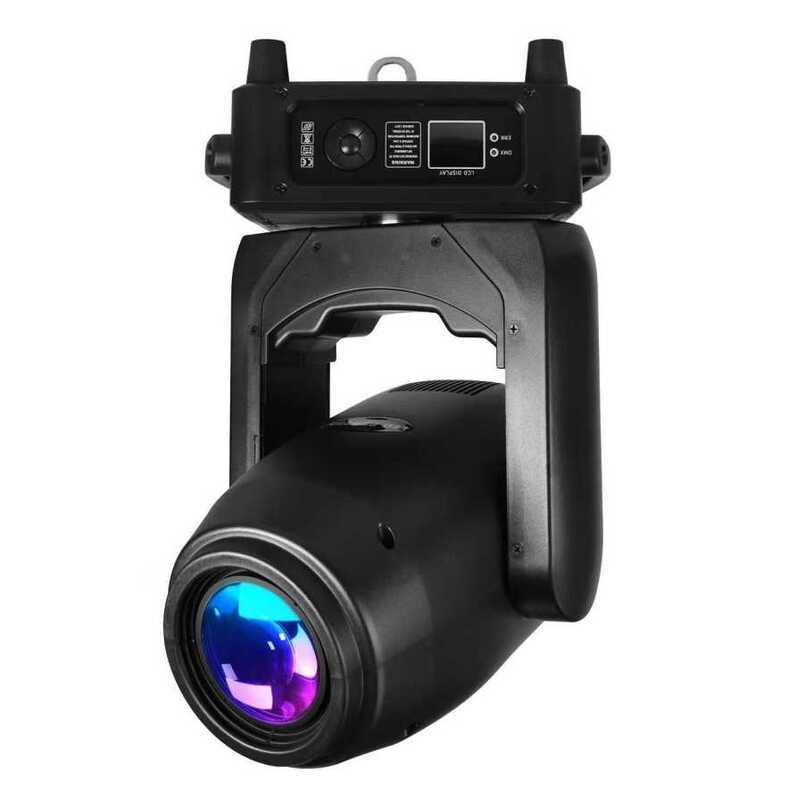
One fixture, three jobs. The Multi EL300BSW from LITEVISION, a beam spot wash moving head manufacturer, is a compact LED moving head light built around a 250 W white COB engine and a motorised zoom. In beam mode it throws a narrow, hard-edged shaft for aerial work; in spot mode it projects a gobo onto a performer or a set piece; opened out, it lays a broad wash over a stage or a dance floor. For rooms that cannot hang three fixture types. Most clubs, live rooms and school halls have one truss and one budget. This beam moving head light covers the aerial looks, the gobo specials and the stage wash from a single hanging position, so a rig that would have needed three separate fixtures can be built from one. Handled by one technician. The body is compact enough to lift onto a truss without a second pair of hands, and the yoke mount hangs straight in a standard clamp. What it changes on a show night. A programmer can hold a look on one unit while the rest of the rig moves around it, or run the whole line together for a wide beam fan. The wheel set carries enough variety to keep a busked set moving without adding a second fixture type to the case.
Control and Firmware
- A single 17-channel mode.
- The fixture uses 17 DMX channels in one mode, so there is no long or short mode to choose between when you build the show file or hand the rig to a guest programmer.
- DMX512 with RDM.
- Control is standard DMX512 with RDM, so the desk can read back the address and settings instead of a technician walking the truss with a ladder.
- Software updates over the wire.
- Firmware for this DMX moving head light is updated remotely over RDM, so a fleet can be kept on one version without opening housings or sending units back.
- A channel table before delivery.
- Send us the console and software you run and we will confirm the channel map and the profile your programmer needs, so the show file is built before the fixtures land.
- Adding to the fleet later.
- Ask for the firmware version and channel map on every batch — a beam spot wash moving head manufacturer who tracks that for you is the reason a reorder next season behaves like the first delivery.
Installation and Rigging
- Check the hanging position first: truss or ceiling height, the clearance the head needs to tilt through, and a mounting point rated for the fixture and the clamp you plan to use.
- Bolt the clamp to the yoke bracket, hang the fixture the right way up for your truss, and fit a secondary safety bond as normal practice on any flown fixture.
- Set the DMX address on the front-panel menu while the unit is still on the ground — one less climb back to a moving head stage light in the middle of a rig.
- Daisy-chain DMX from fixture to fixture and keep the data run away from mains cable; long parallel runs of power and signal are the usual cause of flicker and dropped channels on a new rig.
- Power up and let the head complete its reset before sending any cues.
- Walk a short test pass from the console — a tight beam, a gobo spot, then an open moving head wash light across the stage — and label this LED moving head light with its address and universe so the next technician can trace it.
Applications
Clubs, bars and live music rooms. A line of these over a dance floor gives beam sweeps through the room, gobo specials on the crowd and a moving head wash light covering the gaps between sets — a practical fit where the ceiling is low and the truss carries one row of fixtures. Small and mid-size stages, theatres, school and church halls. One bar can cover the stage wash, a moving head spot light for a solo and beam looks for the finale, which keeps the rig simple for staff who are not full-time programmers. Corporate events, banquet halls and presentation spaces. Rooms like these rarely have a lighting operator. The fixture runs from a short cue stack, or with no console at all from its own built-in programs, and a beam or wash look is usually enough to make a stage read properly. Multi-purpose venues. A room that hosts a gig, a conference and a wedding in the same week needs fixtures that change character between them; this one changes look in seconds without anything being re-hung. Buying the rest of the rig at the same time. A 3-in-1 rarely travels alone, and most orders add wash, framing or beam fixtures for the rest of the room.
Specifications
| Property | Value |
|---|
| Light source | 250 W white COB LED |
| LED life | 50,000 hours |
| Power | 300 W rated, AC 110–240 V, 50–60 Hz |
| Zoom range | 9–30° |
| Dimming | 0–100% electronic linear dimming |
| Strobe | 1–25 Hz, speed adjustable |
| Pan / tilt | 540° / 270° |
| Display and cooling | LCD display, active fan |
| Housing | Aluminium, copper, steel, plastic |
| Working temperature | −20 °C to 40 °C |
| Protection rating | IP20 |
| Dimensions and weight | 300 × 205 × 542 mm, 13 kg |
Colour, Gobo and Prism Effects
- Nine colours plus open white.
- A nine-colour wheel plus white covers the saturated looks a cue stack normally needs, and colour changes happen on the wheel instead of between shows with a gel roll.
- Nine fixed gobos.
- Nine gobos plus white on the fixed wheel give shapes, breakups and textures ready to call from the console for aerial and surface projection.
- Seven rotating glass gobos.
- Seven glass gobos sit on the rotating wheel, and each one spins forwards or backwards on its own, so a gobo can turn at one speed while the head is moving at another.
- Three prisms.
- Three prisms, each rotating independently in both directions, multiply the beam into fans and clusters; pair one with a gobo for the multi-beam looks that fill a wide room from a single fixture.
- Frost for the wash looks.
- One independent frost lens softens the beam edge and turns the fixture into a moving head wash light for stage washes, front light and audience coverage.
- Wheels that work together.
- Colour, gobo, prism and frost sit on separate wheels, so a moving head spot light can hold a gobo, spin a prism over it and change colour without the look collapsing between cues.
Maintenance and Spares
- Clean the front lens between shows.
- Dust and finger marks on the front lens of a beam moving head light cost output and soften gobo edges; a dry microfibre cloth and a soft brush around the lens surround are enough.
- Keep the fan path clear.
- The fixture is actively cooled, so check that the intake and exhaust are not blocked by flight-case foam, drape or a neighbouring fixture, and blow dust out of the vents when you service it.
- Check the rigging hardware at every load-in.
- Clamp, safety bond and yoke bolts are the three things that fail quietly, and a two-minute check before the truss goes up is cheaper than a dropped fixture.
- Run a full test before the unit goes back into the case.
- A reset, a walk through every colour, gobo, prism and frost position, and a strobe burst will catch most faults before a client does.
- Keep a spares plan.
- Every moving head stage light in a rental fleet needs at least one spare unit and a route to parts; ask your sales contact for the current spares list and turnaround before the season starts.
Ordering and Delivery
| Item | What to confirm |
|---|
| Manufacturer | LITEVISION, beam spot wash moving head manufacturer |
| Model | 250 W LED beam / spot / wash moving head |
| Minimum order quantity | Confirmed per model and per market with your sales contact |
| Volume pricing | Batch tiers confirmed with your sales contact |
| Lead time | Confirmed at order; depends on quantity and configuration |
| Payment terms | Confirmed with your sales contact |
| Trade terms | Confirmed for your destination and shipping method |
| Packing | Export packing confirmed per shipment, by sea or air |
| Warranty | Cover and duration confirmed with your sales contact |
| Returns and quality claims | Procedure confirmed before shipping |
| Spare parts | Availability and turnaround confirmed with your sales contact |
| Compliance documents | Test reports for your market on request |
Technical Support & Model Matching
More than 30 engineers with an average of 15+ years in professional lighting stand behind every order — the same people who answer your technical questions. Tell us your venue, rigging height, throw distance and existing control setup; we help match models, check protocol and channel fit, and build a package that works as one system. If a fixture misbehaves on site, we work through the fault with you and sort out spares. Installation and commissioning guidance come with the order. Founded in 2016, exporting since 2022, LITEVISION serves buyers in more than 80 countries from offices in the USA, Taiwan, Mexico and China.
FAQ
Can this fixture be used outdoors or under a covered roof?
No — it is an indoor LED moving head light. The housing is not sealed against rain, hose-down or heavy dust, so it belongs under a roof; a covered stage or a marquee is fine as long as water cannot reach the fixture. For permanent outdoor positions, look at our outdoor moving head range instead.
How does this compare with the EL350BSW?
They are two steps of the same moving head stage light family. The EL350BSW uses a larger module with a tighter narrow end, a bigger colour palette and more gobos on both wheels; this model keeps to a single channel mode and is the lighter of the two, which tells when a technician is hanging a dozen units in a row. For club floors and small-to-mid stages the difference is headroom rather than capability — take the bigger step when your throws are long or the design needs the extra palette.
Do we need a lighting console to run it?
No. As well as DMX512 control, this beam moving head light has built-in auto programs and a master-slave mode, so one unit can drive the rest with no desk in the room — useful in bars, halls and presentation spaces where nobody is programming. When a console does arrive, the DMX route is already there and every function of this DMX moving head light is available on it.
What technical documents can we pass on to a consultant or installer?
Ask your sales contact for the spec sheet, the user manual, the DMX channel table and the photometric file for this model. Those four are what consultants, installers and programmers ask for first, and the channel table is the one your programmer needs to build a profile for this DMX moving head light. A moving head light supplier who sends them before the order saves everyone a week at commissioning.
What happens if the head gets knocked out of position during a show?
Pan and tilt run on 16-bit role with an automatic reset, so after a reset the head returns to a known position rather than drifting into the next cue. If a unit loses its place mid-show, run a reset from the console or the menu and re-take the cue instead of nudging it by eye — the tight look a moving head spot light was programmed for survives the reset.