Product Overview
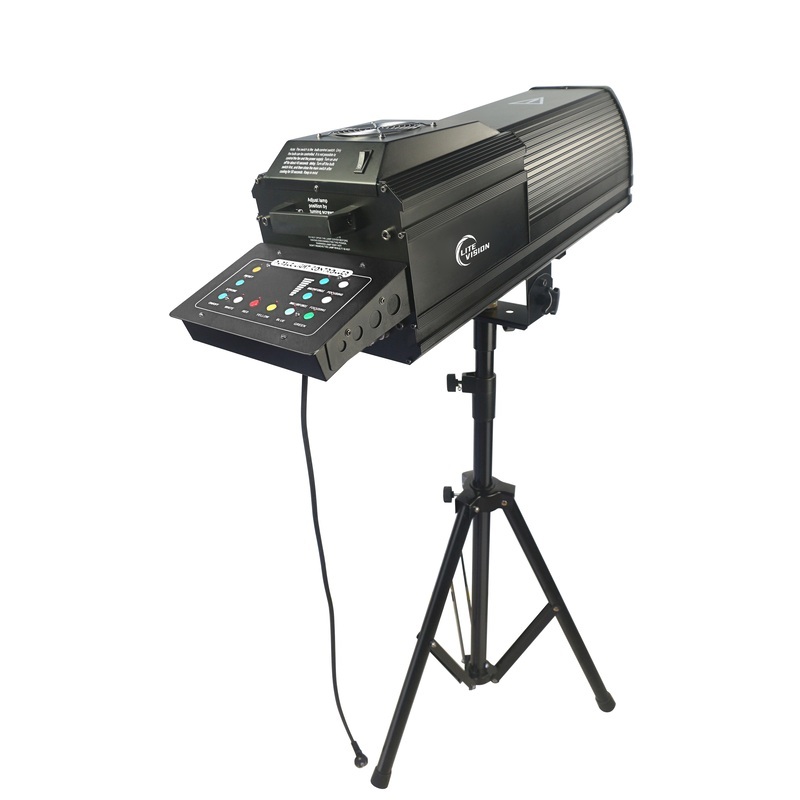
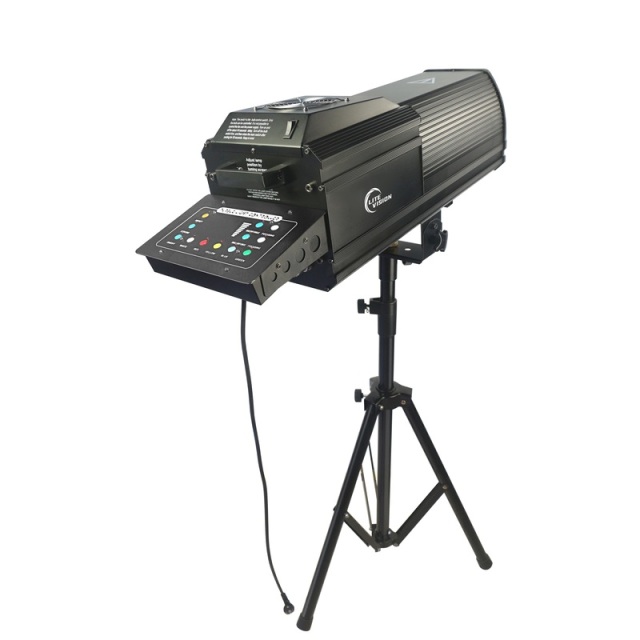
The LTFS-1000 is a long-throw LED follow spot light built for venues where the operator sits a long way from the stage. It is aimed by hand, focused at the lens and colour-changed from the rear panel, so one person can hold a performer in the beam through a scene and answer a cue without leaving the position. It belongs in the working kit of theatres, arenas, rental houses, churches and school halls — the sort of fixture led spot light suppliers keep in stock for the nights when a principal has to stay picked out while the rest of the stage keeps its own picture. The zoom narrows for a tight pick-up across a big room and opens up when the stage is closer. In a show the fixture does two jobs at once: it keeps a clean pool of light on the performer and it carries the colour changes. Colour and dimming stay under the operator's hand on the rear panel, and the DMX link hands the same functions to a console when the show is called from a desk. Every unit is built at our Guangzhou factory and travels in its own flight case, which is the first thing most rental companies ask about.
Beam, Zoom & Focus
- Narrow end for long throws — the tight setting cuts a hard-edged circle that still reads as a face from the back of an arena floor or a high balcony, a throw professional led stage lighting is built for.
- Wide end for closer stages — open the zoom and the same fixture covers a group, a wide entrance or a small platform without a lens change.
- Manual zoom at the front of the housing — the operator sets the spread by hand, so a cue change never depends on finding a menu in the dark.
- Stepless linear electronic focus — once the zoom has moved, the edge is trimmed electronically and stays sharp instead of drifting soft.
- Electronically adjustable aperture — the opening can be trimmed without touching the zoom, and the automatic sizing function keeps it matched to the beam while the operator works.
- Shutter and strobe duty — closing the aperture blacks the beam out instantly for a scene change, and the same mechanism gives a strobe when the music asks for one.
- Setting up for a room — zoom to the throw, focus on the performer's face, then open the aperture until the light reads clearly without spilling onto the set — the whole led stage lighting routine for a follow spot.
Colour, CTO & Dimming
Eight colours plus white sit across two colour changing disks, with red, yellow, blue, green, pink and a heating film among the positions. Two disks give a deeper palette than a single wheel, so a show can plan its colour cues without running out of places to put them.
Colour correction is built in. The CTO positions at 3200 K, 4500 K and 6500 K let the operator warm the beam to match tungsten houselight, hold a neutral balance in a mixed rig, or go cool for a daylight look on camera — the range professional led stage lighting needs when the rig mixes sources.
Dimming runs linearly from 0 to 100 per cent, so a fade to blackout travels smoothly instead of stepping down in visible stages. The operator can ride the level by hand while the performer walks, which is exactly what a quiet ballad needs, and what led stage lighting for churches needs for a slow fade during a service.
The warmer positions on the disks are the ones operators reach for when a cool white beam flattens a face — a touch of colour through the disk reads better on skin than pushing the dimmer.
Control & Console Integration
- Decide who drives the fixture — the operator on the rear panel, or the console on a fully cued show.
- Settle it before the focus session rather than during it — the first decision in any led stage lighting setup.
- Set the DMX address on the rear panel and patch the fixture's channel block into the desk; the block is small enough to drop into a busy universe without re-planning the whole patch.
- Walk through dimming, colour and the aperture from the console, then watch the operator take the same functions back by hand during the run-through.
- Record the colour and dimming positions the operator actually uses into the show file, so the next performance starts from the same place.
- The fixture drops into a professional led stage lighting rig without an extra interface box on its side of the DMX run.
Rigging, Mounting & Handling
The working position is usually the back of the house, a follow spot tower or the rear of a balcony — the position led spot light manufacturers expect rental houses to plan for, with a clean sightline to the stage and room for an operator to stand behind the fixture and swing it through the show.
Set it on a stable stand or platform, or secure it to a suitable mounting point, and check the fixing before doors open. The body has to swing freely, so nothing should foul the housing or the cable as the operator tracks.
Keep the vents and the rear panel clear. The operator needs to reach the colour and dimming controls without standing in front of the beam, and the fixture needs air moving past it through a long show.
Plan the load-in as a two-person lift, the way led spot light suppliers and rental houses do, and keep the route from the truck to the position clear. The ribbed matte-black housing takes the knocks of a touring schedule without showing every mark, and it keeps reflections out of the audience's eyes.
Applications & Venues
- Theatre and opera — hold key light on the principal while the rest of the stage keeps its own picture, and change colour when the scene does; led stage lighting that has to disappear into the show.
- Arena and stadium concerts — a long throw from the roof or the back of the floor to the far edge of the stage, with the narrow zoom doing the work.
- Churches and school halls — an instrument a volunteer can run from the back of the room after one rehearsal; this is the kind of led stage lighting for churches that does not need a console operator in a booth.
- TV studios and broadcast — the correction positions let the beam sit close to the colour temperature the cameras are balanced for.
- Rental houses and touring productions — one operator, one case, and a follow spot light that gets re-focused in a different venue every night.
- Dance, ballet and ice shows — continuous tracking of a performer who does not stand still, across a wide stage.
- Corporate events, awards and galas — a clean pick-up on the speaker walking to the podium or the winner crossing to the stage.
Specifications
| Total power | 1200 W |
| Light source | LED, 1000 W |
| Input voltage | 110-240 V, 50-60 Hz |
| DMX channels | 6 |
| Beam angle | 5-18° |
| Projection distance | 120-200 m |
| Zoom and focus | Manual zoom, stepless linear electronic focus |
| Colour changing disks | 2 |
| Net weight | 40 kg |
| Dimensions | 970 × 430 × 430 mm |
| Flight case | 1080 × 630 × 570 mm |
| Gross weight with flight case | 58 kg |
Ordering & Delivery
- Tell us the venue, the throw distance and who will operate.
- Buying direct from the led spot light manufacturers keeps that conversation short; minimum order quantities and volume pricing are quoted per order, so ask your sales contact for the current figures.
- Confirm the lead time against your event date before you commit — production and delivery schedules move with the season, and a date you can plan around is worth more than an optimistic one.
- Confirm the payment terms and shipping terms that apply to your market, along with the documents your order needs.
- Confirm the plug and lead set for your country.
- The fixture is built for a wide input range, and the cable supplied should match the socket on site.
- Confirm the warranty scope and how a quality issue is handled if one arrives, and ask for both in writing with the order.
- Confirm which spares you want on the shelf beside the fixture, and whether they travel with the same shipment.
- Dealers and led spot light suppliers ordering for stock can ask for the English specification and packing details to forward to their own customers.
- The three documents most buyers ask for first are the specification sheet, the user manual and the channel chart.
- Ask your sales contact for the current versions for this model and they will be sent with your quotation.
- Programmers usually want photometric data and the channel chart before the rehearsal week rather than after it, so request both early enough to build the show file.
- Compliance paperwork varies by market.
- Tell us where the fixture is being installed and we will confirm which documents can be supplied for that country, so nothing is missing at customs or in the venue's technical file.
- If your team runs a console library, ask whether a profile for this fixture is available for the desk you use; it saves building one by hand.
- As led spot light manufacturers we keep each model's technical file together, so a dealer can forward one complete pack to their own customer instead of chasing four different email threads.
Technical Support & Model Matching
More than 30 engineers with an average of 15+ years in professional lighting stand behind every order — the same people who answer your technical questions. Tell us your venue, rigging height, throw distance and existing control setup; we help match models, check protocol and channel fit, and build a package that works as one system. If a fixture misbehaves on site, we work through the fault with you and sort out spares. Installation and commissioning guidance come with the order. Founded in 2016, exporting since 2022, LITEVISION serves buyers in more than 80 countries from offices in the USA, Taiwan, Mexico and China.
FAQ
Can one operator run this follow spot light without a lighting console?
Yes. Colour, dimming and the aperture are all on the rear panel, so an operator can run the fixture on their own, which is how most theatres, churches and school halls use it. Patch it to DMX when the show is called from a desk and the console can take over the same functions.
What is the difference between this and a moving head spot?
A moving head finds its position from motors and a console; this fixture is aimed by a person standing behind it. That is what makes it right for long throws and live tracking — the operator sees the performer and reacts immediately, with no programming step between the performer moving and the beam following. Moving heads still handle the pattern and beam work around the stage while the follow spot holds the principal.
Is a 1000 W follow spot too much for a small church or school hall?
It is a long-throw instrument, so in a short room you will work at the wide end of the zoom and dim it down, where it behaves like any other key light. Tell us the room's dimensions and the throw and we will say plainly whether this model or a smaller fixture suits you better. For led stage lighting for churches the practical test is whether a volunteer can run it after one rehearsal, and with the rear panel controls that is usually a yes.
What should I check before I stand it at the back of the house?
Sightline first: the operator needs to see the stage without leaning around a column. Then the platform, which has to be stable enough for a person to stand behind the fixture and swing it all evening. Leave the vents clear, run the mains cable where nobody will kick it, and check the fixing before doors open.
Can I run two of these from one console?
Yes. Address each fixture separately and patch two channel blocks; the desk can then cue colour and dimming on both while two operators aim them, one from each side of the house. On a wide stage this is usually better than one fixture stretched across the whole proscenium.
How do I keep the lens and the beam clean?
Wipe the front lens with a soft, dry cloth and never with a solvent. Keep the vents and fan grilles free of dust and confetti, and check the aperture opening for debris if the edge of the beam starts to look ragged. Covering the fixture between shows saves most of the cleaning.