Product Overview
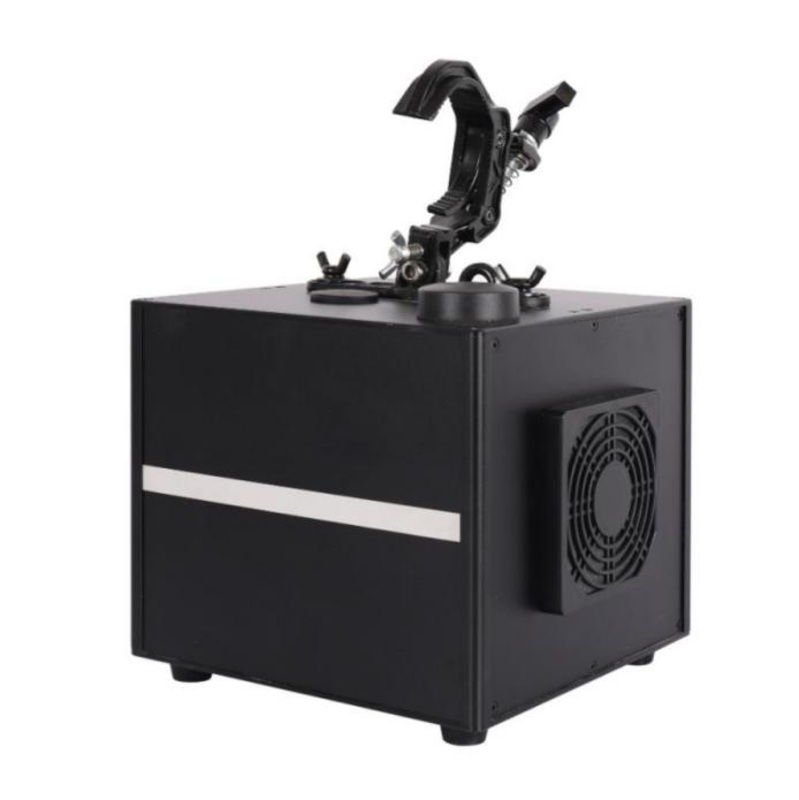
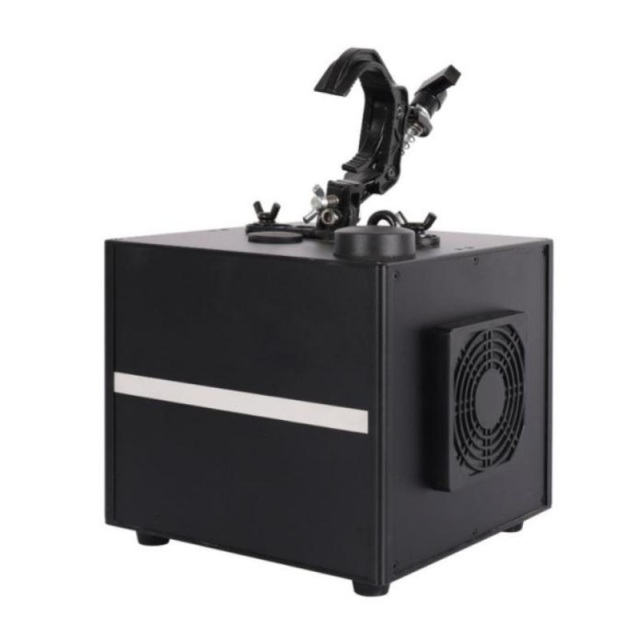
The LTSPT-650 is an indoor spark machine that hangs from a truss and fires a controlled column of sparks exactly on cue. It is built for the beats a light show cannot cover on its own: an intro hit, a chorus drop, a staged hit in a fight scene, a first dance. The body is compact, and the rigging hardware travels with the machine. Because the unit sits above the stage rather than on it, the effect reads differently from a floor fixture. Sparks fall into the scene from over the performers' heads, stay inside the camera frame and inside the sightlines, and leave the deck clear for dancers, sets and scene changes. That matters most in theatres and multi-use halls where the floor is reset several times a night. Control is deliberately plain. On an existing dmx lighting rig it behaves like one more addressable effect: patch it, address it and cue it with everything else. Where the venue has a usable flown position, hanging the effect is usually the cleaner answer than placing another box on a busy stage. Rental houses and the stage lighting equipment suppliers who serve them are buying the same thing here: a cue that lands on the beat every night, with a set-up short enough to repeat at every load-in.
Key Features
- Rigging hardware in the carton — a top hook and a safety rope ship with the machine, so it goes from flight case to truss without a separate clamp order or a hunt through the toolbox.
- Fast warm-up — electromagnetic heating brings the unit to working temperature quickly, so it can stay dark through the opening number and still be ready for the finale.
- Aluminum housing — a rigid metal body in matte black that takes the knocks of load-in and load-out and keeps the machine light enough to hang single-handed.
- Supplied cabling — power and signal cables arrive with the unit.
- It is the detail worth checking with a stage lighting equipment supplier before you order, because the small parts decide whether a fixture works on the first night or needs a hardware run.
- Compact body, sensible airflow — the housing is small enough to slot between fixtures on a busy truss, and a side fan keeps air moving through it during a long show.
- One consistent cue, night after night — the burst is repeatable and easy to re-time, which is what theatrical stage lighting companies need when a production runs for weeks in the same venue.
Hanging and Floor Versions
| Feature | Truss version (this model) | Floor version |
|---|
| Mounting | Top hook and safety rope onto a truss | Stands directly on the stage deck |
| Effect direction | Sparks fall into the scene from above head height | Fountain rises from stage level |
| Deck space | Nothing on the floor to protect or strike | Needs a clear patch of deck beside the action |
| Rigging needs | A rated point plus the supplied safety rope | Power and data at floor level only |
| Set-up | One lift into position, hook stays on the housing | Carried in and placed by hand |
| Position on stage | Sits above the sightline, out of the picture | Reads as a floor prop beside the performers |
| Typical user | Professional stage lighting companies and rental desks with a house truss | Ground-level stages, low ceilings and rooms with no accessible truss |
Rigging and Safety
- Check the point before you lift.
- The machine hangs from its top hook, so confirm the truss or bracket is rated for the load and sits where the fountain will play clear of drapes, set pieces and other rigging.
- Hook it on and add the safety rope.
- The hook seats over the truss chord, and the supplied safety rope is the secondary retention — loop it around a separate structural point rather than the same hook.
- Set the angle before you lock anything down.
- Decide which way the burst should read from the audience, because adjusting a hung machine once the truss is out is a two-person job.
- Patch the data.
- Run the signal cable to the machine, set the starting address, and check that your dmx controller sees it before you leave the position; finding a dead address at half-hour is the expensive version of this step.
- Power up early.
- The electromagnetic heater needs time to reach working temperature, so switch the machine on during the get-in rather than at doors.
- Keep the package together between shows.
- The hook stays on the housing and the rope travels with it, so the machine goes up in one lift.
- That is how stage lighting manufacturers pack a truss fixture, and it is why nothing goes missing between venues.
DMX and Remote Control
A standard DMX512 feed runs the machine, so it behaves like any other addressable effect on the rig: patch it into the same universe as the rest of your dmx lighting, give it an address, and fire it from the cue stack with the music.
The supplied wireless remote is the second trigger path. It needs no patching, which makes it the practical option during focus and rehearsal, and the only option in venues where the show runs from a basic dmx controller rather than a full desk.
Level 3 on both the console and the hand-held remote is the setting the quoted spray height refers to, so that is the level to build the cue around — and the value to write into the show file so a guest operator reproduces it. Professional stage lighting companies tend to standardise on one level for exactly this reason: the cue has to travel.
Decide who holds the trigger. Stage and lighting companies touring the same production often keep the main bursts on the console and leave the remote with the stage manager for encores, corporate one-offs and walk-in music.
Typical Show Applications
- Concert and club drops — the first beat of the final chorus, fired with the strobe and the low end.
- It is the visual accent a wash or a beam cannot give you from the same position.
- Theatre and staged combat — a hit, a gunshot, a spell.
- This is the classic theatrical stage lighting cue, and hanging the machine keeps the burst out of the acting area while it still reads across the whole house.
- Weddings and private events — the first dance, the cake cut, the exit.
- A short burst is enough here, and the remote lets the planner fire it without a console.
- Launches and brand shows — reveal moments that have to look identical at every rehearsal, in every city on the schedule and in front of a camera crew.
- Touring productions — the same cue repeated across venues; stage and lighting companies hang it on the same truss as the rest of the rig and re-address it in minutes at the next load-in.
- Multi-venue rental stock — one machine that covers clubs, theatres and corporate one-offs is what rental desks want from a stage lighting equipment supplier, and it is the role this model fills.
Specifications
| Property | Value |
|---|
| Power | 650 W |
| Effect | Indoor spark fountain |
| Spray height | 1–5 m, quoted at console level 3 and remote control level 3 |
| Spray diameter | 22 mm |
| Heating | Electromagnetic, about 3 minutes to working temperature |
| Control | DMX512 and wireless remote control |
| Casing | Aluminum |
| Mounting | Top hook and safety rope, both supplied |
| Cabling | 3 m power cord and signal cable, supplied |
| Dimensions | 225 × 205 × 225 mm, excluding the hook |
| Net weight | 6.2 kg |
| Also in the carton | Multi-function remote control |
Ordering & Delivery
- Send the venue and the position first.
- Trim height, truss layout and what sits below the machine decide whether the burst will read from the audience; as stage lighting manufacturers we can tell you quickly whether a position will work before you commit to the order.
- Confirm the electrical details for the site.
- Mains voltage and connector type vary by market and by building, so tell your sales contact what the venue supplies and the quotation will be built around it.
- Ask for the documents the project needs — specification sheet, user manual and DMX channel list.
- Your sales contact sends the current versions, and they are the files a client, an integrator or a customs broker will usually ask for.
- Agree the commercial terms in writing before the purchase order.
- Lead time, minimum quantity, payment terms and shipping arrangements are quoted per order, so confirm them with your sales contact rather than assuming a figure.
- Check warranty cover and spares.
- Warranty scope, spare-part availability and how service is handled in your region are worth confirming up front; rental desks and stage and lighting companies that run the machine every week should know the answer before the first show.
- Confirm the compliance documents your market requires.
- Test reports and certificates for the destination market are provided on request, so tell us at quotation stage which ones your project, insurer or customs office needs.
Technical Support & Model Matching
More than 30 engineers with an average of 15+ years in professional lighting stand behind every order — the same people who answer your technical questions. Tell us your venue, rigging height, throw distance and existing control setup; we help match models, check protocol and channel fit, and build a package that works as one system. If a fixture misbehaves on site, we work through the fault with you and sort out spares. Installation and commissioning guidance come with the order. Founded in 2016, exporting since 2022, LITEVISION serves buyers in more than 80 countries from offices in the USA, Taiwan, Mexico and China.
FAQ
Can it be hung on any truss, or does it need a special bracket?
The top hook is fixed to the housing and takes the machine straight onto a truss chord, and a safety rope is supplied with it. Any rated point will do; what needs checking is the position, so the burst plays clear of drapes, set pieces and other rigging.
Does the effect need haze or fog to be visible?
No. The sparks are physical and read on their own, which is the practical difference between this machine and a beam fixture on your dmx lighting rig — no haze budget, no fogger warm-up, and nothing that drifts out of the room between cues.
Can it be used outdoors or in a marquee?
It is an indoor machine. For an outdoor stage, a covered structure or a temporary venue, talk to your sales contact about the conditions at the site before you plan the effect into the show.
Should I choose the truss version or the floor version?
Take the truss version when the deck has to stay clear and the venue has a usable flown position; take the floor version when there is no accessible truss or the ceiling is low. In theatrical stage lighting the hanging model usually wins, because the burst stays above the performers and out of the acting area.
What maintenance does it need between shows?
Wipe the housing down, keep the side fan grille clear of dust and confetti, and check the hook and the safety rope for wear at every load-in. Anything beyond that — cleaning inside the housing or replacing a part — should go through your sales contact rather than being opened on site.
How quickly can it be re-addressed when the rig changes?
It takes a moment: set the new starting address on the machine, confirm from your dmx controller that the desk sees it, and it is ready for the next cue. If the show is running without a desk, the hand-held remote needs no address at all.