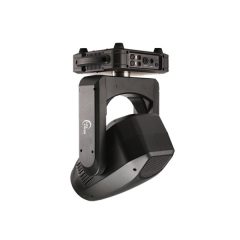
Product Overview
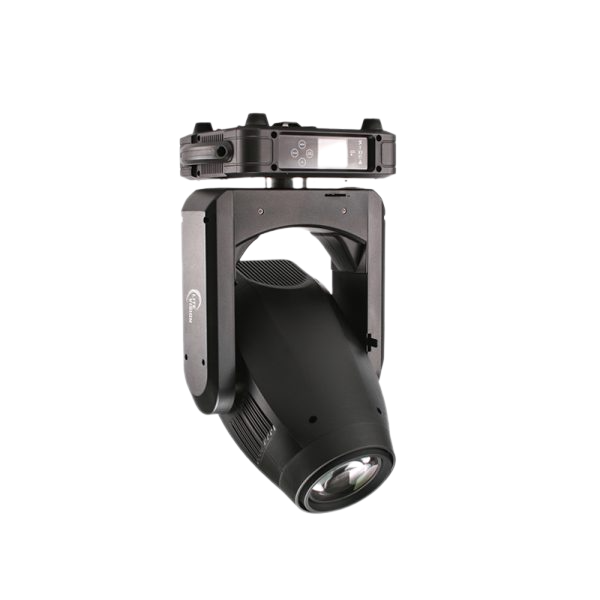
Beam, spot and wash share one optical path, so the character of the output is set by the zoom, the frost and the gobo wheels rather than by which fixture happened to be free on the truss. That is the practical gain on a busy rig. Close the zoom and pull the frost out and it works as a tight moving head beam light for aerial and mid-air looks; open the zoom and it settles into the wash over a stage; drop a gobo in and it projects. One position, three jobs, one set of spares. Rental companies and distributors spec it for the front truss and the floor package of touring shows, for theatre and broadcast work where the gobo and animation wheels get used, and for club installs that want a moving head wash light across the floor without adding a second fixture type. We supply it as a beam spot wash moving head manufacturer working with rental fleets, distributors and integrators, and the specification is written around the questions those buyers actually send: channel modes, gobo options, rigging weight and how the fixture holds up across a long run.
Light Source & Power
- 460W white LED engine rated above 30,000 hours — one high-output white source, so there are no discharge lamps to change and no lamp hours to track between venues.
- 550W input power is the figure to plan circuits around, not the light output. Add it up per bay before the distro is booked.
- AC 100–240V, 50/60 Hz. As a beam spot wash moving head manufacturer we build one version for both voltages, so a single stock item covers 120V and 230V markets and keeps inventory simple for a distributor carrying LED stage lighting for several countries.
- Because the engine is a single white LED, two units set to the same values match — pairing LED moving head lights on one cue is a matter of matching values rather than trimming lamps.
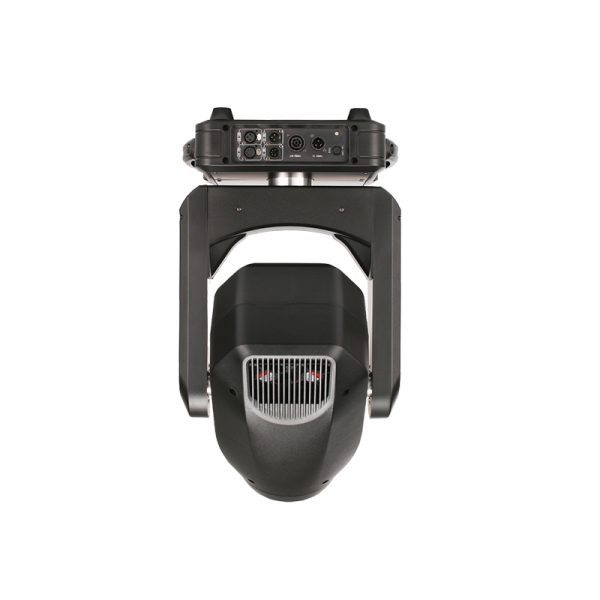
- The head is ventilated through the front housing and the rear grille. Keep those paths clear when the fixture is packed into a dense truss so the LED and electronics run at the temperature they were designed for.
Colour System & CTO
Colour is mixed with CMY flags rather than a wheel, so it moves continuously. You can sit between two saturated points, cross-fade at whatever speed the cue needs, and hold a hue exactly where the designer asked for it instead of landing on the nearest slot.
A CTO channel carries the same source from 2700K to 6500K. In one cue stack that gives a tungsten-matched look for a warm scene and a cooler, daylight-balanced look for the next — from the same fixture, without gel.
The 7-colour wheel plus open sits alongside the mixing system and earns its place in the fast moves: its directional rainbow sweep reads as an effect on a hit, where a CMY cross-fade would be too smooth to register.
Set the fixture as a moving head wash light and the mixing does the heavy lifting — wide, saturated fields across a set or a cyclorama, blended into the next unit without a visible edge.
Gobo & Animation Wheels
- Rotating gobo wheel: 7 interchangeable gobos plus open. Each gobo can be shaken, and the wheel itself can be positioned, so a pattern can be trimmed to sit exactly where it is wanted in the beam.
- Fixed gobo wheel: 8 interchangeable gobos plus open, with gobo shake, for texture that stays put while the head moves.
- Animation wheel: a dynamic water-ripple effect that runs over whatever is in the gate — movement in the beam without moving the head.
- Stack the layers. A fixed pattern for the core of the look, a rotating gobo for movement on top, the animation wheel for shimmer: three textures from one gate, cued in any combination.
- Interchangeable means the pattern set is not fixed for the life of the fixture. Talk to your sales contact about gobo options for a production before the order is placed.
- This is the moving head spot light side of the fixture — gobos in, the beam trimmed, and the pattern thrown hard across a set, a floor or a back wall.
Optical Effects & Beam Shaping
| Property | Specification |
|---|
| Minimum beam angle | 6° |
| Maximum beam angle | 42° |
| Zoom | linear |
| Focus range | 5–100% |
| Focus | electronic |
| Iris | built-in beam trim |
| Shutter rate | 1–25 Hz |
| Shutter mode | random available |
| Dimming range | 0–100% |
| Dimming curve | linear |
| Frost | heavy frost |
| Prism | 1 bidirectional 5-facet rotating prism, positionable |
Control & Channel Modes
- Decide the channel mode before the show file is built. The 26-channel map keeps the patch compact; the 35-channel map opens the finer parameters for detailed programming. Switching between them re-maps the fixture, so the choice belongs at the start.
- Get the current channel chart and the fixture library file for your console, and patch against the mode you will actually run.
- Switch on RDM. Addressing, status checks and setup then happen from the console instead of from a ladder at the truss.
- Add Art-Net where the show is distributed over network — it is an option on this LED moving head light and makes sense when the data backbone is already IP-based.
- Keep the channel mode in the show file name. A 35-channel show loaded into a 26-channel patch is the most common way a working rig suddenly misbehaves.
- Standardise on one mode across an inventory so a swapped fixture drops straight into the same patch.
Pan, Tilt & Movement
Pan is 540° or 630°, fixed when the fixture is ordered, and tilt is 270°. Both axes run at 16-bit resolution, so slow moves stay smooth and a position cue lands where it was programmed rather than a step away from it.
Auto repositioning is the part that saves shows. After a power interruption or a bump, the head returns to its last position by itself — which matters when the fixture sits inside a set piece or is holding a performer's mark.
The motion system is tuned for fast travel that stays quiet and smooth. Cue-to-cue moves arrive without ringing, and this LED moving head light does not announce itself into a quiet scene.
Take the 630° option where the fixture has to reach around a set or cover two areas from one position; 540° suits a straight-on front truss. Either way, the wider the arc, the more clearance a moving head beam light needs from its neighbours.
Size, Weight & Packing
- Fixture size 29 × 39 × 74 cm — worth checking against the gap between a packed front truss and the set, and against the headroom in a low venue.
- Net weight 27 kg. That is a two-person lift, and a figure to add up per bay before the rig plan is signed off.
- Packing size 38 × 46 × 84 cm, one fixture per carton. Use it to work out pallets, truck space and case builds before a quantity is confirmed.
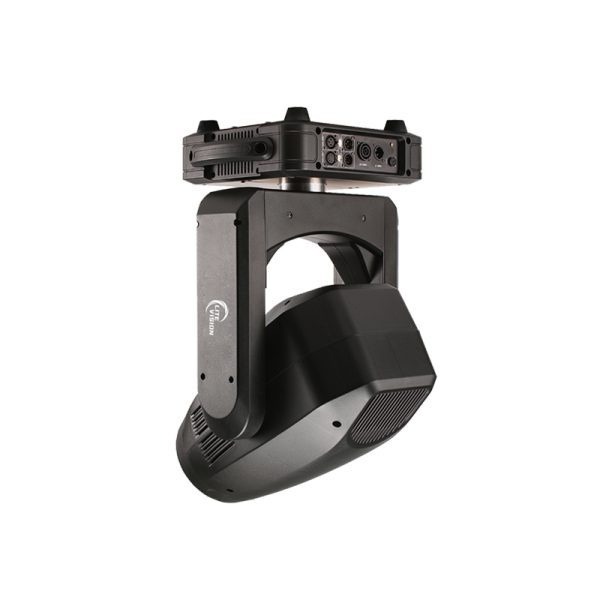
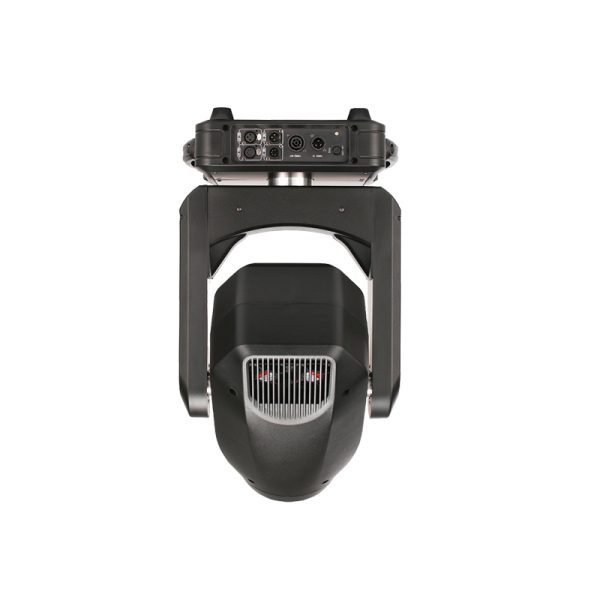
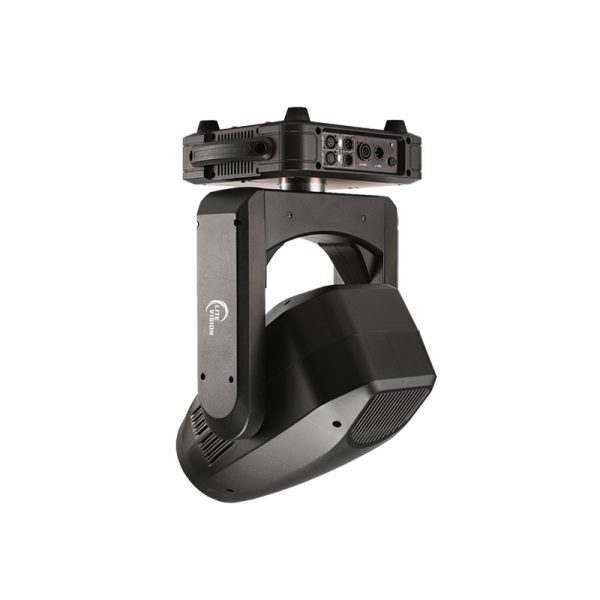
- The housing is matte black with a ventilated head and a rear connection panel, so the ports stay reachable with the fixture already on the bar — no need to pull a DMX moving head light down just to re-address it.
- Brief a case builder with the carton size rather than the fixture size, and leave clearance for clamps and cable.
- Weight and carton size together decide how many units a truck bay takes and how the load-in is staffed, and both feed the real cost per show.
Rigging & Commissioning
- Plan the rig as you would for any LED stage lighting fixture: weight per point, data run and power balance come before the first clamp goes on.
- Set the address and channel mode at ground level, before the fixture goes on the bar, and label it so the patch sheet and the rig match.
- Hang from the mounting bracket with clamps rated for the fixture weight, and fit a secondary safety as standard practice on any flown position.
- Check the swing clearance before tightening anything down — the head travels through a wide arc, and neighbouring fixtures, drapes and set pieces are what it will find.
- Route the mains cable clear of the yoke's travel and balance the load across circuits.
- Commission at the first position: confirm both wheels index, the zoom travels end to end, the frost and prism engage, and the pattern is sharp when the fixture is working as a moving head spot light.
Ordering & Documentation
| Property | What to confirm |
|---|
| Order quantity | Confirmed with your sales contact for the project and the batch |
| Lead time | Confirmed against your event or installation date |
| Payment and trade terms | Agreed with your sales contact before the order is released |
| Warranty | Period and scope stated in the order documents |
| Returns and quality claims | Raised with your sales contact, with packing kept and photographs of the issue |
| Documentation | Specification sheet, DMX channel chart, photometric files and manual available on request |
| Compliance paperwork | Confirmed for the destination market before shipping |
| Spare parts | Replacement parts and consumables confirmed at the order stage |
| Ordering | Placed directly with us as the bsw moving head light supplier and builder of the fixture |
| Project support | Fixture scheduling and package planning for larger LED stage lighting projects |
Technical Support & Model Matching
More than 30 engineers with an average of 15+ years in professional lighting stand behind every order — the same people who answer your technical questions. Tell us your venue, rigging height, throw distance and existing control setup; we help match models, check protocol and channel fit, and build a package that works as one system. If a fixture misbehaves on site, we work through the fault with you and sort out spares. Installation and commissioning guidance come with the order. Founded in 2016, exporting since 2022, LITEVISION serves buyers in more than 80 countries from offices in the USA, Taiwan, Mexico and China.
FAQ
Is a three-in-one better than buying separate beam, spot and wash fixtures?
For most touring, theatre and club positions, yes: one three-in-one takes a single rigging point, one power outlet and one spare stock instead of three. Separate fixtures still win when a show needs an extreme narrow beam or a dedicated wide wash that a hybrid cannot reach. We build this as a beam spot wash moving head manufacturer for the long middle ground of a show — the front truss, the side positions and the floor package — where the look changes several times a night.
Can I fit my own gobo patterns?
Both wheels are interchangeable: 7 rotating gobos and 8 fixed gobos, each with an open position. Tell your sales contact what the production needs before the order is placed so the gobo set can be agreed with it. Shows that lean heavily on pattern work are worth flagging at that stage, because that is when the fixture spends most of its night as a moving head spot light.
How do I keep several units consistent across a rental fleet?
Standardise on one channel mode, keep the same gobo set across the batch, and label every fixture to match the patch sheet, so a swapped unit drops into the same cues. When you add to an existing fleet, ask your sales contact to match the configuration to your current stock — as a bsw moving head light supplier we would rather confirm that than leave a fleet half-updated.
What should I check when the fixtures arrive?
Power one up before it goes on the rig: run a slow pan and tilt sweep, confirm both wheels index and the zoom travels end to end, then address it from the console. When a DMX moving head light has taken a knock in transit, the data side usually shows it first. Keep the cartons until the batch has been checked.
Will it stay quiet enough for theatre and camera work?
The motion system is tuned to travel fast without ringing, which is what makes a moving head beam light usable in a quiet scene. Camera work comes down to colour: you can move between a tungsten-matched look and a daylight-balanced one inside the same cue, from the same fixture. Ask for the photometric files if the lighting designer wants to model it before the rig goes in.
Where does it fit — theatre, club or arena?
All three, for different reasons. In theatre it is the gobo and animation work plus a wash that softens with heavy frost; in a club it is the moving head wash light over a floor and the beam for aerial moments; in an arena it is the reach across long throws. The common thread is that the look changes without changing the fixture.