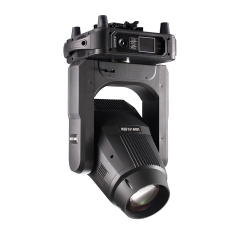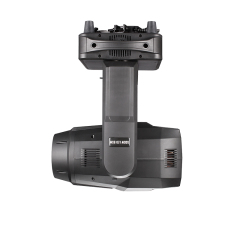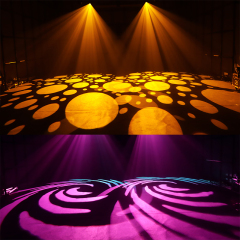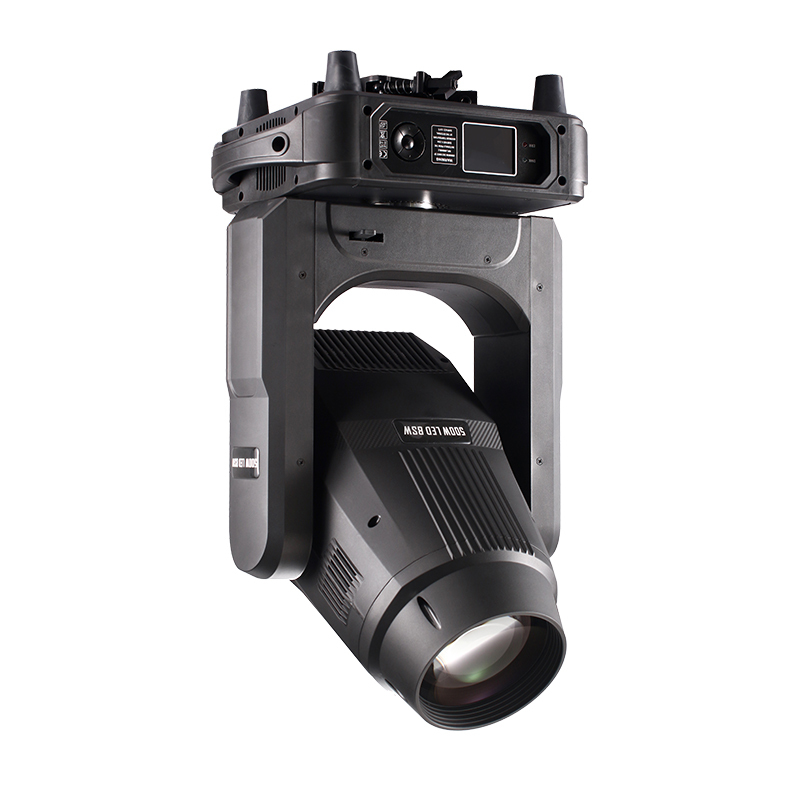
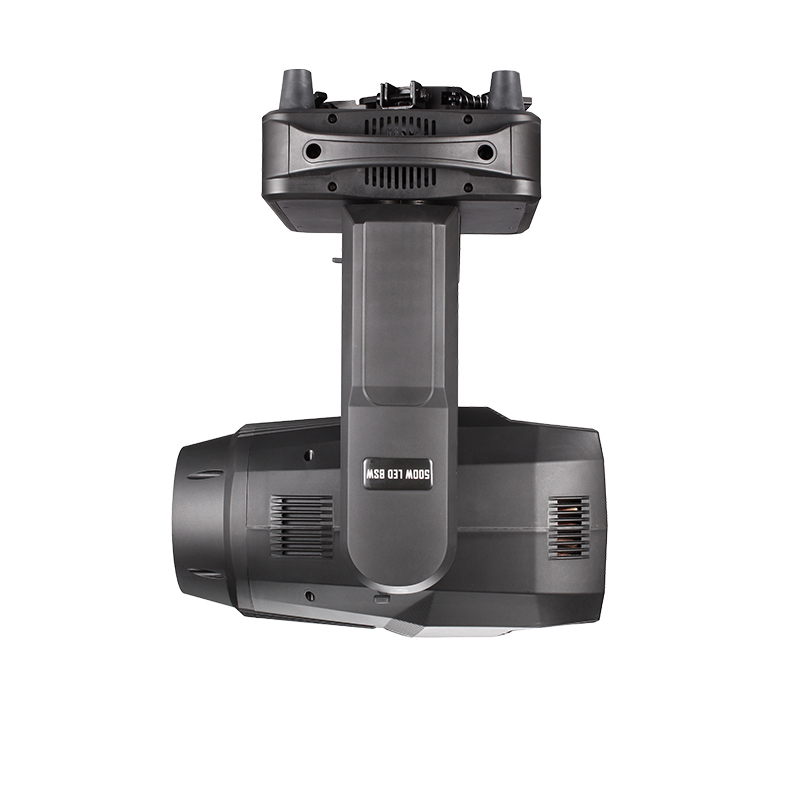
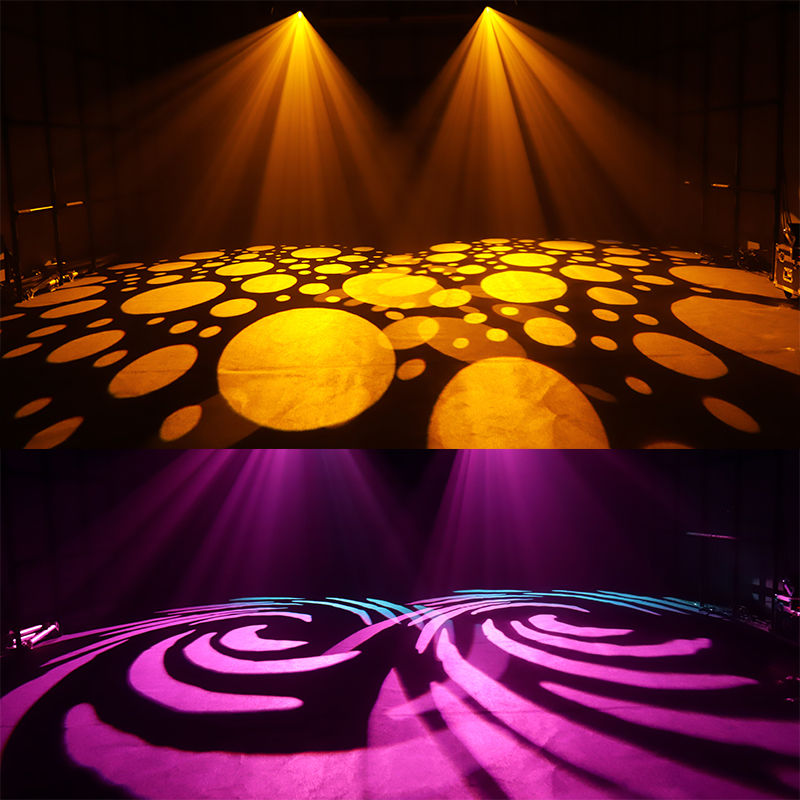
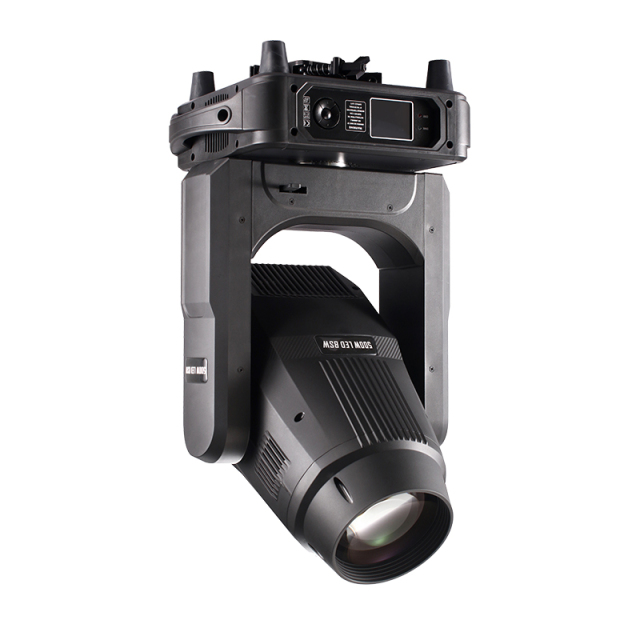
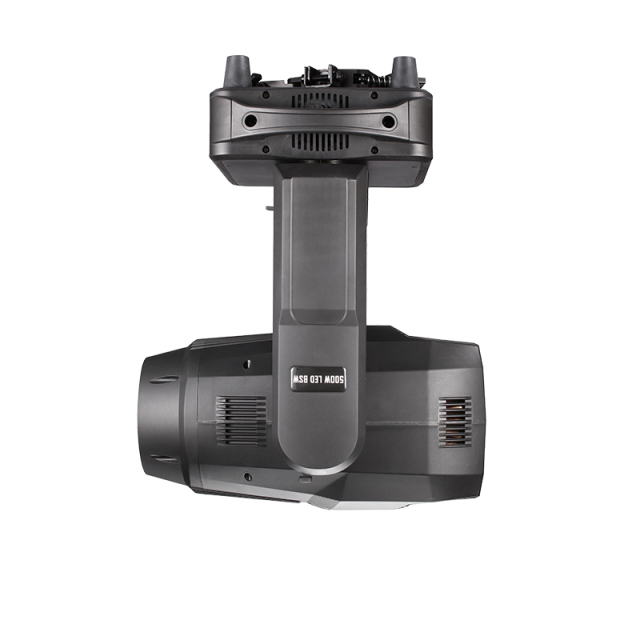
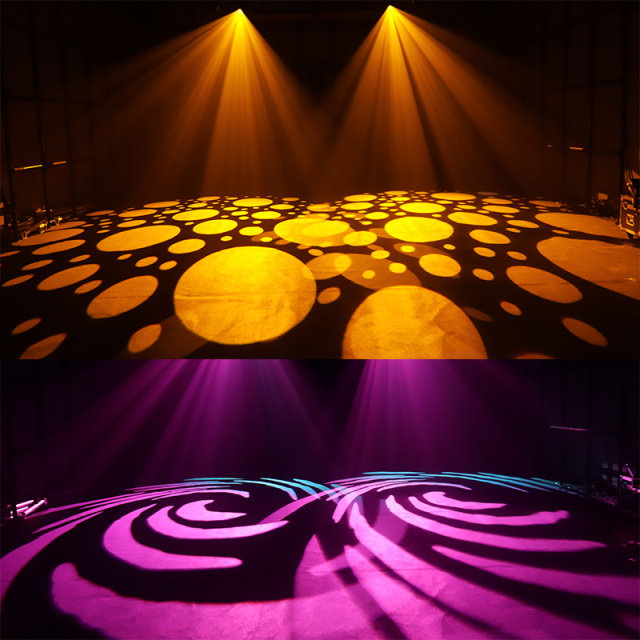
A 500 W LED module with an 8000 K source color temperature and CRI >95 powers the Multi LC500BSW 500W LED Beam Spot Wash Moving Head for applications that combine projected textures with broader wash coverage. Spot zoom spans 4–50 degrees and wash coverage spans 10–50 degrees, while linear focus adjustment from 4 to 50 meters controls pattern sharpness on scenery, floors or backdrops. Linear CMY+CTO mixing, eight wheel colors plus open, eleven fixed gobos plus open and seven rotating glass gobos provide continuous color adjustment and varied projection effects. Independently rotating prisms, an independent frost filter and 0–100% linear intensity adjustment expand the options for image multiplication, softened light fields and dimming cues.
Spot zoom covers 4-50 degrees, giving this led spot moving head light a narrow setting for concentrated looks and wider settings for larger projected images. Adjusting the angle changes the image footprint, so check the result on the actual scenic surface rather than judging it only in the air.
Wash coverage spans 10-50 degrees. For professional led stage lighting rigs that move between defined effects and broader coverage, this separate range provides a useful distinction from the spot function; no separate beam-angle specification is provided.
Linear focus adjustment runs from 4 meters to 50 meters. In theatrical stage lighting, focus controls the sharpness of a pattern on scenery, a floor or a backdrop. This adjustment range is not a statement of illuminance or guaranteed useful projection distance.
One independent frost filter softens the projected spot into a more natural light field. Introduce frost when a defined pattern edge would distract from the scene, and remove it when the image itself needs to remain visible.
Linear intensity adjustment from 0-100% supports dimmable led stage lighting cues, from reduced-output accents to full-output effects. Program the desired level independently from the color and optical treatment so changes in intensity do not require a different visual texture.
High-speed strobe operates at 0-30 times/sec with adjustable speed and a strobe macro function. Use these controls for deliberate rhythmic accents, with the venue's audience-safety procedures governing when flashing effects are appropriate.
Pan travel reaches 540 degrees with 16-bit precision scanning and electronic error correction. This moving-head LED light can reposition across the stage, but this travel specification does not mean continuous rotation. Tilt travel reaches 270 degrees, also with 16-bit precision scanning and electronic error correction. Program tilt positions with the physical rig and surrounding equipment in mind. DMX512 operation uses a 23-channel configuration. We supply this control configuration as your equipment supplier; the channel table remains essential for understanding the function and value range of each channel. An integrated LCD display and address-code setting provide local setup access. For DMX LED installations, keep each fixture's address consistent with the console patch and label it clearly for technicians. RDM functionality and software upgrading support fixture management. Use the update method and software intended for this model rather than assuming that another fixture's procedure applies. Console reset, self-propelled operation and master-slave mode provide different operating options. Automatic playback can support repeatable effects, while console operation gives an operator direct control over programmed cues. Cue programming for this dimmable LED fixture should distinguish intensity changes, movement and optical changes. Building these as separate cue elements makes later adjustments easier without rebuilding the entire look.
Theater and school productions can use projected textures on scenic surfaces while keeping performer illumination on dedicated front-lighting fixtures. In theatrical lighting, this division lets this fixture handle scenic animation without requiring it to provide every lighting function. Indoor concerts can use this fixture as an effects layer around a separate stage wash. Professional LED lighting designs benefit from assigning different jobs to each fixture type: scenic texture from this fixture, broad color coverage from wash fixtures and focused performer light where needed. Nightclubs and entertainment venues can organize looks around distinct parts of an evening, from restrained background scenes to more active performance cues. A dimmable LED lighting design should also account for ambient light and sightlines so the effect remains intentional rather than overwhelming the room. Mixed-fixture installations can pair this fixture with an Ommatea B1260K or Y3740K when RGBW wash and emitter-pattern effects are also required. Lighting suppliers can keep these jobs distinct in a rig: projected images from this fixture and array-based color effects from the wash fixtures. Pairing does not by itself establish a shared console personality or matched output. Camera-based productions need a trial with the intended camera settings, shutter behavior and cue transitions. Check low-level fades, color appearance and visible modulation in the actual setup; the color-rendering specification does not establish flicker performance or complete camera compatibility. Quiet performances also need an acoustic check at the fixture's installed distance and normal operating condition. Listen during pauses and dialogue, not only during music, because no measured fan-noise specification is provided.
Begin with the model-specific specification sheet when documenting this fixture. Check the document revision and exact fixture identification; file availability and revisions must be verified rather than assumed. Review the operating manual and installation drawing before finalizing the installation. Useful details include approved mounting orientations, fixing points, connector pinouts, electrical precautions, cleaning methods and service procedures. Match the DMX channel table, console personality and fixture firmware before programming the rig. Check the intended console software version as well; protocol support alone does not establish a tested personality or visualization profile. Calculate coverage and output using photometric files or measurements taken under stated conditions. For suppliers preparing a lighting design, useful conditions include projection distance, optical setting, color treatment and measurement position; source wattage is not a substitute for illuminance data. Check destination-specific safety and regulatory requirements against documentation for this exact model. Request the applicable reports from us as your equipment supplier, and verify their model identification and scope before using them for an installation.
LITEVISION brings together more than 30 engineers who have worked in the industry for an average of 15+ years. Share your purchasing requirements and the models you are considering to discuss the available options with our team. We provide product maintenance and technical support, with customer service staff available to answer your questions and help address issues. Whether you are comparing options before ordering or need assistance after purchase, contact us with your technical questions and maintenance concerns.
The product model is Multi LC500BSW, a 500W LED BSW 3 in1 stage lighting fixture.
Within the Multi series, the Multi LC600BSW 600W LED beam spot wash hybrid covers the same three-in-one format at higher output.