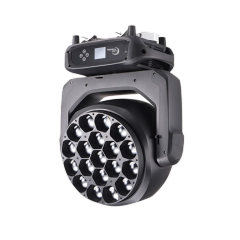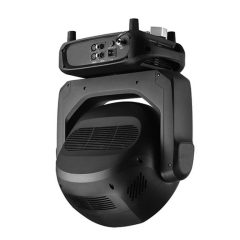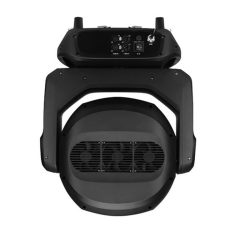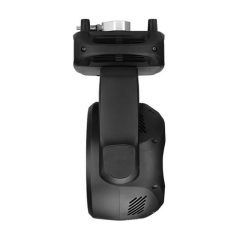
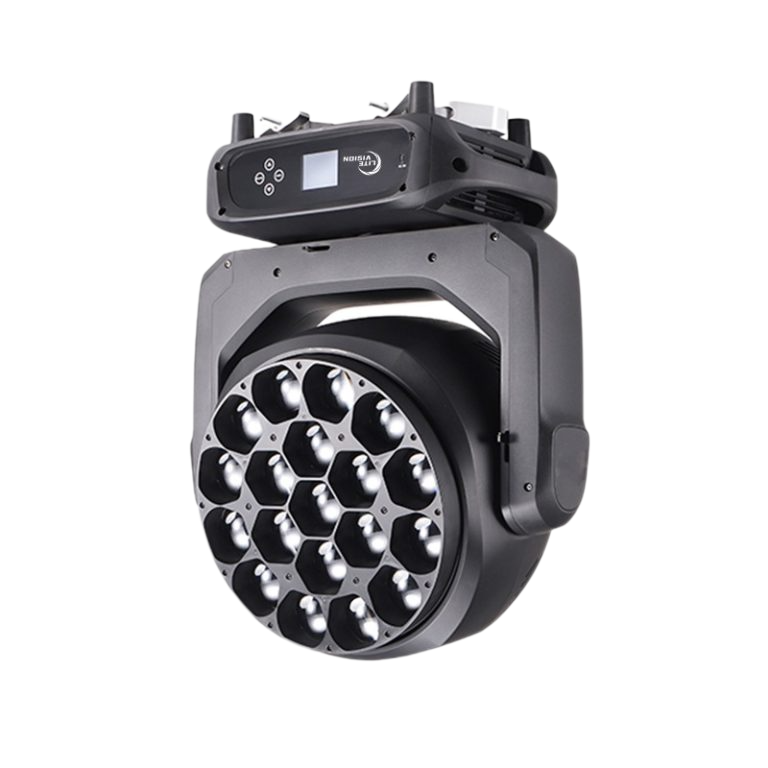
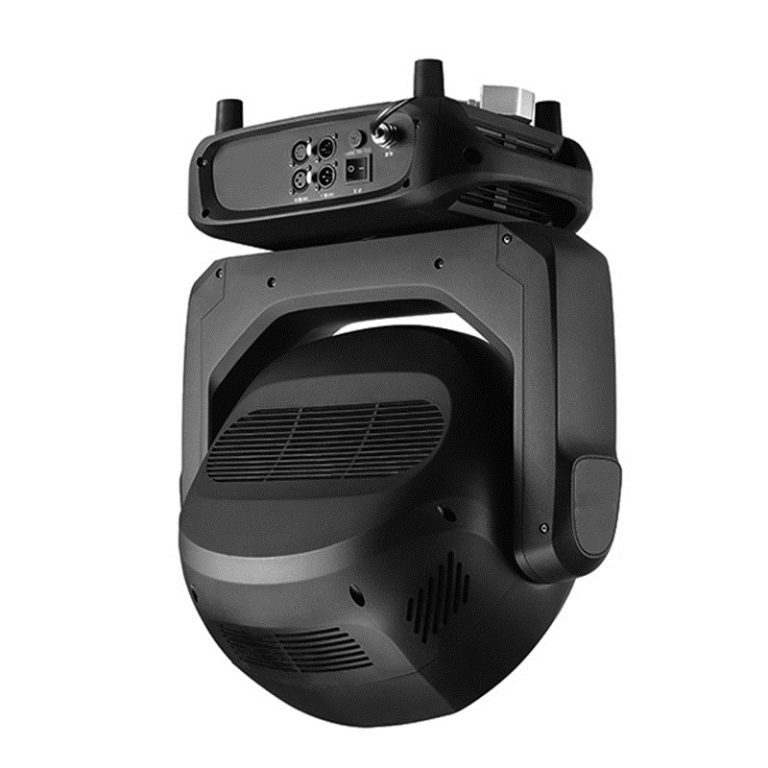
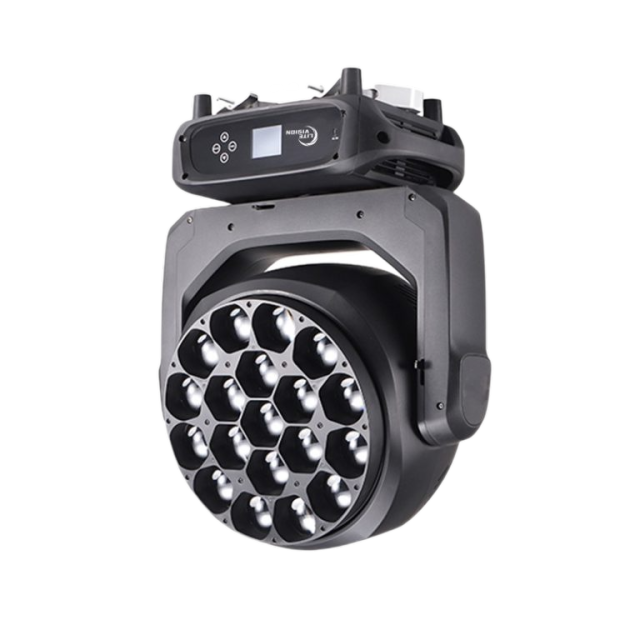
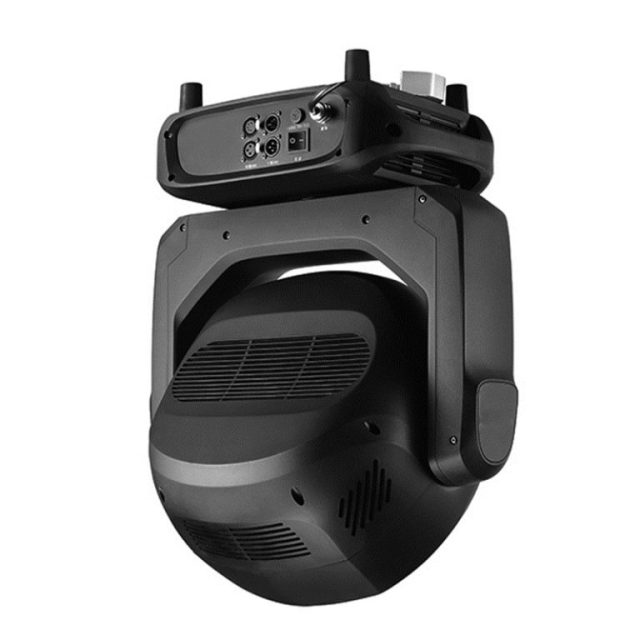
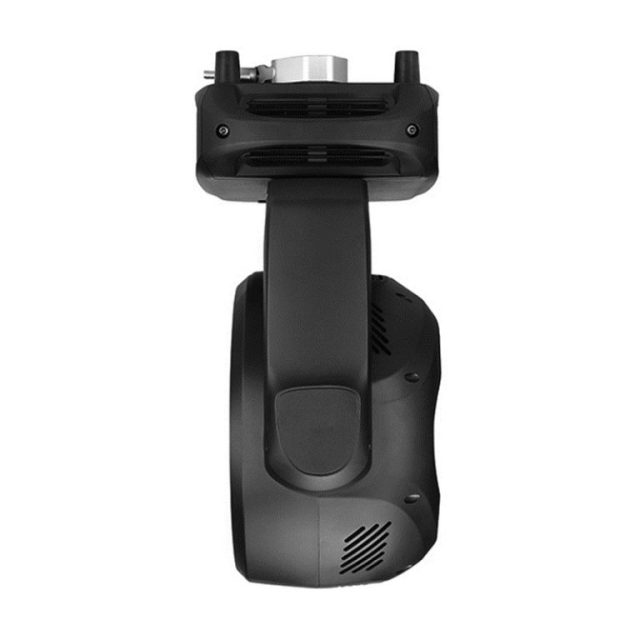
This is the pixel version of the Ommatea 19 × 40 W moving head wash light. The light engine is treated as a grid rather than a single lamp: nineteen OSRAM RGBW emitters sit behind the front lens, and each one can be addressed and colour-mixed on its own, so the same fixture lays down an even wash for a scene change and then breaks into moving columns, chases and colour blocks for the next cue.
What that buys you on site is one fixture where a rig would normally carry two — a wash head plus a pixel effects unit — with one hanging point, one power feed and one DMX footprint to plan.
Rental companies like it because it can be addressed and configured on the ground before it flies; designers specify it because the pixel engine builds looks that would otherwise need a second effects fixture on the same bar. That is how an LED moving head light manufacturer should be able to supply a fleet: the same build, the same firmware and the same addressing routine, batch after batch.
- Nineteen OSRAM 40 W RGBW emitters. Red, green, blue and white come out of every chip, so the fixture mixes a full spectrum without a separate white wheel or a colour flag cutting light out of the beam.
A pixel LED light engine, not a single lamp. Each emitter is driven separately, so the lens face can hold columns, blocks, gradients and chases inside one beam instead of one flat field of colour. - 64 preset macros on board. Recall a macro from the menu when there is no programmer on site, then refine it from the console — useful for clubs, halls and fast turnarounds. - 2500 K to 8000 K linear colour temperature. Warm, tungsten-like white through to daylight white, adjusted in one continuous range rather than fixed steps, so the white can be matched to the rest of the rig. - 50,000 hours expected LED life. No lamps to change and no warm-up or restrike wait after a blackout; the fixture comes back the moment it is given output again.
White in the mix, not on top. The white emitters can lift a saturated colour mix or punch a clean key, while the RGBW channels handle the deep saturates.
Zoom decides where this moving head wash light is useful. Closed down to 4°, it throws a tight, defined column with the individual emitters still readable inside the beam — the angle for a back truss, a long room, or a beam look through haze. Opened to 60°, the same head becomes a broad wash that covers a low stage or a small dance floor from a short trim height, with the cells blending into an even field of colour.
Because the range is continuous rather than stepped, a show travels between the two extremes on one parameter instead of swapping fixtures or adding a diffuser.
The front lens rotates continuously while the fixture is running. Combined with the pixel engine, that turns the projected pattern into a kaleidoscope, and the shape changes with zoom: spinning beams at the narrow end, a rotating patchwork of colour cells at the wide end. Designers tend to treat it as an effect in its own right rather than as a background wash.
One practical note when you map this pixel LED light: patterns read most clearly when the zoom is narrow enough for each emitter to stay distinct. Push the zoom wide and the cells merge into colour, which is often what you want for a wash but not for a pattern cue — build the look at the angle you will actually use it at.
Input is 100–240 V at 50/60 Hz, so the same DMX moving head light works on 120 V and 230 V supplies without a step-down transformer, and a fleet can move between territories without a different power configuration.
Full-load input power is 800 W, with a power factor of 0.98 or better and a maximum input current of 8 A. Power factor is the figure that matters on a distribution rack: at 0.98 and above, the current drawn stays close to the real power used, so the rack behaves predictably and the supply is not loaded with current you cannot turn into light.
Plan circuits around the 8 A maximum rather than an average. On a 16 A circuit that leaves sensible headroom for cable and connector ratings; on a smaller supply it is the number that tells you how many fixtures the circuit will take before you go looking for another feed.
Whether you feed each fixture individually or group them on a distribution board is a venue decision. Tell us the supply you are working with and, as your LED moving head light supplier, we will confirm the connector type and any local requirement before the fixtures ship.
Three channel modes — 21, 35 and 97 — give different depths of control. Match the mode to the show rather than to habit: a plot that treats this moving head wash light as a plain wash rarely needs the largest mode, while a plot that maps the pixel engine cue by cue will want it. The channel chart lists exactly what each mode exposes, so the show file can be planned without guesswork.
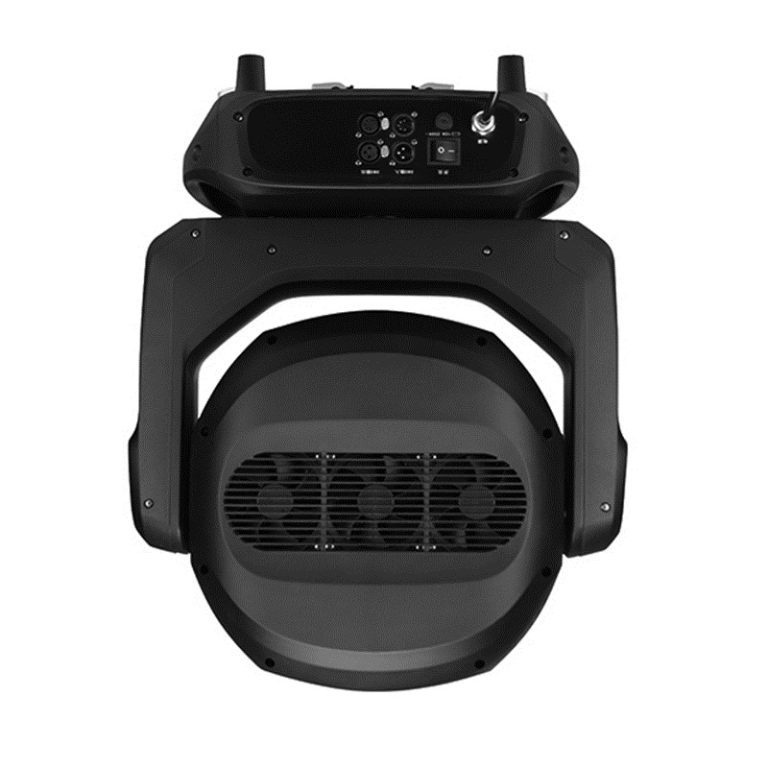
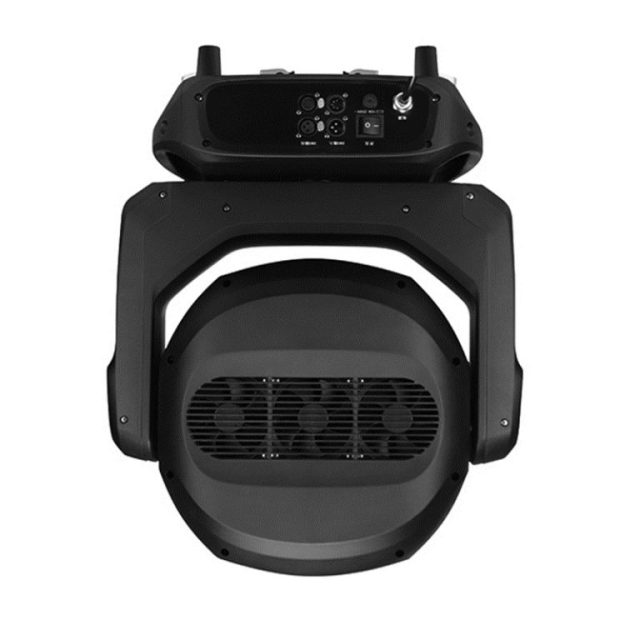
DMX512 and RDM are standard on XLR-3 connectors. Art-Net and sACN are supported for network control, with an RJ45 port available as an option, and wireless DMX is an option too. Confirm the port and wireless configuration on your order — a network-driven rig and a cabled rig need different hardware on the back panel, and it is easier to settle that with the LED moving head light manufacturer than to re-panel a fixture later.
Every DMX moving head light needs a fast way to set an address on a dark stage. With the optional rechargeable battery fitted, the menu opens and the address is set with no mains power at all, and the same menu can be fed from an external power bank before the fixture is patched in.
The 2.4 inch colour LCD reads in English or Chinese and flips 180° for a head hanging upside down in a truss.
Three switchable frequency modes let you adapt the fixture to different camera and dimming conditions. If the head is going on camera, test the modes during focus rather than during the show.
Eco mode and a sleep mode for standby cut consumption when the rig is sitting idle between rehearsal and doors.
- 16-bit resolution on both axes. Slow moves and long cue fades stay smooth instead of stepping from position to position.
Non-touch magnetic encoder. Pan and tilt are read magnetically rather than through an optical wheel, so there is no encoder disc to clean and the head keeps its reference.
Repeatable positions. A look saved on the tour comes back to the same place on the next load-in, which is what keeps a repertory show or a weekly club night consistent — the quality a rental house looks for first in a moving head stage light.
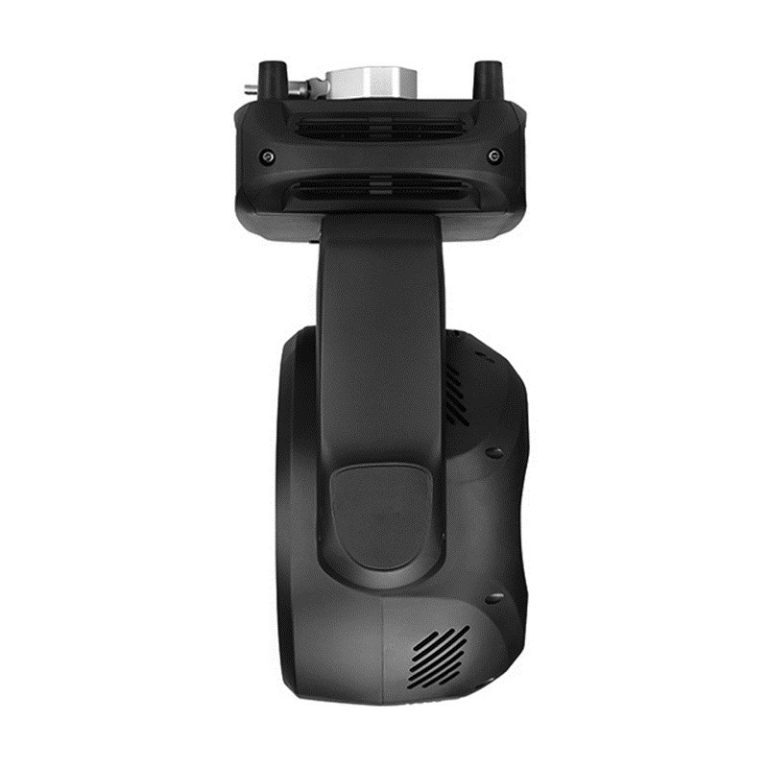
Steep angles. The tilt range lets this moving wash light point almost straight down over a stage, or out and across a room from a downstage truss.
Working environment temperature is -20 °C to 40 °C. That covers a cold truck, an unheated hall in winter and a hot stage in summer, but it assumes the fixture is given air: keep the rear grille clear and leave room behind the head for the fan to move air out of the housing.
Protection rating is IP20, which means the fixture is built for indoor and protected positions. Rain, splashes, hose-down cleaning and long-term outdoor installation sit outside what the housing is designed for — for exposed positions, ask us about the IP-rated fixtures in the range.
Cooling is sensor-driven. The fixture reads its internal temperature and controls the fan accordingly, so it does not run the fan harder than it needs to. In a low, enclosed set or a small booth, give the fixture more clearance rather than less; heat that cannot leave the housing is what shortens LED life.
If the fixtures have travelled or been stored below freezing, let them come up to room temperature before powering on. Condensation on cold optics is normal after a winter load-in and clears once the housing has acclimatised.
| Feature | Ommatea 1940BEE | Ommatea 1940K | Ommatea P1940M |
|---|---|---|---|
| Light engine | OSRAM 19 × 40 W RGBW; each emitter addressable | 19 × 40 W RGBW; pixel patterning macros | OSRAM 19 × 40 W RGBW; individual LED control |
| Input power | 800 W, PF ≥ 0.98 | 800 VA at 230 V | 850 W |
| Zoom range | 4°–60° | 4°–60° electronic | 4°–45° |
| Signature effect | 64 macros; rotating lens kaleidoscope | Wash, beam and FX modes; digital framing; beam edge softening | Rainbow halo ring; vortex and kaleidoscope |
| Colour temperature | 2500–8000 K linear | 2500–8000 K CT emulation | 2500–10000 K |
| Control channels | 21 / 35 / 97 CH | 21 / 35 / 78 / 92 / 97 CH | 21 / 35 / 78 / 92 / 97 / 43 CH |
| Protocols | DMX512, RDM; Art-Net/sACN optional | DMX512; confirm RDM and network options | DMX512, RDM; confirm network options |
| Protection / weight | IP20 / 23 kg | IP20 / 18 kg | IP65 / 19 kg |
| Specify it for | Pixel-mapped club, theatre and rental work | One-lens wash and beam with edge control | Exposed outdoor and architectural positions |
| Choose another model if | The position is exposed to rain or dust — take the P1940M | Your show file is built on per-emitter pixel mapping — take the 1940BEE | You need the widest 60° zoom indoors — take the 1940BEE or 1940K |
| Use it alongside | 2460BEE for large stages; Y740K for compact rooms | 1940BEE for pixel cues; Sword L200BR for tight beams | Archi 461BSW for outdoor beam and spot work; 1940BEE for indoor pixel work |
More than 30 engineers with an average of 15+ years in professional lighting stand behind every order — the same people who answer your technical questions. Tell us your venue, rigging height, throw distance and existing control setup; we help match models, check protocol and channel fit, and build a package that works as one system. If a fixture misbehaves on site, we work through the fault with you and sort out spares. Installation and commissioning guidance come with the order. Founded in 2016, exporting since 2022, LITEVISION serves buyers in more than 80 countries from offices in the USA, Taiwan, Mexico and China.