Product Overview
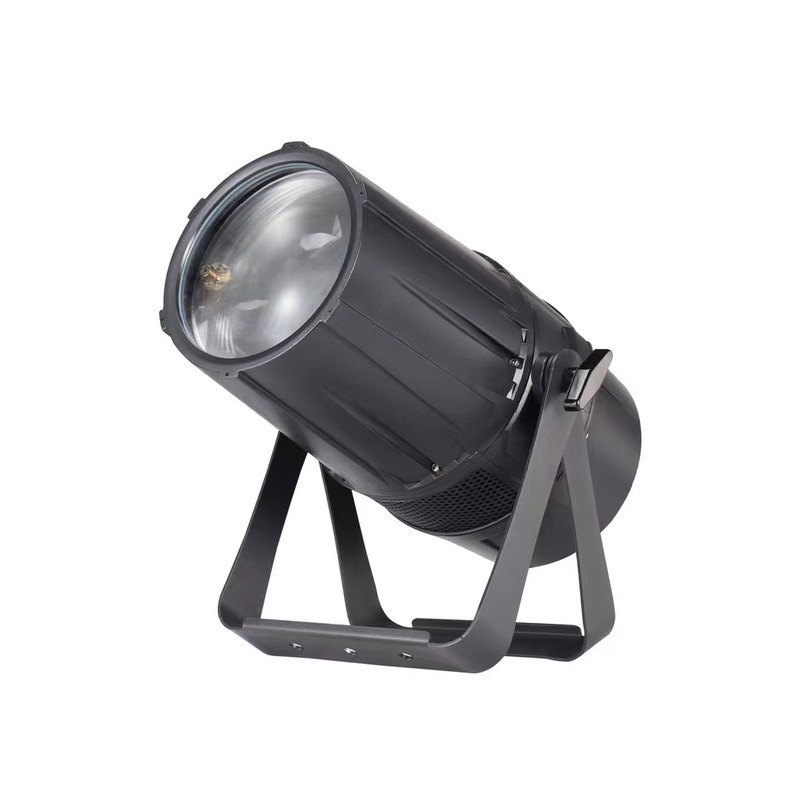
A single 300 W COB LED delivers warm white illumination, while electronic focus adjusts the beam from 10° to 60° to suit smaller areas or wider coverage. Operators can establish the required beam width, then balance brightness against the surrounding lighting, with two dimming modes and a fast electronic strobe operating at 1–25 Hz. DMX512 and RDM support, 4/7CH modes and four built-in programs provide control options, while a rear display and round buttons allow local setup. For outdoor installations, the IP65 rating covers dust ingress and water jets under the rating conditions; cable connections and adapters also need protection appropriate to the exposure.
Product Advantages
- Electronic focus adjusts the beam from 10°-60°, giving cob led stage lighting a concentrated setting for smaller areas and a broader setting for wider coverage.
- Warm-white illumination gives white led stage lighting a natural, welcoming character, with attention on the illuminated subject rather than changing colors.
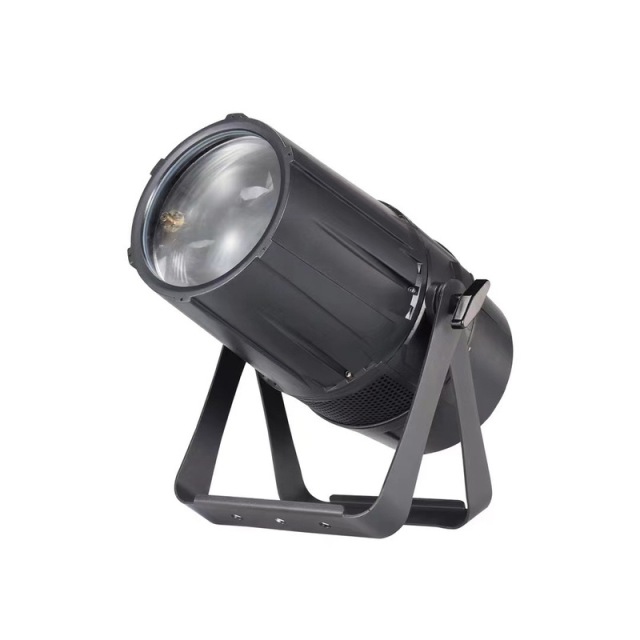
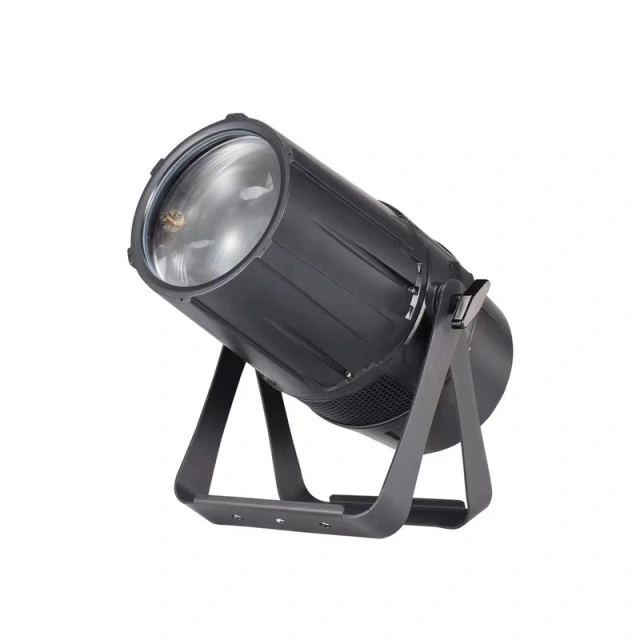
- A large, clear front lens forms the optical face of this led wash light, directing the output through a single front aperture.
- Adjustable coverage lets the same fixture accommodate changes in throw and illuminated area without relying on a different fixed-angle lens for every arrangement.
- For dimmable led stage lighting, beam width and brightness serve different purposes: establish the required coverage first, then balance the level against the surrounding lighting.
Core Specifications
| Property | Value |
|---|
| LED source configuration | Single COB LED |
| LED source power | 300 W |
| Rated electrical power of the fixture | 450 W |
| AC input voltage range | 100–240 V |
| AC supply frequency | 50/60 Hz |
| Specified average LED service life | ≥50,000 h |
| Fixture dimensions | 376 × 220 × 386 mm |
| Net fixture weight | 8 kg |
Control & Programming
DMX512 and RDM support connect this fixture to dmx led stage lighting installations. The available channel modes are 4/7CH; the console patch and fixture setting need to use the same mode so that controls address the intended functions.
Three-core data input/output provides the signal connections. Connector pin assignments and the required adapters need to match the installation’s existing data cabling.
Four built-in programs provide preset operation, while the fast electronic strobe operates at 1~25 Hz. Brightness, strobe and zoom give operators separate ways to shape a cue; use the channel table to establish their exact assignments.
Two dimming modes are available for dimmable led stage lighting. Their behavior and menu names need to be checked against the operating instructions rather than assumed to match another fixture’s curves.
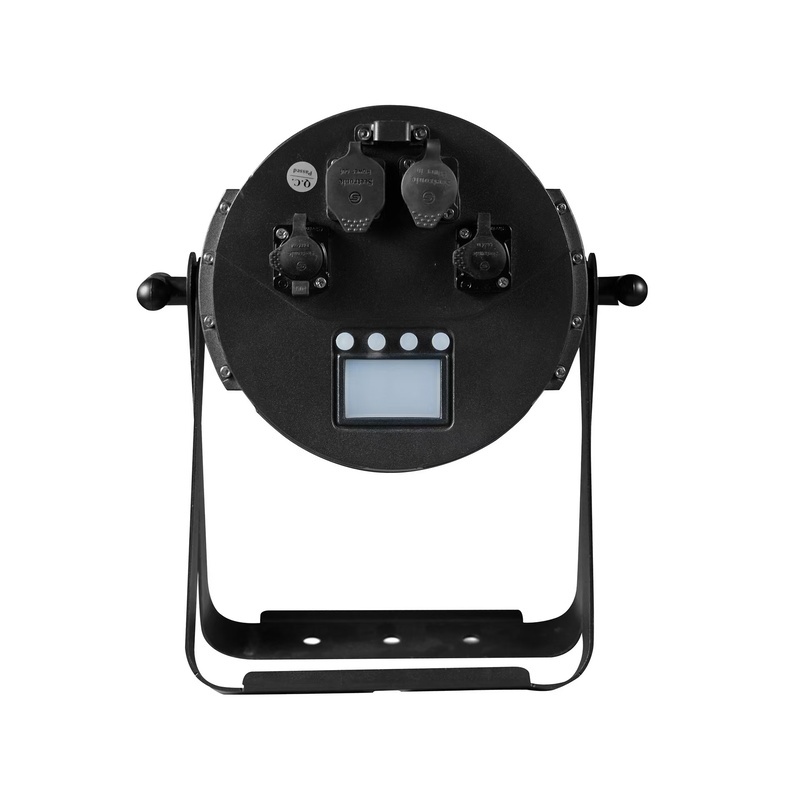
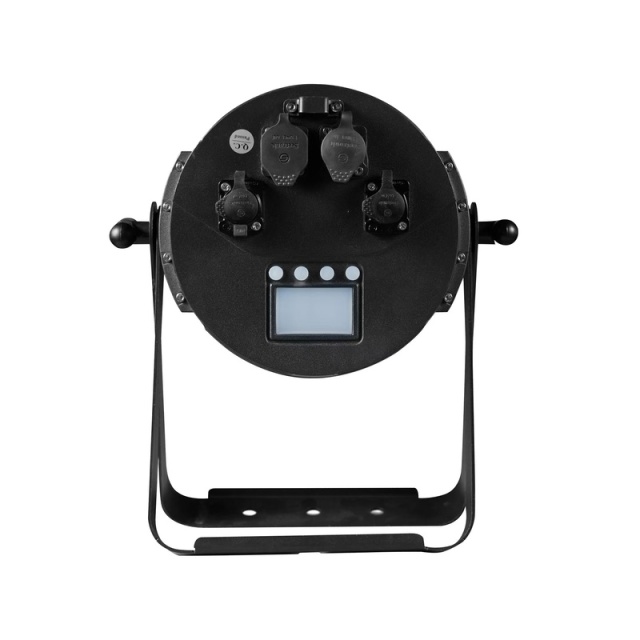
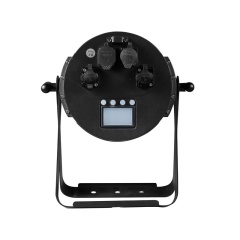
A rear control display and round buttons provide local access during setup. Keep that panel accessible when arranging the fixture so technicians can inspect settings without disturbing the intended aim.
Art-Net-based systems require verification of the network-to-fixture connection method and any required interface. Before integrating this led wash light into a networked installation, establish the complete signal path rather than assuming a direct network connection.
Installation & Outdoor Care
- Assess the exposure before installing outdoor led stage lighting. The protection level is IP 65, covering dust ingress and water jets under the rating conditions; immersion, marine exposure and unrestricted use in every climate are outside that claim. Obtain the operating-temperature limits and permitted mounting orientation for the intended site.
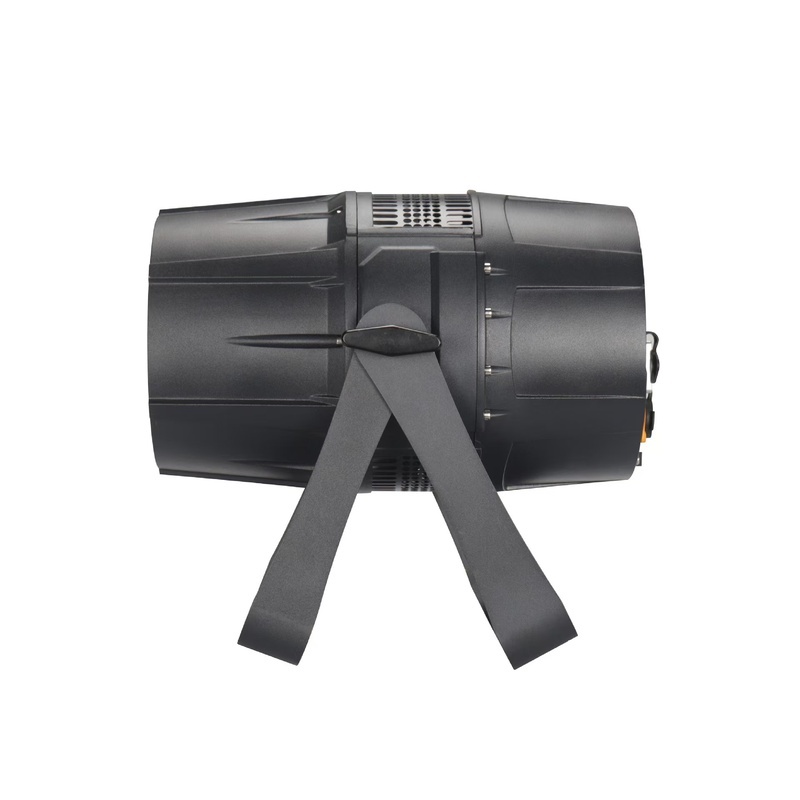
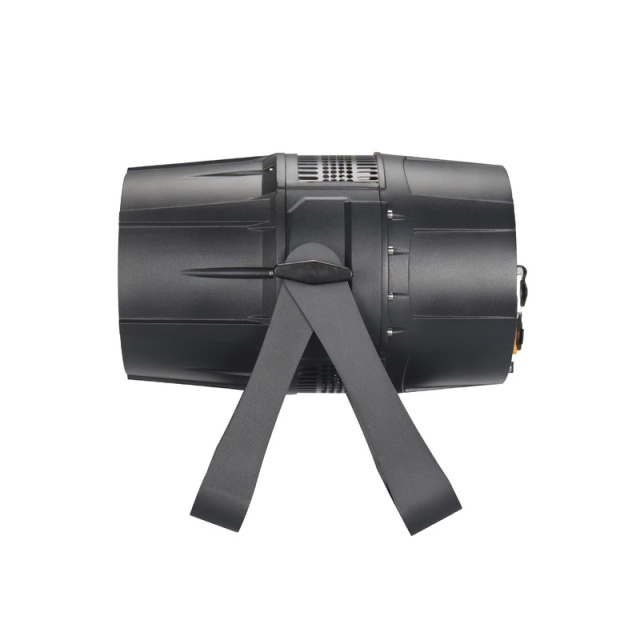
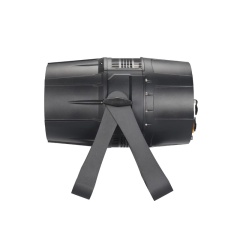
- Inspect the adjustable mounting bracket and side adjustment handle before aiming the fixture. Use suitable mounting hardware and secondary retention where required, and allow space for the bracket’s movement, cable bends and service access.
- Route the power and signal cables so they do not pull against the rear connections. For dmx led stage lighting outdoors, the cable connections and any adapters also need protection appropriate to the exposure; covered connectors alone do not establish the protection of a complete cable assembly.
- Aim white led stage lighting at the intended surface before final tightening. Keep the beam clear of unwanted reflective surfaces and check that the fixture’s physical angle remains secure after the cables are arranged.
- Keep the ribbed cylindrical body and vented rear housing clear of obstructions. Do not cover the housing with fabric or block access around the rear during operation.
- Isolate the electrical supply and allow the fixture to cool before cleaning. Use a soft cloth on the lens, avoid abrasive cleaners, and inspect connector covers, cable entries and mounting points during routine maintenance.
Testing & Compliance
Thermal, electrical and longevity testing form part of our product checks, addressing heat behavior, electrical operation and durability. These checks support dependable operation of cob led stage lighting without replacing the installation requirements for the individual fixture.
Our products are CE, RoHS, UL, and ISO 9001 certified, ensuring compliance with international safety and quality standards. As a professional stage lighting supplier, we provide the relevant compliance documentation on request for the intended market.
Our final inspection process includes a check by the quality-control team and a qualification report before warehouse release. Working with a stage lighting equipment supplier should give installers a clear record of the product being checked, rather than relying on appearance alone.
outdoor led stage lighting also needs an installation-specific review of exposure and connections. The photographed inspection marking reads “Q.C. Passed”; that marking identifies an inspection status and does not extend the stated environmental protection.
For a technical fault, record the operating mode, symptoms and conditions, together with the fixture identification and clear photographs or video. That information helps our support team distinguish a setting or signal issue from a component problem and discuss the appropriate maintenance action.
Applications & Companion Fixtures
- Theater and school performances can use white led stage lighting for presenters, actors and spoken-word areas where the audience needs a clear view of people and costumes. Place fixtures from complementary directions when the design calls for more even facial modeling.
- Outdoor events can use outdoor led stage lighting for presentation areas, temporary performance spaces and illuminated event features. Include nearby structures and audience sightlines when planning the aim so useful illumination stays within the intended area.
- Architectural displays can use this led wash light on entrances, selected façade sections and decorative structures. Review the surface texture and reflectance during a site trial, since pale stone, dark finishes and glazing respond differently to the same illumination.
- Touring productions can use a fixed PAR body for an area that needs to remain lit while moving effects operate elsewhere. Label the intended aim and operating settings to help crews reproduce the arrangement at successive venues.
- Color-led designs can pair this white-light fixture with the Archi PZ740C4 when RGBW effects are needed elsewhere in the scene. Treat the white illumination and colored accents as separate design elements rather than expecting color mixing from this model.
- Projects needing shaped light around scenery or architectural edges can add a framing fixture such as the Archi E1200BSWF. Its framing function serves a different task from the adjustable coverage of this PAR.
Technical Downloads
- Match the specification sheet and operating manual to the exact fixture configuration before using them for a drawing or installation plan. cob led stage lighting documents need to distinguish source information from electrical requirements and identify the supplied version.
- Request the photometric file and measured illuminance results for the beam settings and distances relevant to the project. Measured color-rendering information is also needed when accurate reproduction of scenery, finishes or skin tones forms part of the specification.
- Obtain the complete DMX channel table before building a console show file. dmx led stage lighting documentation should identify channel functions, value ranges and the channel mode to which each table applies.
- Check for a fixture-library file for the intended console and software release. Our role as a professional stage lighting supplier includes discussing integration requirements, but a generic protocol listing does not establish that a particular console combination has been tested.
- Request the actual tested-console list and its software versions when a project requires validated operation. A stage lighting equipment supplier also needs the fixture firmware version to match a library or test record to the unit being installed.
- Check which files are currently available through Downloads and request any additional documents needed for the project. A specification sheet, manual, channel table, photometric file or console library should only be treated as available once the corresponding file has been provided.
About Us
Stage, architectural and outdoor-event lighting are the focus of LITEVISION’s manufacturing and trading business. We bring over a decade of lighting expertise to projects requiring practical fixture design, consistent production and ongoing technical assistance.
Our advanced production lines combine automated systems with engineering oversight, and our annual production exceeds 50,000 units for global markets. As a professional stage lighting supplier, we continue to develop lighting designs that balance performance, energy efficiency and long service life.
LED wash fixtures, flood lights, architectural lights and performance-lighting equipment form part of our range for temporary and permanent installations. Our work as a stage lighting equipment supplier also includes complementary lighting categories for projects that need more than a single type of fixture.
Project discussions begin with the lighting task and technical requirements. Our design team can work with customers on custom product designs and installation consultation, with the scope established for the particular project before manufacturing begins.
Customers across Europe, the Americas, Asia and the Middle East work with our partners, distributors and technical service teams. This network supports local communication alongside assistance with maintenance, technical questions and potential upgrades.
Energy-efficient materials, waste reduction in production and durable product design guide our sustainability work. We develop products for continued use and maintenance, helping reduce unnecessary replacement while supporting the changing needs of venues and event operators.
White-Light & Recording Requirements
- For a 3200K or 5600K requirement, check the exact configuration with us before ordering. We have not confirmed whether these values identify separate versions or selectable settings on one fixture, so adjustable color temperature should not be assumed.
- For installations needing both white points during a performance, establish whether the supplied configuration can deliver that change before designing the cues. A requirement to change color temperature during operation is different from choosing a white point when ordering.
- For recording, assess a sample of the intended configuration with the cameras, lenses and white-balance settings you will use. Include skin tones, costumes and scenic materials in the shot; a matching color-temperature value alone does not establish matching color reproduction.
- For flicker checks, record at every planned frame rate and shutter setting, including any slow-motion settings. Test the brightness levels used in the show, especially low levels and fades, and review the footage for banding or brightness variation. Flicker-free performance has not been established for this model.
- For theaters, interview spaces and other sound-sensitive venues, check operating noise before specifying the fixture. No model-specific acoustic measurements or quiet-operation guarantee are available; lighting performance alone does not establish suitability near open microphones.
- For a practical sound trial, let the fixture reach normal operating temperature, then listen and record from the intended microphone positions. Include quiet passages and any zoom adjustments planned during recording, with the fixture at its proposed mounting distance.
- For production approval, keep a record of the tested fixture configuration, camera settings, brightness levels and microphone placement. Use those conditions when checking the delivered units so the result reflects the actual recording setup.
Technical Support & Model Matching
LITEVISION brings together more than 30 engineers who have worked in the industry for an average of 15+ years. Share your purchasing requirements and the models you are considering to discuss the available options with our team. We provide product maintenance and technical support, with customer service staff available to answer your questions and help address issues. Whether you are comparing options before ordering or need assistance after purchase, contact us with your technical questions and maintenance concerns.
FAQ
Can I switch between 3200K and 5600K on the fixture?
Switching between 3200K and 5600K is not confirmed for this model. Please check with us before ordering whether these values refer to separate fixture versions or selectable operation on the supplied unit.
For additions to an existing rig, compare the confirmed color temperature with the lights it will work alongside. A difference in white appearance can be noticeable when fixtures illuminate the same subject or adjacent surfaces.
For camera work, request color-rendering data and assess the light under the intended camera settings. Color temperature alone does not establish how accurately skin tones, costumes or scenery will appear on camera.
For an installation with a specified white point, include that requirement in the order details so we can check the proposed configuration against it. If matching existing fixtures is important, a side-by-side assessment can help establish whether the combination meets your needs.
For rental fleets, record the supplied color-temperature configuration in the equipment inventory. That gives technicians a useful reference when grouping fixtures for a show or selecting replacements later.
Can one fixture provide both narrow and wide beam coverage?
Electronic focus adjusts the beam from 10° to 60°, allowing the fixture to cover smaller areas or provide wider illumination. This adjustable coverage accommodates changes in throw and illuminated area without requiring a different fixed-angle lens for every arrangement. Set the required beam width first, then adjust brightness to balance the output against the surrounding lighting.
What control options are available, and will it connect directly to an Art-Net network?
The fixture supports DMX512 and RDM, with 4-channel and 7-channel modes and three-core data input/output. The console patch and fixture must use the same channel mode so controls address the intended functions. For an Art-Net installation, verify the network-to-fixture connection method and any required interface; the complete signal path needs to be established before integration.
What does the IP65 rating cover for an outdoor installation?
The IP65 rating covers dust ingress and water jets under the rating conditions. Cable connections and adapters also need protection appropriate to the exposure. Immersion, marine exposure and unrestricted use in every climate fall outside the stated claim. Before specifying the fixture for a site, obtain its operating-temperature limits and permitted mounting orientation, and assess the installation’s exposure.
Should electrical planning use the 300 W LED rating or the fixture’s rated power?
The fixture’s rated electrical power is 450 W, while 300 W identifies the power of its single COB LED source. Its specified AC input range is 100–240 V at 50/60 Hz. Use the fixture’s electrical rating when reviewing the installation’s power requirements, keeping the LED source specification distinct from the stated electrical power of the complete fixture.
Does dimming make this fixture suitable for filmed performances?
dimmable led stage lighting still needs a camera test at the intended frame rate, shutter setting and brightness level. No model-specific flicker or acoustic measurements are supplied, so recording suitability and sound-sensitive operation need to be checked for the actual production.