Product Overview
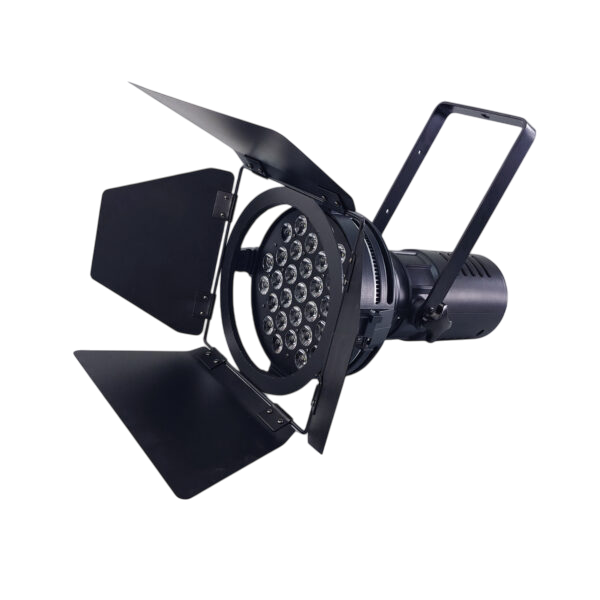
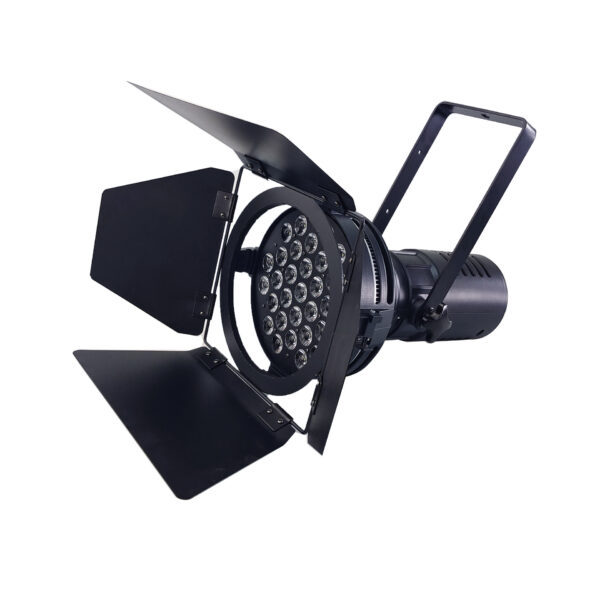
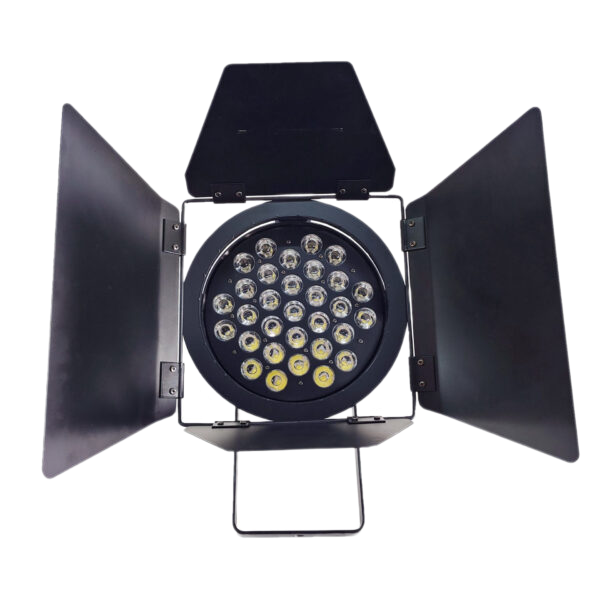
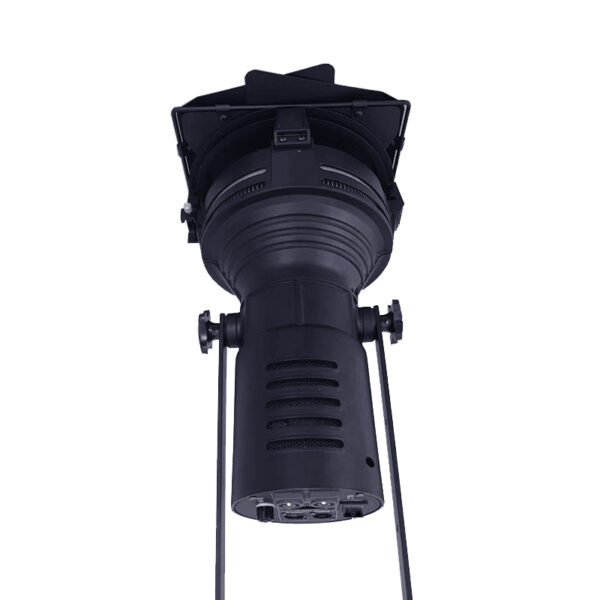
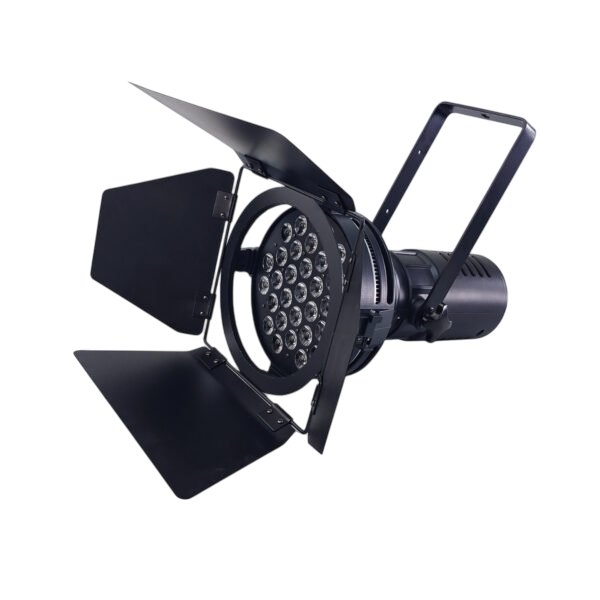
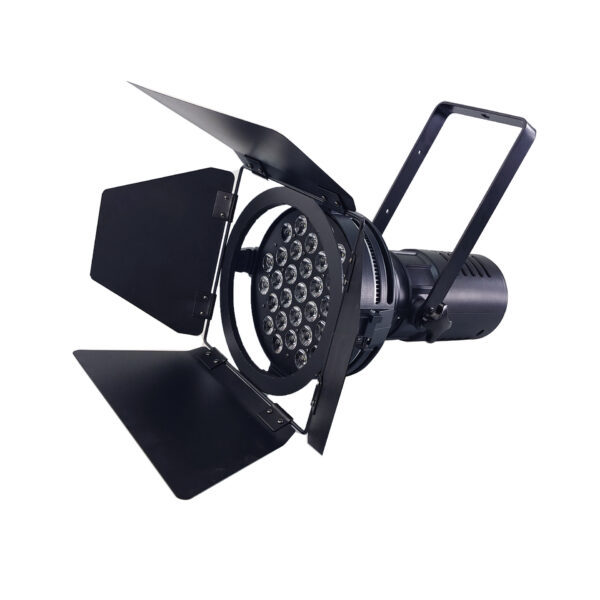
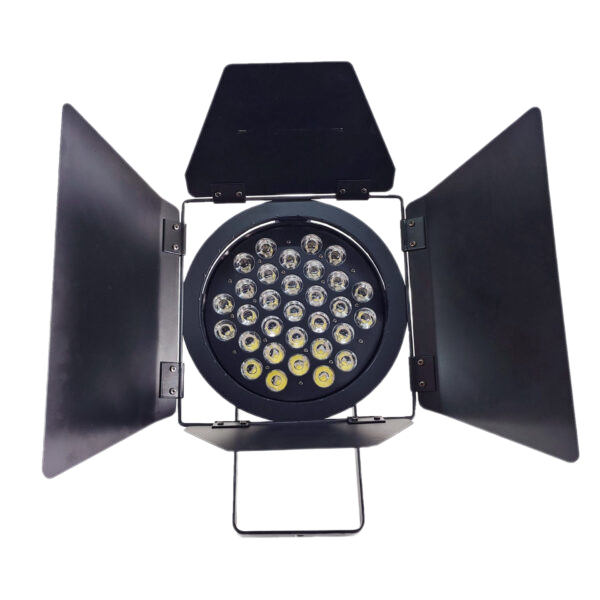
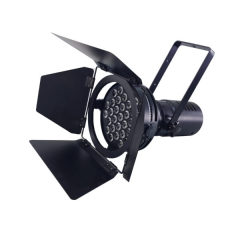
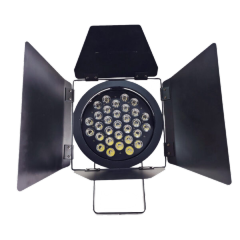
The LEP350 is a static high-power LED wash light for exhibition stands, auto show booths and stage front light. Thirty-one 15 W LEDs sit behind a round lens face, the body is aimed by hand, and there is no pan or tilt to drift during a three-day show.
Rental houses, exhibition and event AV suppliers, and dealers who stock professional LED stage lighting tend to buy it as the front-light unit in a package: two or four units for a booth, six or eight across a small stage front, more when the same light has to reach the back of a hall.
It is also the fixture we quote most often for church platforms — an even wash on the speaker and the choir, without a visible beam cutting through the room.
Set against a bar of par cans, one unit covers a wider face with fewer cables and no lamp changes; set against a moving head, it is lighter to fly and it never drifts off its mark. Most rigs end up with both: moving heads for movement, this wash light for the steady base everything else is read against.
The fixture is built at our Guangzhou plant on the same production line as our beam and hybrid ranges — the same moving head light factory, the same engineers, the same production standards.
We are LED stage lighting manufacturers rather than a trading desk, so a specification question comes back from the people who build the unit, including the awkward ones about dimming curves, colour temperature and whether this model really suits your room.
Light Source & Beam
- 31 × 15 W LEDs. The array is dense, so the output reads as one broad field across a face rather than a row of hot spots you have to blend by eye.
- Warm white or cold white, fixed at build. White LED stage lighting means one colour temperature per unit — no RGB mixing, no colour wheel, no gel to swap. Order one tone and every unit in the batch matches.
- 50,000 H rated LED life. In exhibition and church work that is years of short days rather than a scheduled lamp change, and there is no colour shift from ageing lamps to chase.
- 3–15 m throw. At the near end it fills a booth wall or the front of a small stage; at the far end it still covers a platform from the back of a hall. If your positions fall outside that band, tell us and we will say whether this model or a different one fits.
- A soft-edged field. The overlapping lenses give the LED wash light a wide, gentle pool — the shape that flatters skin on a stage and paint on a car body under a camera.
- Barn doors that actually cut. The hinged leaves on the front stop the field at a screen, a backdrop or the edge of the next stand without moving the fixture — useful on a booth where LED stage lighting fixtures sit close together.
Control & Dimming
Control is deliberately simple — the way professional LED stage lighting is usually run in a booth or a hall where the operator has a dozen other things to do. The fixture runs on DMX512, in master-slave, or in static mode, and nothing else has to be configured for it to work.
Two channel footprints are available: 2-channel when console real estate is tight, 10-channel when more of the fixture's parameters need to sit under the desk. Whichever you patch, keep the channel chart with the fixture so the next operator does not have to guess.
The dimmer has two characters. DIMMER 0 is the normal fast linear response, which suits music-driven snaps and beat work. DIMMER 1–9 is the soft curve, ramping more gently and holding its shape at the bottom — the one to audition first when the light is on camera or fading under a speech.
Dimming itself is linear from 0 to 100 per cent, so a long fade stays smooth across its whole length instead of collapsing in the last few per cent.
Because there is no colour mixing to program, a look is built from intensity and position. On a rig with twenty of these, that means faster programming and fewer cues that drift between units.
Power, Cooling & Protection
- Universal mains input. AC 100–240 V at 50/60 Hz, so the same fixture goes on a 110 V North American supply and a 230 V European one without a step-down transformer.
- 200/300 W input. The figure follows the version you order — use it when you plan circuit load, because a dozen units add up quickly on one circuit.
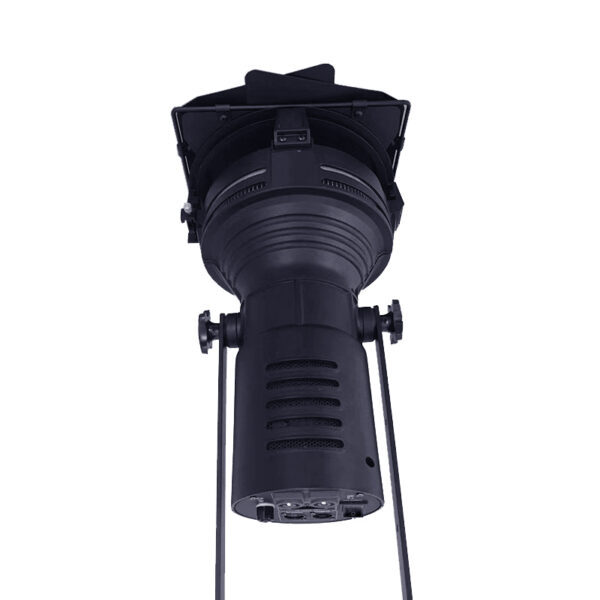
- Forced fan cooling. The fan runs whenever the fixture is powered. That is normal at this output, but it does mean the unit is not silent, which is worth knowing when the brief is LED stage lighting for churches or a quiet conference room.
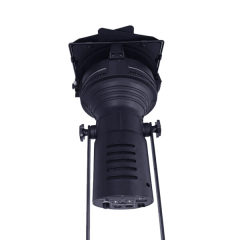
- Keep the vents clear. When the fixture is rigged close to a wall, a set piece or another light, leave air space behind the housing so heat leaves the body instead of building up inside it.
- Indoor, dry use. The rating is IP20; like most LED stage lighting fixtures of this size it belongs in a hall, a booth or on a stage, not on an outdoor stage or under a marquee where condensation forms.
- No moving parts. Nothing in the optical path drifts in transit and there is no pan or tilt to re-home after a rough load-in, so the unit comes out of the case where you left it.
Size & Weight
| Item | Figure |
|---|
| Net weight | 7.5 kg |
| Gross weight | 10 kg |
| Light dimensions | 51 × 27 × 27 cm |
| Carton dimensions | 57 × 32 × 32 cm |
| Packing | One unit per carton |
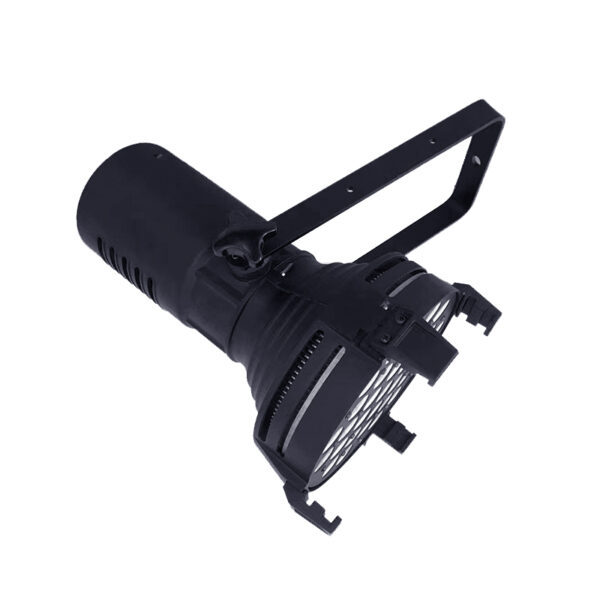
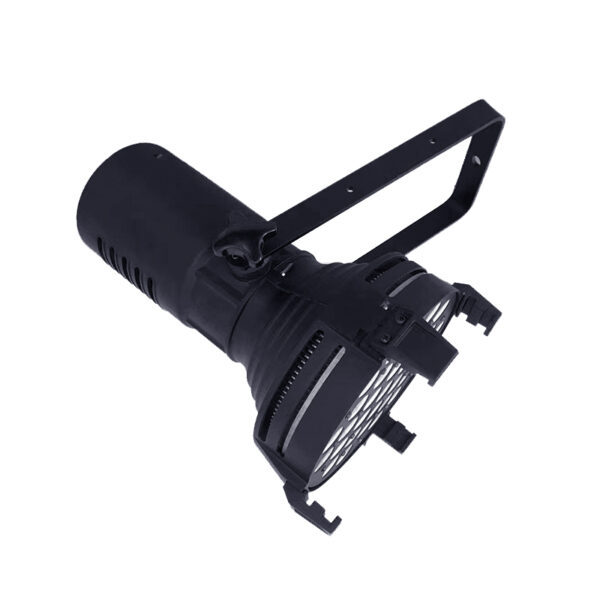
| Mounting | U-shaped yoke bracket |
| Housing | Matte black |
| Environment | Indoor use, IP20 |
Mounting & Installation
- Check the bracket first. The U-shaped yoke is the only mounting hardware the fixture needs; make sure both locking points are tight before the unit goes up — the same bracket check we would like every one of our LED stage lighting fixtures to pass.
- Hang it or stand it. Clamp the yoke to truss for a flown position, or set the fixture on a shelf, a stage floor or a plinth and tilt the body on the bracket. For exhibition work the stand option usually wins, because it goes in before the truss does.
- Aim before you tighten. Rough the aim of the whole body by hand, check the centre of the pool against the face or the product, then lock the bracket. Everything after that is fine adjustment.
- Power it sensibly. Take the fixture to a circuit that can carry the input power of the version you ordered, and leave slack in the cable so the unit can be re-aimed without unplugging it.
- Chain the data. Run DMX from fixture to fixture, set the address on each unit before the console comes up, and terminate the last one in the line. A missing terminator or a duplicated address causes most of the strange behaviour on a first build.
- Set the cut-off from the audience side. Walk the room, look at the edge of the pool, and adjust the barn doors until the light stops where you want it — not at the wall behind it.
- Run a fade and a blackout before doors. Check that the fixtures behave together, that nothing flickers at the bottom of the fade, and that the console file matches the addresses you set.
Ordering & Delivery
- Fix the version. 200 W or 300 W, warm white or cold white. This is white LED stage lighting, so the tone is set during build and cannot be swapped at load-in — decide it before the order is placed. Say where it is going. Tell us the destination market and the paperwork the project needs; as LED stage lighting manufacturers we can confirm which test reports and certificates we can provide for that market, rather than assume one set covers every country. Confirm quantity and packing. Tell us how many units and whether they travel as single cartons or consolidated for a tour or a container, so the packing list matches what arrives. Put the dates in writing. Production lead time and shipping terms should be agreed before the fixture is promised to a client or a show date; both move in a busy season. Agree payment terms. Confirm the payment method, the currency and the documents your finance team needs, and ask for the invoice and packing list to be issued with the shipment. Settle the after-sales route. Ask what the warranty period covers, how a faulty unit is handled and where spares come from — and get it in writing with the order. Document | What it covers --- | --- Specification sheet | Electrical, optical and physical data for the exact version on your order, issued by the LED stage lighting manufacturers who build it DMX channel chart | The 2-channel and 10-channel layouts, ready to key into a console file Photometric data | Throw and field figures for planning positions before the rig goes up User manual | Setup, addressing, both dimming curves and routine care for this LED stage lighting fixture Drawings | Cabinet and bracket dimensions for rigging plans and case layouts Compliance documents | Confirmed per destination market — name the standard your project specifies and we will say what we can provide Spare parts | What can be supplied for this model and how to order it
Technical Support & Model Matching
More than 30 engineers with an average of 15+ years in professional lighting stand behind every order — the same people who answer your technical questions. Tell us your venue, rigging height, throw distance and existing control setup; we help match models, check protocol and channel fit, and build a package that works as one system. If a fixture misbehaves on site, we work through the fault with you and sort out spares. Installation and commissioning guidance come with the order. Founded in 2016, exporting since 2022, LITEVISION serves buyers in more than 80 countries from offices in the USA, Taiwan, Mexico and China.
FAQ
Should I order the 200 W or the 300 W version?
Match it to the throw and the surface. A booth wall four or five metres away is comfortable on the lower input; a stage front lit from the back of a hall, or a large product display that has to compete with daylight, is where the higher figure earns its place. Tell us the room, the mounting height and the distance to the subject, and we will tell you which one we would take.
Warm white or cold white?
Warm white sits closer to the light people are used to in a room and is the usual choice for platforms, speeches and services; cold white reads cleaner and crisper on camera and against white booth walls. This is white LED stage lighting, so the decision is the tone rather than a colour range — and because the tone is set at build, order the mix your rig needs rather than planning to change it later.
Can we run it without a lighting console?
Yes. Master-slave and static modes let the fixture be set up without a desk — useful on a stand where the booth builder is the one switching it on, or in a small venue with no operator on the show.
Will it work with the console we already have?
If the desk speaks DMX512, yes. It behaves like any professional LED stage lighting fixture: address it, patch the channel count you have chosen, and it responds. Load the channel chart into the show file first so nobody is guessing at load-in.
Is it quiet enough for a church or a conference room?
Cooling is by fan, so it is not silent — you will hear it in a room with no music playing. In the LED stage lighting for churches work we supply, the fixtures usually sit above and behind the platform, where the fan is masked by speech and building services; if the room is very quiet, audition one unit in position before committing to a number.
Can it be used outdoors?
No. The rating is IP20, which means indoor and dry. An outdoor stage, a marquee with condensation or a position under a leaking roof will shorten its life — for those jobs, look at our IP-rated outdoor ranges.
Can we mix it with moving heads on the same rig?
Yes, and most rigs do. It takes standard DMX512, so it sits on the same universe as the moving heads, and it comes out of the same moving head light factory as our beam and hybrid ranges — which means channel habits, spares and support run through one route instead of two.