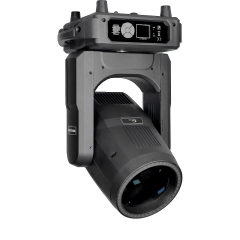
Product Overview
Club rigs and small touring stages rarely have room for a full beam package, and rarely need one. The Sword L200BR is the beam in Lite Vision's compact Sword range: a dedicated LED beam moving head for indoor rooms where the look depends on hard-edged shafts cutting through haze rather than on broad washes.
It does one job. The optical train is built around a single narrow angle, the colour and gobo wheels are made for quick cue changes, and pan and tilt are quick enough to throw the beam around a room on the beat. Nothing on the fixture is there to cover a second role.
As an LED moving head light manufacturer we build this model for people who buy beams in numbers: rental houses adding to a touring inventory, distributors filling out a beam tier for local venues, and installers fitting out clubs, bars and multipurpose halls. Those buyers care less about a long feature list than about whether the same show file works on every unit in the case, and whether a fixture that goes down on a Saturday can be back on the truss quickly.
If a project needs one moving head light to work as beam, spot and wash at once, this is the wrong tool — and we will tell you so before you order rather than after.
Optics and Beam Angle
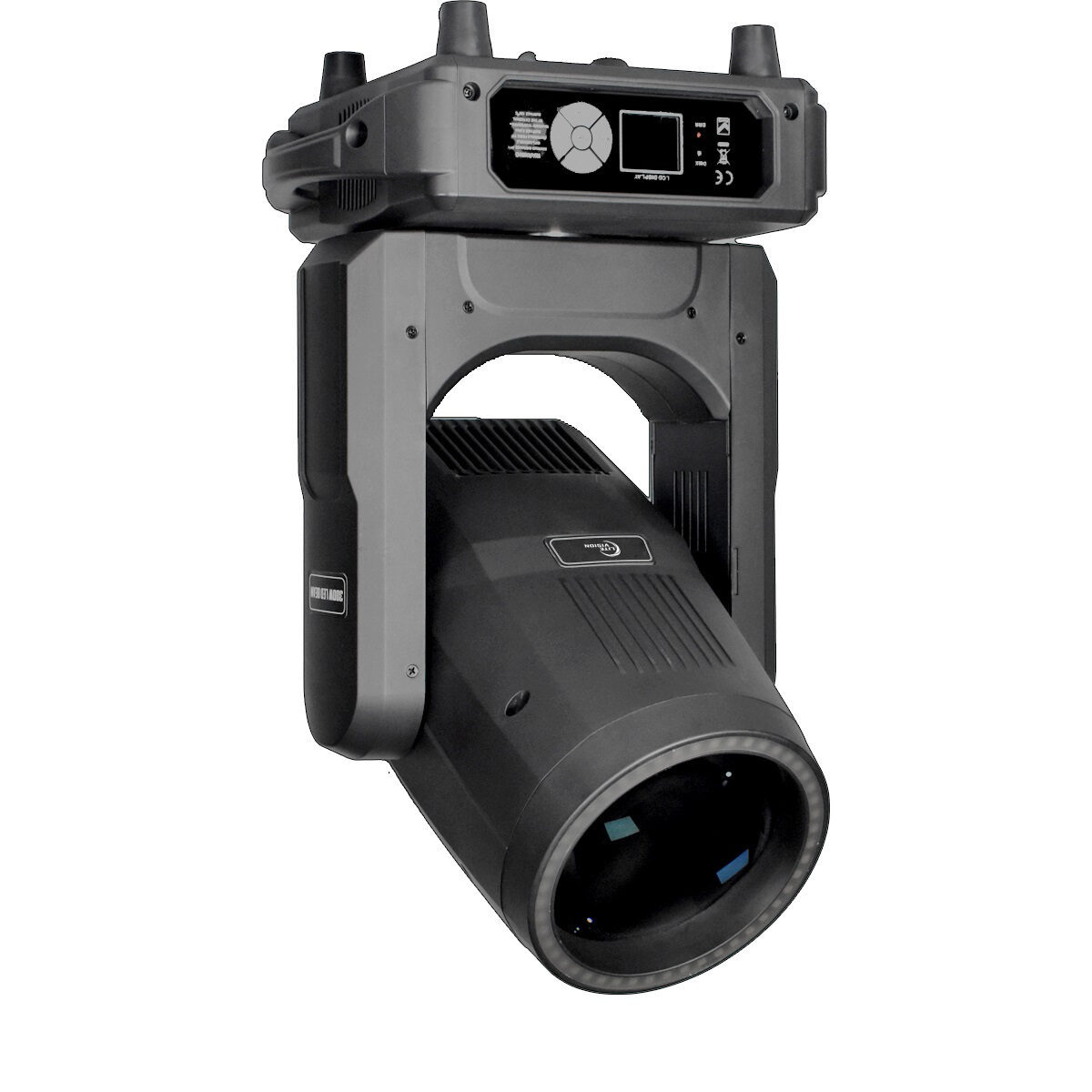
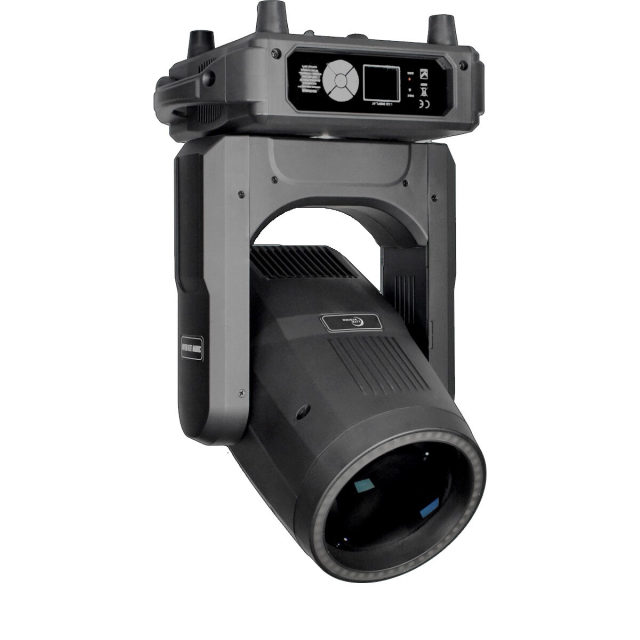
The front lens is the whole optical story on this model: a fixed 1.8° beam angle, at the tight end of what a beam fixture can do.
At that angle a beam moving head light throws a column that stays narrow all the way across a room. Close to the fixture the beam is a hard-edged line; at the back of a club it is still a solid shaft with a clean outline, which is the reason beam positions are booked in the first place. It is a look for haze and distance, not a way to light a stage floor.
The angle is fixed — there is no zoom to set and no focus ring to drift. That changes how the rig is planned rather than what it can do: positions are chosen by how far the beam has to travel, and the effect comes from where the column lands, not from widening it to cover an area.
Keeping the angle fixed has a practical payoff. Fewer lens groups sit in the path, so more of the light stays in the beam, and there is no zoom calibration to check between production runs. As an LED moving head light manufacturer, we treat that repeatability as a design requirement rather than a quality check: two units bought a year apart put the same column on the same spot, which is what a rental fleet actually needs from a beam.
What you will notice in use is how much the room matters. In a dry, haze-free venue a column this narrow is almost invisible from the side; with haze in the air it becomes the strongest element on stage. Budget for haze as part of the rig, not as an optional extra.
Colours and GOBOs
- 14 colours plus white on the colour wheel. Enough to hold a house palette, a couple of seasonal looks and a guest act's colour scheme without swapping fixtures. The white position gives an unfiltered beam for the brightest, most neutral column.
- Discrete colour positions. Colours land on cue rather than sliding through a spectrum, which suits chase programming and beat-driven changes where the snap is the whole point.
- 10 fixed gobos plus white. Patterns break the beam into silhouettes in the air. With several beams crossing a dance floor, different gobos are what stop the rig reading as one repeated shape all night.
- A fixed gobo wheel, not a rotating one. The wheel indexes to a pattern; individual gobos do not spin. If a look depends on rotating gobo animation, this is not that fixture — a moving head beam light manufacturer builds a wheel like this to change patterns quickly, not to animate them, and the movement comes from pan and tilt.
- Enough variation to carry a moving head light show. Fourteen colours, ten patterns and a prism give a small rig a long cue list: colour chases, pattern changes on the drop, and colour-plus-gobo combinations for the slower sections. It is a narrow palette used well rather than a wide one used once.
Prism, Movement and Effects
- 540° pan and 270° tilt. A full turn of pan and three-quarters of tilt covers a rear-truss position above a dance floor and still points straight down for floor work.
- 16-bit position resolution with accurate reset. Slow sweeps stay smooth instead of stepping across the room, and the moving head light returns to the same home position on power-up, so a cue that worked on Thursday still works on Saturday.
- 8+16 facet prism. The prism breaks the single beam into a ring of narrower beams — the classic multi-beam fan over a dance floor, and the fastest way to fill a room from one position on the truss.
- Prism work from a narrow source. Because the beam leaves the lens at 1.8°, the split beams stay separated further down the room rather than blurring into one another, so the fan still reads as individual shafts at the back of the venue.
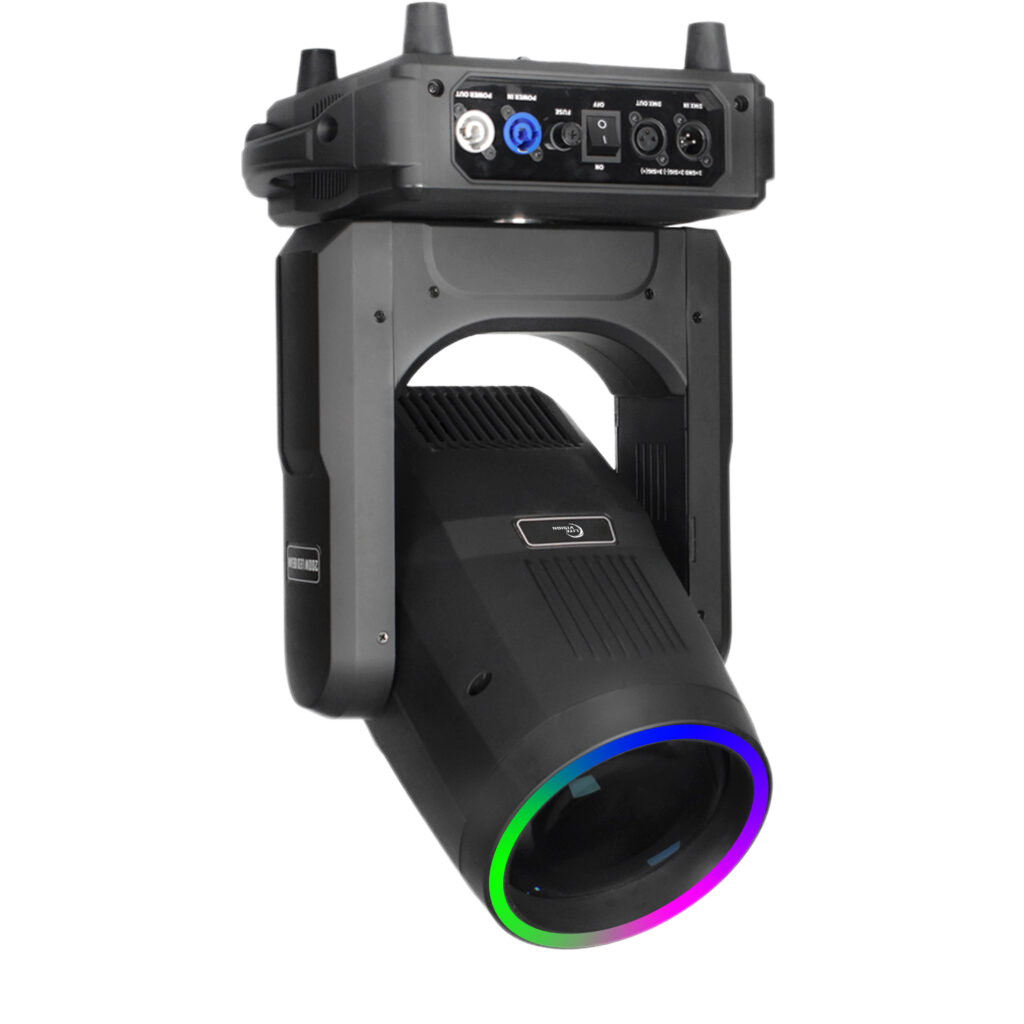
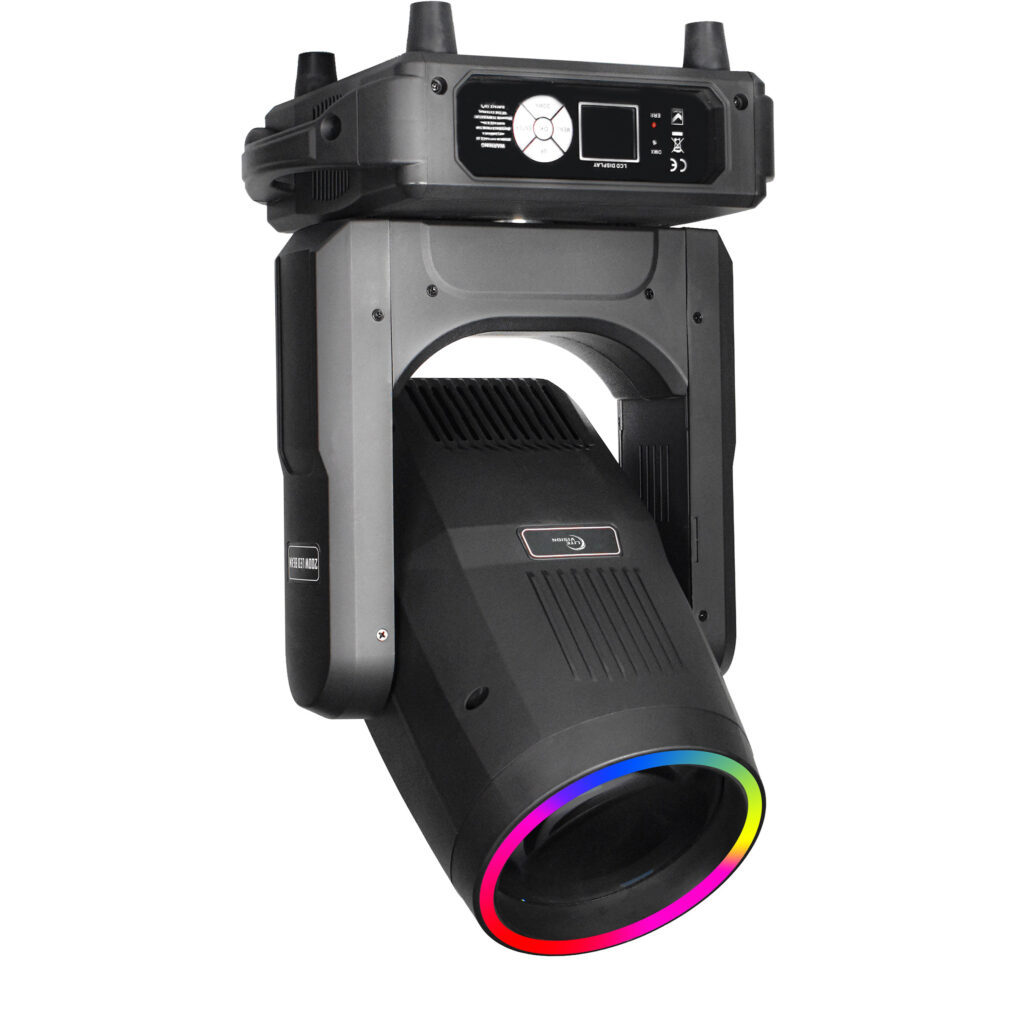
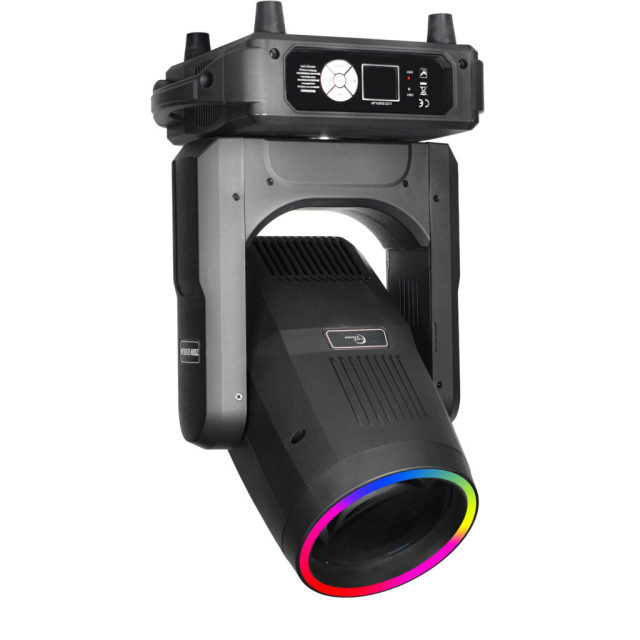
- RGB LED strip around the lens. A ring of RGB LEDs sits around the front lens and shows colour on the face of the fixture even when the beam is aimed away. Where fixtures are visible to the audience, that turns a moving head stage light into part of the set rather than a black box on a truss.
- Effects stack in one cue. Colour, gobo and prism can be combined and moved together, so a single fixture can hold a textured fan while it sweeps — which is how a handful of units carry a full moving head light show in a room that only has room for a handful.
Power Supply and Input
- Wide-range input for mixed markets. The fixture runs on AC100–250 V, 50/60 Hz, so one version covers venues on 110 V and venues on 220–240 V. Distributors holding stock for several regions do not have to split an order by voltage.
- 350 W total draw from a 200 W LED engine. The extra headroom covers the LED driver, the control electronics and the strip-light circuit. When you calculate distro per truss, work from the fixture draw rather than from the LED wattage, or you will under-count the chain.
- 200 W LED light engine. A single LED module feeds the optical train of this moving head light. There is no discharge lamp, no igniter and no lamp-hour log to manage, and nothing that has to come out on a lamp interval schedule.
- POWER IN, POWER OUT and fuse on the rear panel. Units link along a truss with short jumpers instead of every fixture running back to the distro. Ask us for the linked-unit limit at your supply voltage before you plan the chain — it changes with voltage and cable length.
- Specified for real site power. These fixtures meet venue distro, wall circuits and generator-fed stages, so the input stage is specified for that spread rather than for a bench test. As a moving head beam light manufacturer we would rather plan the supply with you before the order ships than diagnose it from a photograph afterwards.
Control Modes and DMX
Control is deliberately simple: one DMX512 personality at 18 channels, plus auto and master/slave modes for rooms that never see a console.
The single 18-channel map is the practical part. A show file written on one unit transfers to the rest of the inventory without a mode change, and there is no second personality to keep in sync between builds. For a rental fleet that is worth more than a long channel list nobody uses.
Auto mode runs the built-in program from the menu — no controller, no operator. A bar, a function room or a small hall can have beams moving over the floor on the first night. Master/slave takes it further: set one fixture as master, link the others to it, and the rig runs the same show from a single short data link.
The rear panel carries DMX IN and DMX OUT, so a beam moving head light like this one chains truss to truss in the standard way, and there is nothing unusual for your technician to wire around.
Addressing is done from the onboard menu, so set addresses on the ground before the fixtures go up rather than on a ladder. Ask us for the channel chart for the build you receive and keep it with the show file. When you add a dmx moving head light to an existing rig, matching that chart is what stops a small addition turning into a rewrite of the whole cue stack.
- One DMX512 personality at 18 channels. Any desk that outputs DMX512 patches this fixture as an 18-channel device — grandMA3, Avolites, ChamSys, ONYX or an older console. There is no second mode to switch into, so the same show file runs on every Sword L200BR in the case.
XLR DMX IN and DMX OUT on the rear panel. The rig chains truss to truss in the standard way, and a dmx moving head light added mid-season wires like everything else on the bar.
No console needed for smaller rooms. The standalone and linked options covered under Control Modes and DMX mean a bar, hall or function room that never buys a desk still gets a moving head light show on the first night.
Wireless DMX is confirmed per order, not assumed. Tell us the transmitter brand and system your rig already runs — Wireless Solution, LumenRadio or another — and we will confirm the wireless configuration of the units allocated to you before the order is scheduled. Do not plan a wireless position on site until that confirmation is in writing.
DMX512 is the control set; networks need a node. This model runs DMX512 with auto and master/slave modes. If your system distributes Art-Net or sACN to the truss, place a node there and feed the fixtures DMX — no network port on the fixture replaces that.
RDM users should raise it early. If your workflow depends on remote addressing or remote monitoring, say so when you enquire and we will confirm what the build you receive supports, rather than leave you to find out at the venue.
Build a two-tier beam rig with the Sword L120B. The 120 W model in the same family runs a 0°–3.8° angle on 16 channels at 12 kg. Use it where budget and weight matter most and the L200BR where the column has to stay tight over a longer throw; crew, rigging practice and spares carry across both.
Pair it with wash and haze. A beam moving head light is an aerial layer, so add Ommatea bee eye wash units — P1940M, 1940K or 2460BEE — to cover performers and floor, and budget for haze: without it in the air, a 1.8° column barely reads from the side of the room.
Applications
- Nightclubs and bars. Rear-truss beams over a dance floor, running from auto or master/slave mode so the venue does not need an operator on the payroll. A beam moving head light at this angle gives the room its strongest visual element from the first night.
- Small and mid-size stages. Four to eight units across a rear truss carry the aerial half of a moving head light show while the wash fixtures cover the floor. The fixed angle makes positions easy to repeat from venue to venue.
- DJ booths and mobile setups. Two units on a T-bar give a mobile rig the beam look without a truck. Power and data run in one pass along the bar, so setup is a chain rather than a star of cables.
- Multipurpose halls, schools and churches. Places that need a look rather than a lighting department: auto and master/slave modes cover an assembly or a service, and staff can bring up a preset without a console.
- Rental fleets and distributor stock. Beams are the fixture venues ask for first and rental houses run out of. For a moving head light supplier this model is the beam tier that keeps one show file valid across the fleet — one personality, one colour set, one gobo set.
- Visible-set stages. Where fixtures sit on stage instead of hidden on a rear truss, the LED ring around the lens adds colour to the face of the unit, and a moving head stage light becomes part of the design rather than a black box.
Installation and Rigging
- Check the yoke before anything goes up. The fixture hangs from its U-shaped yoke, and the clamp bolts to the yoke's rigging point, never to the housing.
- Fit a clamp that matches your truss, and clip a secondary safety bond through the yoke before the fixture leaves the ground.
- Hang it — or stand it on a light stand or the floor if it is working as an uplight — and leave clear space above and behind the body for the vents.
- Run the data: DMX IN from the controller or the previous fixture, DMX OUT to the next one. A dmx moving head light chains in the standard way, so there is nothing unusual to wire.
- Set the address from the menu before the fixture goes up whenever you can. It is quicker on the ground than on a ladder, and it is the step crews most often skip.
- Power up, let the fixture complete its reset, then run pan and tilt through the full range to confirm both directions are free and the beam lands where the plot says it should.
- Focus with the room in its show state: haze on, house lights at performance level. A narrow beam set in a lit, empty room will look wrong once the show starts.
- Send us the plot before the crew goes up. As a moving head beam light manufacturer we review hang positions, addresses and data linking with customers every week, and it is cheaper than re-rigging a truss.
- IP20 is a narrow rating and should be read that way: the fixture is protected against fingers and larger solid objects, and it has no water protection at all. In practice that means indoor work — clubs, bars, theatres, halls and studios, the normal home of a moving head stage light — plus covered stages where rain genuinely cannot reach the fixture. It does not mean a festival field, an open terrace, or a stage roof that lets water through in a storm. When a project sits on the line, tell us how the fixture will be mounted and aimed and we will give you a straight answer instead of a hopeful one. Better to settle that boundary before the order than to find it out on site. The body is vented, so airflow matters: leave clear space above and behind the fixture, and do not pack units tight against drapes or a low ceiling. Two habits keep an indoor fixture healthy. Let a cold unit reach room temperature inside its case before power-up, because condensation on the lens and the electronics does more damage than the cold itself. And keep haze machines from blowing straight into the vents — fluid leaves a film that dulls the optics long before anything electrical fails.
- Net weight | 13.5 kg Dimensions (W × D × H) | 370 × 330 × 570 mm Mounting | U-shaped yoke with a single rigging point Rigging positions | Truss clamp, floor or light stand Housing | Matte black, vented body Handling | Lifts and aims by one technician Control panel | Display with MENU / UP / DOWN / ENTER keys
Maintenance and Serviceability
Most of what goes wrong with a beam fixture goes wrong slowly and quietly: a film on the lens, dust in the airflow, a colour wheel that stops snapping cleanly. A short routine prevents all three.
The front lens is the first surface to go dull. Wipe it with a soft microfibre cloth and a cleaner made for coated optics, and avoid solvents — a scratched lens cannot be polished back. How often depends on the room: a club running haze every night needs it far more often than a hall that uses the fixture twice a month.
Vents and the fan path collect the same film, plus dust from the road case. A soft brush or low-pressure air through the vents at every service is enough. Do not chase dust into the housing with a high-pressure line, which pushes it onto the optics instead of out of the fixture.
Colour and gobo wheels sit inside the optical path and will eventually pick up haze residue. Cleaning them is a bench job, not something to attempt on a truss. Ask us for the service procedure before the housing comes off and we will tell you what to check while it is open.
Store and transport the fixture in a padded case with the yoke taking the load rather than the lens. A beam that travels loose in a van arrives with a scratched front element long before anything electrical fails.
Spares and turnaround matter as much as the routine. If a unit goes down mid-season, the question is how fast it comes back, not what the part cost. Tell us which parts you want to hold in stock and we will confirm availability and timing with your order — as a moving head light supplier we would rather you held the right two parts than the wrong ten.
Ordering and Delivery
- Minimum order quantity and price tiers. These are quoted per order and depend on quantity and configuration. Ask your sales contact for the current minimum and the tier that applies to your volume.
- Lead time and production slot. Confirm the current scheduling before you commit a show date or a container booking. Peak season and made-to-order configurations both move the date.
- Payment and trade terms. Payment method, currency and Incoterms are agreed at quotation. Have them written on the order confirmation before you transfer.
- Packing. Tell us whether the fixtures will travel in cartons or in flight cases and how many per case, so packing is confirmed with the order rather than assumed at the loading dock.
- Warranty and after-sales. The warranty period and what it covers are confirmed with your order — ask for the current terms in writing so both sides work from the same document. Claims are handled by the team that built the unit, which is faster than routing them through a reseller.
- Returns and quality claims. If a unit arrives damaged or fails in use, send photographs, the model and serial information and a short description of the fault. We will confirm the handling route and what needs to come back.
- Documentation. Ask for the specification sheet, user manual, DMX channel chart and photometric file for the build you receive, and keep them with the show file. Your programmer will need the channel chart on site, not after the event.
- Compliance for your market. The rear panel carries a CE mark; test reports and declarations differ by destination, so tell us the country of sale and we will confirm what is available for this model.
- One point of contact. Every order is handled by the people who build the fixture rather than by a marketplace desk. If the configuration needs to change before production, tell your contact early — as a moving head light supplier we would rather adjust a line on the order than fix it after shipping.
- Document | What it contains | When you get it --- | --- | --- Specification sheet | 200 W LED engine, fixed 1.8° lens, 14 colours plus white, 10 fixed gobos plus white, 8+16 facet prism, 18 DMX channels, 13.5 kg, IP20 | Sent with your quotation for forwarding to your own customers User manual | Menu tree, DMX addressing, auto and master/slave setup, cleaning and service notes | In the carton with each fixture, and as a PDF on request DMX channel chart | Channel-by-channel map for the 18-channel personality | Issued with the order confirmation — keep the version next to your show file Photometric file | Beam distribution data for previsualisation in Capture, Vectorworks or a console's fixture editor | On request Dimension drawing | 370 × 330 × 570 mm outline, yoke and rigging point included | On request for CAD drawings and rigging plans CE documentation | CE mark on the rear panel; declarations and test reports differ by destination | Tell us the country of sale and we confirm what is available for this model Build and firmware note | The firmware build and channel definition shipped in your units | Ask for it before adding new units to a fleet already on the road
Technical Support & Model Matching
More than 30 engineers with an average of 15+ years in professional lighting stand behind every order — the same people who answer your technical questions. Tell us your venue, rigging height, throw distance and existing control setup; we help match models, check protocol and channel fit, and build a package that works as one system. If a fixture misbehaves on site, we work through the fault with you and sort out spares. Installation and commissioning guidance come with the order. Founded in 2016, exporting since 2022, LITEVISION serves buyers in more than 80 countries from offices in the USA, Taiwan, Mexico and China.
FAQ
Can this beam moving head light run a show without a lighting console?
Yes. Nothing has to be patched in for the fixture to work on its own: a bar, function room or hall can have beams over the floor on the first night, and the same units move to DMX512 with no hardware change once a desk arrives. Control Modes and DMX sets out how the standalone and linked options are set up before the rig goes up.
Does the fixture support wireless DMX?
The rear panel carries antennas, and the wireless configuration is confirmed per order rather than assumed. If your rig already runs a wireless system, tell us the transmitter you use and we will confirm what the dmx moving head light you receive is set up for before it ships.
Does the LED need warm-up time before a show?
No. There is no discharge lamp to strike and no cool-down cycle to respect, so the fixture comes up as soon as it is powered and can be blacked out and restarted in the middle of a set. The one thing worth doing is letting a cold unit reach room temperature before power-up if it has travelled in an unheated van.
How does it compare with the 120 W Sword beam?
The 120 W model is the lighter, lower-cost entry point, with a slightly wider beam range and its own six-colour wheel alongside the main colour wheel. This 200 W version gives you a tighter fixed beam, a combined 8+16 facet prism and a longer channel map — the step up for a room where the beam has to travel further and hold its shape.
Can I hang it under a marquee or a covered terrace?
Under a roof that genuinely keeps rain off, yes — that is a covered stage in practice, and it is what IP20 allows. If wind can drive rain onto the fixture, or the structure leaks, it is not an IP20 position. Send us a photograph of the mounting point and we will tell you honestly whether we would hang our own fixture there.
Can the gobo set be changed to different patterns?
The fixture ships with a fixed wheel of 10 gobos plus white. Pattern sets are a production question rather than a user swap: tell us the patterns your show needs and we will confirm what is possible for your order before it is scheduled.