Product Overview
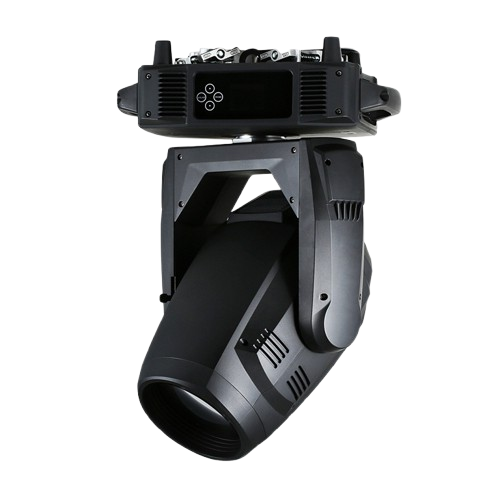
The Sword NB380B is a 371 W discharge beam moving head light built around the SIRIUS HRI 371 W S lamp. It runs at 7500 K and fires through a fixed 1.8° lens, so the output is a hard-edged, near-parallel column of light rather than a soft field. Source life is rated at 1500 hours or more, which sets the lamp-change rhythm a rental fleet plans around.
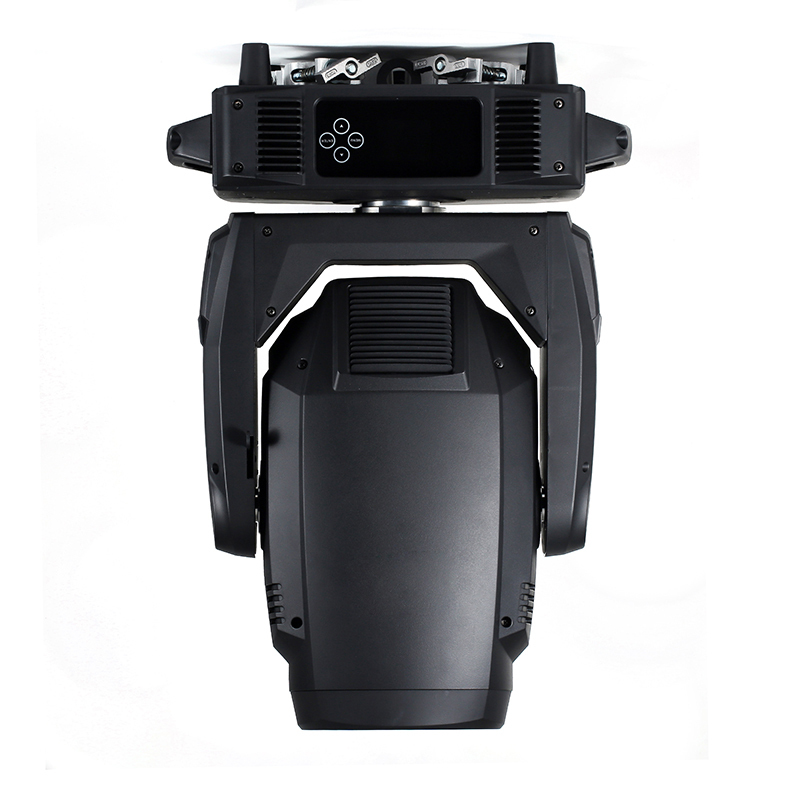
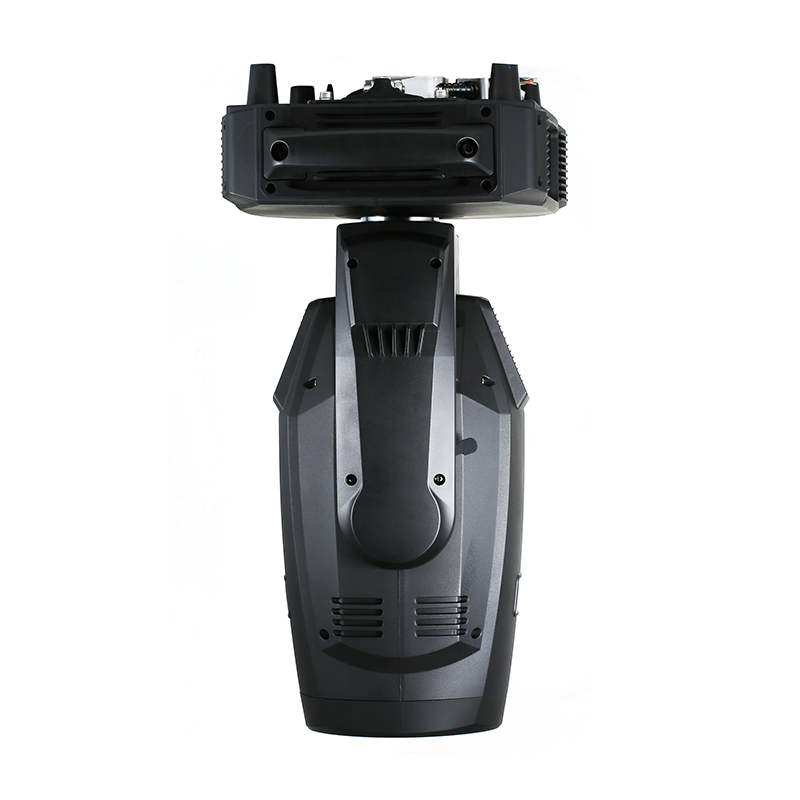
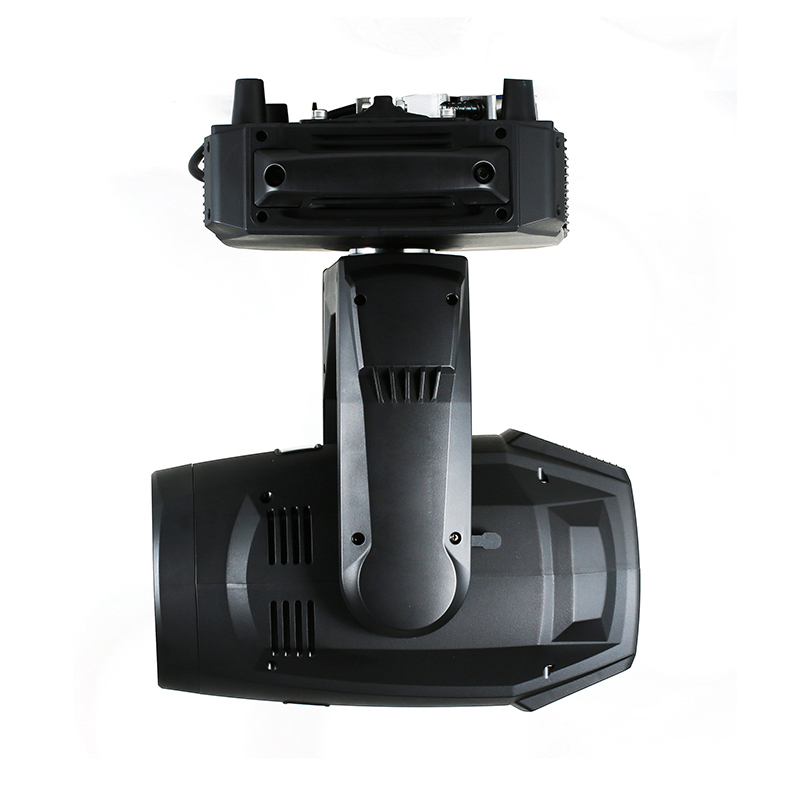
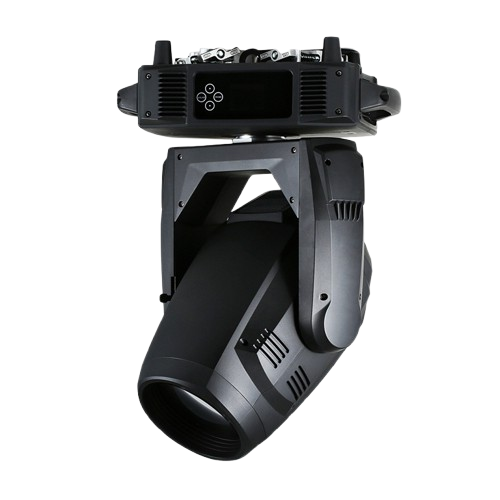
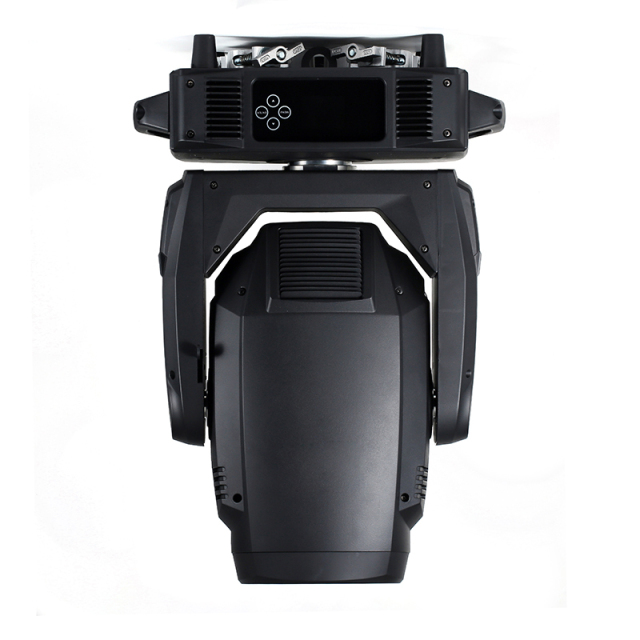
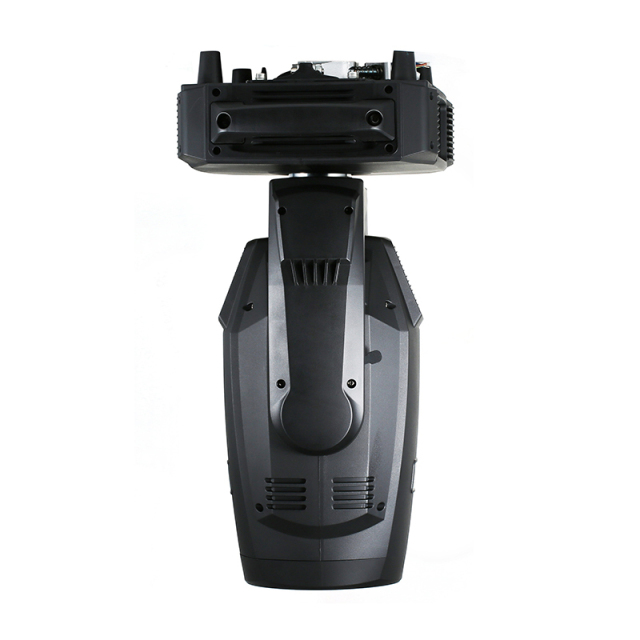
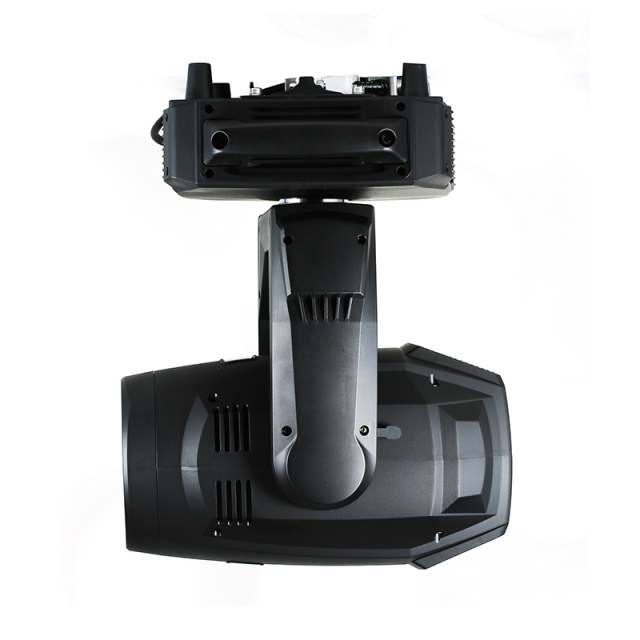
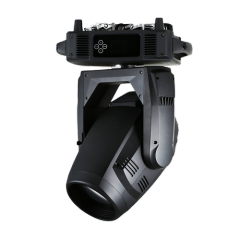
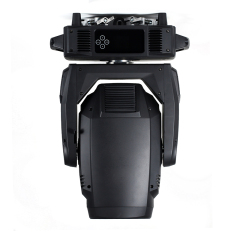
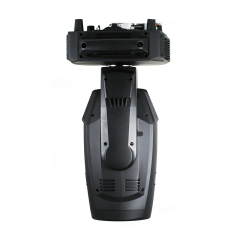
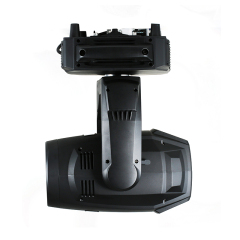
Every unit is assembled and optically aligned at our moving head light factory in Huadu, Guangzhou, then run through a full function test before packing. The head sits in a matte black yoke with a vented housing and a front-facing digital panel, so it looks like a working tool on a dark stage rather than a piece of scenery.
Rental desks, club installers and venue technicians use it as the beam layer of a moving head stage light package: the fixture that cuts through the wash and gives the audience a line to follow. It hangs from a standard yoke, so it sits comfortably on truss that already carries heavier profiles.
Within the Sword family this is the 371 W option. The 470 W model in the same series is the step up for longer throws and larger rooms; choose the 371 W when you want the same narrow-beam geometry with a lighter head and a lower power draw on the truss.
As a beam moving head light supplier we work mainly with rental companies, distributors and system integrators, so the commercial and technical sides come from one team — the people who answer your DMX question also handle the lamp supply.
Beam, Prism & Gobo Effects
- Fixed focus, no zoom. The lens train on this moving head beam light is locked to one angle, so the shaft holds the same width from the front truss to the back wall and there is nothing in the zoom path to drift out of alignment.
- Eleven colours plus white on a single wheel, with half-colour positions between slots, so the beam can be split into two colours or rolled through the wheel instead of stepping hard from one to the next.
- Bidirectional rainbow. The colour wheel spins either way for a continuous roll, which keeps a static position alive through a build-up without any pan or tilt movement.
- Fourteen gobos plus open on one fixed pattern plate, with dithering and arbitrary role, so a gobo can be rotated to any angle and shaken for texture when the beam needs to break up rather than stay clean.
- Three prisms: 8-facet, 24-facet and a colourful rainbow prism. Two discs can be stacked at once, which fans the single beam into a cluster of shafts — the look most operators reach for when a track drops.
- Independent atomization and 0–100% linear dimming. Frost softens the beam edge without touching the colour or gobo wheels, and the fade closes to black without a visible step.
- Strobe up to 25 Hz with random and pulse modes, so the flash can sit exactly on the beat or scatter across the rig, and it runs alongside the prisms rather than replacing them.
- A dj moving head light rig leans on the prisms and the strobe more than the gobos: both are reachable from the console without leaving the show, so drops and builds can be put together live.
Display & Onboard Menu
A rechargeable battery keeps the menu live when the fixture is unplugged. Address, channel mode and personality can be set on the bench or up on the truss before mains power reaches the dmx moving head light, which saves a climb once the rig is flown and the sockets are at height.
The panel switches between Chinese and English and reverses through 180°, which matters when the yoke is inverted on a downstage pipe: the readout stays upright and legible from the floor instead of being read upside down from a ladder.
Reset detection runs manually, or automatically when no DMX signal is present, so the head can be homed and checked during a service call without dragging a console onto the stage. It is the routine that catches a head that took a knock before the next show rather than during it.
Nine built-in programs are stored on board for stand-alone running, and the menu shows lamp and light-source hours side by side, so a lamp change can be planned against real use rather than a wall calendar.
DMX Control & Movement
- DMX512 and RDM are both native. On a desk that supports RDM you can read the fixture's address and status remotely, and the address on this dmx moving head light can be changed from the console rather than from the menu.
- Two channel modes, 16 and 13. Patch 16 when you want the full fine-channel set for slow, long moves; go to 13 when universe capacity is tight and the show can live without every fine channel.
- Pan 540° and tilt 270°, both at 16-bit, with automatic error correction so a head that has been nudged returns to its reference instead of sitting a few degrees off the line for the rest of the night.
- Remote commands from the desk: lamp switching and reset travel down the data line, so a moving head stage light in a flown rig can be recovered without a ladder.
- A DMX shortcut interface keeps patching and daisy-chaining quick along a truss, and firmware is updated over the DMX data cable, so a software fix does not mean opening the housing.
Installation & Operating Environment
- Plan the position before you climb. The beam is fixed, so everything comes from pan, tilt and where you hang the moving head beam light — half a metre of truss either way changes where the shaft lands in the room. Fit a standard hook clamp to the yoke bracket and add a secondary safety bond. Run data fixture to fixture through the DMX shortcut interface and terminate at the last unit. Keep the data run clear of mains cable, and check the address on each dmx moving head light before the first cue. Spread the load across circuits the way you would with any discharge fixture, and let the lamp cool before you strike it again or move the head. Leave clearance around the vented head front and rear so air moves through the lamp chamber, and let the high-temperature automatic protection cut in rather than taping over a vent or boxing the fixture in. If it goes into a dj moving head light position on a low truss, angle the yoke so the beam clears the front of the booth and the display stays readable from the floor.
Specifications
| Light source | SIRIUS HRI 371 W S discharge lamp, 7500 K, rated 1500 hours or more |
| Beam angle | 1.8° fixed focus |
| Power and voltage | 530 W at 90 V; AC 90–264 V, 50/60 Hz |
| Colour wheel | 11 colours + white, half-colour effect, bidirectional rainbow |
| Gobo wheel | 14 gobos + open, dithering and arbitrary role |
| Prisms | 8-facet, 24-facet and colourful rainbow; two discs stackable |
| Dimming and strobe | 0–100% linear dimming; strobe to 25 Hz, random and pulse modes |
| Control | DMX512 and RDM, 16 / 13 channel modes |
| Pan and tilt | 540° / 270°, 16-bit, automatic error correction |
| Ingress protection | IP20 |
| Ambient temperature | -10 °C to 45 °C |
| Product size | 618 × 422 × 301 mm |
| Net weight | 21.6 kg |
| Packing | Carton 730 × 430 × 540 mm; 25.7 kg gross |
Ordering & Delivery
- Start with the project: venue type, throw distance, unit count and the desk you will run them from. As your beam moving head light supplier, we can then check every unit in the order against the rest of the rig — beams, washes and control — as one system. Minimum order quantity, lead time, payment terms and trade terms are agreed per order. Confirm the current figures for your destination with your sales contact before you fix a show date. Ask what the warranty covers in your region, how a faulty unit is handled, and whether spare lamps and mechanical service parts are held locally or shipped with the next order. For an order split across shipments, give us the full quantity up front so the batch is planned as one run. Agree the returns and quality-claim route before the first shipment. If a unit arrives damaged or faults in service, resolution moves fastest when the process has already been settled for your market. Document | What it covers Specification sheet | Electrical, optical and physical data for tender packages and spec comparison User manual | Menu structure, channel modes, reset and routine service steps DMX channel table | The 16-channel and 13-channel layouts for patching and profile building Photometric data | Beam angle and output information for lighting design and paperwork Size and packing drawing | Dimensions, carton size and weights for freight and container planning Compliance documents | Certificates and test reports for your market, requested through our team Service parts list | Lamp and mechanical spare references for stocking decisions
Technical Support & Model Matching
More than 30 engineers with an average of 15+ years in professional lighting stand behind every order — the same people who answer your technical questions. Tell us your venue, rigging height, throw distance and existing control setup; we help match models, check protocol and channel fit, and build a package that works as one system. If a fixture misbehaves on site, we work through the fault with you and sort out spares. Installation and commissioning guidance come with the order. Founded in 2016, exporting since 2022, LITEVISION serves buyers in more than 80 countries from offices in the USA, Taiwan, Mexico and China.
FAQ
Why is the beam fixed at 1.8° instead of zooming?
The optical train is built for one job: a parallel, hard-edged shaft. At 1.8° the column stays dense over distance, which is what lets a beam moving head light cut through a wash and read from the back of a hall. A zoom would soften that edge and add moving elements to the lens path, so this model keeps the focus locked and puts the movement into pan, tilt, prisms and gobos instead.
Can it cover a stage on its own, or do I need wash units too?
Pair it. As a moving head stage light it draws lines and creates aerial effects; it does not fill a stage with even light. The usual build is a row of beams for the shafts and a separate wash layer for coverage and colour on the performers.
Which channel mode should I patch, 16 or 13?
Patch 16 when you want the full fine-channel set for slow, long moves; choose 13 when console capacity is tight and the show can live without every fine channel. Both modes run on standard DMX512 with RDM available, and either can be re-addressed from the desk if the plot changes.
What does stacking two prisms actually give me?
On this moving head beam light, a single beam becomes a cluster of shafts. The 8-facet gives a moderate fan, the 24-facet a dense spray of thin beams, and the colourful rainbow prism tints that fan rather than leaving it white. Stacking two discs multiplies the effect again, which is why the pair is usually saved for a chorus or a drop.
Is it suitable for a club install rather than a tour?
Yes, and a dj moving head light position is one of its natural homes. In a club the fixtures hang close and stay put, so the value sits in what the head does on the spot: a stacked prism fan and a fast strobe fill the room without needing long throws. Set the addresses from the battery menu before the truss goes up and the install finishes in one lift.
How do I plan lamp replacement around the hour meter?
The menu logs lamp and light-source hours separately, so the counter is the honest guide rather than a wall calendar. Read it at each service interval, note the figure on the job sheet, and ask our service team for the replacement procedure and current lamp supply before you schedule a swap.
Where is the fixture built, and who handles service after delivery?
It is assembled and optically aligned at our moving head light factory in Huadu, Guangzhou, then function-tested before packing. As a beam moving head light supplier we support the unit directly: lamp supply, menu and DMX questions, and service parts all go through the team that sold it to you.