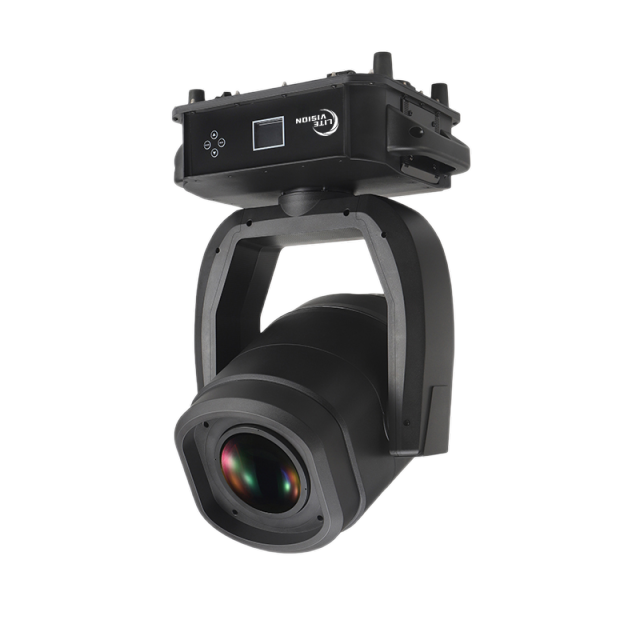
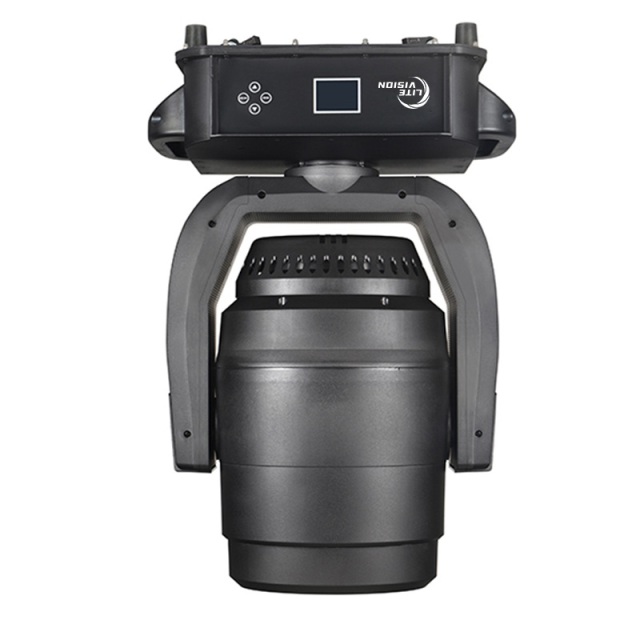
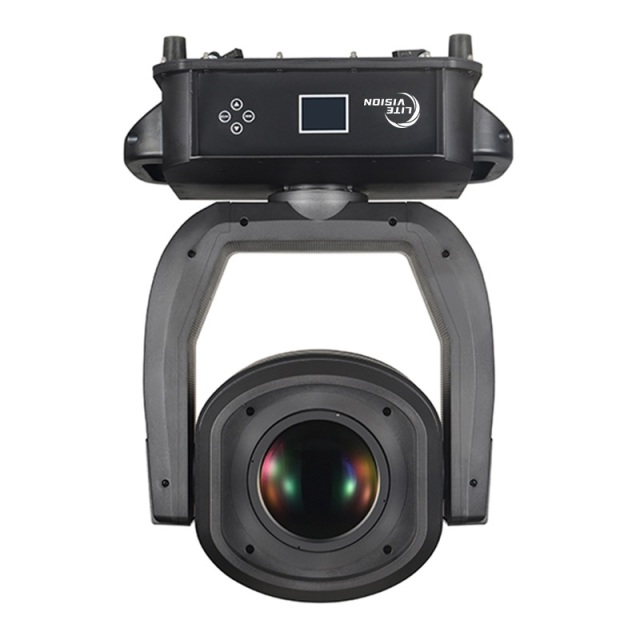
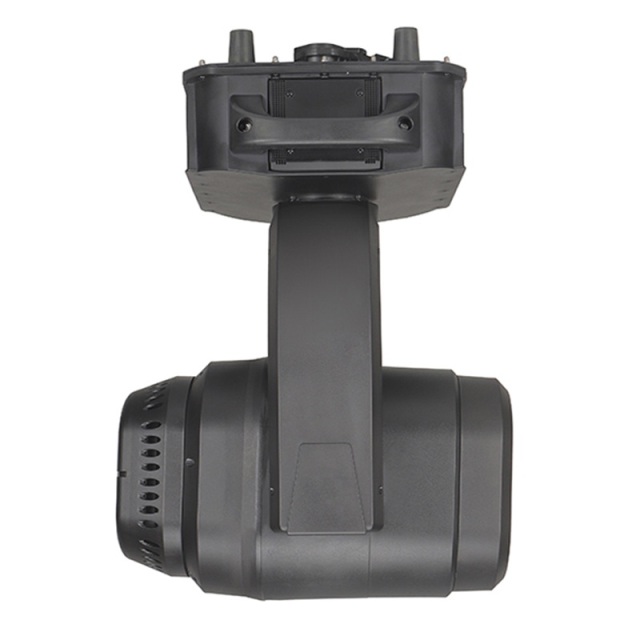
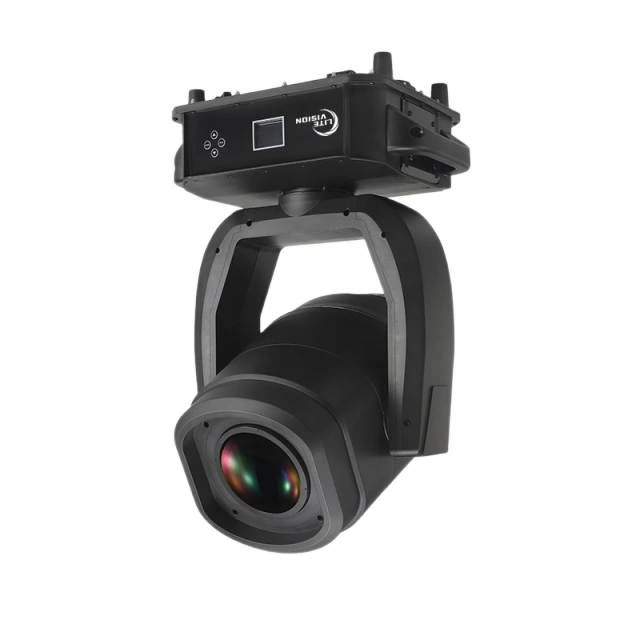
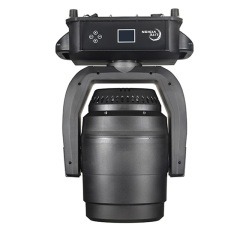
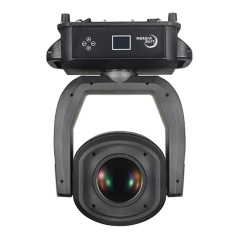
Product Overview
Beam, spot and wash normally mean three different heads on the truss. Here they share one housing: the narrow end of the zoom throws a hard-edged column for aerial work, the middle of the range behaves like a moving head spot light for gobo projection and mid-stage texture, and the wash setting spreads an even field across the floor. Changing between them is a question of zoom, wheel and prism position, not a fixture swap.
As a beam spot wash moving head manufacturer, we build this model around the outdoor brief. The housing is sealed to IP65, and the light leaves through a coated front optic that keeps haze residue on the glass rather than in the optical path — which is what decides how the beam still looks after a long, wet night.
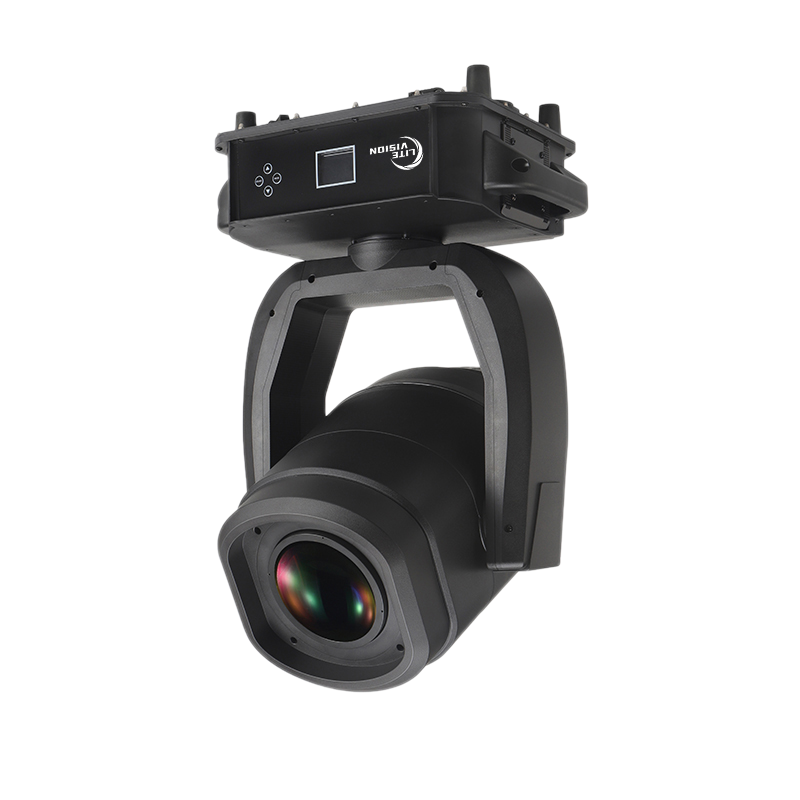
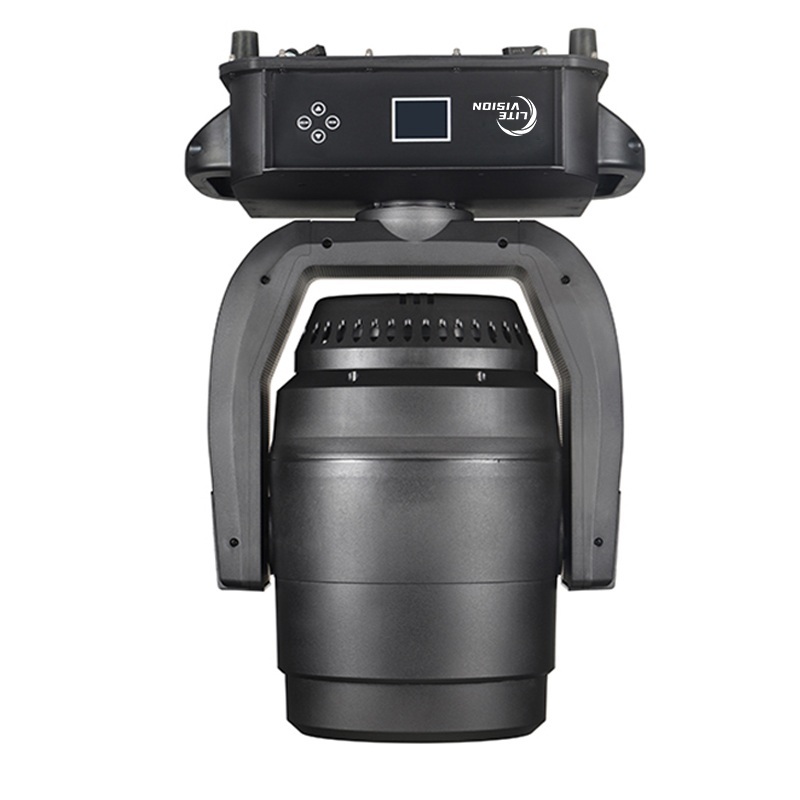
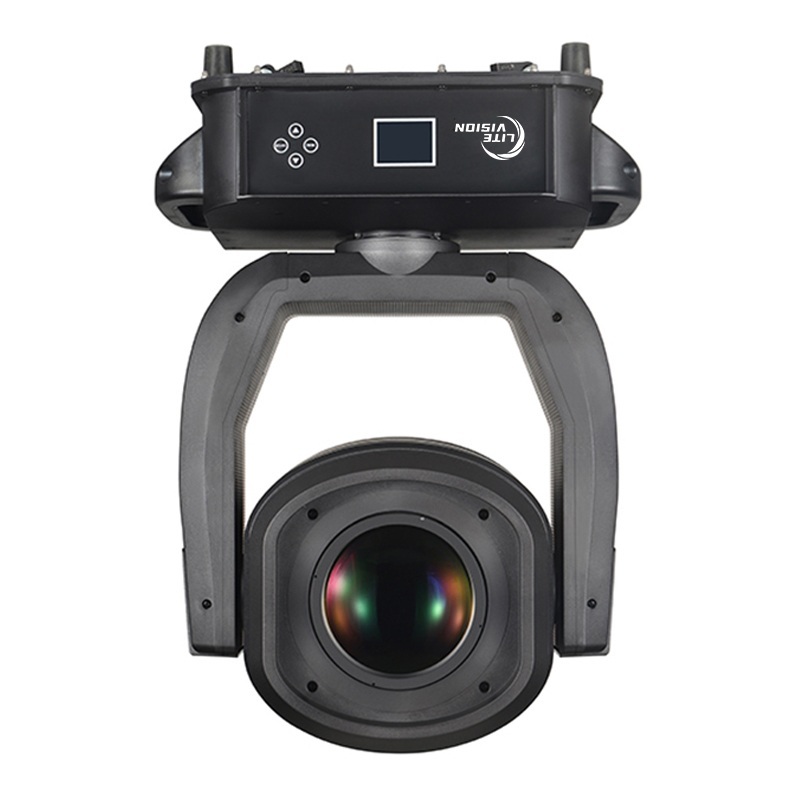
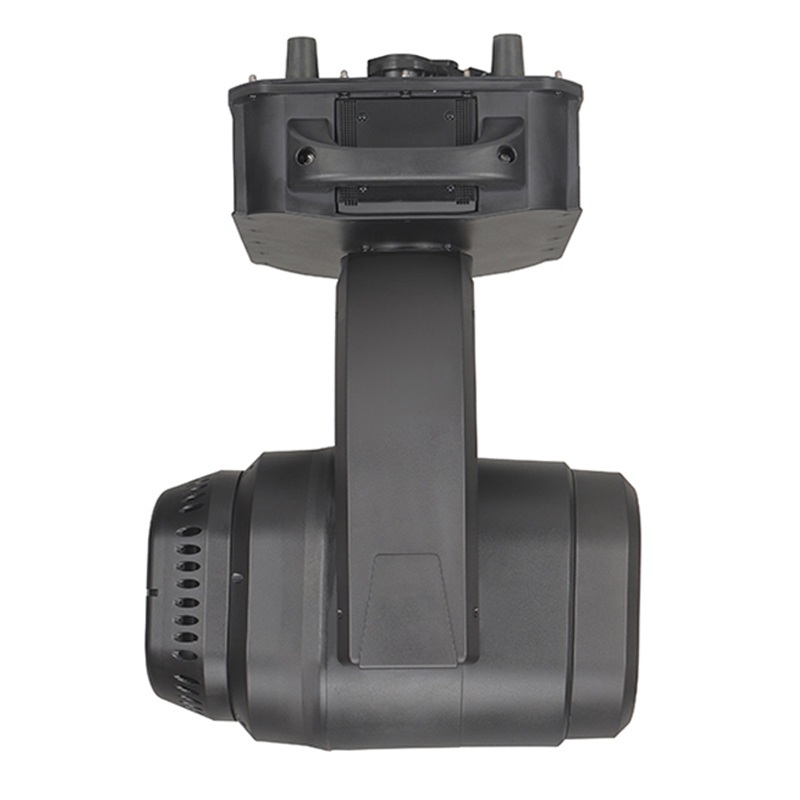
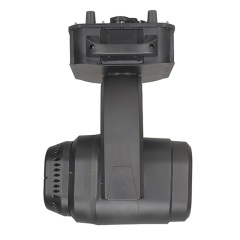
Riggers meet it first as an outdoor moving head light: a matte black yoke-mounted housing, smooth 16-bit pan and tilt movement, and a body that sits as comfortably on a downstage truss as it does on a floor riser.
Where it earns its place is on productions that change venue and weather in the same week — festival mains, touring rigs, theme-park shows and building reveals. Instead of carrying separate beam, spot and wash heads, a rental house can order one model that covers all three jobs from a moving head wash light supplier and keep a single spares kit behind it.
- Fewer fixture types on the truck. As a beam spot wash moving head manufacturer we build one head that covers three jobs, so a rental house cuts both the number of models it carries and the spare types sitting behind them.
A fixture that outlives the design. Every wheel, prism and frost position has its own channel, so this beam moving head light can be re-patched into next season's show instead of being replaced when the brief changes.
A spot that projects, not just a beam that cuts. Gobo rotation and controllable role turn the spot setting into an imaging tool, so patterns land where the design puts them and hold through a long cue.
A consumable you can budget for. The OSRAM SIRIUS HRI source is a known lamp type with a published service interval, so maintenance is forecast rather than discovered.
One set of behaviours to learn. Wheels, prisms and frost follow the same logic across the family, so a programmer who knows one unit can build cues on the next without re-learning the menu.
Installation & Operating Conditions
- Check the suspension point first. A moving head stage light this size needs a clamp and a structure rated for the load, plus enough clearance for the head to sweep through its full pan without fouling truss, cable or scenery.
- Match the enclosure to the site. As a beam spot wash moving head manufacturer we build it to IP65, and that rating covers rain and dust on the housing itself. It does not cover a mounting position that sits in standing water, so check drainage, cable dressing and the entry point before a permanent install.
- Patch before you power up. Set the address and the channel mode first — a DMX moving head light will happily sit in the wrong mode and look broken — then confirm the desk sees it. RDM discovery saves time on a large rig.
- Work inside the temperature window. The specified working range is −20 °C to 40 °C. A black metal housing in direct summer sun can sit above ambient temperature, so on a permanent outdoor install leave air around the vents rather than boxing the unit into a recess.
- Log lamp hours from day one. A discharge source is a planned consumable; write the hours into the show file and book the change before a run rather than in the middle of one.
Control & Networking
Control is where a rental fixture either fits an existing rig or turns into a week of work. This DMX moving head light carries three channel modes — 25, 27 and 38 — so a house console with a tight patch can run it short while a touring desk opens all 38 for every wheel, prism and frost position.
DMX512 and RDM are standard. Art-Net and sACN cover node-based systems, and wireless DMX is an option for rooms where getting data to the truss is awkward. Control ports are XLR-3 in and out, with RJ45 available on request.
On the unit itself, the 2.4-inch colour LCD runs Chinese and English menus and flips 180°, and a non-touching magnetic encoder holds pan and tilt position without drift across a long night. Electronic sensors monitor the fixture and the fans are intelligently controlled; power drops automatically in blackout, with an eco mode that sleeps the unit on standby — worth having when a venue leaves a moving head stage light powered all day between rehearsals.
For programmers, one detail matters more than it sounds: an optional built-in rechargeable battery lets you edit the menu and set the address with no mains at the rig, or with a power bank connected. That is one fewer trip up the truss every time the patch changes.
Applications
- Festival and touring stages. An outdoor moving head light earns its keep when the weather turns mid-show: a sealed housing means a rain delay does not automatically become a load-out, and the beam still cuts through a wet, hazy field.
- Theatres, schools and multipurpose halls. A moving head stage light that drops to a tight spot for a lectern and opens into a soft wash for a choir covers a whole calendar without a second inventory.
- Theme parks and building reveals. Permanent outdoor shows punish anything that cannot take rain, dust and daily heat cycles; the sealed housing and the wide wash setting suit programmed shows that run every night of the season.
- Stadium and arena front truss. At that distance a beam needs density rather than spread; the fixture holds a defined column to the far end of a bowl and opens out for the floor once the house lights are down.
Specifications
| Input voltage | AC 100–240 V, 50/60 Hz |
| Input power | 691 W, PF ≥ 0.98, maximum input current 7 A |
| Light source | OSRAM SIRIUS HRI 461 W, expected life 1500 hours |
| Luminous flux | 23,000 lm |
| Front lens | 148 mm, three anti-reflective coated optical sets |
| Zoom range | Beam/Spot 2°–45°; Wash 8°–50° |
| Colour system | 4 colour wheels — 3 with CMY carrying 10 colour filters + 2 diffuser plates; 1 independent wheel with 2500 K / 3200 K / 5600 K plates + 8 filters |
| Gobo system | Rotating wheel: 8 unpluggable gobos + open, rotation and role controllable. Static wheel: 18 gobos + open, water-flow and shake effects |
| Prisms and effects | 8-facet prism; dual-ring 8+16-facet prism; independent frost; 0–100% dimming; mechanical strobe with pulse, synchronous, asynchronous and random patterns |
| Pan / Tilt | 540° / 270°, 16-bit |
| DMX channels | 25 / 27 / 38 |
| Control protocols | DMX512 and RDM standard; Art-Net and sACN; wireless DMX optional |
| Protection rating | IP65 |
| Dimensions and weight | 417 × 417 × 667 mm; 28 kg net |
Colour, Gobo & Effects
- Four colour wheels, three of them CMY. Ten colour filters and two diffuser plates sit across the CMY wheels, so colour moves blend smoothly instead of snapping between gels. Adding a diffuser plate softens the spot edge without leaving the wheel position.
- The beam layer stays sharp. With the zoom pulled all the way in, this beam moving head light throws a tight, hard-edged column that holds together through haze and across a long throw — the quality that makes it usable for aerial work in a big room.
- A rotating wheel you can re-load. Eight unpluggable gobos plus open sit on the rotating wheel, with gobo rotation and controllable role. Unpluggable is the useful part: a worn or damaged pattern can be changed without sending the head to a workshop.
- A static wheel for texture. Eighteen gobos plus open, including water-flow and shake effects, give movement that does not depend on the rotating wheel — useful when the rotating wheel is already carrying the show's signature pattern.
- Two prisms that stack. An 8-facet prism and a dual-ring 8+16-facet prism both rotate in either direction, and overlaying them produces a 16+24-facet dual-ring effect. Most moving head spot light programmes lean on that stacked look for crowd-facing reveals.
- Colour temperature on its own wheel. A separate wheel carries 2500 K, 3200 K and 5600 K plates alongside eight more filters, so a show can move between a warm tungsten feel and a 5600 K daylight look without disturbing the CMY wheels.
Archi 461 Model Comparison
| Feature | Archi 461BSW | Archi 461B |
|---|
| Optical function | Beam, spot and wash in one head; zoom 2°–45° in beam/spot, 8°–50° in wash | Beam only; fixed 2° angle |
| Front lens | 148 mm | 200 mm |
| Colour system | Four wheels: three with CMY carrying 10 filters and 2 diffuser plates, plus an independent wheel with 2500 K / 3200 K / 5600 K plates and 8 filters | One fixed wheel, 11 filters plus white, bi-directional rainbow |
| Gobos | Rotating wheel with 8 unpluggable gobos, static wheel with 18 gobos plus water-flow and shake effects | Fixed wheel with 18 gobos, water-running and shake effects |
| Animation wheel | Not fitted | Fitted, layering animation effects over the beam |
| Prisms | 8-facet plus dual-ring 8+16-facet, stackable into a 16+24-facet dual ring | Two 6-facet prisms, overlay and bi-directional rotation |
| DMX channels | 25 / 27 / 38 | 18 / 22 / 26 |
| Pan / Tilt | 540° / 270°, 16-bit | 540° / 260°, 16-bit |
| Protection rating | IP65 | IP55 |
| Net weight | 28 kg | 33.5 kg |
| Choose it when | The same hanging position has to serve as a moving head spot light for gobo projection, a wash for the stage, and a beam for the aerial cut | The design is built on one hard beam and you want the wider front optic for the longest throws |
Ordering & Documentation
- Tell us about the show. Venue type, mounting position, throw distance and the console you run decide whether this hybrid is the right answer or whether a lighter LED head suits you better — and whether the rig lives outdoors all year or only for the season. An outdoor moving head light that sees salt air needs a different maintenance plan from one that sees a dry summer.
- Ask for the documents. The specification sheet, user manual and channel chart are the three files programmers ask for first; photometric data and a console fixture profile can be requested for pre-programming or tender work.
- Confirm the configuration. Quantity, build and any accessories you want quoted alongside are agreed in writing before production starts. If you are buying as a moving head wash light supplier for resale, say so at this stage so the pack and the paperwork match what your customers expect.
- Agree commercial terms. Lead time, payment terms, shipping terms and the order quantities that apply to your region are confirmed by your sales contact for each order, because they depend on quantity, configuration and destination. Nothing is assumed on either side until it is in writing.
- Plan the arrival. Units ship in export packing, and a two-position flight case measuring 1020 × 530 × 835 mm is built for this body if the rig tours. Confirm the packing arrangement and the loading plan for your destination before the booking is fixed.
- Settle spares and warranty up front. Ask your sales contact about warranty terms and coverage, the spare lamp and consumables worth holding for your region, and how a faulty unit is handled. Getting that on paper before the first show is cheaper than discovering it during one.
- Document | What it gives you | Availability --- | --- | --- Specification sheet | Full electrical, optical, colour, gobo, prism and mechanical data in one file, formatted for tender submittals and dealer catalogues | Download User manual | Menu structure, address and channel mode setting, lamp replacement steps, cleaning and storage guidance | Download DMX channel chart | Function-by-function layout of the 25, 27 and 38 channel modes, tagged with the firmware revision it matches | Download Photometric file | Illuminance at measured throw distances, beam and field width at each zoom position, colour rendering readings, and the conditions each measurement was taken under | Download Dimension drawing | Body outline, mounting points and the pan/tilt sweep envelope for rigging plans and CAD drawings | On request Console fixture profile | A profile built for the desk and software version you name, so the fixture patches cleanly in pre-programming; send the console model and version before rehearsals | On request Firmware and channel notes | Which channel definitions change between revisions, so an existing show file is not re-patched without warning | On request Certification documents | Issued for the destination market and supplied with the order paperwork | With the order
Technical Support & Model Matching
More than 30 engineers with an average of 15+ years in professional lighting stand behind every order — the same people who answer your technical questions. Tell us your venue, rigging height, throw distance and existing control setup; we help match models, check protocol and channel fit, and build a package that works as one system. If a fixture misbehaves on site, we work through the fault with you and sort out spares. Installation and commissioning guidance come with the order. Founded in 2016, exporting since 2022, LITEVISION serves buyers in more than 80 countries from offices in the USA, Taiwan, Mexico and China.
Built in our own plant. LITEVISION designs and manufactures stage and architectural lighting in Guangzhou, with production lines and automated systems under the same roof as the engineering team. Because the optical bench, the wheel stack and the housing are made in one place, a change to a gobo position or a channel definition is controlled at the source rather than negotiated between suppliers. Tested before it ships. Every unit runs through thermal, electrical and longevity checks, and an independent quality team inspects each machine and issues a qualification report before the warehouse releases it for packing. As an IP65 moving head light manufacturer we pay particular attention to the enclosure: the seal around the front lens and the cable entries is what decides whether a fixture survives its second season outdoors. Certified for export. Products are CE, RoHS and UL certified and manufacturing follows ISO 9001. Scale behind the model. The plant produces over 50,000 units a year, and an in-house R&D team develops new fixtures alongside current production. In practice that means a repeat order lands on the same production line as the first one, with the same tooling and the same test routine. What else we make. Alongside this hybrid, the catalogue covers outdoor and indoor moving heads, LED wash and profile/framing fixtures, laser and battery lights, SFX machines, follow spots, DMX controllers and data distribution, plus architectural wash lighting for building projects. A buyer assembling a rig can source the moving lights, the control and the cases in one conversation. Working with buyers. Whether you buy as a moving head wash light supplier stocking for resale or as a rental house building a rig, our design team can look at customised configurations where a project needs something outside the standard build, and our sales engineers will talk through a layout before an order is placed. After delivery, technical questions come back to the same team that built the fixture.
FAQ
Can it run on both 110 V and 230 V supplies?
Yes. The power supply accepts AC 100–240 V at 50/60 Hz, so the same DMX moving head light works on a North American 120 V circuit and a European 230 V supply without re-tapping. Tell your sales contact the voltage you will actually run on and the load calculation follows from the figures in the specification sheet.
How does it differ from the beam-only head in the same series?
The two share the same OSRAM SIRIUS HRI source and the same sealed body. The beam-only version locks the optics into a single narrow beam and adds an animation wheel for water and flame effects; this one trades the animation wheel for spot and wash optics, CMY colour wheels and a wide two-stage zoom. If a show is pure aerial work, the beam-only head is the tighter tool. If the rig also has to wash a stage and project gobos, this beam moving head light does all three.
Is the lamp replaceable, and what should I keep as a spare?
The OSRAM SIRIUS HRI source is a replaceable lamp, not a sealed light engine, so a fixture can be brought back to full output instead of being retired when the source reaches the end of its life. Hold a spare lamp for any critical run and log hours from the first show; ask your sales contact for the correct spare part and the replacement procedure for your region.
What happens if a unit develops a fault during a run?
Report it to your sales contact with the symptoms, the channel mode you patched, and the console and node in use. Most faults turn out to be a setting, a consumable or a data problem, and working through those three in order gets a show back on stage quickly. If the unit has to come out of the rig, our team will confirm the service route for your region.
What should I confirm before ordering this for an outdoor rig?
Three things: where the fixture will hang and what it is exposed to, which console and channel mode the show will run, and what spares and documentation you need on hand. We build this as an IP65 moving head light manufacturer, so we would rather check the mounting position and drainage on a permanent install than have you find out during the rainy season. A photograph of the intended position usually settles it in one exchange.