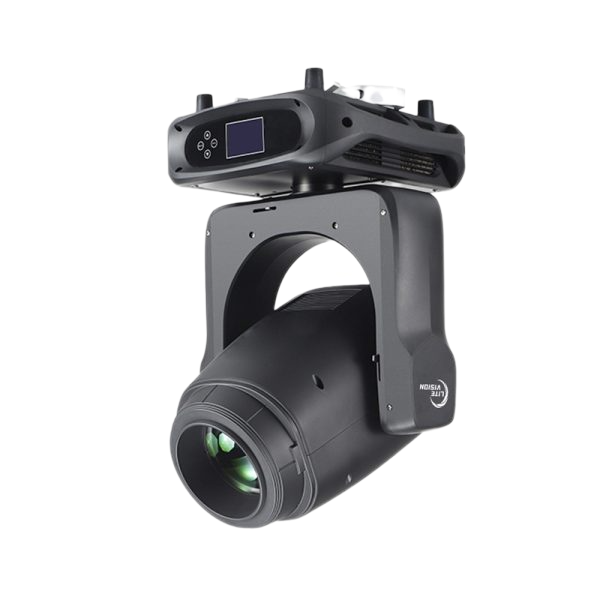
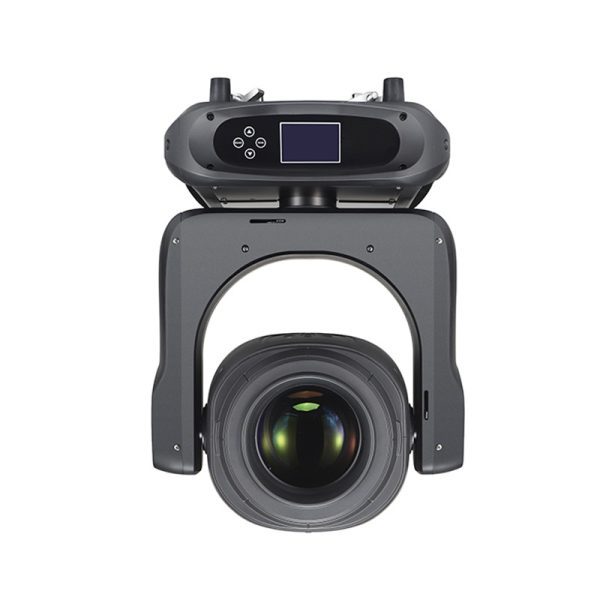
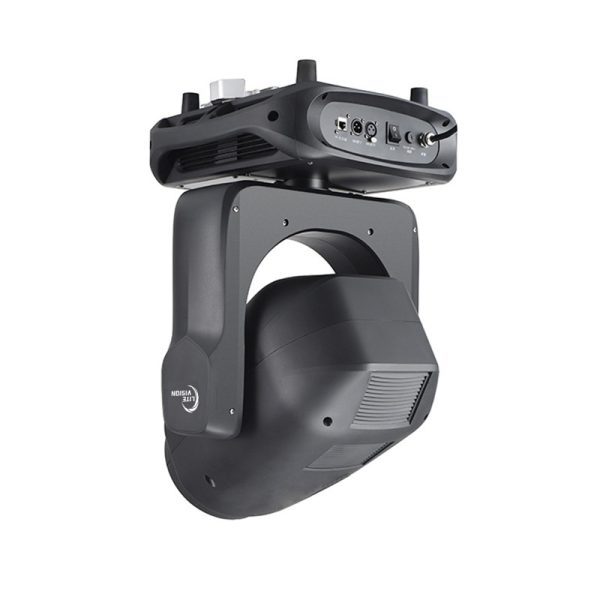
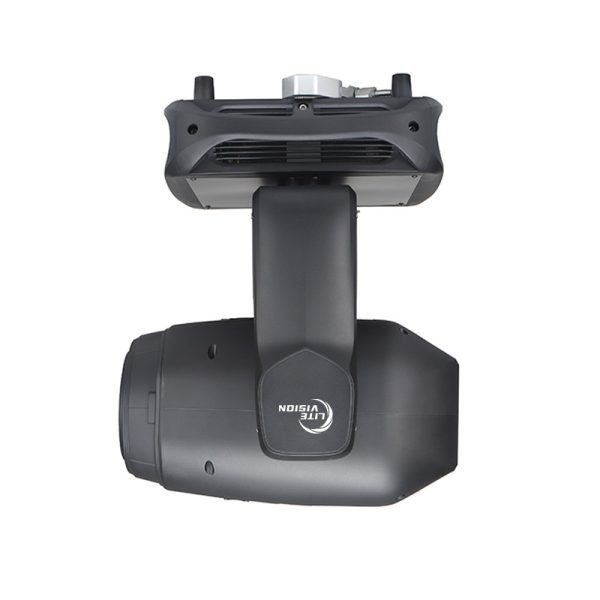
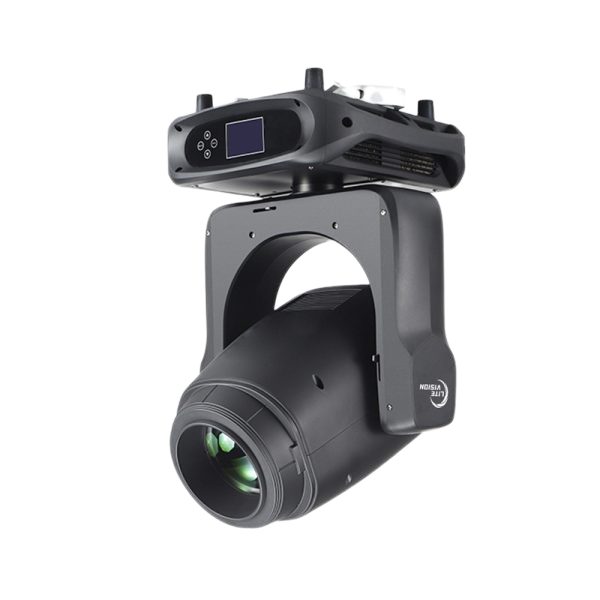
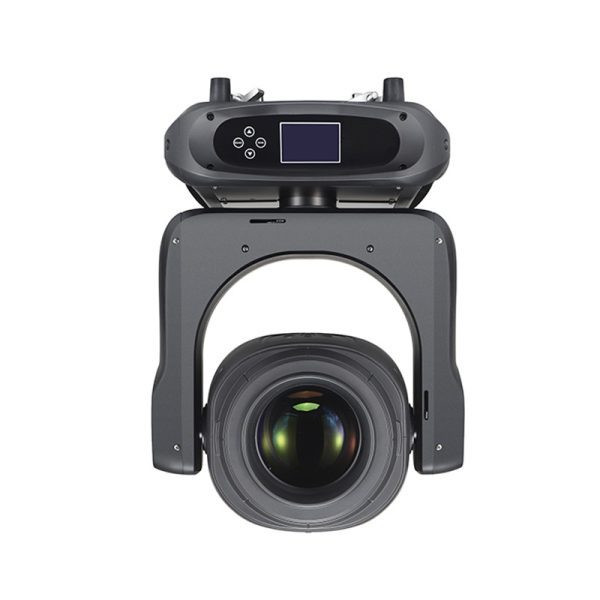
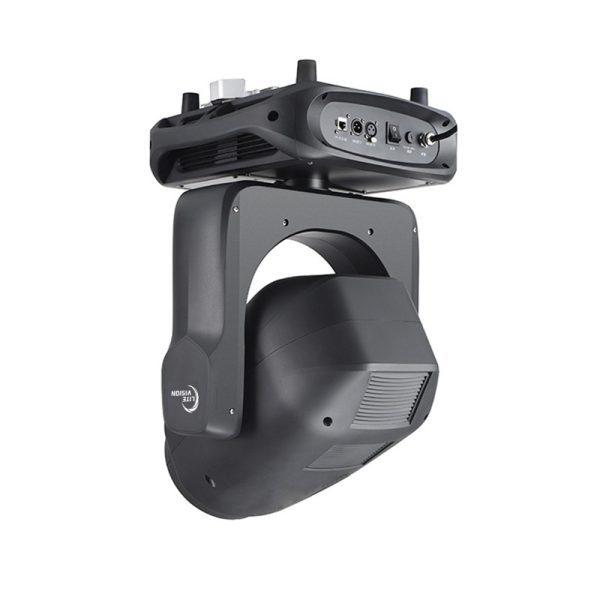
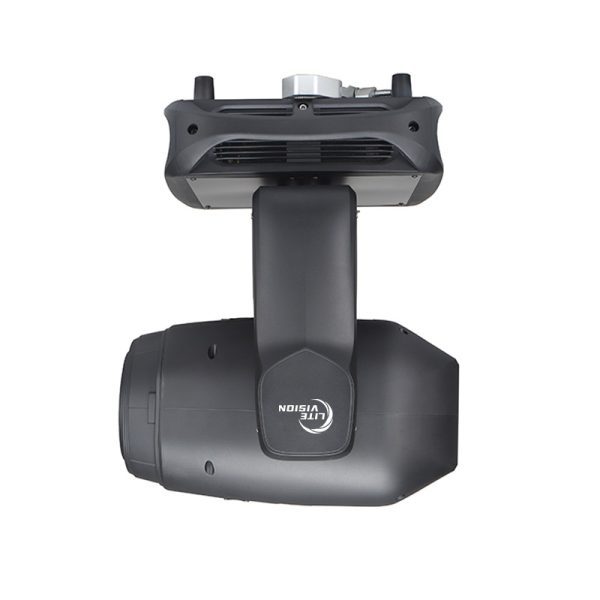
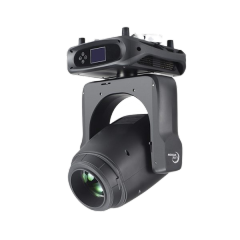
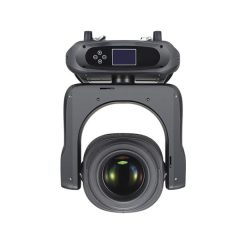
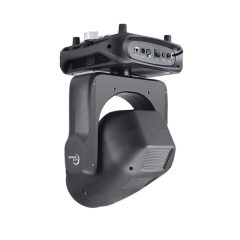
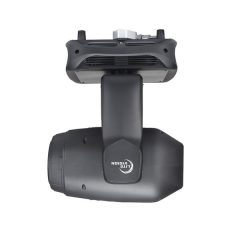
Product Overview
In beam mode the fixture throws a hard-edged shaft that reads from the back of a room — the look that cuts through haze in a club or punches across a wide arena floor. Buying from the beam spot wash moving head manufacturer keeps the details consistent: the channel chart you receive matches the firmware in the unit, and lamps, fans and drivers come from the same team that assembled it. It suits rooms with a long throw and generous trim height — arena floors, large clubs, theatre houses and broadcast stages — where a designer wants to re-purpose a fixture between numbers rather than lock the rig into one look.
Optics System
- Beam at 2°: the moving head beam light produces a hard-edged, high-contrast shaft that holds together over a long throw, which is what makes a rear-truss or long front-of-house position worthwhile.
- Beam and spot share the 2°–45° band on the beam spot wash 3in1. Close it down for a shaft, open it up for a focusable pool that carries gobo and prism work without changing fixtures.
- Wash runs from 8° to 50°. At the wide end the unit works as a moving head wash light covering a broad, even field from one front position; at 8° it still cuts a defined edge for a tighter stage.
- For theatre and broadcast the moving head spot light end is the useful one: focus holds across the zoom, so patterns and prisms land where they were programmed instead of drifting as the angle changes.
- The 8-facet and 16-facet prisms can be used together, multiplying a beam into a wider fan for aerial and audience-cover effects.
- An independent frost softens the edge without a second fixture, so a sharp beam cue and a soft wash cue can follow each other in the same sequence.
Color System
- Start with the CMY mixing system. On this beam spot wash 3in1 engine, hue, saturation and depth run continuously, so colour fades stay smooth from cue to cue.
- Reach for the 11-colour wheel when a cue has to land on a fixed, repeatable colour — a snap change on the wheel cuts harder than a CMY fade ever will.
- Crossfade between the two: hold CMY for a slow sunset across a long number, then hit the wheel when the music drops and the change has to be seen.
- Use the wheel positions as reference points and CMY to trim around them, so several fixtures in a rig can be matched without nudging each unit by hand.
- Everything runs from the console — the colour engine behaves like any other dmx moving head light in the patch, with no local colour control to reset between shows.
Gobo System
- The rotating gobo wheel carries 8 gobos, so aerial effects can spin and sweep with the music instead of sitting still.
- A second, fixed wheel adds 12 gobos plus 7 circles, giving a broad pattern library without a second fixture on the truss.
- The circles are the workhorse positions: a clean round aperture gives a defined pool or a crisp beam edge with no pattern in the way.
- Between the two wheels a single unit covers a full set list without anyone changing gobo holders between shows.
- At the tight end of the zoom the beam spot wash 3in1 turns patterns into texture inside the shaft; open into spot and the same gobos project as recognisable shapes.
- Gobo wheels are usually among the first parts of a rental fixture to show wear — ask your sales contact about a spare wheel if the unit is going out on a long run.
Control, Rigging & Commissioning
Control runs on DMX512 and RDM over XLR-3 as standard — the expected baseline for a dmx moving head light — with Art-Net and sACN when the rig is networked; wireless DMX512 is optional, as is the RJ45 connection. In practice the fixture can sit on a legacy three-pin chain or on a fully networked rig without an external node.
Three channel modes — 25, 29 and 38 — cover a tight festival universe through to a full theatre desk. Park a moving head spot light on the small mode when channels are scarce and open to 38 when every function needs its own slot.
Movement is 540° of pan at 540°/2.2 s and 260° of tilt at 260°/1.2 s, both on 16-bit adjustment, so slow drifts stay smooth and fast snaps still land where they were drawn.
Hanging is conventional: a U-shaped yoke, standard clamps and a data run. This is a substantial moving head stage light, so check the truss loading at the position and fit a secondary safety as standard practice.
Leave room for the sweep. Pan and tilt need clearance from truss, drapes and neighbouring fixtures, and the yoke should sit square so part of the pan range is not eaten by the rig.
Commissioning a hybrid means checking three looks, not one: focus the beam, set the spot, then open out to a moving head wash light and walk the field to make sure coverage is even before the cue is recorded.
Light Source & Power
| Fixture type | Moving head stage light, beam spot wash hybrid |
| Light source | OSRAM SIRIUS HRI 482W discharge lamp |
| Lamp rated life | 1500 hours |
| Input voltage | AC 100–240V, 50/60Hz |
| Input power | 700W |
| Power factor | PF≥0.98 |
| Cooling | Fan cooling with automatic detection and speed control |
| Shutter | Mechanical, with automatic power reduction when closed |
| Energy management | Energy-saving mode with standby dormancy |
Size, Weight & Flight Case
| Light size | 417 × 417 × 705 mm |
| Net weight | 30 kg |
| Transport format | Two fixtures per flight case |
| Flight case size | 1034 × 629 × 821 mm |
| Gross weight, 2-in-1 case | 76 kg |
| Ingress protection | IP20, indoor use |
| Housing | Black |
| Mounting | Hanging bracket |
| Safety | Safety cable attachment point |
Ordering & Delivery
- Order direct from the beam spot wash moving head manufacturer. Send the fixture count, the console and protocol you run, and whether you need RJ45 or wireless DMX, and we will confirm the configuration before production is booked.
- Confirm minimum order quantity, volume pricing and current lead time against your own delivery date with your sales contact — these follow the production schedule rather than a fixed figure.
- Agree payment terms, Incoterms and the destination port in writing before production starts. The terms that apply to your order are the ones confirmed for it.
- Packing is two fixtures per flight case as standard; confirm case quantity, shipping marks and container loading with your sales contact when the order is placed.
- Warranty period and scope, and the route for a unit that arrives damaged or fails in service, are set out in the order documents — ask for the current terms in writing before you commit.
- Ask for the documentation pack before you build the patch: specification sheet, user manual, DMX channel chart and photometric file.
- LITEVISION stays the BSW moving head light supplier for the life of the fixture — spares and firmware questions go back to the team that built the unit.
Technical Support & Model Matching
More than 30 engineers with an average of 15+ years in professional lighting stand behind every order — the same people who answer your technical questions. Tell us your venue, rigging height, throw distance and existing control setup; we help match models, check protocol and channel fit, and build a package that works as one system. If a fixture misbehaves on site, we work through the fault with you and sort out spares. Installation and commissioning guidance come with the order. Founded in 2016, exporting since 2022, LITEVISION serves buyers in more than 80 countries from offices in the USA, Taiwan, Mexico and China.
FAQ
How much of a stage can one unit cover from a front truss?
The wash end opens far wider than the beam end — 50° against 2° — so a position that throws a shaft on one number can cover the whole upstage on the next. In use, the moving head wash light setting is the one you will live on for general cover, and the beam spot wash 3in1 label matters most when both looks have to come from the same clamp.
Can I set the DMX address before the fixture is powered?
The 2.4-inch colour LCD is backed by a built-in self-charging battery, so menu editing, addressing and other settings can be done on the truss before the feed is live, and a power bank can be used for the same job. The display font rotates 180° and switches between Chinese and English, which makes it readable whether the unit hangs upright or upside down. For a dmx moving head light that spends its life in the air, that saves a ladder trip on every load-in.
What happens when the lamp reaches its rated life?
The OSRAM SIRIUS HRI 482W is rated at 1500 hours. Discharge lamps of this type lose output gradually before they stop, so a moving head beam light that looks flat on a long throw is usually telling you the lamp is near the end rather than that the optics have gone. Ask your sales contact for the current lamp part number before you need one, so a replacement is on the shelf rather than on order.
Can the same fixture really handle beam, spot and wash in one show?
That is the point of the design. A moving head spot light cue for a gobo look, a tight beam for an aerial and a wash for general cover all come from the same unit — the change between them is a zoom and a cue, not a re-rig. The one thing it will not do is work outdoors, so plan the positions under cover.
Can it be used outdoors or at a festival field?
No. It is an indoor fixture for theatres, clubs, studios and covered stages, and exterior positions need a weather-rated unit from the Archi range. It is worth asking any BSW moving head light supplier for the ingress rating before you plan an outdoor position; on a moving head stage light of this class the housing is sealed for interior use only.