Product Overview
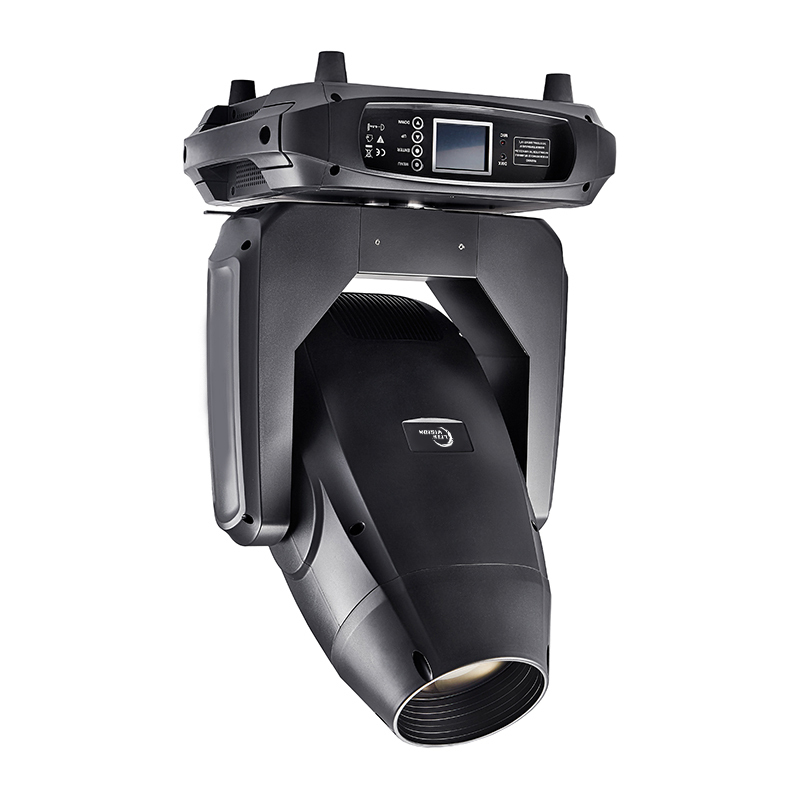
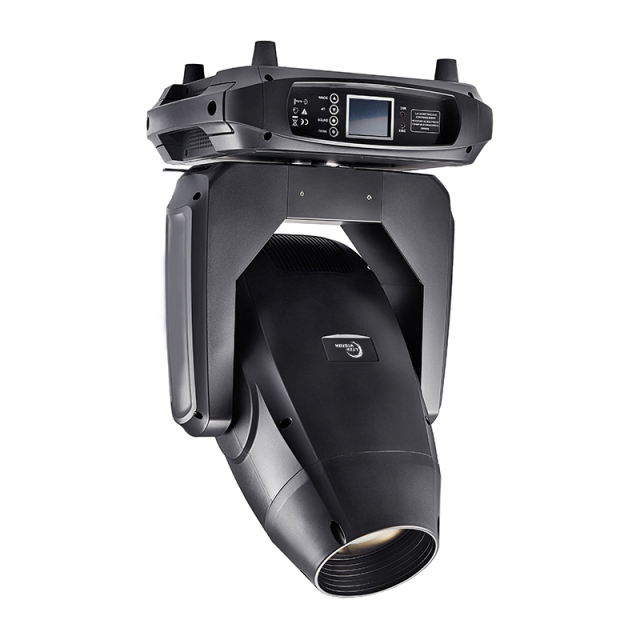
Multi L600BSW is a 460W white LED moving head that covers beam, spot and wash work from a single body, and it is built to IP65 so it can stay on an outdoor rig between shows. Three things set this led moving head light apart in our range: colour that mixes continuously instead of stepping through slots, two gobo wheels working alongside an animation wheel, and a zoom that runs from a tight column to a wide field. Between them they cover colour cues, pattern work and area coverage that would otherwise need three fixtures on the truss. The housing is matte black on a U-shaped yoke, with a cylindrical head and a vented body that keeps the airflow path clear of the mechanics. Nothing on the outside is decorative: the yoke is the mounting point, the vents are the cooling route, and the base carries the panel where the address gets set. That dual use is why this model usually ends up as a core line in rental stock rather than a special order. As a beam spot wash moving head manufacturer we build this model for rental fleets and for distribution, and we would rather settle the specification with you than just quote a unit. Send us the throw distances and the rooms you cover, and we will work through head count, lens settings and control configuration with you.
Outdoor Rigging & Sealing
- Check the mounting point first. Confirm the truss, bracket or ground support can carry the fixture's net weight plus the clamp, the safety bond and the cable, and pick a position that lets the yoke swing clear of the structure through the full pan and tilt range — the first check a beam spot wash moving head manufacturer will want you to confirm before the fixture goes up.
- Hang it on the yoke with rated hardware.
- Use a clamp rated for the load, fit a secondary safety bond as standard practice for anything overhead, and re-check the bolts after the first show rather than at the end of the run.
- Weatherproof the connection, not just the fixture.
- A waterproof moving head light is only as sealed as its cable entries, so point every connector downward and use IP-rated plugs instead of a standard connector left hanging in the rain.
- Keep the vents clear.
- The head is vented and the fan system adjusts to load, so do not wrap the body in drape or block the airflow path with scenery, however tempting that is on a cold night.
- Test before the position goes out of reach.
- Run pan, tilt, zoom, colour and gobo changes with the fixture at working height, because faults are far easier to chase on the ground than from a lift at load-in.
- Plan the routine for a permanent position. As an IP65 moving head light manufacturer we build the seal into the body, but glands and mounting hardware still age outdoors, so put the fixture on the site's maintenance schedule instead of treating it as fit-and-forget.
- Cover the connectors between events.
- Fit the caps your case or rack supplier provides on unused connectors, and never leave a connector face-up where water can pool.
Colour Mixing & CTO
- Infinite CMY mixing.
- Three motorised subtractive flags move continuously, so a colour cue crosses from one hue to any other without passing through a wheel position.
- That is what keeps a beam spot wash 3in1 from snapping between fixed colours mid-show.
- Linear CTO from 2700K to 6500K.
- A CTO flag rides with the CMY section and takes the fixture from tungsten-warm to daylight in one continuous move.
- It is how this waterproof moving head light sits alongside house lighting or a daylight key without adding a gel.
- Seven dichroic filters plus open.
- A separate colour wheel carries seven dichroic filters and an open slot for the saturated positions CMY alone will not reach.
- Pre-set the filter you want, then trim the shade with the flags rather than accepting it as it comes.
- Subtractive mixing on a single source.
- As an IP65 moving head light manufacturer, we build colour by filtering one clean beam from a single white LED rather than blending coloured emitters.
- That keeps the colour even across the zoom instead of separating at the beam edge.
- Repeatable positions.
- Because the flags are positional rather than free-floating, a colour cue lands in the same place every night — useful when a show runs for weeks and the operator changes between performances.
- Saturation and output.
- Deep saturated colour costs light on any subtractive system, so plan cue levels with that in mind.
- A lighter mix of the same hue usually reads as the intended colour while leaving more output in the beam — the sort of trade-off a moving head wash light supplier can talk through with a venue before it commits to a rig.
Beam Shaping & Effects
Zoom and focus. The zoom runs linearly from 6° to 42°, so this beam spot wash 3in1 can punch a narrow column down a long throw or open out to cover a stage. Focus sits on its own control, which means a pattern that was sharp at the narrow end can be brought back after you widen out.
Iris and frost. A 5–100% electronic iris closes the beam for tighter, more defined columns and for iris effects inside a cue. Light frost softens the edge towards a wash feel and heavy frost goes further, turning the beam into a diffuse field, so a designer can cross between a hard beam and a soft wash without changing fixtures on a waterproof moving head light.
Rotating gobo wheel. Seven interchangeable rotating gobos sit beside an open slot, and each can be indexed to a fixed angle or left spinning. A shake function adds a fast oscillation for water, flame and texture work where a static pattern reads flat, and gobos swap by hand so a rental house can restock patterns without sending the fixture back — the kind of access a beam spot wash moving head manufacturer builds in for rental stock.
Fixed gobo wheel. The fixed wheel carries eight interchangeable gobos plus open and also runs the shake effect. Layering a fixed pattern over a rotating one multiplies the looks available from a single moving head beam light, which is why the two wheels are worth using together rather than treating one as a spare — a point a bsw moving head light supplier should make when specifying the fixture.
Prism and animation. A bidirectional five-facet prism rotates either way and can be positioned, splitting the beam into the fan of shafts that beam looks are built on. The animation wheel adds a moving water effect that can run on its own or over a gobo, which is the difference between a static pattern and a texture that moves.
Applications & Venue Use
- Festival and touring stages.
- A rain delay does not automatically mean a de-rig, and the CMY section lets an operator recolour the whole rig between sets without touching a wheel.
- Concert and stadium packages.
- A beam spot wash 3in1 keeps the fixture count down on long throws, because one head can run narrow for aerials and open up for stage coverage.
- Rental fleets and dry hire.
- One model covering three jobs makes a hire list simpler to stock and easier to explain to a client who is not a lighting specialist.
- Venues that change shape.
- A room hosting a club night, a concert and a private event in the same week needs fixtures that change character fast.
- One head covering beam, spot and wash means the same rig serves all three, which is what a moving head wash light supplier needs when a venue is buying one rig instead of three.
- Distributor catalogues.
- A single model that covers beam, spot and wash is easier to position than three single-purpose units, and it gives a bsw moving head light supplier a top-of-range line without a separate beam and a separate wash beside it.
Specifications
| Parameter | Value |
|---|
| Light source | 460W white LED |
| Rated life | More than 30,000 hours |
| Input voltage | AC100–240V, 50/60Hz |
| Input power | 550W |
| Pan | 540° standard, 630° optional, 16-bit |
| Tilt | 270°, 16-bit |
| Dimming | 0–100% linear |
| Shutter and strobe | Electronic, 1–25Hz or random |
| Protection rating | IP65 |
| Housing | Matte black, U-shaped yoke |
| Net weight | 24 kg |
| Packing dimensions | 380 x 460 x 840 mm |
| Function | Detail |
| DMX channel modes | 26 or 35 channels Control protocols |
| DMX512, RDM and Art-Net Display | Battery-operated panel with screen Standby lock |
| 15-second auto lock Pan / tilt disengage | Hold MENU and ENTER Remote functions |
| DMX address reset, fixture reset and sound control over DMX Firmware updates | Uploaded over DMX with an uploader Input signal |
| Isolated Motion system | Auto repositioning after power loss Energy management |
| Automated energy-saving mode | |
Ordering & Documentation
- Confirm the configuration. Tell us which pan range you need — 540° as standard or the 630° option — plus the gobo set you plan to run and the protocol your console uses. We would rather settle those points with you before the order than after.
- Ask for the document pack.
- Request the specification sheet, the user manual, the DMX channel chart and the photometric files with your enquiry, so your team can build the fixture into the console file and the drawings before the units land.
- Match the chart to the firmware.
- Ask for the channel chart that matches the firmware on the units you receive — ours included — and check what changes between versions before you program a show against it.
- Check compliance for your market.
- Requirements differ by country, so tell us where the fixtures are going and we will confirm which documents can be supplied for that market rather than assume a standard.
- Agree the commercial terms in writing.
- Lead time, minimum order quantity, volume breaks, payment terms and Incoterms are set per order, so confirm each one with your sales contact before the purchase order goes out.
- Agree the after-sales route.
- Ask what the warranty covers and for how long, how a quality claim is handled, and who carries freight on a return.
- Those terms matter as much as the fixture once units are out on tour.
- Plan spares before the first tour.
- Ask which parts we recommend holding for your fleet size and what your team can change on site, so a single unit does not have to come out of the rig for a small fix.
Technical Support & Model Matching
More than 30 engineers with an average of 15+ years in professional lighting stand behind every order — the same people who answer your technical questions. Tell us your venue, rigging height, throw distance and existing control setup; we help match models, check protocol and channel fit, and build a package that works as one system. If a fixture misbehaves on site, we work through the fault with you and sort out spares. Installation and commissioning guidance come with the order. Founded in 2016, exporting since 2022, LITEVISION serves buyers in more than 80 countries from offices in the USA, Taiwan, Mexico and China.
FAQ
Can one head really cover beam, spot and wash positions?
For most cue lists, yes. The zoom runs from a tight column to a wide field and the gobo and prism sections carry the pattern work a spot would do, so a single moving head beam light can hold the middle of a show. Where a dedicated beam fixture still wins is the very narrowest, hardest-edged aerial look, so test the tightest cue in your show against this fixture before you commit.
What is the difference between the 26- and 35-channel modes?
Both modes drive the same led moving head light; the shorter map is quicker to patch and leaves fewer channels to manage, while the longer one breaks more functions out for individual control. Which one suits a show depends on how much of the prism, frost and animation work the operator wants on separate faders. Ask for the channel chart and you can see the exact split before you patch.
How do I set the address on a fixture that is already flown?
The control panel runs on its own battery, so you can open the menu, set the DMX address and check settings with the fixture hung and unplugged. From the console side, RDM lets you read and change the address remotely, and the fixture also accepts a remote address reset over DMX. We can send the channel chart ahead of delivery so the patch is ready before the rig goes up.
Do I need a networked console to run this fixture?
No. A standard DMX512 line is enough, and RDM lets the console read and set addresses on that line. Art-Net is there for venues that already run lighting over the network, so one moving head wash light supplier can cover both kinds of client with the same fixture. Decide which a venue uses before the rig goes in — mixing cable runs and network nodes on one universe is where most addressing mistakes start.
What should I check when comparing this against another hybrid head?
Put the channel chart, the gobo list and the zoom range side by side first, because those decide what a show can actually do with the fixture. Then check what the other bsw moving head light supplier means by beam, spot and wash — on some heads the wash position is a frost over a fixed beam angle rather than a real zoom. A written channel chart settles that question faster than a sales sheet.
Does the IP65 rating cover the whole installation?
No — it covers the fixture. The body and its sealed joints are rated, but the clamp, the safety bond and whatever you plug into the connector are outside that, and the installation is only as protected as the weakest part of the chain. As an IP65 moving head light manufacturer we would rather say that plainly than let an IP number stand in for the whole rig.