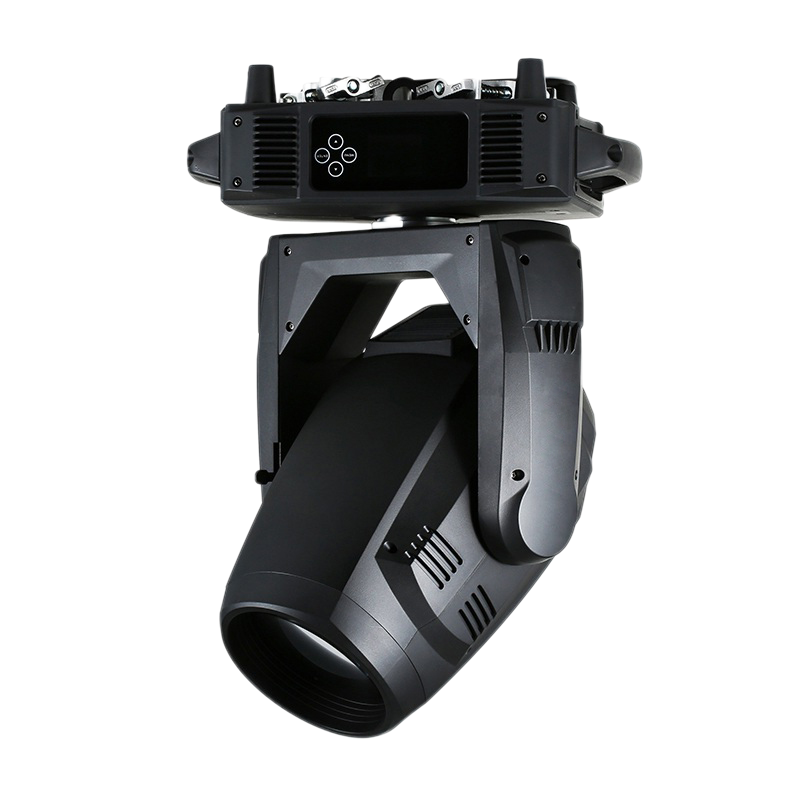
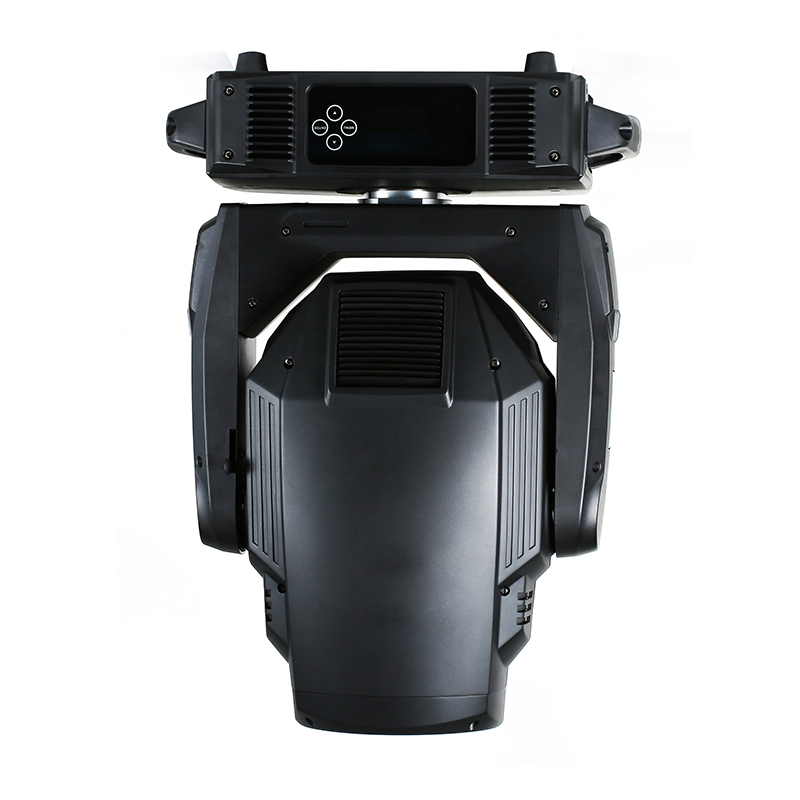
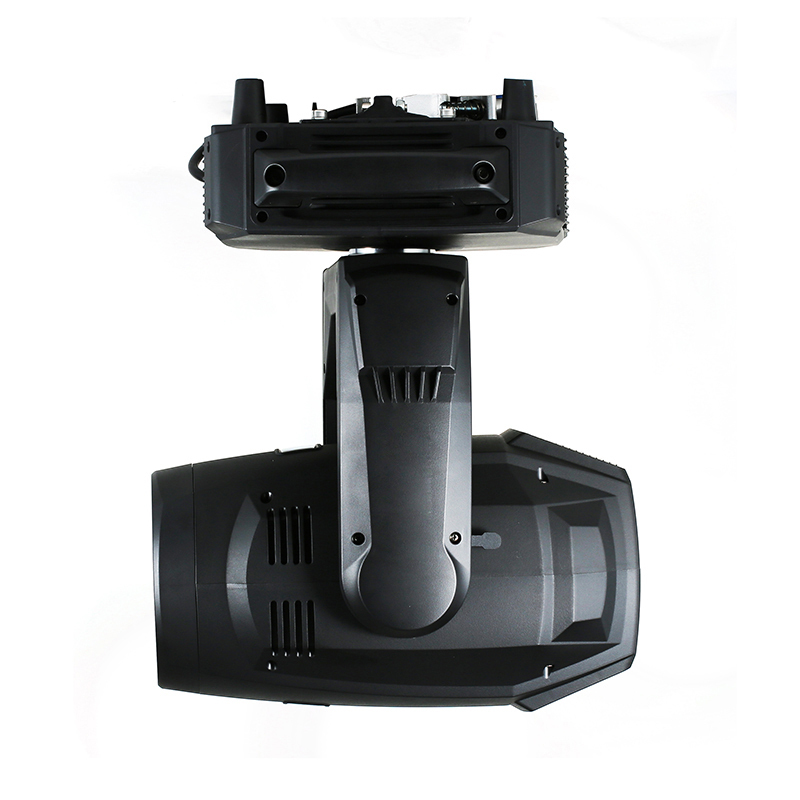
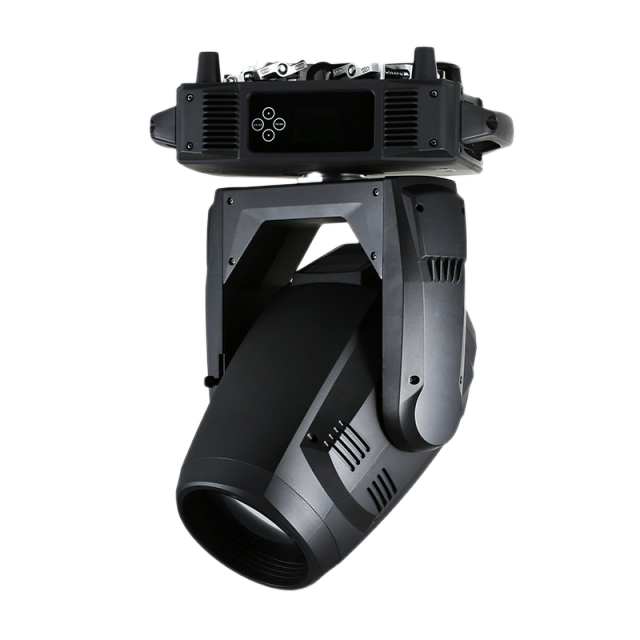
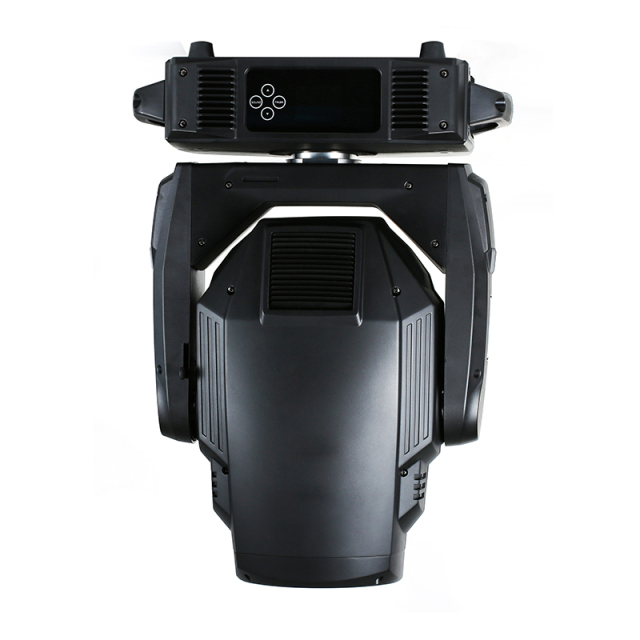
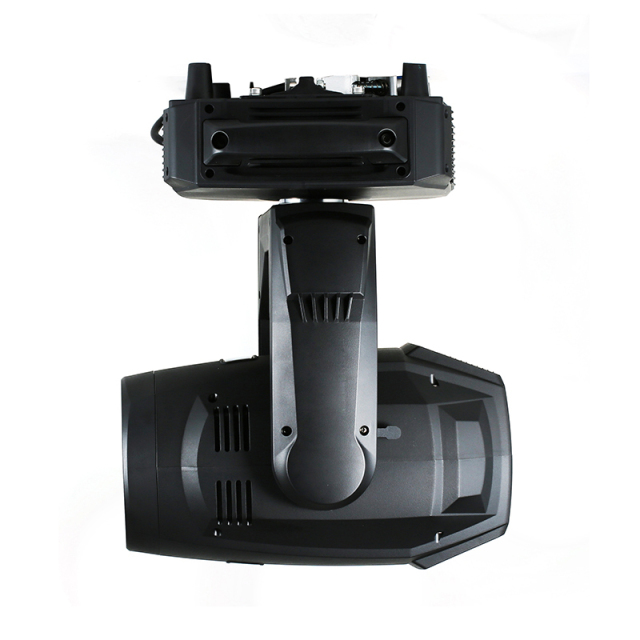
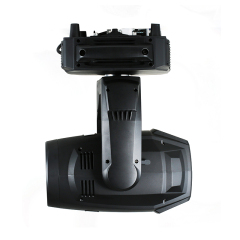
Product Overview
A hybrid that does three jobs. The Multi N480BSW is a beam spot wash 3in1 moving head built around an Osram 470 W discharge lamp at 7700 K. One lamp, one hanging point and one data run cover tight beam looks, gobo pattern work and wide wash coverage along the same bar.
Why rental fleets buy it. A moving head beam light is judged on how hard and how clean the beam reads from the back of the room, and this one is built around a 470 W source for exactly that. Then it changes character: the pattern wheels take over for projection, and the same head covers the mid-throw work a rig would otherwise hang a second fixture for.
One model, whole-rig coverage. Closed down it is the tight effect head; opened out it covers the set behind the band. Clubs and touring stages lean on it for the effect looks, theatres and multi-purpose venues use it because they cannot hang a different fixture for every show, and theme parks and long-run installations like a single spare covering every position.
How it sits with the rest of the range. This is the 470 W member of our Multi hybrid family, sharing menus, gobo language and rigging approach with the smaller and larger hybrids in the line, so a fleet can add one without rewriting its patch templates.
Bought direct. We supply this fixture as a bsw moving head light supplier to rental companies, distributors and project contractors, so the channel map, the spares and the engineer who knows the lamp all come from the same team.
Colour, Gobo & Prism System
- Three colour plates that stack — each plate carries four colours plus CMY plus white. On a beam spot wash 3in1 head the colour system carries most of the look, and because the plates superimpose you can build a gradual shift instead of a hard switch from one gel to the next.
- Bidirectional rainbow — the colour system runs a two-way rotating rainbow effect, so the rainbow travels either direction and can be reversed on cue instead of only spinning one way.
- Thirteen fixed gobos plus open — the fixed wheel gives the fast pattern looks a moving head beam light is bought for, with gobo jitter for a shimmer, and every pattern can be parked at any angle rather than sitting in a fixed clock position.
- Eight rotating gobos plus open — the rotating wheel handles the effects that have to move: spinning breakups, slow rotations, and jitter combined with rotation. That is the wheel a moving head spot light lives on when the look has to keep changing through a track.
- An independent flame plate — the fire plate sits on its own wheel, so flame looks can be layered over a gobo or run on their own without tying up either pattern wheel.
- An 8-facet and a 16-facet prism — the two prisms superimpose. One splits the beam into a fan, the other into a denser cluster, and running both together produces the layered multi-beam look that reads from the back of a hall.
- Atomisation from 0% to 100% — the frost softens the edge of a beam or a gobo into a moving head wash light without losing the shape underneath, which is how the same head goes from a hard beam look to soft coverage inside one cue.
Head Movement, Dimming & Strobe
Dimming is mechanical, not only electronic. A double-chip mechanical dimming system carries the 0–100% fade and it runs linear across the whole range rather than compressing at the bottom, which is the difference between a clean fall-off on a slow blackout and a step the audience can see.
Strobe is built in. Multiple stroboscopic speeds come from the double-sided channel strobe, so one fixture carries a hard pulse for a drop and a slower flicker for a build without adding another head to the patch.
540° of pan, 270° of tilt. Both axes run on 16-bit fine adjustment and both can be slowed for controlled moves or pushed for snap cues. On a moving head spot light holding a gobo still on a moving performer, that fine adjustment is what keeps the image from creeping.
Fast enough for a mark on the beat. The X axis completes a full 540° sweep in 2.2 seconds and the Y axis covers its 270° in 1.0 second. A stage light moving head that arrives a fraction late is worse than no cue at all, and this is where the speed shows.
Self-correcting after reset. The head completes its own horizontal and vertical correction automatically, and an optocoupler role function lets a technician re-establish the start position by hand during service. On a dmx moving head light sitting in a truss you cannot easily reach, correcting the start point without dropping the fixture saves a changeover.
Quiet, stable drive. The drive is specified as low-noise and large-torque, and that combination is what you notice when the rig hangs close to the audience in a theatre or a studio: moves start and stop without a clunk.
Specifications
Indoor, dry positions only — the rating is IP20, so this is a club, theatre, studio and covered-stage fixture. Whether it is working as a moving head wash light or a tight beam, it should not be hung where rain, sprinklers or wash-down can reach it. Ambient range of -10 °C to 45 °C — that covers a cold load-in in the morning and a hot stage-side position after a long night. Outside that band we do not publish performance figures. One-in, one-out cooling through a dustproof window — air follows a defined path through the housing. In a dusty venue or a festival field that window is the part to check; a blocked path is the usual reason a head starts behaving oddly after a long run. Keep the vents clear — the side ribs and the rear vent do the cooling work. Packing a head tight against another fixture or draping cloth over it is a reliable way to overheat one. Let a cold fixture acclimatise — a head that has travelled in a cold truck into a warm, humid venue should reach room temperature before power-up. That is normal practice with discharge-lamp fixtures, and it protects the electronics from condensation. Do not try to weatherproof an IP20 head — if the position is exposed, a cover is not the answer, a weather-rated fixture is. Tell us the site and, as a beam spot wash moving head manufacturer, we will point you at the right unit rather than sell you the wrong one.
| Model | Multi N480BSW |
|---|
| Light source | Osram 470 W discharge lamp, 1500 h rated life |
| Colour temperature | 7700 K |
| Power supply | AC 90–240 V, 50/60 Hz |
| Power consumption | 550 W |
| Zoom range | 7.2°–34° (pattern mode) |
| Colour system | 3 colour plates, each 4 colours + CMY + white |
| Gobo wheels | 13 fixed + white, 8 rotating + white |
| Pan / Tilt | 540° / 270°, 16-bit precision |
| Control | DMX and RDM, 26 or 30 channels, wireless optional |
| Ingress protection | IP20 |
| Operating temperature | -10 °C to 45 °C |
| Light size | 618 × 422 × 301 mm |
| Net weight | 24.5 kg |
Rigging, Power & Control Setup
- Plan the hanging position first. Confirm trim height, truss position and working clearance before the moving head spot light goes up — 540° of pan needs more room than the fixture's own footprint suggests, and the U-shaped yoke takes a standard clamp. Release the vertical lock before power-up. The head is locked for transport to protect the lamp and the internal assemblies; powering a locked head is the classic first-show mistake. Set the address and channel mode on the LCD. The menu runs in Chinese and English, and a built-in Ni-MH battery keeps the display alive with the mains off, so addresses can be set on the bench or in the case before the fixture is flown. Both maps are built in — choose the one the show file expects and keep that choice consistent across the fleet, so a swapped unit behaves exactly like the one it replaces. Run data on 3-pin XLR and keep it clear of the mains. Signal in and out are 3-pin with an in-line DMX interface on the first fixture, and power enters separately; keep the data run away from the mains run along the bar. Reset before trimming positions. On power-up the head completes its own horizontal and vertical correction, and a dmx moving head light that has been nudged by hand during focus will otherwise hold the wrong zero. Use RDM and update over the data link. RDM lets a console see and address each fixture remotely, and software is updated through the DMX connection rather than by opening the housing. Send us the rig plan before load-in. Trim heights, truss layout, console and the channel mode you intend to use — as a bsw moving head light supplier we would rather check the patch on paper than fix it at half past midnight.
Ordering & Delivery
- Confirm what you are ordering. Quantity, channel mode and packing all change the price and the freight, and this beam spot wash 3in1 head travels either in a waterproof and shockproof air box or in a carton.
- Ask for the commercial terms in writing. Minimum order quantity, lead time, payment terms and trade terms are quoted per order and per destination rather than published as a fixed table — as a bsw moving head light supplier we would rather put them in the quotation than leave them to be assumed.
- Check the freight arithmetic. One carton measures 730 × 430 × 540 mm at 28.6 kg gross; for a fleet, ask us to work the volume so the container or air freight plan matches the case count.
- Agree the warranty and service route before the order is released. Ask for the current warranty, repair and spare-parts policy so your own service desk knows what it is working with.
- Agree how a quality issue would be handled. Ask for the notification window and the information your team would need to send with a claim, so a problem is settled in one exchange rather than three.
- Tell us the rest of the fleet. If these heads sit alongside other Multi hybrids in your inventory, list the models — as a beam spot wash moving head manufacturer we can keep menus, channel modes and the spare-parts list consistent across the whole fleet.
- Specification sheet | Electrical, optical and physical data for submittals and project files DMX channel table | Function-by-function maps for the 26-channel and 30-channel modes User manual | Menu structure, addressing, calibration and routine service notes Fixture library profile | Console personality for both channel modes; confirm your console so we can match it Photometric data | Beam and illuminance information for planning throw and coverage Outline drawing | Dimensions and rigging points for truss and ceiling plans Compliance documentation | Ask which test reports apply to your market's approval route before specifying
Technical Support & Model Matching
More than 30 engineers with an average of 15+ years in professional lighting stand behind every order — the same people who answer your technical questions. Tell us your venue, rigging height, throw distance and existing control setup; we help match models, check protocol and channel fit, and build a package that works as one system. If a fixture misbehaves on site, we work through the fault with you and sort out spares. Installation and commissioning guidance come with the order. Founded in 2016, exporting since 2022, LITEVISION is a beam spot wash moving head manufacturer serving buyers in more than 80 countries from offices in the USA, Taiwan, Mexico and China.
FAQ
Can one fixture really cover beam, spot and wash duties?
That is what the beam spot wash 3in1 layout is for. The same optical path narrows for the hard-edged looks, projects gobos through the pattern wheels, and opens out to cover a stage or a set piece. What it will not do is replace a dedicated wide wash for very broad, soft coverage of a large floor — most rigs run a few of those alongside heads like this one.
Is the flame effect a gobo, or its own wheel?
Its own wheel. The flame plate is independent of the 13-position fixed wheel and the 8-position rotating wheel, so fire looks can be layered over a spinning gobo or run on their own without using up a pattern position. That separation is why a stage light moving head can stack flame and gobo looks inside a single cue.
What routine upkeep does it need between shows?
Airflow and lamps, mostly. Clear the dustproof cooling window and check the vents after dusty dates, keep the front lens clean, and log lamp hours so a lamp does not fail mid-set. A moving head beam light that is serviced on that rhythm stays consistent from venue to venue, which is what a rental desk actually needs.
Which channel mode should I patch, 26 or 30?
It depends on how much individual control your show file uses. The 26-channel map is the more compact of the two; the 30-channel map carries more parameters. Pick one and hold it across the fleet, and confirm the map with us before you build the template so a substituted unit drops straight in. Where the fixture carries most of the pattern work in a show, the longer map is the one worth testing first.
Does it work over wireless DMX?
Wireless control is an option alongside the standard 3-pin DMX in and out. On a fixed install we would normally run cable; on a touring rig, or a dmx moving head light being added to a bar without pulling new data cable, the wireless option is worth asking about. Confirm it when you specify.
Is the published 7.2°–34° zoom the same in every mode?
That range is quoted in pattern mode, which is where gobo and spot work happens. At the wide end the head behaves as a moving head wash light; at the narrow end it is a tight beam. If you are planning a long throw strictly on beam angles, ask us to confirm the current figures before you commit a rig plan.