Product Overview
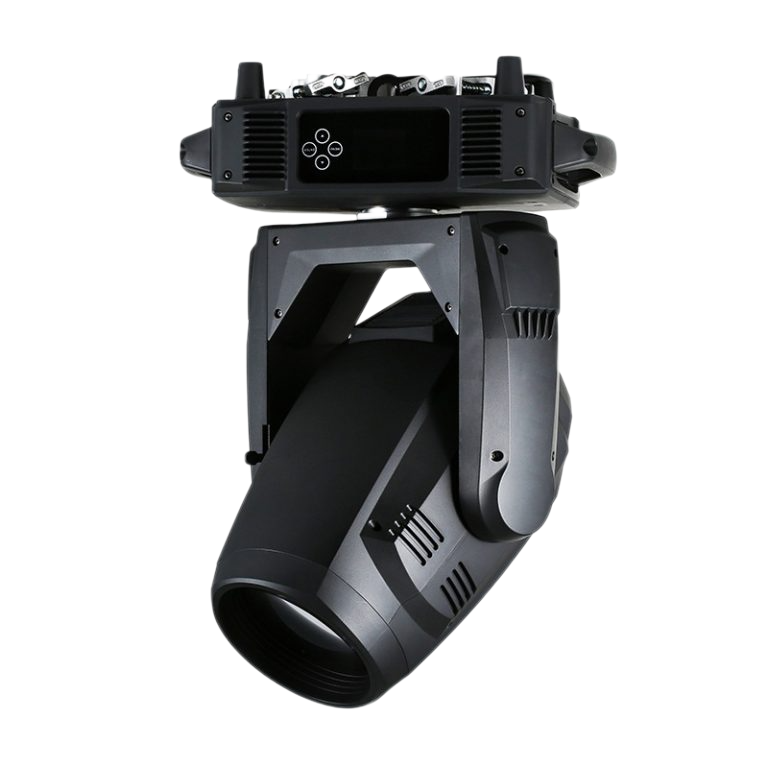
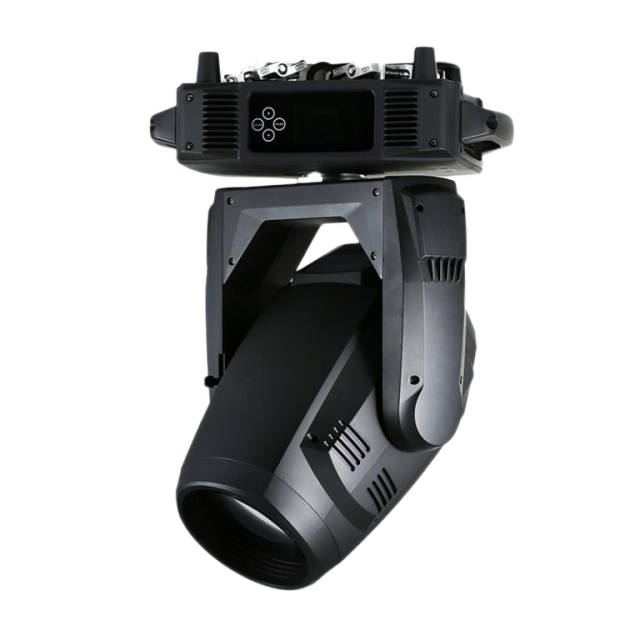
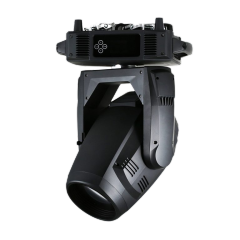
This is a beam spot wash 3in1 moving head: one housing that covers a tight aerial beam, a gobo spot for projection and a frosted wide wash. Programmers move between the three during a show without swapping fixtures, which matters when hanging positions, truck space and the patch are already fixed. Rental companies and touring productions are the main buyers, and the argument is fleet economy. A single model covering beam and wash duty cuts the number of distinct fixtures on the truck, and with it the spare parts, the channel definitions the crew has to learn and the repatching between shows. Crews who already run a moving head beam light of this class will recognise the addressing routine and the wheel logic straight away. Venues and distributors take a different angle: one house hybrid that opens a show with a hard shaft and finishes on a full-stage wash. Distributors who buy from us as their beam spot wash moving head supplier get a single model answering both the beam and the wash enquiry, with one set of spares behind it. In daily use it behaves like any professional stage light moving head on a truss. Colour, gobos, prisms and frost are called from the console during the show, so the fixture's own menu is mostly used at load-in. We build and ship this fixture ourselves, so the first conversation tends to be about the wheel layout rather than the price.
Lamp & Optical System
- PHILIPS 380W lamp. A rated life of 1500 hours makes running cost predictable: lamp changes can be booked between tours instead of landing in the middle of one. Keep a simple hour log per unit and the replacement date never arrives unannounced.
- 7800K colour temperature. A cool white that keeps saturated colour reading cleanly and gives gobo projection a neutral base instead of a warm cast, so the stage does not shift tone when this fixture takes over a cue.
- Electronic zoom. The zoom is motorised and linear, so the beam opens and closes smoothly through a cue rather than stepping between fixed angles. One unit can cover a stage width and then cut to a shaft inside the same number.
- Electronic focus. Focus is motorised too, and it is what makes a usable moving head spot light: gobo edges stay defined as the zoom moves, instead of only at the one distance where the fixture was focused by hand.
- 0–100% frost. Linear atomisation takes the hard edge out of a beam for a moving head wash light look, or removes glare from a gobo projection. It works progressively, so a small percentage is a genuine half-step between the two.
- Dimming, strobe and cooling. Dimming runs 0–100% smoothly and the strobe carries several speeds to match the track. Fan cooling handles the heat, so keep the ventilation grilles at the rear and sides clear when fixtures are hung close together on a bar.
Colour, Gobo & Prism System
| System | What it gives you |
| Colour wheels | Three independent wheels, each with four colours plus CMY plus white |
| Colour layering | The wheels superimpose, so two-tone, gradient and split-colour looks come from one unit |
| Rainbow effect | Two-way rotating rainbow on the colour wheels |
| Fixed gobos | 14 gobos on the fixed wheel for pattern washes and break-ups |
| Rotating gobos | 8 gobos on a separate rotating wheel that indexes and rotates during a moving head spot light cue |
| Gobo role | Magnetic role for initial position correction and maintenance |
| Prism 1 | 8-facet, bidirectional rotation, stackable |
| Prism 2 | 16-facet, bidirectional rotation, stackable |
| Prism stacking | Both prisms superimposed for layered beam effects |
| Wash duty | Frost in and the zoom open turn the beam into a moving head wash light |
Movement & role
Pan runs 540° and tilt 270°, both on 16-bit precision scanning. That resolution is what a moving head beam light needs for slow work: a long tilt through a ballad stays smooth instead of stepping, and small trims at focus land where the designer points.
Speed is adjustable per axis from the console, which is the difference between a stage light moving head that can hit a fast cue and one that has to be tricked into it. The position stays put; only the time taken to reach it changes.
Pan and tilt correction completes automatically. A unit nudged during load-in still returns to the same reference before the show, saving a technician a walk to the truss.
Optical coupling role does the same job for maintenance: after a wheel or belt is serviced, the arm finds its initial position again without a manual re-teach.
A vertical locking function holds the head for transport and keeps the lamp and optics away from knocks between venues. Release it before power-up — commanding a locked head to move puts the load straight onto the tilt motor.
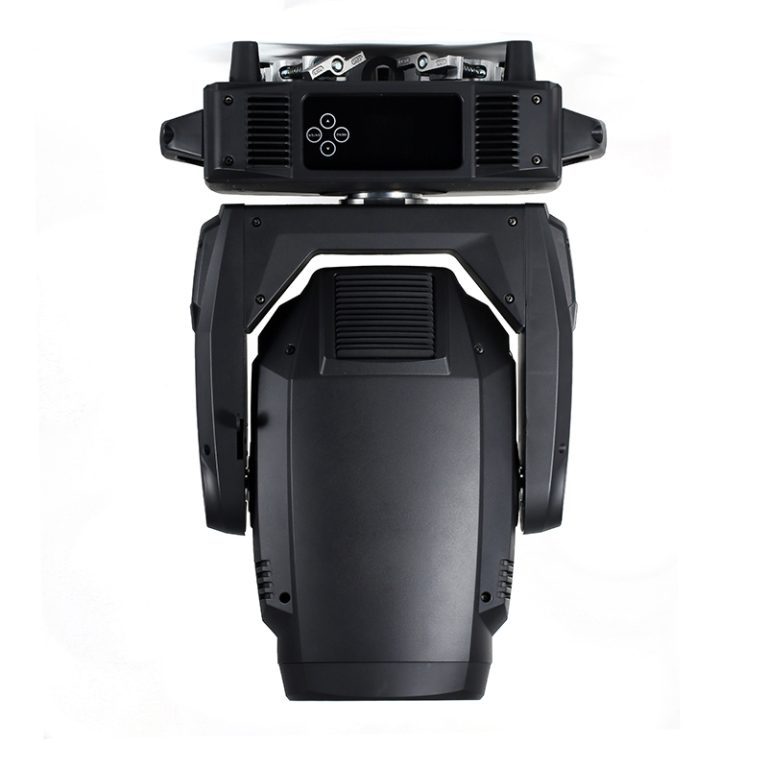
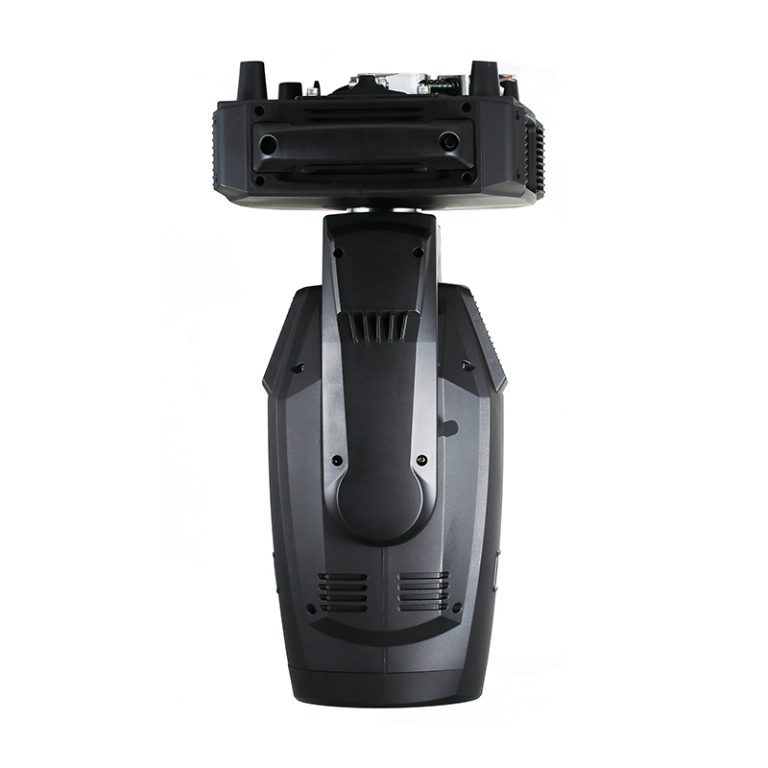
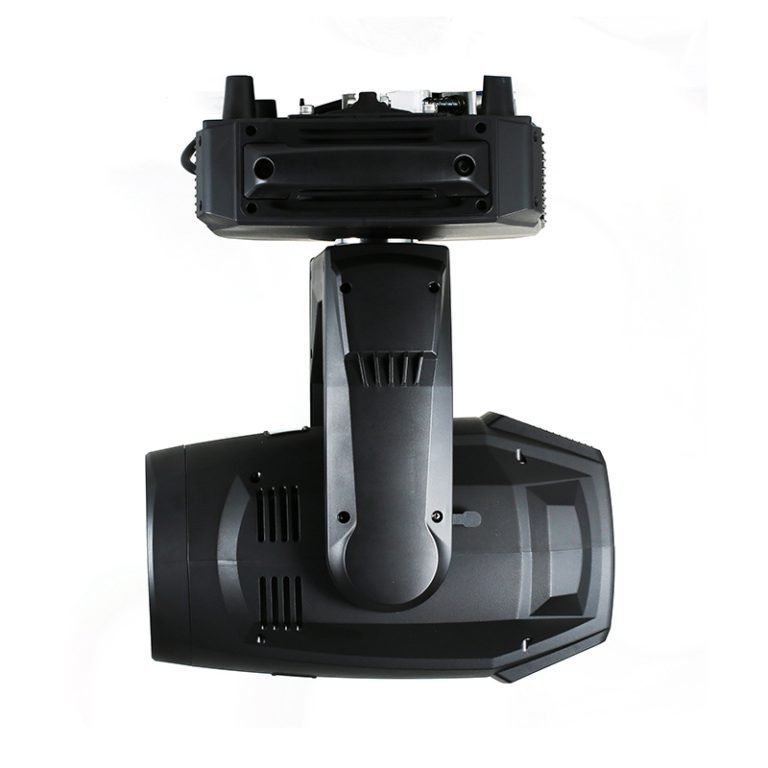
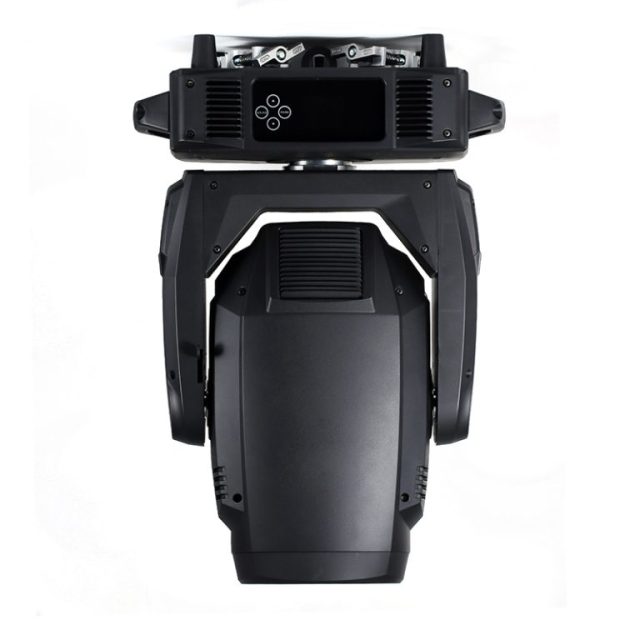
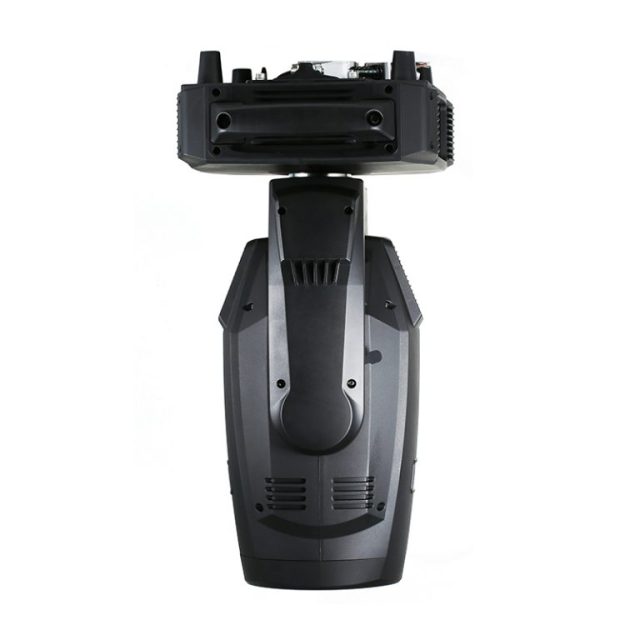
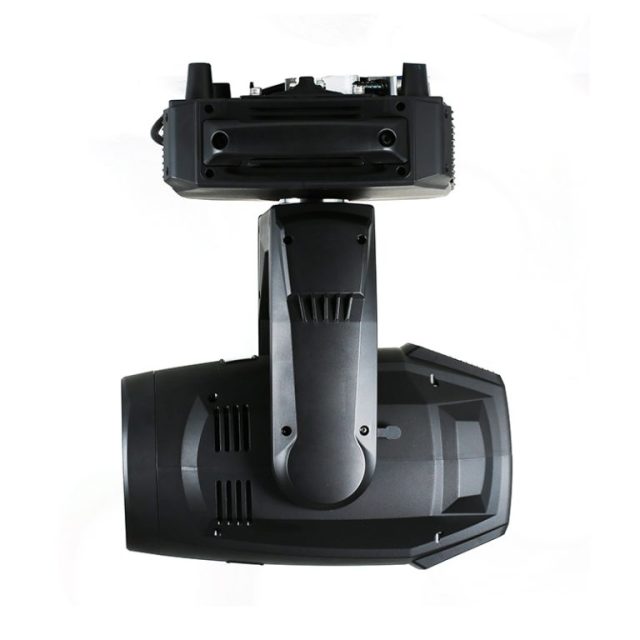
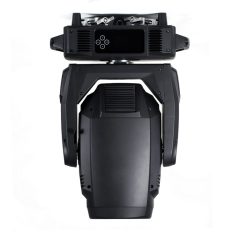
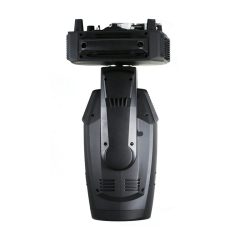
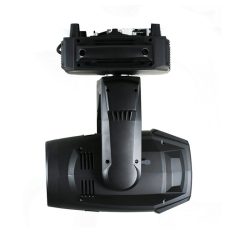
The head sits in an open yoke, and the bracket with its base knobs lets you set the hanging angle before the unit goes up on the bar.
Specifications
| Specification | Detail |
|---|
| Model | Multi NC380BSW |
| Fixture type | Beam spot wash 3in1 moving head |
| Lamp | PHILIPS 380W, rated life 1500 hours |
| Colour temperature | 7800K |
| Power | 680W, 100–240V, 50/60Hz |
| Pan / tilt | 540° / 270°, 16-bit precision scan |
| Optics | Electronic linear zoom and electronic linear focus |
| Dimming / strobe | 0–100% smooth dimming, multi-speed strobe |
| Colour system | 3 colour wheels, each 4 colours plus CMY plus white |
| Gobos and prisms | 14 fixed and 8 rotating gobos; 8-facet and 16-facet stackable prisms |
| Control | DMX512 on 3-core XLR in and out |
| Dimensions / weight | 659 × 422 × 301 mm, net weight 24.2 kg |
Installation & Setup
- Release the vertical transport lock, check the front lens and the rear ventilation grilles, and confirm the lamp is seated before the fixture leaves its case.
- Hang it from a clamp on the yoke bracket and add a safety bond. If the rigging method is new to your crew, confirm the clamp and bond arrangement with your sales contact before the first hang.
- Run DMX in and out on 3-core XLR. This is a straightforward DMX moving head light: signal in from the console or the previous unit, signal out to the next, terminated at the end of the chain.
- Set the address on the display. The display holds its own charge, so menu and address settings can be entered before the fixture is powered — useful when you are addressing a truss while the distro is still off.
- Run a reset and watch pan, tilt and the wheels complete their correction before programming starts. If an axis does not return to reference, stop and recheck the transport lock.
- At focus, trim pan and tilt, then run through the beam, the moving head spot light patterns and the wash from the console rather than from the menu, so what you see at the desk is what the cue will do.
- Write the address and menu settings onto the patch sheet. Identical units in the same position can then be set the same way at the next venue without working them out again.
Documentation & Downloads
- Specification sheet. Lamp, colour temperature, power, pan and tilt, dimensions and weight on one page — ask for it in the format your tender or project file requires.
- User manual. Menu structure, setup and service guidance. Request the version that matches the production run you are buying, so the menu numbering on site matches the paperwork.
- DMX channel table. Get this before programming. It sets the order of the colour wheels, gobos, prisms, frost and movement, and it is the map your programmer builds the show file from on any DMX moving head light.
- Photometric file. Where the design has to be calculated ahead of the install, ask for the photometric data for this model so coverage in the previz matches the rig on site.
- Fixture library file. For consoles and previz software, request the library entry for your desk so the fixture appears with the right parameter names and ranges.
- Compliance documents. Requirements differ by country, and the document set a beam spot wash moving head supplier can offer varies with them. Tell your sales contact the destination market and they will confirm which test reports and compliance documents are available for this model — buyers working to a public tender usually need that list early.
Ordering & Delivery
- Confirm the quantity and configuration. Order quantities, any minimum and volume pricing are quoted against your actual order rather than published as a fixed figure, so send the unit count and the destination and ask for a quotation. Because we are the beam spot wash moving head manufacturer, anything unusual about the configuration comes back to the people who build the unit.
- Confirm the lead time in writing. Production and delivery schedules move with order size and season, and a fixture that misses its date is worse than one that ships a week later — get the current schedule against your show dates before you commit.
- Confirm payment and trade terms. Payment method, currency and the Incoterms that apply are agreed per order, and they decide who books the freight and who carries the insurance.
- Confirm the packing for your route. Tell your sales contact how the units will travel and whether multi-unit or flight-case packing is available for this model; packing affects both the freight cost and the condition the fixtures arrive in.
- Confirm warranty and spares. Warranty period and what it covers are set per order and per market, so ask for them in writing, together with how replacement lamps and spare parts are supplied if a unit goes down mid-season.
- Confirm the return and quality-dispute route. Ask for the process in writing before the first shipment — who to notify, what evidence is needed and what happens to the unit. Every beam spot wash moving head supplier handles this differently, and it is better to know the route before you need it.
Technical Support & Model Matching
More than 30 engineers with an average of 15+ years in professional lighting stand behind every order — the same people who answer your technical questions. Tell us your venue, rigging height, throw distance and existing control setup; we help match models, check protocol and channel fit, and build a package that works as one system. If a fixture misbehaves on site, we work through the fault with you and sort out spares. Installation and commissioning guidance come with the order. Founded in 2016, exporting since 2022, LITEVISION serves buyers in more than 80 countries from offices in the USA, Taiwan, Mexico and China.
FAQ
What is the difference between beam, spot and wash on this fixture?
All three come from the same lens. Beam is the narrow end of the zoom with the frost out and a hard edge for aerial shafts; spot brings in the gobo wheels for projected patterns; wash opens the zoom and adds frost for even coverage. It is a beam spot wash 3in1 design, so a programmer can move between those three states inside a single number.
How many DMX channels does it need?
The footprint depends on the mode the desk is running, and the definitive list is the channel table for this model — ask your sales contact for the current version and it will give you the exact count for your patch. Plan the address before you hang: this is a DMX moving head light with 3-core XLR in and out, so signal can run straight down a truss without extra hardware.
Which lamp does it use, and how often will it need changing?
A PHILIPS 380W lamp rated at 1500 hours. Real hours depend on how hard the fixture works and how often it is struck, so log hours per unit and replace before the rated figure rather than after a failure. On a moving head beam light that runs every night, keep at least one spare lamp on the truck.
Can it produce a wide wash, or do I still need separate wash lights?
It covers wash duty: open the zoom, add frost and the output becomes a soft, even field rather than a shaft. For front-of-stage colour or a full-stage wash you may still prefer dedicated units, since a moving head wash light with a wider field does that job with fewer fixtures. This one earns its place where the same position has to switch between a shaft and a wash during the show.
Will it fit under a low truss?
The head sits in an open yoke, so the clearance you need is the yoke plus the clamp plus a little travel. Measure the whole assembly rather than the fixture alone, and check the trim height at the lowest point of the tilt range — a stage light moving head that clears the bar at rest can still clip a set piece at full tilt.
How do I keep colour and gobo alignment consistent across several units?
Order the whole run together so the units come from the same production run, and record the address, wheel offsets and menu settings for each position on the patch sheet. If two units ever look different under the same colour wheel, raise it with your sales contact — as the beam spot wash moving head manufacturer we can check the batch and tell you what to adjust.