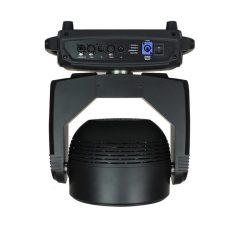
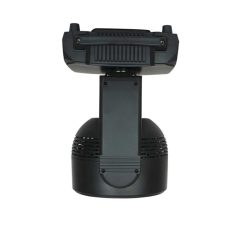
Product Overview
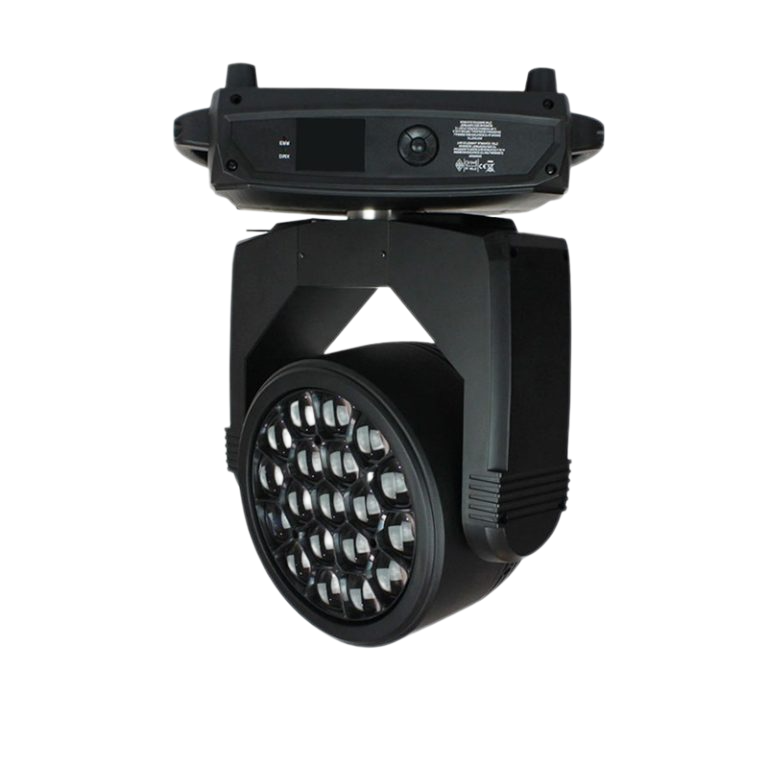
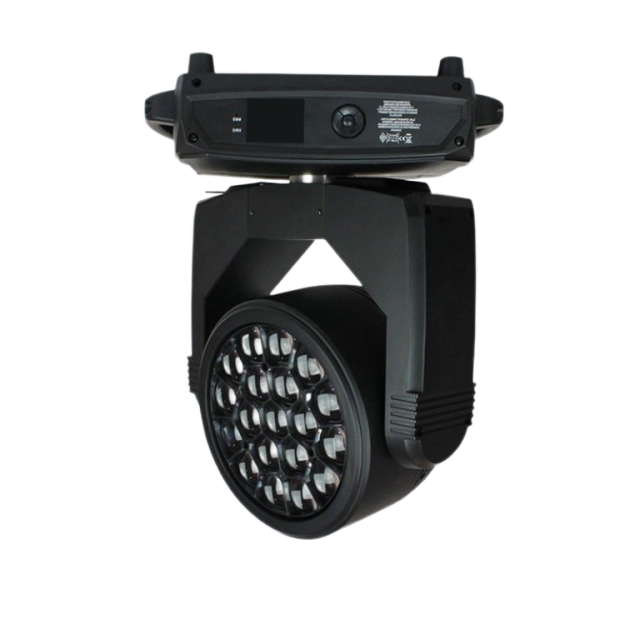
The Ommatea 1940K is a 19 × 40 W RGBW four-in-one LED moving head for indoor stages, built around a 4°–60° electronic zoom. That range is the point of the fixture: the same head that cuts a narrow airborne column across a club floor can open out and cover a theatre stage front, without changing lens tubes or swapping units between numbers. Three operating modes — wash, beam and FX — plus a bi-directional rotating front lens let one fixture carry a whole look on its own. It is a lamp-free LED moving head light, 6,000 K native white and rated at 50,000 hrs, so a season of shows costs programming time rather than lamps and relamping calls. If you are weighing it against a fixed-angle beam or a pure wash unit, ask how many different rooms the fixture has to work in. One zoom range spanning 4°–60° usually answers that better than two single-purpose fixtures sharing the same truck.
Light Source & Colour Engine
- Nineteen 40 W RGBW emitters. Each 4-in-1 LED carries red, green, blue and white on one chip, so saturated colour and clean pastel tints come from the same source with no separate white wheel to align or drift.
- 6,000 K native white. Neutral and consistent, which is what you want under a front truss, on a set wall and in front of a camera.
- 50,000 hrs rated LED life. No discharge lamp to relamp, and no slow colour shift as a lamp ages out halfway through a tour.
- 2,500–8,000 K white emulation. Warm the output to sit beside tungsten practicals on a theatre stage, or cool it for a 5,600 K camera balance.
- A dedicated colour temperature channel. Warmth is its own console parameter, so the whole rig can be nudged warmer at half-hour without rewriting a single colour cue.
- RGBW auto-tuning. When a CT emulation is dialled in, the RGBW mix rebalances to hold the target instead of simply dimming the white — skin tones and set whites stay where the designer put them.
- Colour that holds at the narrow end. A LED moving head light in this class is judged on how tight its mixing stays at 4°, where a fringed beam shows immediately; the single-chip array keeps the column one colour rather than a fan of separate red, green and blue edges.
Optics System & Zoom Range
Zoom is electronic and runs from 4° to 60°, set from the console rather than by hand. At the narrow end the output is a hard-edged column for aerial work, mirror-ball hits and long throws across a room. At the wide end the same head becomes a wash that covers a stage front from one hanging position. Most designs live in between — somewhere around 12°–25° for backlight fingers and 40°–60° for front coverage — and the point is that those are cues, not purchases.
Two details separate this optical block from a plain zoom wash. The front lens rotates in both directions, so a slow rotation turns a wide field into a kaleido pattern in the air. And the wash output can be digitally framed and softened, so the edge of the field feathers instead of landing on the floor as a hard circle. Framing, edge softening and lens rotation all live on the console, which means the look is repeatable from venue to venue rather than being a focus call somebody has to remember.
For a moving head beam light the useful test is not the widest angle on the sheet but whether the narrow end still holds its shape at your throw distance. Plot it at your real trim height before you fix a quantity: any moving head light supplier can send the angle figures, but the 4° end gains enormously from haze and the 60° end loses punch quickly in a bright room with no atmospheric support.
Effect Configuration & Operating Modes
- Wash mode. Open the zoom and the fixture works as a moving head wash light — broad, even coverage across a stage front, dance floor or set wall, with the edge softened when the field has to blend.
- Beam mode. Close the zoom for a narrow, punchy column that reads through haze and carries to the back of a large room.
- FX mode. Kaleido effects built from the rotating front lens, for the parts of a show that need a moving pattern rather than a static wash.
- Digital wash-beam framing. Shape the field from the console instead of flagging the fixture — useful on a front truss where spill is hitting a screen or a painted wall.
- Beam edge softening. In wash mode the edge can be feathered, so two adjacent units overlap without a visible seam.
- Pixel patterning macros. Pattern movement runs from inside the fixture, so a club or a school hall gets effect without a media server or a second operator on the desk.
- Dimmer and strobe. 0–100% linear electronic dimming for clean fades to black, plus an adjustable stop/strobe with instantaneous blackout for hits.
- Professional led stage lighting usually has to change character between numbers. Here the modes switch inside the cue list rather than at the truss, so a beam look and a wash look can sit two cues apart on the same fixture.
DMX Control & Console Files
Control is DMX512 with five channel maps running from 21 up to 97 channels. Patch the smallest map when a venue only needs colour, zoom and movement from a straightforward desk. Step up to the largest when a designer wants the pixel macros, the colour temperature channel and the framing effect broken out as individual parameters. It is the same fixture underneath each time — you are choosing how much of it the console is allowed to see.
Ask for the channel chart for the mode you intend to use before anyone programs, and patch from that chart rather than from a profile somebody built elsewhere. Send us the console model and the software version and, as the LED moving head light manufacturer, we will tell you which of the five maps patches most cleanly into the show file you already run, and which parameters you will need to name yourself.
Two habits keep a shared rig predictable. Record the channel mode and start address on the patch sheet, and keep identical units on the same map so that swapping a fixture mid-run does not shift every address behind it. If the shows are built in a visualiser first, get the profile sorted before the pre-viz session rather than on site.
This model is controlled over DMX512. If your rig depends on RDM for remote addressing, or runs an Art-Net or sACN network, confirm that the option is fitted on the units you order before you write it into the design — a dmx moving head light is only as convenient as the addressing method the venue actually has.
Applications
- Nightclubs and bars. Beam over the floor, wash between numbers, FX when the room peaks — one fixture type covering a space whose mood changes every hour.
- Theatre, school halls and multi-purpose venues. Indoor and lamp-free, with a wash end that covers a stage front from a short front truss and nothing to relamp between terms.
- TV studios and broadcast. 6,000 K native white, emulation down to 2,500 K for tungsten-lit sets, and linear dimming to blackout on cue.
- Concert and touring support. One model that handles both the aerial looks and the front coverage on a mid-size stage, so the truck carries fewer fixture types.
- Churches and worship venues. Professional led stage lighting for a volunteer operator: a small channel map plus built-in macros will carry a service, and nobody has to climb a tower between weekends.
- Rental fleets and integrators. Buying from one moving head light supplier keeps channel maps, macros and spares inside a single family, which is what makes a fleet easy to lend out and easy to replace.
Rigging, Power & Operating Environment
- Size the hardware to the fixture. At 18 kg net you want a rated half-coupler or clamp and a secondary safety cable through the yoke, and the truss point should be checked against the full load of the bar, not the single unit.
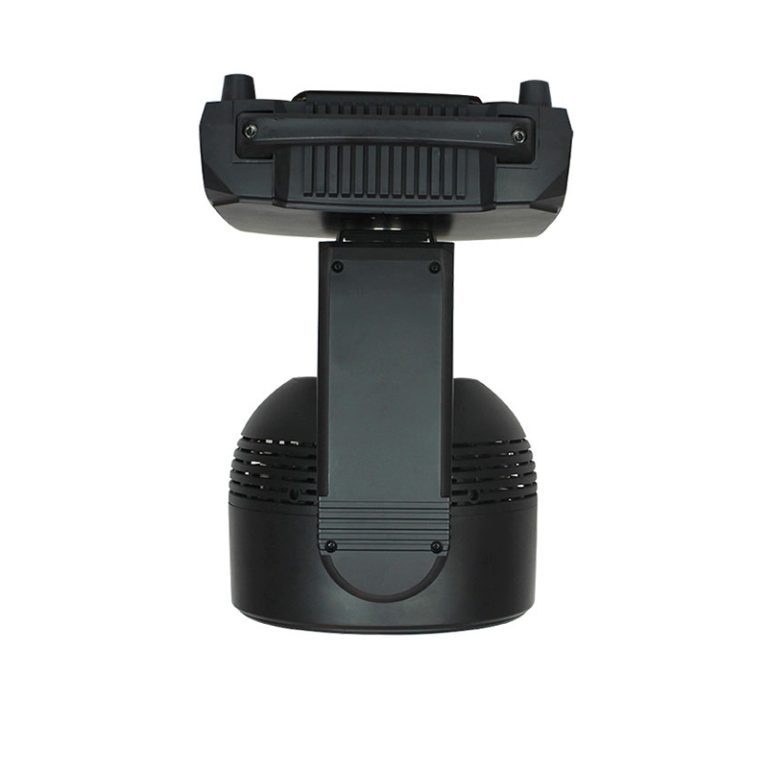
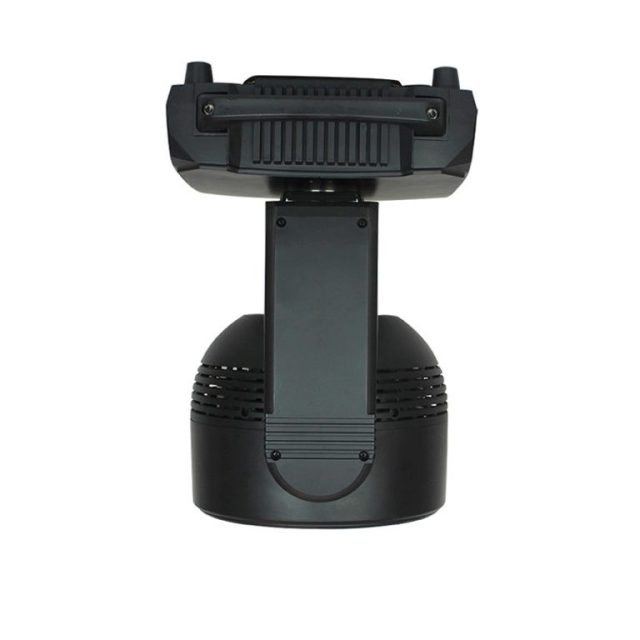
- Hang it on the bracket and give the head room to travel. The yoke mounts to the truss; the head needs clearance through its full pan and tilt arc, so leave a gap to the next fixture and to anything hanging lower in the set.
- Plan power before data. The unit runs on 100–240 V, 50/60 Hz and draws 800 VA at 230 V 50 Hz; check that against the circuit you intend to share and do not assume a whole truss will run from one ring.
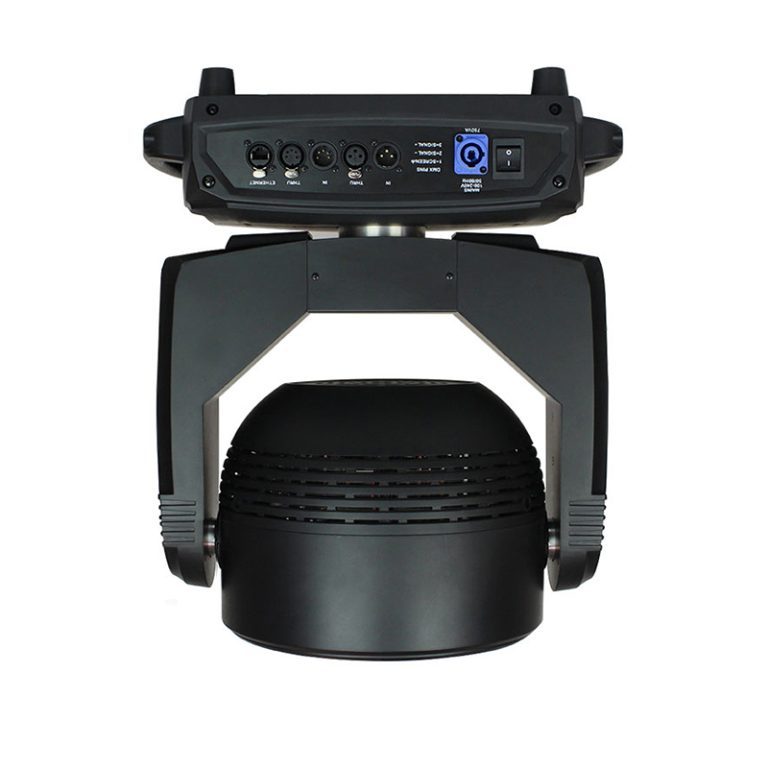
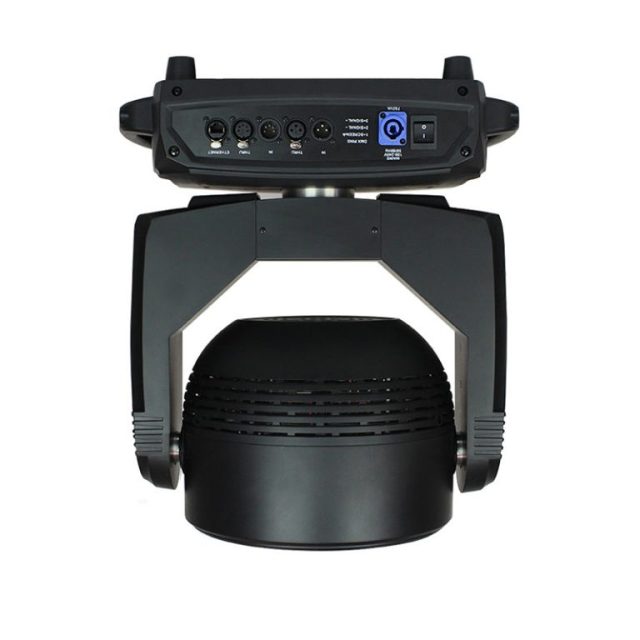
- Run DMX512 in and out from the rear panel, and keep the data line away from mains cable wherever the run allows it.
- Set the start address in the menu to match the channel mode, then write both on the patch sheet — the same discipline you would apply to any dmx moving head light on the line.
- Keep it indoors and keep it breathing. The rating is IP20, so the fixture belongs in dry, covered spaces with clearance around the fan vents; dust loading and haze-fluid residue are the usual reasons a unit starts cutting out.
- Sweep pan and tilt through full travel before doors, then focus at working height. A moving head beam light that looks right at 3 m rarely looks the same at 9 m, and the difference is cheaper to fix before the audience arrives.
Specifications
| Light source | 19 × 40 W RGBW 4-in-1 LED |
| Colour temperature | 6,000 K native white |
| LED rated life | 50,000 hrs |
| Colour temperature emulation | 2,500–8,000 K on a dedicated channel |
| Zoom range | 4°–60°, electronic |
| Operating modes | Wash, beam, FX (kaleido effects) |
| Front lens | Bi-directional rotation |
| Pixel control | Pixel patterning macros |
| Channel maps | 21 / 35 / 78 / 92 / 97 CH |
| Control | DMX512 |
| Power supply | 100–240 V, 50/60 Hz; 800 VA at 230 V 50 Hz |
| Ingress rating | IP20 |
| Net weight | 18 kg |
Packing & Flight Case Options
| Option | Detail |
| Packing | Cardboard carton, one fixture per carton |
| Carton dimensions | 46 × 46 × 58 cm |
| Carton gross weight | 22 kg |
| Carton recommended for | Dealer stock, single-unit sales and fixed installations |
| Flight case | 2-in-1 road case, two fixtures |
| Flight case dimensions | 53 × 83 × 76 cm |
| Flight case gross weight | 75 kg |
| Flight case recommended for | Rental and touring fleets moving a working pair between venues |
| Bulk shipping | Cartons stack and palletise for volume orders |
| Touring protection | The road case keeps a matched pair together between shows |
Ordering & Delivery
- Tell us what the fixture has to do — venue type, throw distances, how many units, and whether this is a fixed installation or a rental fleet. That decides the channel mode, the packing and the spares list.
- Ask for the current commercial terms in writing: minimum order quantity and any tier pricing, production and delivery lead time, payment terms, and the trade term you need the shipment quoted on. We confirm these per order rather than publishing fixed figures.
- Confirm what arrives with each unit and which documents travel with the shipment — the specification sheet, the channel chart for your chosen mode and the packing list. If the project file needs a manual or a photometric file, say so at quotation stage so it is included.
- Ask about warranty scope and how a quality claim is handled in your market. A moving head light supplier is judged on the week after delivery as much as on the day of the quote, so agree the process before the first shipment rather than after.
- Match the packing to the way the fixtures will travel — carton for a fixed installation, 2-in-1 flight case for a touring inventory — and confirm freight and consolidation against the packing list.
- We quote from the factory as a LED moving head light manufacturer, and we stay on the file after delivery for patching, spares and commissioning questions.
Technical Support & Model Matching
More than 30 engineers with an average of 15+ years in professional lighting stand behind every order — the same people who answer your technical questions. Tell us your venue, rigging height, throw distance and existing control setup; we help match models, check protocol and channel fit, and build a package that works as one system. If a fixture misbehaves on site, we work through the fault with you and sort out spares. Installation and commissioning guidance come with the order. Founded in 2016, exporting since 2022, LITEVISION serves buyers in more than 80 countries from offices in the USA, Taiwan, Mexico and China.
FAQ
Can one fixture really cover both the beam and the wash for a room?
That is what the 4°–60° zoom is for. Closed down it throws a narrow column for aerial looks; opened up it covers a stage front as a moving head wash light. The change is a cue rather than a re-rig, so the same unit can be a beam for one number and front coverage for the next, with the edge softened when the field has to blend.
Which console will this led moving head light patch into?
It speaks DMX512 and offers five channel maps, so any desk running standard DMX can drive it. Tell us the console model and software version and we will point you to the map that patches most cleanly into your existing show file. On a shared rig, keep identical units on the same map so a swap does not shift every address behind them.
Can we address and monitor it over RDM or an Art-Net network?
This model is controlled over DMX512. If your rig relies on RDM for remote addressing, or on Art-Net or sACN, confirm with us that the option is fitted on the units you order before you build it into the design. For a dmx moving head light in a touring inventory we would keep a written patch sheet either way, so the show survives a change of desk.
How do I get a soft edge instead of a hard circle on the floor?
Work in wash mode and bring in beam edge softening, which feathers the field so two units overlap without a seam. Digital wash-beam framing shapes the field from the console instead of flagging the fixture. A moving head wash light used as front light usually wants the wider end of the zoom with the edge softened; save the hard edge for beam work over the audience.
How far will the beam actually throw?
The 4° end is genuinely narrow and holds together over a long throw, especially with haze in the air; the 60° end is for coverage at short to medium distance. Rather than quote one figure that will not match your room, plot the fixture at your trim height and depth — ask us for the photometric file and we will send it with the channel chart. A moving head beam light is only as good as the throw it was chosen for, so check the distance before you fix quantities.
Is it suitable for a church or a school hall?
It is an indoor fixture rated IP20, lamp-free, with built-in macros, which suits venues where the operator is not a full-time programmer: the small channel map plus the macros will run a service or an assembly without a media server. For professional led stage lighting in a hall that also hosts exams, assemblies and community events, hang it on a front truss, set the wash as the default look and reserve FX for the moments that call for it.