Product Overview
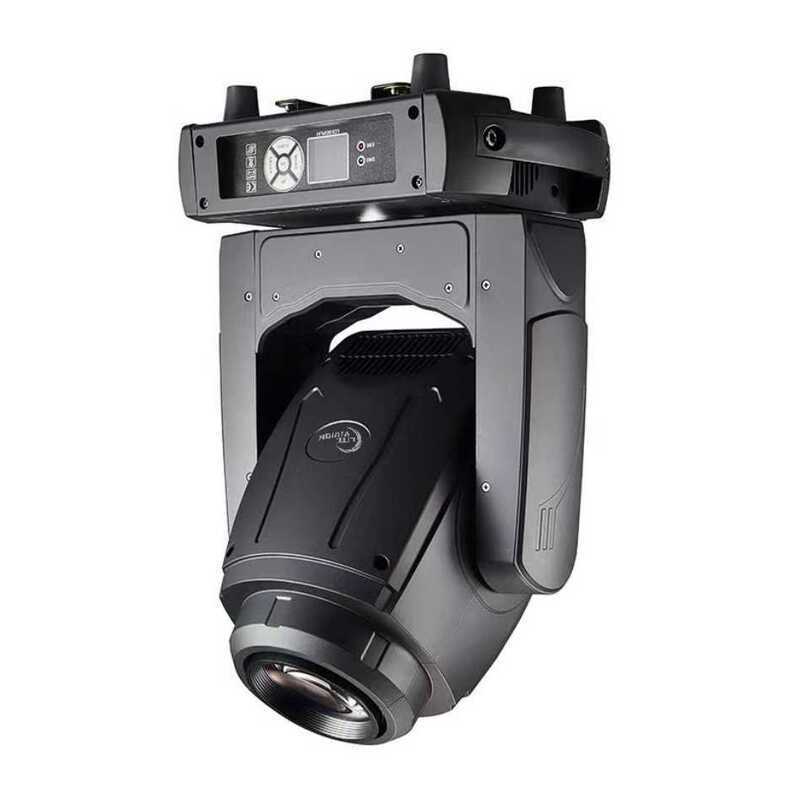
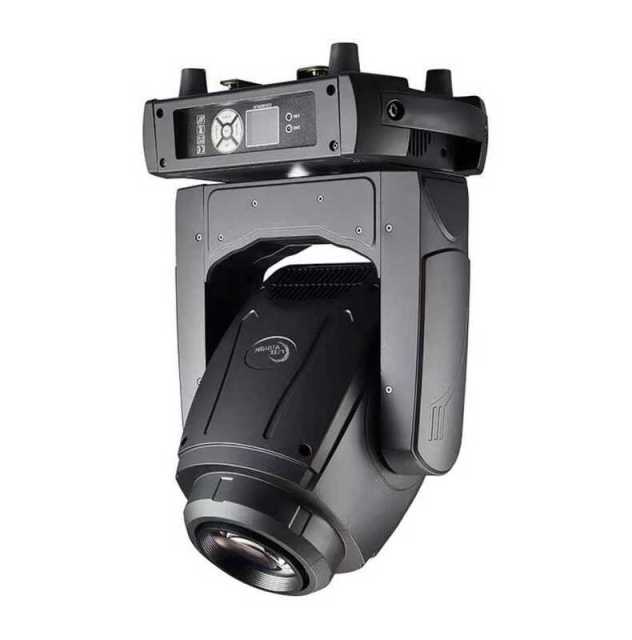
The Multi EL350BSW is a beam spot wash 3 in 1 moving head: one black housing on a U-shaped yoke, one white LED module, and three looks an operator can move between without touching the rig. A tight beam for aerial work, a gobo spot for stage texture and a soft wide wash for coverage all leave the same lens. On a small truss that means fewer hanging points, fewer power drops and one spares conversation instead of three. Rental houses buy it as fleet fill — an LED moving head light that can go out on a club night, a corporate booking and a school production without a lamp change in between. Distributors adding a professional tier look for a moving head light supplier who can cover the middle of a catalogue with one model, and this head does the work of a beam and a wash at once. Venues with a fixed truss and a modest console buy it as the main effect fixture in the room. It is built for indoor rooms: nightclubs and bars with low ceilings, theatre and school stages, worship venues, conference and banquet spaces, and covered stages at outdoor events. In a club it stands in for a dj moving head light and a wash in the same position, which matters when ceiling height and power drops are limited. What it usually replaces is a pair of older fixtures — a fixed-angle beam and a separate moving head wash light — and that frees truss space and a power drop. What it sits beside is the rest of the Multi and framing lines: a couple of these on the back truss, framing units front of house and a soft light for faces will cover most small and mid-size venues. The 250 W model in the same series is the step below: a COB source, a wider minimum zoom angle and a smaller colour and gobo library. This 280 W version is the tighter, busier head of the two. If your shows need many distinct looks on a small stage, the wider palette is what you are buying; if you only need a dependable club beam, the lower step covers it. Every unit comes out of the same factory as our framing, soft-light, laser and follow-spot lines — one beam spot wash moving head manufacturer behind the whole range — so a rig can be filled from one place with one set of channel conventions and one spares list. That matters more than it sounds when a show is specified once and then extended a season later.
Beam, Spot & Wash Output
- Zoom from 2.8° to 32°.
- The narrow end is where a moving head beam light does its aerial work — a hard pencil that carries across a room; open it up and the same fixture covers a stage.
- A combined optical lens holds the beam shape through the zoom range, so the edge stays crisp at the tight end instead of flaring out.
- One independent frost lens drops in for a soft, even pool of light along with the dimming you need for a straight wash, and it takes the hard edge off when the beam is pointed at people rather than at air.
- A standard 3-facet prism splits the beam into three and rotates forward and reverse independently, which is where the fan and tunnel looks come from on this kind of head.
- 0–100% linear dimming lets the desk fade smoothly rather than in visible steps, and the strobe runs 0–30 flashes per second with adjustable speed for a slow blink or a hard cut on the drop.
- The same head that cuts a moving head spot light onto a soloist will open out into full coverage for a chorus — the zoom does the work, and nothing is swapped.
- Pushed out wide as a moving head wash light, it holds a dance floor from a single position without washing out the front rows — the setting a dj moving head light is usually bought for.
Colour & Gobo Wheels
The colour wheel carries 14 colours plus white — enough to hold house looks, a warm and a cool option for camera, and the saturated party colours a dj moving head light needs, all without reaching for gel.
Twelve fixed gobos plus white handle quick texture: breakups, dots and lines that snap into place without a rotation motor to programme. They are the fastest way to give a stage a surface to light.
Seven rotating glass gobos plus white, each indexing and rotating forward and backward independently, carry the theatrical looks. This is where a moving head spot light earns its place in a cue stack — a slow rotating gobo over a stage wash reads as depth rather than decoration.
Colour, gobo and prism stack. The same wheel set can be re-patched from a moving head beam light effect into a textured stage wash by opening the zoom and dropping the frost in, which is why one fixture can serve several numbers in the same set.
Gobo and colour wheels take the most handling over a long run, so they are worth thinking about at the design stage. If a show needs a pattern or a colour that is not in the standard set, talk to us about availability before the design is locked rather than after the order is placed — as the beam spot wash moving head manufacturer we would rather answer that question early.
Control, Addressing & Menu
- Set the DMX address from the 1.8-inch LCD panel on the base, or straight from the console over RDM if the desk supports it.
- Choose the channel mode to suit your patch — the smaller map when universes are tight, the fuller one when the desk should carry more of what the fixture can do.
- Both are standard on this dmx moving head light.
- Turn the display 180° if the head hangs upside down, so the menu stays readable from the floor. The menu is bilingual, which helps when a local crew member rather than your own programmer sets up.
- Match pan and tilt direction to the rest of the rig before cues are recorded; the console can flip either axis.
- Use the reset and macro functions to bring the head back to a known state after a knock, a rig move or a power cut.
- With no console on site, run self-walking mode; with two or more units, master-slave repeats one unit's programme across the rest.
- Software updates go in over RDM, so a firmware change on an LED moving head light does not mean opening the housing or pulling the fixture down off the truss.
Rigging, Power & Service Access
- The U-shaped yoke and hanging bracket take a standard clamp.
- Set the tilt, fit a secondary safety through the bracket, then take the weight — the head hangs in any orientation.
- Power is in and out through aviation plugs, so units can be looped on a run.
- Add the fixture draws together before you plan circuits and check the cable rating against the total.
- DMX runs on 3-pin XLR in and out, which is what most small and mid-size rigs already use, so a dmx moving head light goes straight onto the existing chain.
- A three-core cable with the right pinout gets the run patched in minutes.
- An axial fan moves air across the source.
- Keep the vents clear and keep drape and other fixtures away from the intake, and the head will hold its output through a long night.
- The housing is a high-temperature resistant plastic, so it copes with the heat around the source without adding much to the weight on the truss.
- Rated from −20 °C to 40 °C.
- Winter load-ins and hot roof voids both sit outside comfortable, so give the fixture time to come back into range before you power it up.
- Rain, sea air and permanent outdoor mounting are outside what this housing is built for — take an IP65 model from the range for those jobs.
- Between runs, clean the lens and the fan path, check the bracket bolts and keep a spare clamp and safety in the case — the small parts any moving head light supplier should be able to supply.
- Menu access and all connectors are on the outside, so routine checks do not need the housing opened.
Specifications
| Specification | Value |
|---|
| Light source | 280 W white LED module |
| Source life | 20,000 hours |
| Total power | 350 W |
| Input voltage | AC 110–240 V, 50–60 Hz |
| Channel modes | 16CH / 20CH |
| Pan / tilt | 540° / 270°, 16-bit with electronic error correction |
| Zoom range | 2.8–32° |
| Colour wheel | 14 colours + white |
| Gobo wheels | 12 fixed + white; 7 rotating glass + white |
| Protection rating | IP20 |
| Dimensions | 34 × 22 × 52 cm |
| Net weight | 14.3 kg |
Ordering & Delivery
- Confirm the configuration before production starts — channel mode, colour and gobo set, quantity, and anything the show needs from the fixture.
- Ask about minimum order quantity, volume steps and how the units are packed for export, since all three change with order size and destination.
- Agree payment terms and Incoterms with your sales contact, and confirm which port or door the shipment is going to.
- Get production and delivery timing in writing for the date you need the LED moving head light on site, and allow transit time on top of production.
- Ask for the warranty period and exactly what it covers, and for the process on returns or a quality claim, so both sides know what happens if a unit arrives damaged.
- Request the specification sheet, user manual, DMX channel table and photometric file alongside the quotation, so your own customers or consultant can review them.
| Document | What it covers |
|---|
| Specification sheet | Full electrical, optical and mechanical data for tender documents and client submittals |
| User manual | Menu structure, addressing, mode selection, rigging notes and routine care |
| DMX channel table | Channel-by-channel map for both the 16CH and 20CH modes |
| Photometric file | Beam and illuminance data for lighting plots and pre-visualisation |
| Fixture personality | Channel map and mode list for building or checking a console profile |
| Spare parts list | Wear and replacement items, so a rental store can hold the right stock |
Technical Support & Model Matching
More than 30 engineers with an average of 15+ years in professional lighting stand behind every order — the same people who answer your technical questions. Tell us your venue, rigging height, throw distance and existing control setup; we help match models, check protocol and channel fit, and build a package that works as one system. If a fixture misbehaves on site, we work through the fault with you and sort out spares. Installation and commissioning guidance come with the order. Founded in 2016, exporting since 2022, LITEVISION serves buyers in more than 80 countries from offices in the USA, Taiwan, Mexico and China.
FAQ
Can one fixture really cover beam, spot and wash for a whole show?
Yes. The zoom takes it from a tight pencil to a wide, soft pool, with the frost and the 3-facet prism in the same head, so a single cue can move it from a moving head beam light look over the audience to a wash on the stage floor. Most rooms end up running it as a moving head spot light for feature moments and opening it out for coverage between them.
What is the difference between this and the 250 W model in the same series?
The 250 W version runs a COB source, 17 channels, a 9–30° zoom, 9 colours and a 9 + 7 gobo set at 13 kg. This 280 W head is tighter at the narrow end, carries 14 colours and 12 + 7 gobos, and gives you 16CH or 20CH with a 1.8-inch reversible display. As a beam spot wash moving head manufacturer we build both: take the lower step when budget and weight lead, and this one when the show needs more distinct looks.
Which channel mode should we patch?
Both maps ship with the fixture. The smaller map keeps universes free; the fuller one spreads the same functions across more channels for desks that want finer control. The channel table lists every function in both modes, so you can patch either without guessing.
Will it run without a lighting console?
Yes. Self-walking mode plays a built-in programme and master-slave lets one unit drive the rest, which covers bars and banquet rooms where nobody is programming — in those rooms it usually runs as a moving head wash light with a slow built-in sequence. Once a desk is patched, it behaves like any other dmx moving head light on the universe.
Can it be used outdoors?
No. The housing is rated IP20 for indoor, dry conditions. A covered stage is fine as long as the fixture stays out of rain and spray; for façades, theme parks or permanently exposed truss, take an IP65 model from the range instead.
Can we fit our own gobos or order a different colour set?
The standard wheels cover a broad spread of textures and colours, and they handle most club, theatre and event work without changes. If a show needs a specific pattern, talk to us about gobo availability before the design is locked rather than after the order is placed.
How do we keep a later batch matching the one we already own?
Pin the channel mode, firmware and gobo set in the order and keep the channel table on file. Firmware goes in over RDM, so units from a later run can be brought to the same version. Send us the channel map of the fixtures you already own when you reorder and we will confirm the match before the order is released — keeping a fleet consistent across seasons is the part of the job a moving head light supplier should take off your desk.