Product Overview
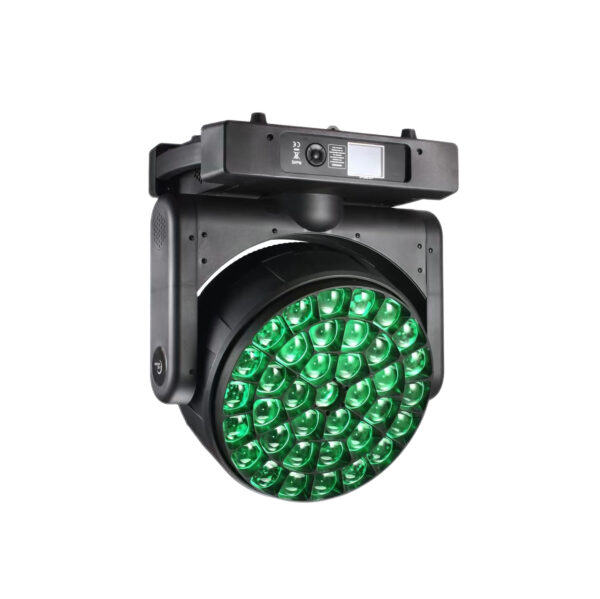
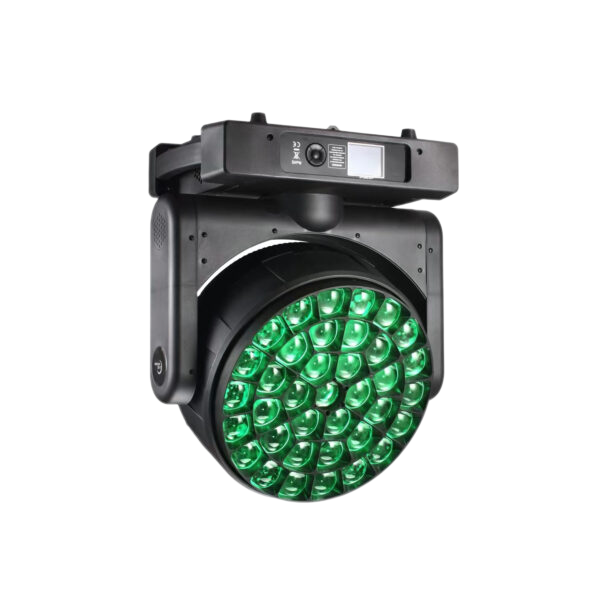
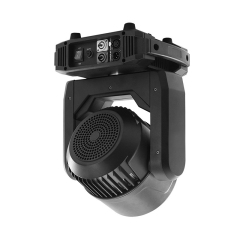
The Ommatea Y3740K is the largest aperture in our bee eye family: thirty-seven 40 W RGBW LEDs behind a single round face, 1560 W of input power and a motorised 10°–30° zoom. It works as a moving head wash light for most of a show and then closes into a dense, narrow column when the music calls for one, so a single position covers both the wide colour field a large stage needs and the aerial definition that carries a set between numbers. Every one of the 37 LEDs is addressed individually, and that changes a rig plan more than any single number on the sheet: patterns, gradients and colour chases run inside one lens instead of stretching across a row of fixtures, which saves truss positions, cable and DMX universes. We build it ourselves, which is the practical difference between buying from a led moving head light manufacturer and buying through a reseller: firmware version, channel chart and connector questions come back from the people who assemble the fixture. Most orders for this body are multiples rather than singles — rental fleets, touring packages and venue installs that need the same look across eight or twelve positions. As a moving head light supplier we keep the conversation on the whole plot: how many positions the throw distance allows, which channel mode keeps the universe count sane, and what the spare-parts list should look like for a long touring life.
Light Engine, Optics & Effects
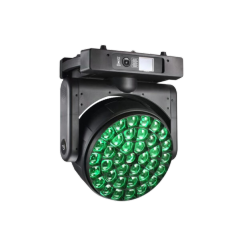
Light engine. Thirty-seven 40 W RGBW LEDs sit behind an integrated lens assembly that pairs a high-transmittance quartz glass light guide rod with a PMMA front lens. The rod mixes colour before the light reaches the front glass, which is why this led wash light holds an even field across a wide angle instead of drifting warm at one edge and cool at the other. Zoom. The zoom is motorised and linear across 10°–30°. At the narrow end this is a proper beam moving head light — a tight, dense column with the 37-lens honeycomb grid clearly visible in the air whenever there is haze in the room. Open it to 30° and the same housing behaves as a wash, spreading an even field across a stage floor at medium and long throws. Lens rotation and effects. Independent of the zoom, the front lens rotates a full 360° with no end stop and carries an automatic error correction routine, so it can spin continuously through a cue without creeping out of position. Because the lens turns while the beam stays put, the pattern breaks apart and re-forms in mid-air — that is where the kaleidoscope, vortex and small-waist effects come from, and it is why this moving head wash light reads differently from a fixed-lens wash at the same zoom setting. Colour and dimming. Colour temperature is adjustable linearly from 2500 K to 10000 K, so the fixture can sit warm beside tungsten practicals or run cool and clean against a daylight-balanced camera. Electronic dimming offers four curves and two dimming modes: a soft curve suits long theatre and broadcast fades, while a linear curve keeps a busked fader feeling predictable.
Housing, Cooling & Protection Rating
- Magnesium alloy, fire-proof housing. The body keeps a 1560 W led wash light manageable on a two-person lift and within normal truss working practice, which is the difference between a fixture that gets used and one that stays in the case.
- IP20 is the number that matters. The published rating is IP20, so this moving head led light belongs in covered venues, under a stage roof or inside a structure. Rain, hose-down cleaning, dust-heavy sites and coastal salt air sit outside its brief; for an exposed outdoor position, talk to us about the IP65 body in the same family.
- Cooling that follows the load. Fan speed is governed by the fixture's own temperature management and overheating protection is built in, so a hot position over a summer show is handled by the fixture rather than by an operator watching a thermometer. That behaviour is also what keeps it usable in covered rooms where speech and acoustic sets are happening underneath.
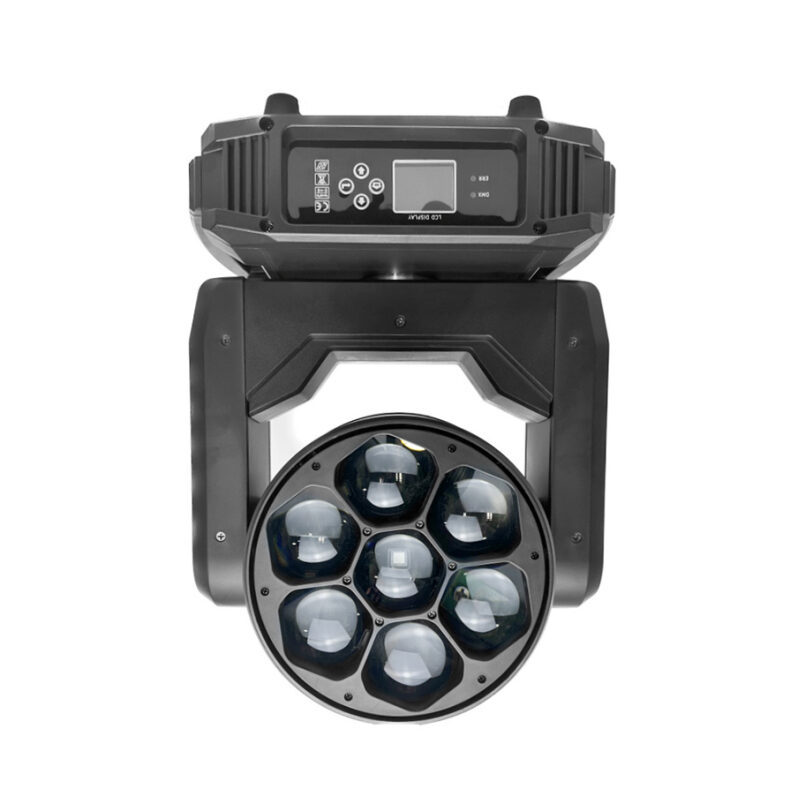
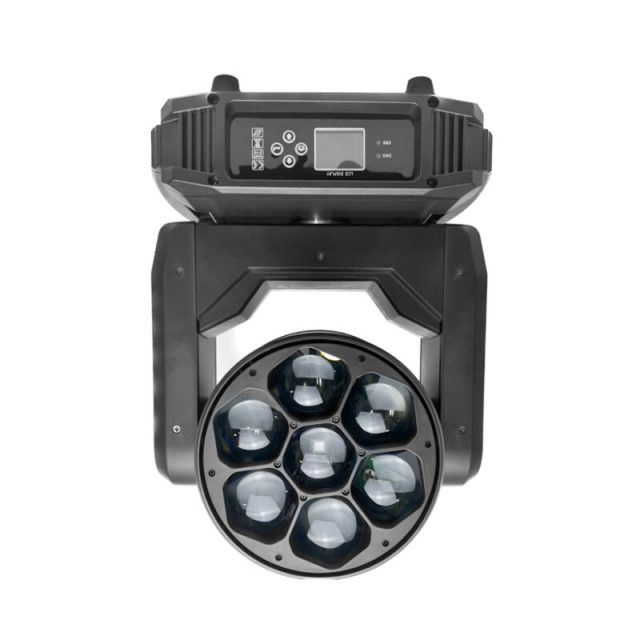
- A display that reads upside down. The 1.77-inch OLED flips through 180°, so menu text is the right way up whether the yoke sits above or below the body — useful in venues that hang everything from a low grid.
- Magnetic code role. Pan and tilt positions are read from a magnetic encoder rather than a mechanical stop, which is how the fixture returns to the same point cue after cue and after a power cycle.
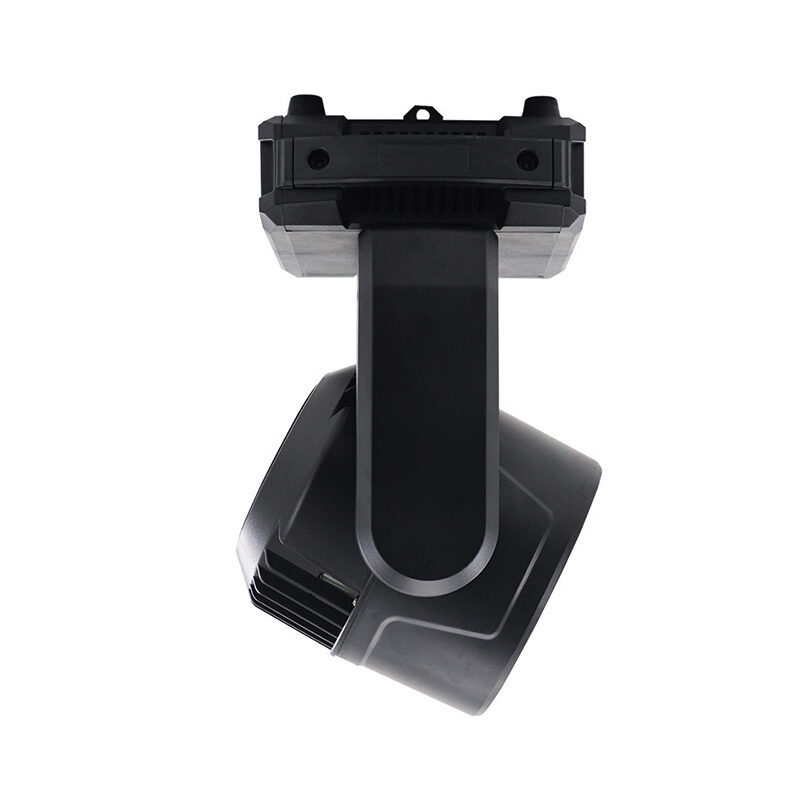
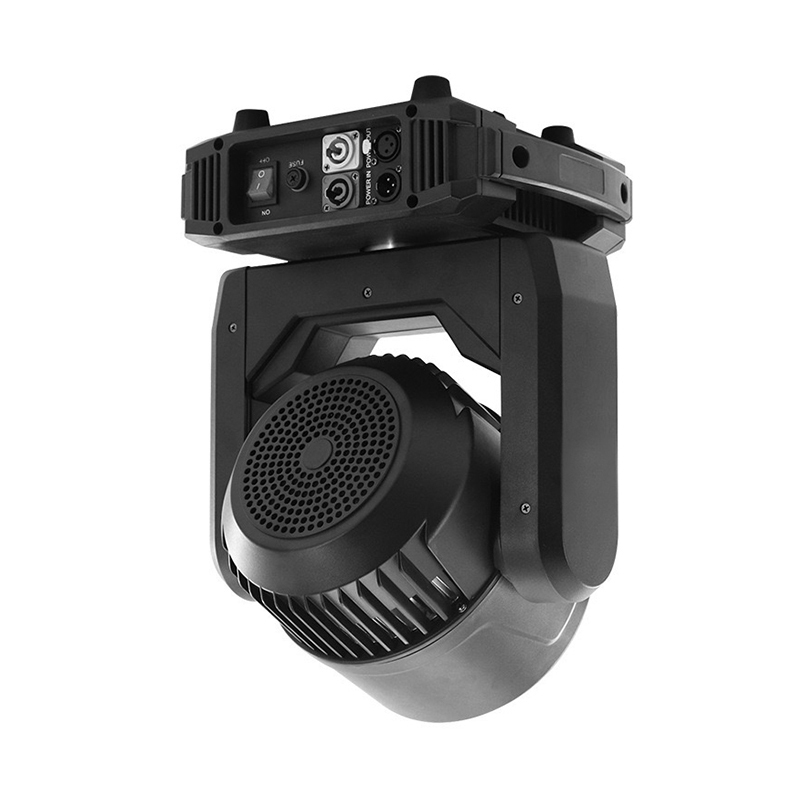
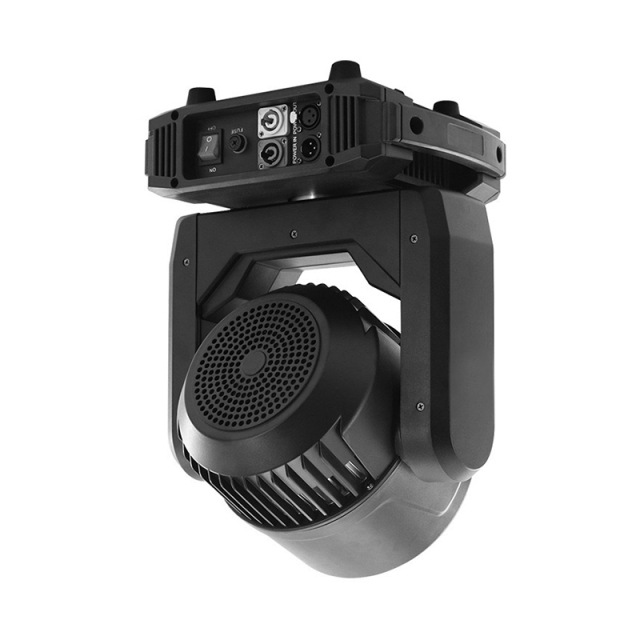
- Connections on the yoke. Seetronic powerCON TRUE1 in and out plus XLR 3-pin in and out, with 5-pin as an option, sit together on the rear panel so power and data dress down the same side of the yoke instead of crossing it.
- Road life and housekeeping. Units ship in a single carton; for touring, case them so the yoke and head are supported in transit and each folding clamp stays with its own fixture. In a permanent install, schedule a periodic check of fan intakes and lens faces — dust on the front glass costs more output than most operators expect.
Mounting, Rigging & Power
- Fit the clamp before the lift. Bolt the optional folding clamp, or your own approved half-coupler, to the yoke bracket and check the fixings while the fixture is still on the ground.
- Set the address and channel mode first. Enter both on the menu at working height; patching a fixture at trim height with a torch is the step everyone regrets.
- Hang, level and secondary-secure. Land the body on the bar, level the yoke, and fit a secondary safety bond through the bracket before anyone works underneath.
- Plan the power run around 1560 W. Feed in through the Seetronic powerCON TRUE1 connectors and check the cable rating and distribution capacity before daisy-chaining units on one chain.
- Run data as a proper chain. 3-pin XLR in and out is standard and 5-pin is available as an option; keep this dmx moving head light terminated at the last fixture and route data cable away from dimmer feeds.
- Dry-run the full movement envelope. Pan is 540° and tilt is 216° — sweep both axes and confirm this moving head stage light clears neighbouring fixtures, truss and set before the doors open.
- Update firmware over the data link. Software runs through the DMX connector, so a laptop at the console end is enough once the fixture is hanging.
Applications & Venue Fit
- Arena and stadium tours. Hung in multiples on an upstage truss, this moving head led light works the narrow end of its zoom for aerial looks and opens wide for full-stage coverage. Fewer positions carry more of the show, which matters when truss tonnage and truck space are the real limits.
- Large clubs and live music venues. A pair over the floor covers the room with a moving head wash light and still gives the operator a hard-edged beam effect from the same housing, so a small venue can programme a full show without buying two fixture types.
- Television studios and broadcast. On a studio grid the wide end of the zoom fills the floor from a modest trim height, and the colour temperature can be trimmed to the cameras instead of being gelled into submission.
- Theatre, multipurpose halls and conference rooms. Typically deployed as a colour and effects layer above the stage rather than as front light: fan speed follows the load, so the fixture stays out of the way of speech and acoustic music.
- Rental fleets and cross-rental. DMX512 and RDM are standard, so any competent operator can address this moving head stage light without a special procedure and a sub-rental swap does not turn into a programming session.
- Covered outdoor stages. Under a festival roof or a properly sheltered structure the fixture is in its element; open sky, rain, dust-heavy sites and washdown areas are not its environment.
- Mixed Ommatea plots. The range runs from a 7 x 40 W body through the 19 x 40 W units up to this 37 x 40 W version, so one moving head light supplier, one control language and one approach to spares can cover a plot as it scales from club to arena.
Specifications
| Power supply | AC 100–240 V, 50/60 Hz |
| Power consumption | 1560 W |
| Light source | 37 x 40 W RGBW LED, individually controllable |
| LED lifespan | 50,000 hours |
| Zoom range | 10°–30°, linear motorised |
| Colour temperature | 2500–10000 K, linear adjustment |
| Pan / Tilt | 540° / 216° |
| DMX channels | 21 / 22 / 35 / 36 / 111 / 148 CH |
| Control mode | DMX512, RDM, master/slave |
| Connectors | Seetronic powerCON TRUE1 in/out; XLR 3-pin in/out, 5-pin optional |
| Housing | Magnesium alloy, fire-proof |
| Protection rating | IP20 |
| Net / gross weight | 24.7 kg / 30.7 kg |
| Packing size | 71 x 61 x 41 cm |
Ordering, Documentation & Delivery
- Start with the project. Tell us the venue type, trim height, throw distance, how many positions you want to fill and which console runs the show; we will say quickly whether this 37 x 40 W body is the right size or whether a tighter beam moving head light suits your throw distance better.
- Fix the configuration. Confirm quantity, whether you want 5-pin XLR in place of the standard 3-pin, and whether the optional folding clamp should travel with each unit — as the led moving head light manufacturer we check each request against the production schedule before it is locked.
- Agree the commercial terms in writing. Minimum order quantity, quantity tiers, unit price, production lead time, payment terms and Incoterms are quoted per order because they depend on destination and volume; they are confirmed against your specific batch rather than published as a fixed list.
- Agree warranty and after-sales cover. Warranty period and exactly what it covers, the process for raising a quality claim, and which spare parts you want held for your market are settled before the order is released.
- Request the documentation pack. Specification sheet, user manual, DMX channel chart and photometric files are available from our team; ask for the versions that match this dmx moving head light as it stands today, before your programmers write a single cue.
- Confirm compliance paperwork for the destination. Test reports and certificates vary by market; tell us where the fixtures are going and our QC team will confirm which documents apply to that shipment.
- Settle packing and shipping. Confirm carton or road-case packing and the pallet layout, then arrange shipping documents and collection dates with your moving head light supplier contact.
Technical Support & Model Matching
More than 30 engineers with an average of 15+ years in professional lighting stand behind every order — the same people who answer your technical questions. Tell us your venue, rigging height, throw distance and existing control setup; we help match models, check protocol and channel fit, and build a package that works as one system. If a fixture misbehaves on site, we work through the fault with you and sort out spares. Installation and commissioning guidance come with the order. Founded in 2016, exporting since 2022, LITEVISION serves buyers in more than 80 countries from offices in the USA, Taiwan, Mexico and China.
FAQ
Is this fixture actually rated for outdoor use?
The published protection rating is IP20. Despite the name, this moving head led light is built for covered venues, studio floors and stage roofs — rain, dust-heavy sites and washdown areas are outside its brief. If a project needs a fixture that stays out in the weather, ask us about the IP65 body in the same Ommatea family.
Which DMX channel mode should we start with?
The fixture offers 21, 22, 35, 36, 111 and 148 channel modes. Start short: 21 or 22 channels covers pan, tilt, colour, zoom and dimming, which is all most operators need for beam and wash cues. Move up to 111 or 148 when you want to drive this dmx moving head light pixel by pixel, with individual control of all 37 emitters.
How tight is the beam at the narrow end of the zoom?
At 10° the fixture behaves as a genuine beam moving head light: a dense, narrow column with the 37-lens honeycomb grid clearly visible whenever there is haze in the air. The zoom is linear and motorised, so you can open it gradually through a cue rather than switching between fixed angles.
How does it hold up in front of a camera?
Electronic dimming with four curves and two dimming modes lets you choose a soft curve for long fades, and colour temperature runs linearly from 2500 K to 10000 K so the white point can be trimmed to the cameras rather than corrected later. For studio work, set the curve first and build the cue stack around it — changing curves mid-record is what makes a fade look stepped.
How do we set the address and keep firmware current?
Set the address and channel mode on the 1.77-inch OLED, which flips 180° so the menu reads correctly when the fixture hangs upside down. Software updates travel over the DMX connector, so a laptop at the console end can push a new version down the chain. As the led moving head light manufacturer we can tell you which firmware version ships with your units and which channel chart matches it.
Will the head clear our truss through the full tilt range?
Pan is 540° and tilt is 216°. Pan reaches any position in a standard rig but is not continuous rotation, so any preset that relies on endless spinning needs to be built from the 540° sweep instead. Before the first show, sweep both axes at trim height and check clearance against neighbouring fixtures, truss and any set piece.
Can it run a show without a console?
Yes. Master/slave mode lets one unit drive the others with the fixture's own built-in settings, which is enough for a bar, a function room or a display where nobody is programming. For anything with cue stacks, put this moving head stage light on DMX512 or RDM and drive it from the desk.