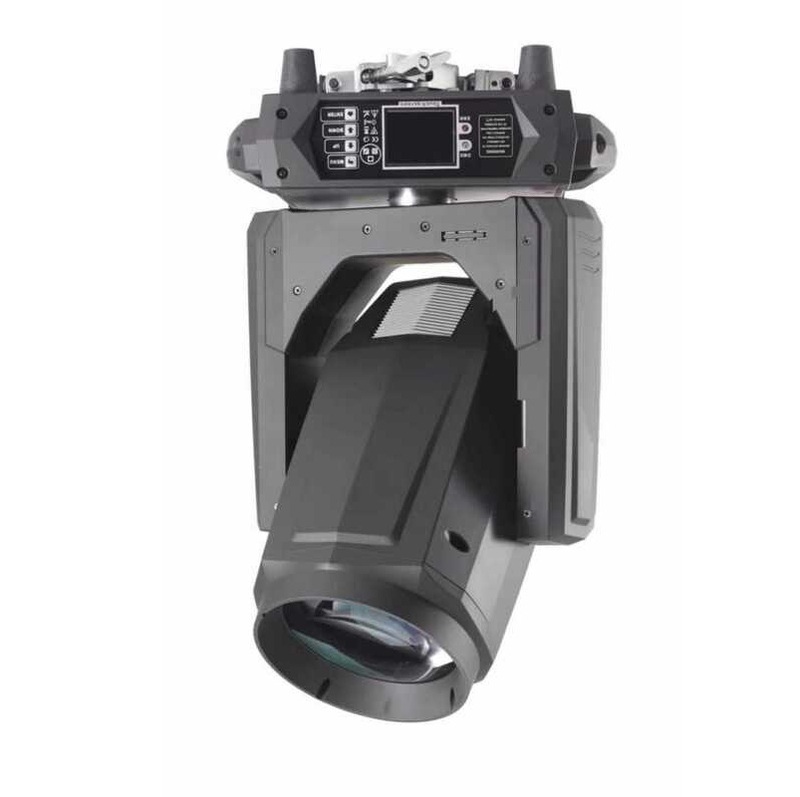
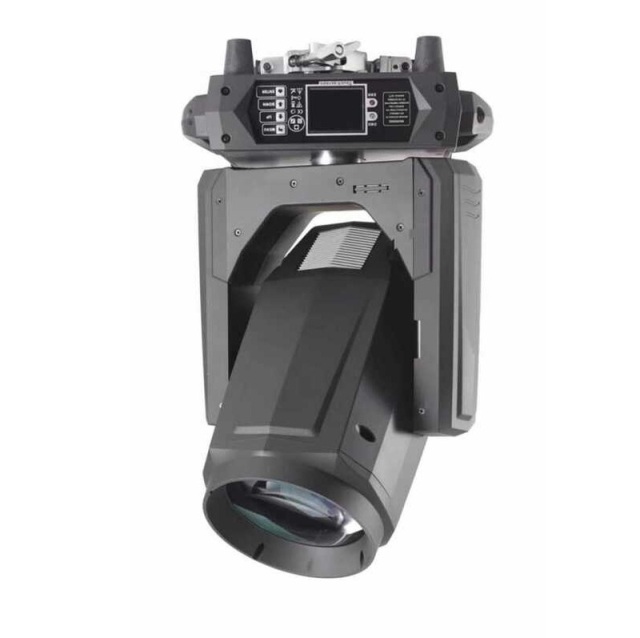
Product Overview
The Sword 600 is a beam moving head light built to throw a tight shaft across long distances, and everything about it serves that one job. The optical path is deliberately narrow and the front aperture is large, so the beam leaves the fixture as a dense column rather than a thin line.
Rental houses, touring productions, clubs and venue installers buy this class of moving head light from a beam moving head light manufacturer for arena tours, stadium shows and festival stages — anywhere the beam itself is the visual rather than the stage wash. It hangs on a truss like any other fixture and is driven entirely from the console.
Set beside the smaller beam models in the range, this is the long-throw option. The larger lamp and lens are what let the beam hold its shape at the far end of a hall instead of dissolving into the haze, and it works alongside wash and spot fixtures that light the performers while it draws the lines above them.
Day to day the workflow is short. The operator patches the profile for this dmx moving head light, sets the address and mode on the rear panel, and builds the whole moving head light show from the desk — color, gobos, prisms, frost and strobe. Nothing needs to be touched on the fixture between numbers.
Optical System & Beam Quality
- Large front lens.
- On a moving head beam light the lens does most of the work, and a 186 mm output diameter is what gives the beam its body — it reads as a solid column, not a pencil line.
- Tight 2° beam angle. The narrow angle keeps the shaft dense over the long throws typical of arena and stadium positions, which is exactly where wider fixtures lose their punch.
- Original USHIO 450 lamp.
- A known discharge lamp sits at the center of the optical path, so output is predictable from show to show and the lamp platform is one rental inventories already work with.
- Lens group optical system with electric focus.
- Focus is driven from the console, so moving from a soft edge to a sharp beam is a cue rather than a climb up the truss.
- 7500 K color temperature correction.
- The beam sits on the cool side of white, which separates it cleanly from warm tungsten or LED stage wash and keeps the shaft crisp against a lit stage.
- Consistent across a rig.
- Every unit in a package uses the same lamp and optical path, so a fan of them matches when they are spread across a stage or flown in a line.
Color, GOBO & Effect Wheels
| Function | What it does |
| Color wheel | 14 colors plus white |
| GOBO wheel | 15 gobos plus white |
| Prism | 8-facet and 48-facet prisms, stackable in a single effect |
| Frost | Standard frost for softening the beam edge |
| Dimming | 0-100% electronic dimming |
| Strobe | Electronic strobe with adjustable speed and strobe macro control |
| Effect layering | Color, gobo, prism and frost can be combined in one look |
Movement, Control & Protection
Pan and tilt run on 16-bit precision with electronic error correction. In practice that means long, slow moves stay smooth instead of stepping, and the head returns to stored positions accurately after a night of fast cues and the odd knock in the truck.
Every moving head stage light on the truss takes its share of control channels, and this one uses a 20-channel DMX512 profile. Plan the universe budget before you patch a long line, and split the run across outputs when it gets tight.
It is a dmx moving head light in the straightforward sense: addressing, mode and menu settings live on the rear control panel, and every effect is driven from the desk. Set the fixture up on the ground and there is nothing to adjust in the air.
Overheat protection watches the fixture's temperature and protects the lamp and electronics when a truss position runs hot. Keep the vented head clear of drape, coiled cable and flight-case lids so the airflow does its job.
An inductive ballast paired with an AC/DC switching power supply drives the lamp. That pairing keeps output stable through the voltage swings common on touring power and lets the fixture run from the wide input range printed on the panel.
One fixture can carry a whole section of the moving head light show — a dimmed, frosted shaft into a stacked prism fan, changed from a single cue.
Rigging, Power & Installation
- Fix the position before anything flies.
- Mark the truss points and the throw distance on your plot first — the beam angle is set by the optics, so height and distance decide the look.
- Confirm the point load with your rigger.
- At 17 kg, this moving head stage light is a two-person lift and needs clamps and a safety bond rated for the weight.
- Hang it from the yoke bracket and leave clearance for full pan and tilt travel, so this moving head light never fouls the truss or the unit beside it.
- Keep the vents clear. Leave a hand's width around the vented sections of the head and keep cable bundles off the housing.
- Budget the power per position.
- Each unit draws 600 W, so map the circuit load across the truss and balance it before the show rather than after the first breaker trip.
- Run data in a sensible order.
- Chain DMX fixture to fixture where the run is short, and put a splitter or a network node at the truss when the chain gets long or feeds several positions.
- Set the address and mode on the rear panel while the fixture is still on the ground, then test the full menu — color wheel, gobos, both prisms, frost, dimmer, strobe and a slow pan and tilt sweep.
- Every unit is checked at our moving head light factory before packing, but a road check catches a damaged gobo or a stiff yoke before the show does.
- Keep it dry.
- The fixture is IP20-rated, so it belongs under a roof or a covered stage — never in direct rain, and never where a hose or a spill can reach it.
Applications & Venue Fit
- Arena and stadium concerts.
- Flown from roof grids and FOH towers, where the throw is long and this beam moving head light has to stay solid all the way to the back rows.
- Touring productions and festival stages.
- It hangs from a standard clamp, travels in your own cases and is re-patched from the road console at every load-in.
- Large clubs and live venues.
- A moving head light show of aerial beams over the crowd, gobo air effects through haze and strobe hits on the drop — in a room with enough height to take the throw.
- Fixed venue installs.
- Theaters, halls and multi-purpose rooms where this moving head stage light sits on the same front truss all year and is re-focused electrically for each production.
- Corporate and product reveals.
- A single unit on a front truss cuts a clean shaft through room haze for a reveal moment without washing out the stage picture.
- Where it does not fit.
- Small rooms with low ceilings and short throws waste a beam this narrow — a wider fixture covers those spaces better and is easier to use there.
Specifications
| Specification | Value |
|---|
| Power supply | 100-240 V, 50/60 Hz |
| Light source | Original USHIO 450 lamp |
| Total power | 600 W |
| Color temperature correction | 7500 K |
| Beam angle | 2° |
| Front lens diameter | 186 mm |
| Pan / tilt | 540° / 270°, 16-bit with electronic error correction |
| DMX channels | 20 |
| Ballast and power supply | Inductive ballast with AC/DC switching power supply |
| IP rating | IP20 |
| Dimensions | 596 × 300 × 254 mm |
| Weight | 17 kg |
Documentation & Ordering
- Tell us the venue, the rigging height and the throw distance. We check them against the fixture's fixed beam angle and tell you whether this beam or another power class in the range suits the position better.
- Ask for the document set: specification sheet, user manual, DMX channel chart and photometric data.
- Drawings and fixture profile files come from our moving head light factory, matched to the build you are buying.
- Confirm the console side before programming starts — the channel profile you will patch against, and whether your desk or software needs a profile file from us.
- Ask your sales contact for the order terms that apply to your quantity: volume pricing, production lead time, payment terms and Incoterms are quoted per order.
- As the beam moving head light manufacturer we price against the configuration and the delivery schedule you actually need.
- Put the warranty in writing before the units ship — what is covered, for how long, and how a claim is handled in your market.
- Agree how a quality issue is dealt with: what to send us (photos, a DMX log, the serial number), how quickly you can expect an answer, and whether the fix is a repair or a replacement.
- Confirm the compliance documents your market requires — the standards and test reports your tender or customs process asks for — and we will tell you what we can provide for this model.
- Agree packing and spares before dispatch: case or carton, and whether a spare lamp or a spare unit travels with the tour.
- As your moving head beam light supplier we can quote both with the order so one failure does not stop the show.
Technical Support & Model Matching
More than 30 engineers with an average of 15+ years in professional lighting stand behind every order — the same people who answer your technical questions. Tell us your venue, rigging height, throw distance and existing control setup; we help match models, check protocol and channel fit, and build a package that works as one system. If a fixture misbehaves on site, we work through the fault with you and sort out spares. Installation and commissioning guidance come with the order. Founded in 2016, exporting since 2022, LITEVISION serves buyers in more than 80 countries from offices in the USA, Taiwan, Mexico and China.
FAQ
What throw distance is this beam built for?
It is made for long throws — arena and stadium positions, festival stages and large halls where the fixture sits far from the action. The narrow beam angle and the large front lens are what keep a beam moving head light visible at that distance; in a small room with a short throw, a wider fixture is the better tool.
Which DMX profile does it use, and how do I check it against my console?
It runs a 20-channel DMX512 profile. Ask us for the channel chart before you patch and compare the channel order against your desk or your show file, and tell us which console you run so we can confirm what the patch will look like. If your file already uses another dmx moving head light in this class, the chart lets you map the differences channel by channel.
Can it be used outdoors?
No. This moving head light is rated IP20, which means indoor use, or a covered stage where no rain, spray or hose water can reach it. It is not built for permanent outdoor installation, and running it in damp conditions puts both the lamp and the electronics at risk.
What do the two prisms and the frost do to the look?
The 8-facet prism splits the beam into a ring of narrower shafts and the 48-facet prism spreads it into a much wider fan. They can be stacked for a denser multi-beam effect, and the standard frost softens the edge when you want a wider, less aggressive look out of the same fixture.
What lamp does it use, and how is it serviced?
The fixture runs an original USHIO 450 lamp. Lamp change is routine maintenance on a discharge fixture of this type, and our moving head light factory supplies the current lamp guidance and part numbers for the build you receive. Ask us for the maintenance points worth checking between tours — gobo wheel, prisms, fans and vents.
How does it compare with the smaller beam models in the range?
The smaller models are the lighter, quicker option for clubs, small theaters and touring packages that need many units on a fixed budget. This one is the long-throw class: bigger lamp, bigger front lens, more weight on the truss. If you are deciding between them for a specific venue, send us the rigging height and the throw distance — as the beam moving head light manufacturer we can tell you which class still holds a solid beam that far out.