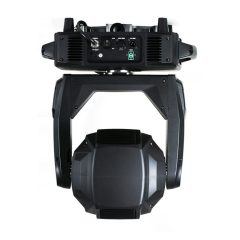
Product Overview
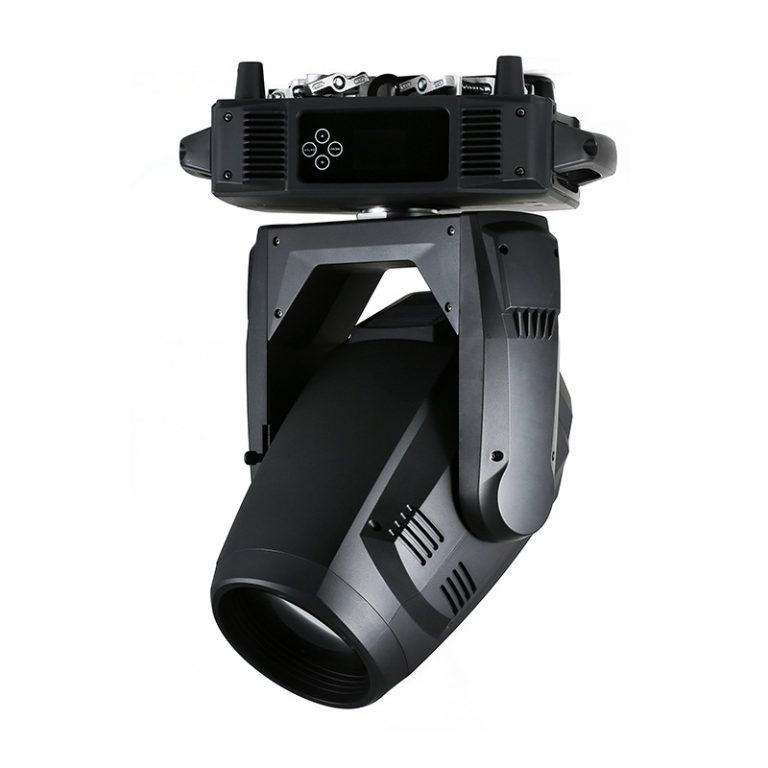
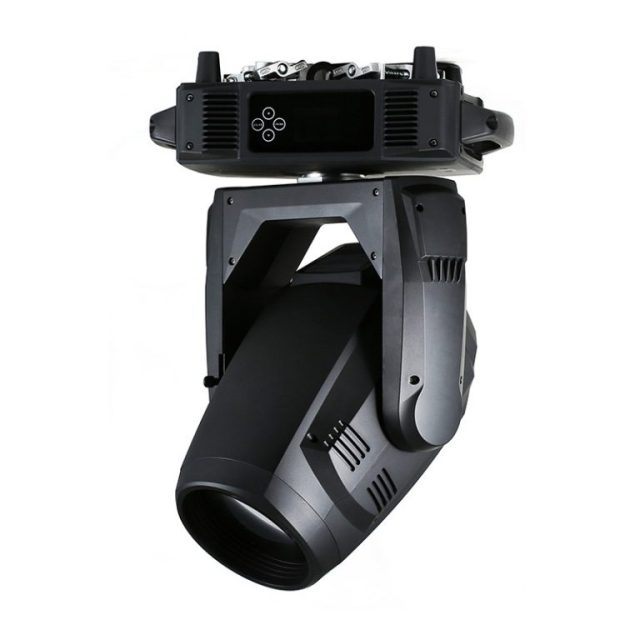
It concentrates that output into a narrow, parallel shaft instead of spreading it across a stage, so the fixture reads as a hard-edged column in haze and keeps its punch at long throw. That is the job it is bought for: aerials, audience sweeps, floor pools and the sharp mid-air cuts a moving head light show is built on. Two mechanical dimmer blades carry the fades, and a second shutter on the opposite side drives the strobe, which is why hits and blackouts feel immediate rather than electronic. Frost sits on its own wheel, so the beam can stay hard for one number and soften for the next without swapping fixtures. Nothing in that chain is digital, so what the console sends is what the light does. Rental houses, touring productions and venue installers make up most of the demand. A moving head stage light of this class is normally flown on the front truss or on ladders either side of the stage, where a defined beam is wanted for aerials, floor pools and audience sweeps. Clubs, school halls and touring theatre rigs all use it in that position. Fleets often carry both tiers: the smaller unit covers club floors and short throws, while this one takes over where the beam has to carry to the back of a hall or across a stadium floor. Sharing one platform means the crew meets the same control logic on both.
Beam, Colour & Effects Configuration
| Light source | Osram SIRIUS HRI 461 W discharge lamp |
| Lamp life | 1500 hours |
| Colour temperature | 7700 K |
| Zoom range | 0-1.8° |
| Dimming | Double-chip mechanical dimming, 0-100% linear |
| Strobe | Dual-sided channel strobe with multiple speeds |
| Frost | 0-100% atomization |
| Colour wheel | 11 colours plus open, with half-colour and bidirectional rainbow |
| Gobo wheel | 14 gobos plus open, with gobo jitter and gobo role |
| Prism disc 1 | 8-facet |
| Prism disc 2 | 24-facet |
| Prism disc 3 | Colourful prism |
| Fine control | 16-bit indexing and fine adjustment |
Pan, Tilt & Movement
- Pan covers 540° and tilt 270°, so the head can sweep the full stage width and drop into the audience without leaving a dead zone behind the yoke — the wide movement a moving head light show is built on.
- A full pan sweep takes 2.2 seconds and a full tilt 1.0 seconds, which is fast enough for whip pans, cross-stage hits and beat-matched chases.
- Speed is adjustable on each axis, so the same moving head beam light can hold a slow, heavy follow in one cue and snap to a new position in the next.
- A photocoupler role system re-zeroes both axes automatically, so a head that was moved, bumped or re-hung finds its reference again without a manual reset.
- Low-noise, high-torque drive keeps the movement quiet — a detail that matters in theatrical stage lighting, where the fixture may hang close to the audience.
- Both axes hold under load, so a moving head stage light parked on a mark stays there through a long set instead of drifting between cues.
Control & Protection
- DMX512 is the control path, so a beam moving head light in this class drops straight into a standard console patch.
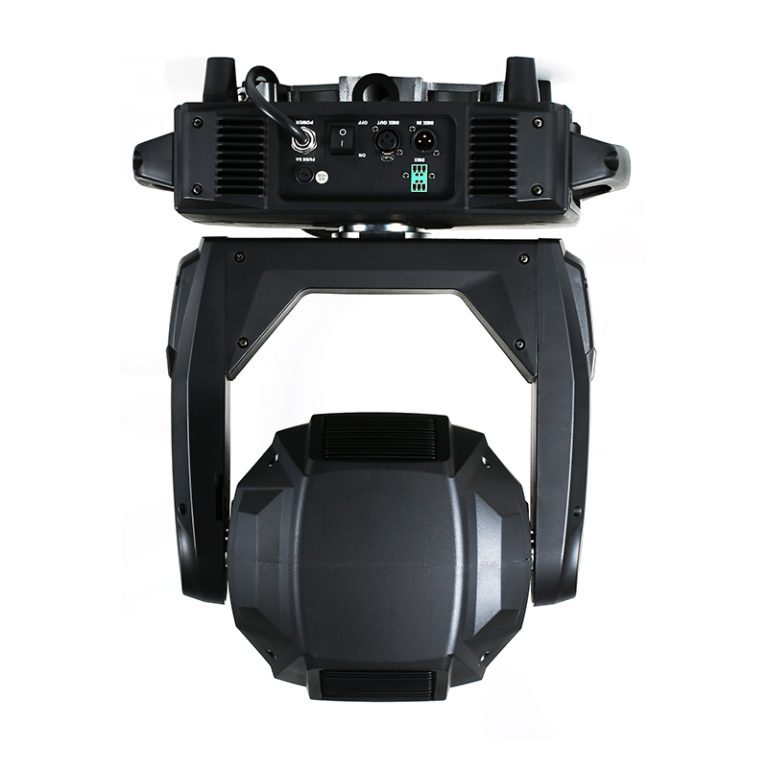
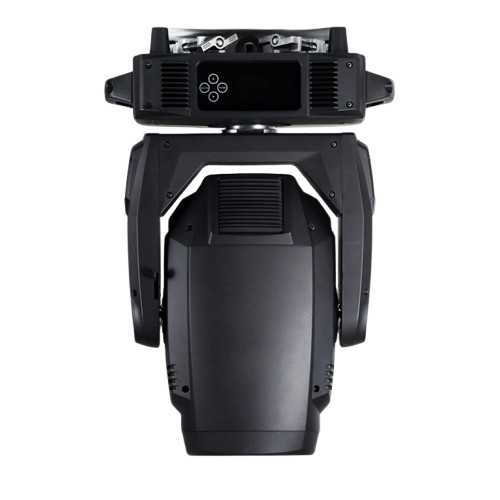
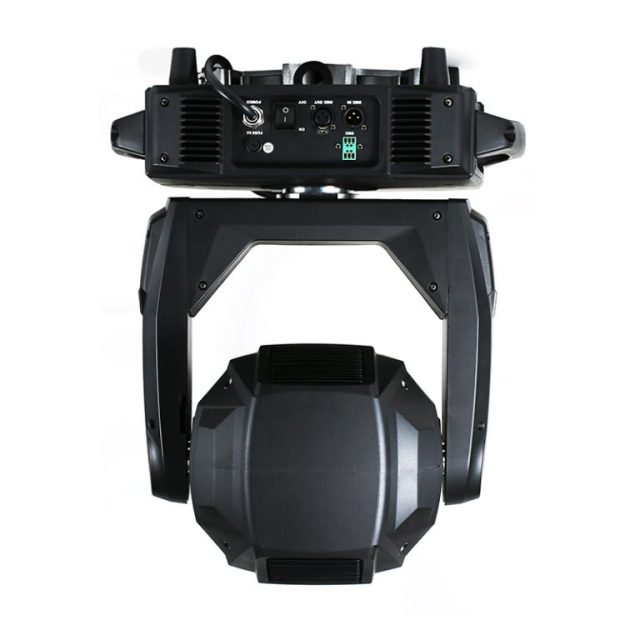
- The rear panel groups power in, the fuse holder, and DMX in and DMX out, which keeps a daisy chain tidy and makes a faulty run easy to isolate.
- A dedicated DMX shortcut socket on the rear panel lets you patch without opening the fixture or hunting for an adapter.
- RDM support lets a compatible console read and change settings on the fixture remotely, which saves trips up the truss during focus.
- High-temperature protection cuts the output when the internal temperature climbs, protecting the lamp and the electronics during a long set.
- Addressing, resets and settings all come from the fixture menu, so check that your console profile matches the channel layout before the first rehearsal.
- An LCD panel carries the menu in English and Chinese, and the layout is kept plain so a technician can reach the address, the language and the reset without working through layers. A built-in Ni-MH battery keeps the control system live when the mains is disconnected, which means settings can be entered with the fixture still in its case or sitting on the stage floor. Addressing happens on the fixture itself, so a DMX moving head light can be numbered, tested and labelled on the case lids and then hung in the order it was labelled. Because the display stays powered from the battery, a settings check after transport does not need a spare mains feed on the loading dock.
Installation & Rigging
- Check the vertical lock before the fixture leaves the case — the head should be secured so it cannot swing while the unit is carried or lifted.
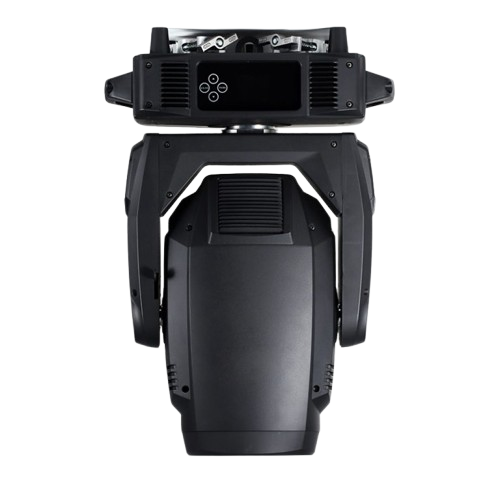
- Hang the fixture from the yoke bracket on a clamp rated for the load, and leave room around the fan and the heat-dissipation window for air to move.
- Release the vertical lock only after the clamp is tightened and the fixture is sitting on the truss.
- Connect mains to the power inlet, confirm the fuse holder is seated, and run DMX in and out as a chain back to the console.
- Set the DMX address and the menu language, then let the fixture run its reference before the first cue.
- Run a short test cue on each unit after focus, checking that pan and tilt settle on their marks and that the prisms engage cleanly.
Operating Environment & Physical Data
| Input voltage | AC 90-240 V, 50/60 Hz |
| Total power | 530 W |
| Ingress protection | IP20 |
| Operating temperature | -10 °C to 45 °C |
| Cooling | Fan-assisted, one inlet and one outlet, with a heat-dissipation window that limits dust ingress |
| Product dimensions | 618 × 422 × 301 mm |
| Net weight | 21.6 kg |
| Packing size (carton) | 730 × 430 × 540 mm |
| Gross weight (carton) | 25.7 kg |
Documentation & Ordering
- Send your rig plan — unit count, typical throw distances and the consoles you run — and the moving head light factory will come back with a quantity and configuration that fits the project.
- Ask for the documentation set for this moving head beam light: specification sheet, user manual, DMX channel chart and photometric file.
- Confirm the build details that change between markets: power connector and plug type, the mains range in use, and the accessory set packed with each fixture.
- Agree the commercial terms — minimum order quantity, price tier, lead time, payment terms and trade terms — before production is scheduled.
- Settle the shipping method and check the packing against the carton size and gross weight listed above.
- Add spare lamps and any wearing parts to the same order so they travel with the fixtures instead of following later.
- Order straight from the beam moving head light manufacturer, so a connector, packing or documentation change can still be agreed while the batch is in production.
Technical Support & Model Matching
More than 30 engineers with an average of 15+ years in professional lighting stand behind every order that leaves our moving head light factory — the same people who answer your technical questions. Tell us your venue, rigging height, throw distance and existing control setup; we help match models, check protocol and channel fit, and build a package that works as one system. If a fixture misbehaves on site, we work through the fault with you and sort out spares. Installation and commissioning guidance come with the order. Founded in 2016, exporting since 2022, LITEVISION serves buyers in more than 80 countries from offices in the USA, Taiwan, Mexico and China.
FAQ
Is this a beam, a spot or a wash?
It is a beam moving head light, not a spot and not a wash. The output stays a tight, parallel shaft across the whole zoom range, which is what makes the aerial effects, audience sweeps and hard floor pools work. The gobo and prism wheels add effects inside that shaft; they do not turn the fixture into a framing profile or a wide coverage wash.
How does this compare with the 371 W version in the same series?
They sit on the same Sword beam platform and share the same control approach, so a technician moving between them is on familiar ground. This is the higher-output tier — the one to specify when the throw is long or the room is big and the beam still has to cut through. The 371 W version remains a capable moving head stage light for club floors, smaller stages and shorter throws.
Can I soften the beam for slower numbers?
Yes. The atomization wheel frosts the beam from a hard edge to a soft one, so a moving head beam light can cover a ballad, a close-up or a presenter without a fixture swap. It is frost rather than a wash conversion: the output stays centred and directional instead of spreading wide across the stage.
Can addresses be set before the fixture is hung?
Yes. The built-in Ni-MH battery keeps the control system live with the mains disconnected, so address, language and reset can be entered while the fixture is still on the case lid. Crews use that to prepare a DMX moving head light before it goes up on the truss, which shortens the focus call.
How does the beam read in haze or smoke?
That is the condition it is built for. A narrow beam only becomes fully visible when there are particles in the air, and in a moving head light show the shafts, prism rotations and gobo spins read because the beam picks them up. In a clear room the effect is far subtler, so plan the haze budget together with the lighting design rather than after it.
How quiet is it in a theatre or a studio?
Movement runs on low-noise, high-torque drive, and the fan sits behind a dedicated heat-dissipation window. In theatrical stage lighting the fixture is usually flown outside the audience's line of hearing, but in a studio or a room with open microphones it is worth checking the level on site before a shoot.
Can the prisms be combined?
Yes. Two prism discs can be stacked, and the 8-facet, 24-facet and colourful discs can be layered so a rotation runs inside another rotation for the endless-beam look. The colourful disc adds colour to the prism effect rather than replacing the colour wheel, so the two systems can be used together.
Can it be used outdoors?
No. The fixture is IP20 rated and is built for indoor positions within the working temperature range shown in the specifications above. Keep it out of rain and away from dusty positions where the heat-dissipation window would clog; for outdoor work, ask us about an IP-rated model in the range.