Product Overview
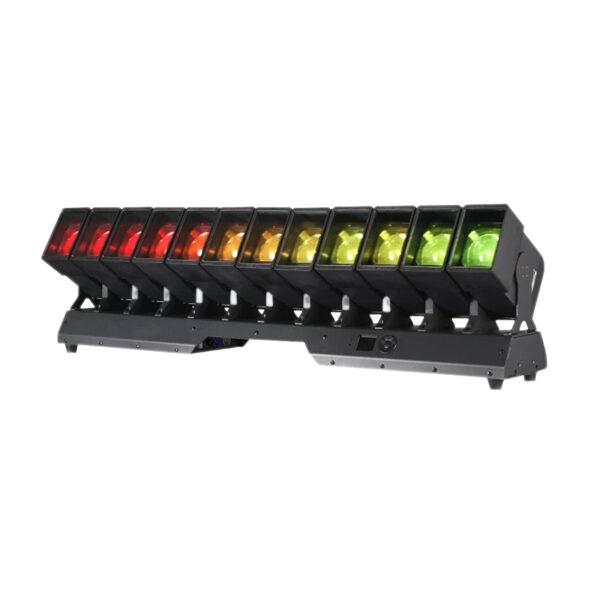
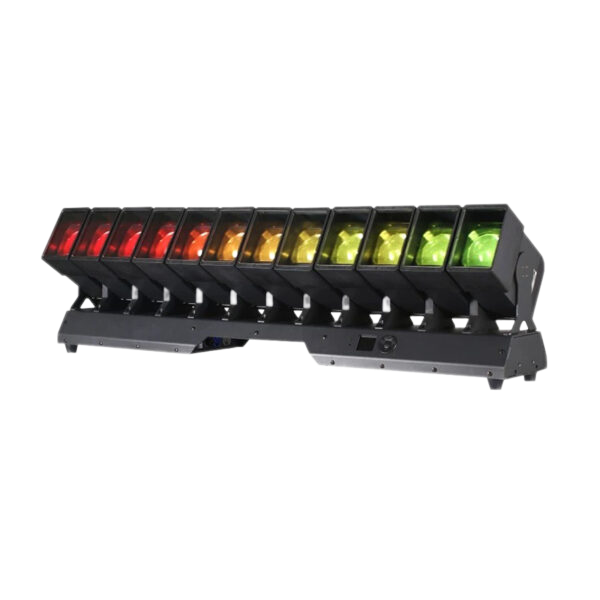
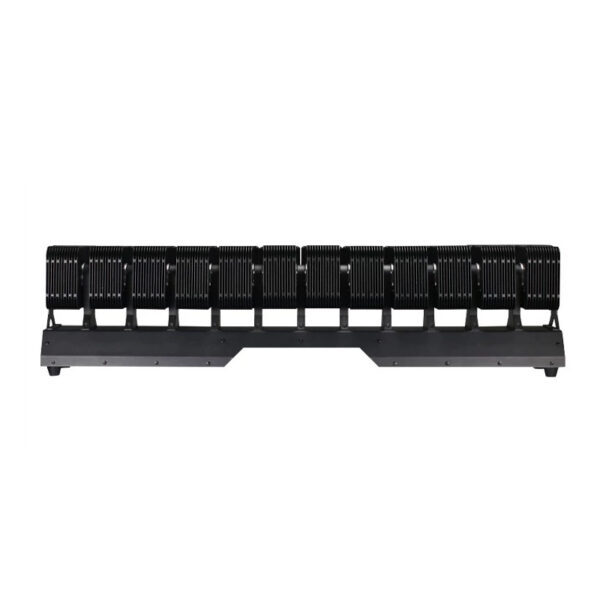
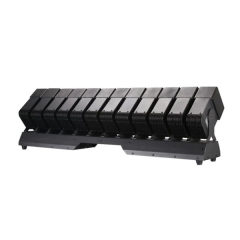
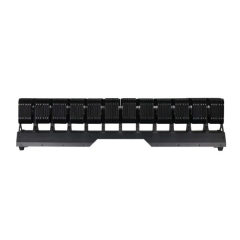
The Tornado 800Z is a linear moving head wash light built around twelve 60 W RGBW four-in-one LEDs. Instead of a single lens on a yoke, it carries a row of twelve individually controlled heads on one bar, so a single rigging point throws a wide, even wash across a stage, a wall or an audience.
That layout changes how a rig goes together. One bar covers a width that would otherwise take a line of single-head fixtures along the same truss, which means fewer clamps, fewer power drops and fewer start addresses to manage before the doors open.
It is built for mid-size rooms rather than stadium work — clubs and live houses, theatres and school halls, church auditoriums, television floors, and touring packages where truck space is tight. In all of them it gives a compact block of led stage lighting that covers a wide stage without loading the truss.
Programmers use it two ways: all twelve heads as one broad curtain of colour, or split head by head into chases and pixel maps across the bar. At the patch stage it is a dmx moving head light like any other — the difference is how much colour arrives from a single fixture.
We build and supply it as a moving head wash light supplier working with rental fleets, venues and integrators rather than consumer-facing sales channels, which is why the bar is specified around rigging weight, DMX modes and service access rather than shelf appeal.
Light Engine & Beam Control
- Point control, head by head. Every head can be addressed and dimmed on its own — run the bar as one wide lamp, chase across it, or hand the pixels to a media server and let the twelve heads carry the moving head light show. No lens change, no extra hardware. Strobe from 1 to 30 Hz. From a slow one-per-second pulse to a fast burst around 25 flashes per second, all driven from the console rather than a separate effects unit.
DMX Control & Channel Modes
Control is standard DMX512. On a desk the bar is a straightforward dmx moving head light to patch: one start address, one mode, and the parameters your programmer already expects to find.
Channel modes run from 20 channels upward — 20, 53, 101, 155 and 179. Pick the smallest mode that still gives your programmer the control the show needs: a 20-channel patch is quick to read, while 179 channels only earns its keep when every head on the led moving head light is being driven separately.
Two alternative 169-channel layouts, 169A and 169B, are also offered. If a show file was built on one of them, confirm which layout it expects before patching, so the console and the fixture agree on what each parameter does.
Away from the console, master-slave, auto-run, sound-active, and static and dynamic macro functions are all built in. Master-slave keeps a group of bars running the same look in sync, sound-active hands the timing to the music, and the macros give an operator a bank of looks to scroll through — enough to run a moving head light show in a room with nobody on the desk.
Mounting & Installation
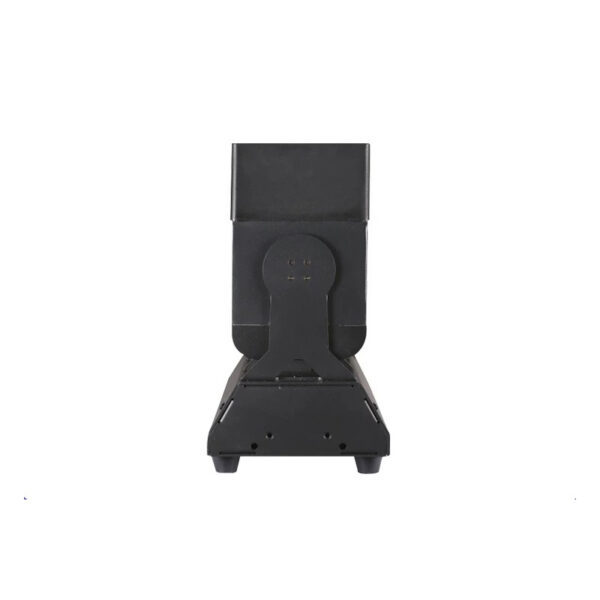
- Plan the hang before the led moving head light goes up the truss. Check that the point can take the load, leave clearance for the heads to tilt through their full 180°, and keep the bar clear of anything it can strike when the bracket is adjusted.
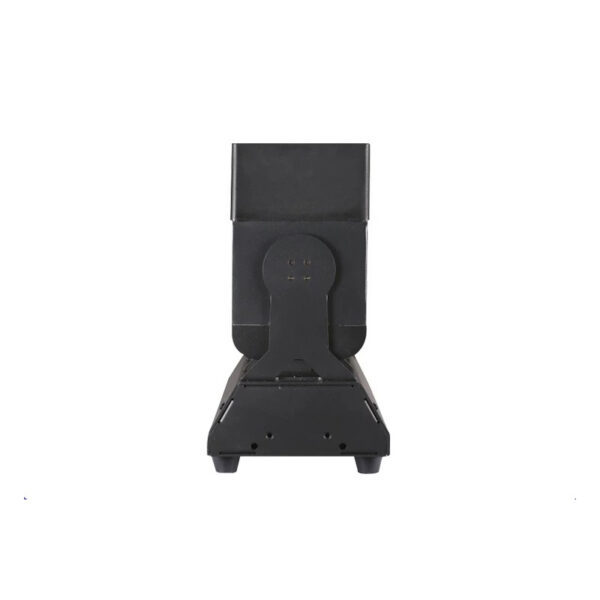
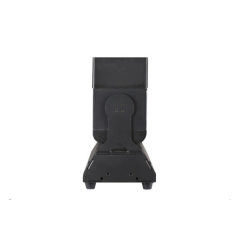
- Clamp through the mounting bracket and set the angle while the bar is still at deck level. The same bracket works as a floor base, so the fixture can stand on the deck and throw upward when a flown position is not available.
- Dress power and DMX along the bar with a service loop at the connector end, so the fixture can be re-aimed later without unplugging anything or pulling strain onto the sockets.
- Address the fixture and choose its channel mode on the LCD before it flies — 179 channels is a lot to re-patch from a ladder, and the English and Chinese menus keep the job simple for local crew.
- Power up one bar on the deck first and run every head through the tilt range, checking for a stiff movement or a noisy fan while the unit is still easy to reach.
- After the rig is flown and patched, run a colour fade, a zoom change and a strobe cue from the console, and confirm all twelve heads land together before the doors open on the moving head light show.
Applications & Venue Fit
- Clubs and live houses. Over a dance floor the bar washes the crowd and the back wall from one point, and pixel chases give the room movement without a second row of fixtures.
- Theatres, school halls and church auditoriums. Wide, even colour from a low trim height, with the zoom opened to cover a stage that a single led moving head light would have to be doubled to reach.
- Television floors and streamed events. The adjustable white and smooth 32-bit dimming keep the bar usable in front of a camera, and the heads can be pushed wide and flat when the shot needs a clean background.
- Rental stock. One bar is easier to truck, patch and strike than a row of single-head moving head wash lights — the kind of led stage lighting that earns its space in a busy truck.
- Front-of-stage and side booms. The heads tilt through 180°, so the bar can stand low and throw upward as easily as it hangs and throws down.
- Beam accents inside a wash rig. Close the zoom on a few heads for narrow columns that cut through the wider wash — a beam moving head light effect from the same bar, without adding fixtures.
Specifications
| Power | 800 W |
| Input voltage | AC90-240 V, 50-60 Hz |
| Light source | 12 x 60 W RGBW 4-in-1 LED, individually controllable |
| Colour | 16.7 million RGBW with automatic colour correction |
| Colour temperature | 2500-6500 K, linearly adjustable |
| Control modes | DMX512, master-slave, auto-run, sound-active, static and dynamic macros |
| DMX channels | 20 / 53 / 101 / 155 / 179 CH; 169A / 169B |
| Movement | Tilt 180° |
| Beam angle | 10-30° electronic zoom |
| Dimming and strobe | 32-bit 0-100% linear dimming; 1-30 Hz strobe |
| Display | Built-in LCD with English and Chinese menus |
| Cooling and housing | Built-in high-speed fan cooling; cast aluminium housing |
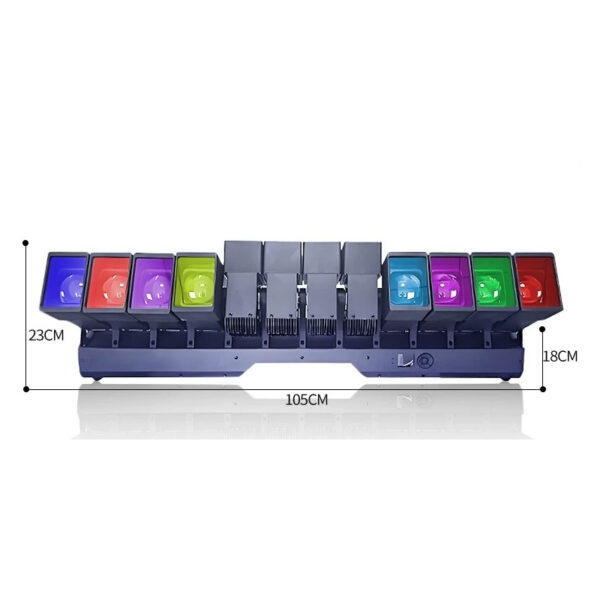
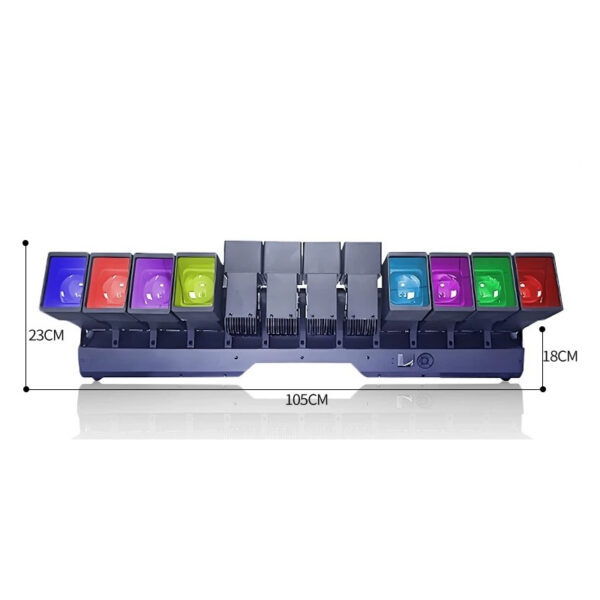
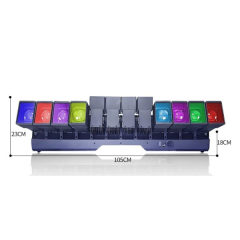
| Fixture size | 100 x 16.5 x 30 cm |
| Packing and weight | Inner box 110 x 45 x 35 cm; net 24.5 kg, gross 26.5 kg |
Ordering & Documentation
- Tell us the room: trim height, throw distance, the surface you are lighting and the console you run. That decides whether the wide or the narrow end of the zoom does most of the work, and whether one bar covers the width or two are needed.
- Confirm the channel layout against your show file. Send the desk model or the file you are working from and we will confirm which mode to patch before anything ships.
- Ask for the documentation set — specification sheet, user manual and the DMX channel chart for the mode you are running. Photometric data and the compliance paperwork your destination market asks for are requested at the same time, and as the led moving head light manufacturer we confirm which reports are available for your market.
- Settle the order itself. As the moving head wash light supplier we quote each run against its size and date — minimum quantity, lead time and payment terms are confirmed per order, and Incoterms are agreed before the goods are released.
- Agree packing and shipping. The fixture travels in its inner box; export packing, palletising or crating are arranged to suit the shipment and confirmed on the order.
- Ask for the warranty terms, the spare parts you want held and the process for a quality claim, and get them in writing with the order so both sides are working from the same document.
- Come back after delivery. Spares, replacement heads and technical questions go straight to the team that built the bar rather than to a separate support queue.
Technical Support & Model Matching
More than 30 engineers with an average of 15+ years in professional lighting stand behind every order — the same people who answer your technical questions. Tell us your venue, rigging height, throw distance and existing control setup; we help match models, check protocol and channel fit, and build a package that works as one system. If a fixture misbehaves on site, we work through the fault with you and sort out spares. Installation and commissioning guidance come with the order. Founded in 2016, exporting since 2022, LITEVISION serves buyers in more than 80 countries from offices in the USA, Taiwan, Mexico and China.
FAQ
Can it replace dedicated beam fixtures?
For narrow columns, partly — closing the zoom gives a tight, punchy beam from each of the twelve heads. But this is a wash-first bar: the zoom stops at 10°, movement is tilt only through 180°, and there is no prism or gobo system on board. Where a rig needs the pencil-thin beam of a true beam moving head light, keep dedicated beam units for that job and let this fixture supply the broad wash and the pixel effects underneath.
Will it work with our console?
Any desk that outputs DMX512 will run it — no converter, no proprietary box. Patch the fixture at the start address your mode needs, load the channel chart for that mode, and it responds like any other multi-parameter dmx moving head light. If the chart you are working from does not match the mode, tell us the mode and we will send the right one; as the led moving head light manufacturer we keep the documentation aligned with the fixture as it ships.
Is it weatherproof?
No outdoor rating is published for this fixture, so plan it for indoor rooms and covered stage positions. The fan-cooled cast aluminium housing suits clubs, halls and studios; if the site is exposed — a terrace, a temporary outdoor stage, a facade — tell us the conditions before you order and we will confirm what it can take.
Will the fans be heard in a quiet room?
The housing is cooled by a built-in high-speed fan, so there is running noise, which is normal at this output. In theatres, studios and church auditoriums, led stage lighting is judged on noise as much as brightness: hang the bar above and behind the listening area rather than beside the stage, and aim the heads instead of moving the fixture closer. If noise decides where the fixture can live in your room, tell us before you order and we will say plainly whether this bar suits the position.
What maintenance does it need?
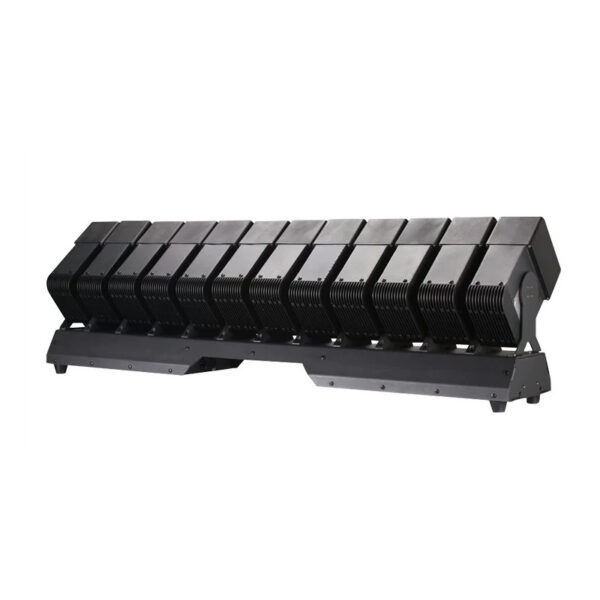
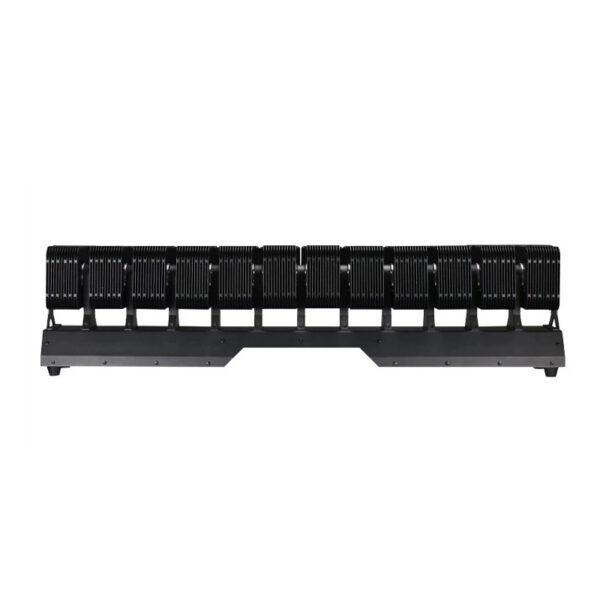
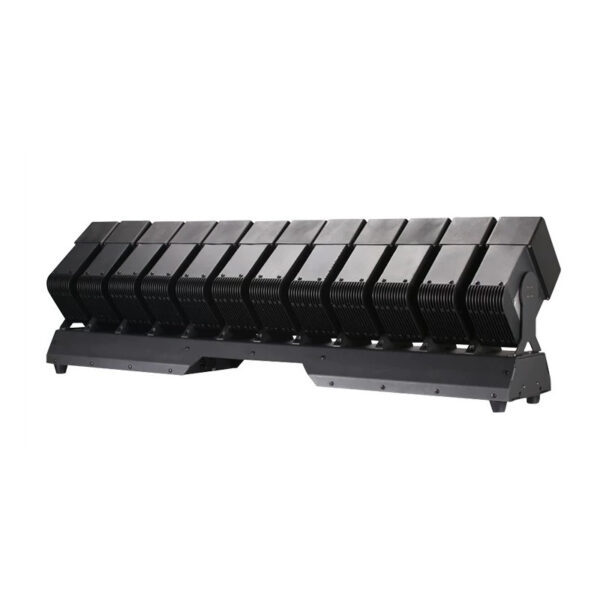
Keep the fan path and the ribbed heat sinks on the back of the heads clear of dust and confetti; a soft brush and low-pressure air at each service visit is enough. Check the bracket bolts and the safety bond every time it goes up, run the heads through the tilt range to catch a stiff or noisy movement early, and look at the power and DMX connectors for bent pins. When you need a head or another service part, quote the model so it is matched correctly.