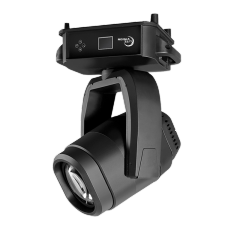
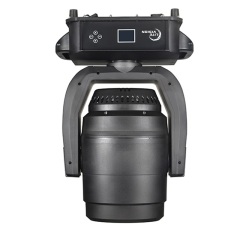
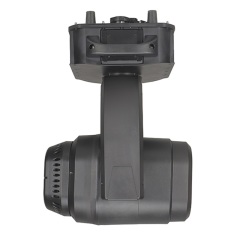
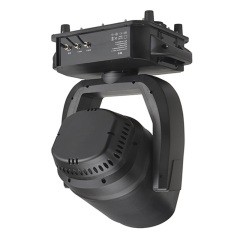
Product Overview
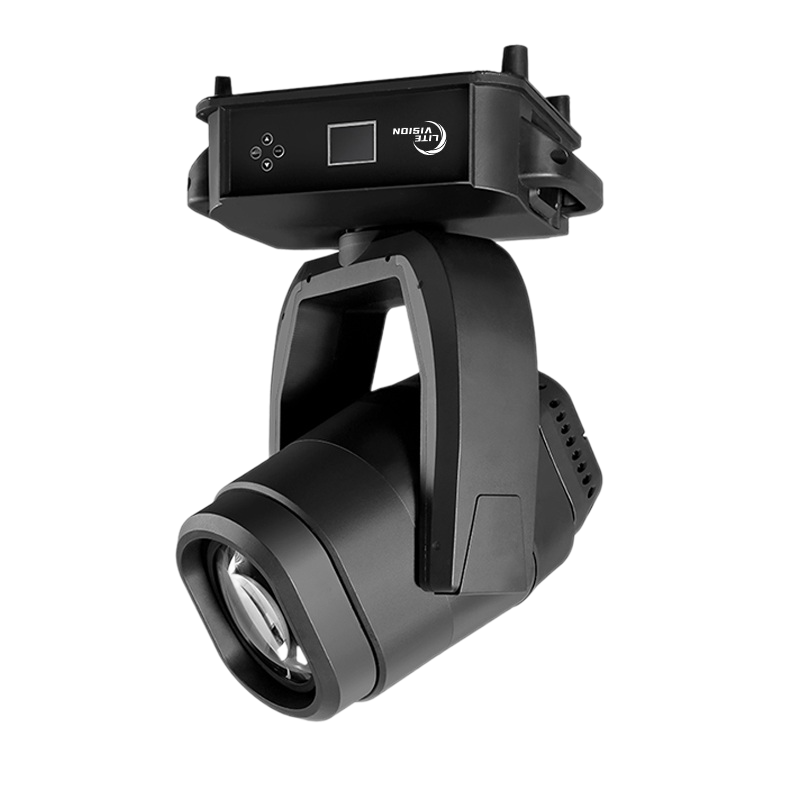
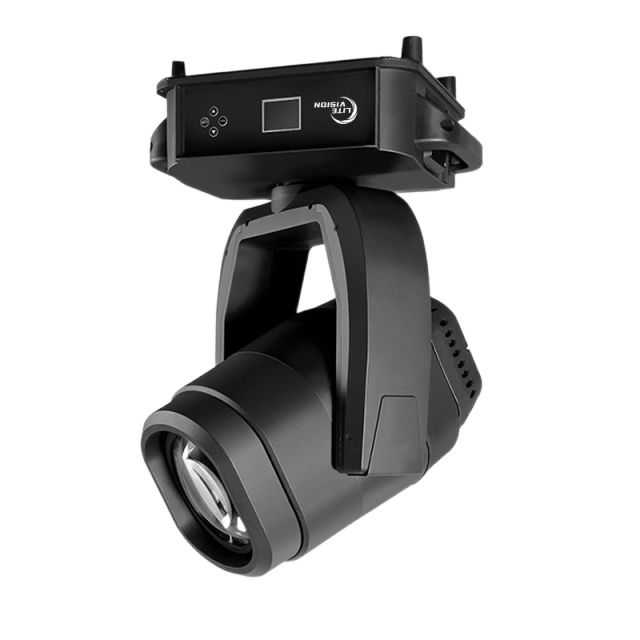
The Archi 461B is the long-throw tool in the Archi family: a 461 W OSRAM discharge moving head beam light with a fixed 2° angle, a 200 mm front lens and an IP55 housing. It is the fixture you hang when the beam itself is the effect — a hard-edged line that still reads as a line at the back of a stadium, a shaft cutting through haze above a festival crowd, or a slow sweep drawn across a building façade. There is no zoom and no wash function on this body; everything in the optical train is dedicated to one narrow angle, and that is precisely why it holds up over distances where zoom fixtures thin out.
As a beam moving head light manufacturer we assemble, run and inspect every unit at our Guangzhou factory before release, and nothing leaves until it has passed that check. Most buyers take this body as the beam layer of a rig and pair it with wash or hybrid fixtures for coverage — if you are building a fleet, tell us what else is going on the truss and we will help you balance the mix.
The front lens measures 200 mm across and carries a high-efficiency antireflection coating. Diameter alone does not make a beam; the coating is what stops light bouncing back off the glass instead of leaving the fixture, and it is the reason the beam keeps its density rather than washing out into a soft cone. The angle is fixed. There is no zoom ring to drift, no motor to add weight and nothing to re-set after transport — you aim the fixture and the beam stays the size it was designed to be. In practice that makes it a drawing tool: you place lines, fan the head across a crowd, and change the shape with prisms and gobos rather than by widening or narrowing the beam. Where a zoom body has to compromise its optical train to cover a wide range, this one spends the whole light path on a single narrow angle. Because a beam this tight is mostly seen in the air, haze does the visible work. In clean air you will see the aperture and the lines where the beam lands; add haze and the shaft appears. When the fixture is used as an outdoor moving head light, check and clean the coated front lens as part of the show-day routine — dust on the glass scatters light and is the first thing to soften a hard edge.
Light Source & Lamp Service
- OSRAM SIRIUS HRI 461 W. The 461 BEAM RP lamp is a short-arc metal halide cup source, and that small arc is what lets a moving head beam light of this size keep its intensity at a narrow angle instead of losing it inside the optical path.
- The lamp is a service item, not a lifetime part. Output falls away gradually across the lamp's working life, so plan replacements against measured brightness on stage rather than waiting for a fixture to drop out mid-show.
- Warm-up and re-strike. A short-arc discharge lamp needs a short warm-up before it reaches full output, and after a power interruption it has to cool before it will strike again. Put these fixtures on circuits that stay live through changeovers.
- Spares sized to your duty cycle. Tell us your average running hours per month and we will help you size a lamp stock, so a replacement is always in the case rather than on a ship.
- Handle the envelope with care. Fit lamps with clean gloves and keep the glass free of fingerprints; contamination on the envelope is a common cause of premature failure.
- Service support. Lamp changes, cleaning and fault finding are routine work for our technical team — ask for the current lamp part number and the replacement procedure before you build a spares list.
Colour Wheel & Rainbow Effects
- 11 colours plus white. One fixed colour wheel carries the full palette, so every colour is a positive position rather than a mix — the same colour on every fixture in the rig, every night.
- Stepping. Snap straight from one slot to the next for cue-to-cue changes and hard colour cuts on the beat.
- Gradual and sliding changes. Colour can cross-fade from one position to the next for slower, music-driven transitions instead of an abrupt switch.
- Bidirectional rainbow. The rainbow runs in either direction at a speed you set from the console, giving a continuous moving colour band without touching the wheel.
- Random colour mode. For busking and unprompted looks, the fixture can step through colours on its own while the operator concentrates on position and prisms.
- Mind the heat. On any moving head beam light the colour wheel sits close to the lamp, so keep the filters clean and replace a burnt filter rather than running with it — a damaged filter scatters light into the rest of the optical path.
Gobo & Animation Wheel
The gobo package is built for movement rather than for logos. A single fixed wheel carries 18 gobos plus white, and it includes water-running and shaking effects that animate the pattern without any external media server — the gobo itself moves.
Alongside it sits a dedicated animation wheel. Where the gobo wheel decides what shape the beam takes, the animation wheel overlays continuous motion on whatever is already in the light path: ripples, flow and drift that read as water, smoke or flame when the beam crosses a façade or a crowd. The two wheels are independent, so you can stack animation over gobo over colour and still have both prisms available.
On a gobo moving head light, that layering is what keeps a long run from looking repetitive: the same 18 patterns behave differently depending on which animation is running and which prism is in. If the design calls for rotating or user-swappable gobos, say so early — that is a different wheel type, and we will point you to the body in the range that carries it rather than sell you the wrong one.
Prism, Frost & Dimmer
- Two 6-facet prisms, overlaid. One prism splits the beam into six; both together multiply it into a field of beams, which is where this fixture stops being a single line and becomes a visual effect.
- Bidirectional rotation. Each prism turns in either direction at a speed set from the console, so you can run them together, counter-rotate them, or park them at a fixed offset.
- Independent frost. The frost filter softens the hard edge into a wider glow without swapping fixtures — useful when the same rig has to move from a sharp club look to a softer architectural wash. - 0–100% mechanical linear dimmer. Dimming is done by a physical flag in the light path rather than by dropping lamp current, so fades stay smooth and the lamp keeps working at its designed power.
- Stacking order matters. Colour, gobo, animation and prism all sit in one light path; a clean look usually means one texture plus one prism, while a busy look layers three or four. Build the cue in that order and it will reproduce the same way on every fixture.
Pan & Tilt Movement
Pan travels 540° at 540°/2.5 s and tilt 260° at 260°/1.5 s, both with 16-bit precision adjustment. The resolution is the part operators notice: 16-bit role gives the motors fine enough increments to hold a slow architectural crawl across a façade without visible stepping, while the same head can snap through a fast fan when the track drops.
Pan and tilt are positional rather than continuous-rotation. The 540° pan range gives more than a full turn of usable travel, so a sweeping circular effect can run past the rear of the fixture and come back without hitting a stop; the 260° tilt takes the beam from above the crowd down onto a stage floor comfortably.
On a moving head stage light, the movement is the performance. Check clearance before you hang it — a head that swings into a truss or a speaker stack will lose the cue and possibly the fixture — and check the yoke bolts through a tour. If the head has to hold a position for hours at a time in a permanent installation, tell us and we will advise on the set-up for that duty.
DMX & Control Electronics
- Three channel modes. The compact mode covers colour, gobo and movement for small rigs and busking; the wider modes open up the animation wheel, the prisms, frost and fine control for fully programmed shows.
- DMX512, Art-Net and wireless DMX512. This is a DMX moving head light first, so it drops into any existing universe, but Art-Net and wireless DMX512 (optional) let you cut cable runs on large rigs and on installations where the truss is not accessible.
- RDM. Remote device management lets the console find, address and poll the fixture without climbing to the truss, which matters on a multi-level stage or a permanent installation.
- 2.4 in colour LCD with a non-touch roller. English and Chinese menus, a display that flips 180° for hanging positions, and a roller rather than a touch layer, so the interface does not depend on a screen surface in a wet or dusty environment.
- Power management and monitoring. The fixture reduces power automatically when the menu is closed, the fans are controlled intelligently instead of running flat out, and electronic sensors watch the head; DMX channel level monitoring shows what the console is actually sending.
- Channel consistency. As a beam moving head light manufacturer we publish the channel chart for each mode and keep it matched to the firmware revision, so a show file written against one batch addresses the same parameters on the next.
Applications
- Festival and touring stages. Hung on the upstage truss as the long-throw layer, drawing lines out over the crowd while wash and hybrid fixtures cover the stage — the classic job for a beam moving head light with this much punch.
- Stadium and arena shows. Beams become architecture at that scale: hard lines across the floor, fans through the audience, and aerial effects that survive a wide camera shot.
- Building façades and city lighting. Slow, precise moves plus the animation wheel draw ripples and bands across a wall, and the fixed angle keeps those lines crisp over a large surface.
- Theme parks and outdoor shows. Nightly operation in the open is where the housing earns its keep, and a gobo moving head light with water-running effects gives a fountain or lagoon show its moving texture without extra projectors.
- Clubs and venues with high ceilings. Two prisms and a frost turn one fixture into a full visual rig over a dance floor, and the frost lets the same head soften for a slower section.
- Rental inventory and dry hire. As a moving head stage light it is simple to brief: one fixed angle, three channel modes and effects that behave the same way on every unit — what a rental desk needs when the fixture goes out with a different operator each week.
Installation & Rigging
- Plan the position first. Trim height, throw distance and the arc the head needs for its pan sweep all decide where the fixture goes — a beam this narrow leaves little room for a last-minute change of aim.
- Check the suspension point and hardware. Use a rated clamp and bolt for the yoke, fit a secondary safety, and confirm the point can carry the fixture plus its cabling before anything goes up.
- Hang, aim and tighten. Bolt through the yoke bracket, set the rough aim by hand, then fine-tune from the console once the fixture is addressed.
- Power. Connect to a supply within the rated input range and confirm circuit loading with your electrician; discharge fixtures belong on circuits that will not be switched during the show.
- Data. Two options: a DMX moving head light chain from fixture to fixture, or a network run into Art-Net if you already carry data over Ethernet.
- Weather. As an outdoor moving head light it is built for exposed positions, but IP55 covers dust and water jets, not immersion. Mount so water drains away from the head rather than pooling on it, keep the vents clear, and check local requirements before a permanent outdoor installation. If a position takes driving rain head-on or stands in water, talk to us before you commit.
- First power-up. Strike the lamp, set address and channel mode, run pan, tilt, colour and both wheels through a full test, then record the settings against the position so a replacement goes in with the same configuration.
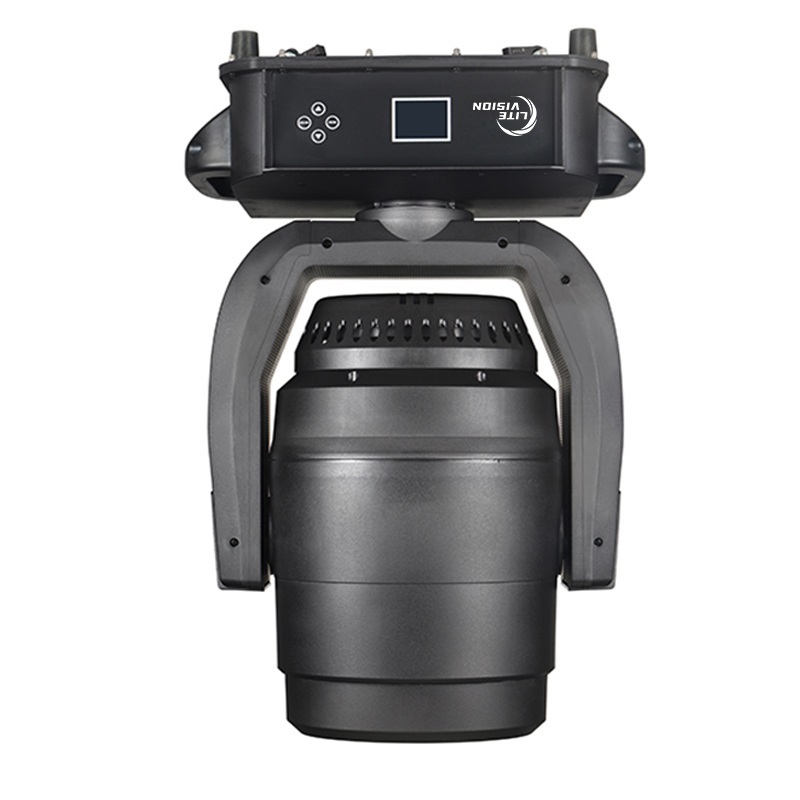
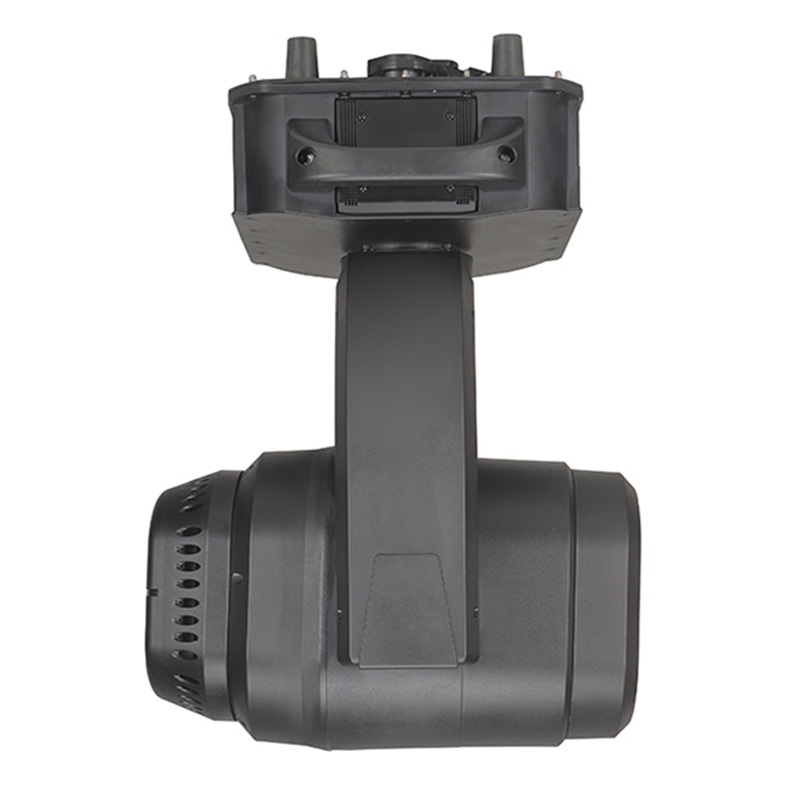
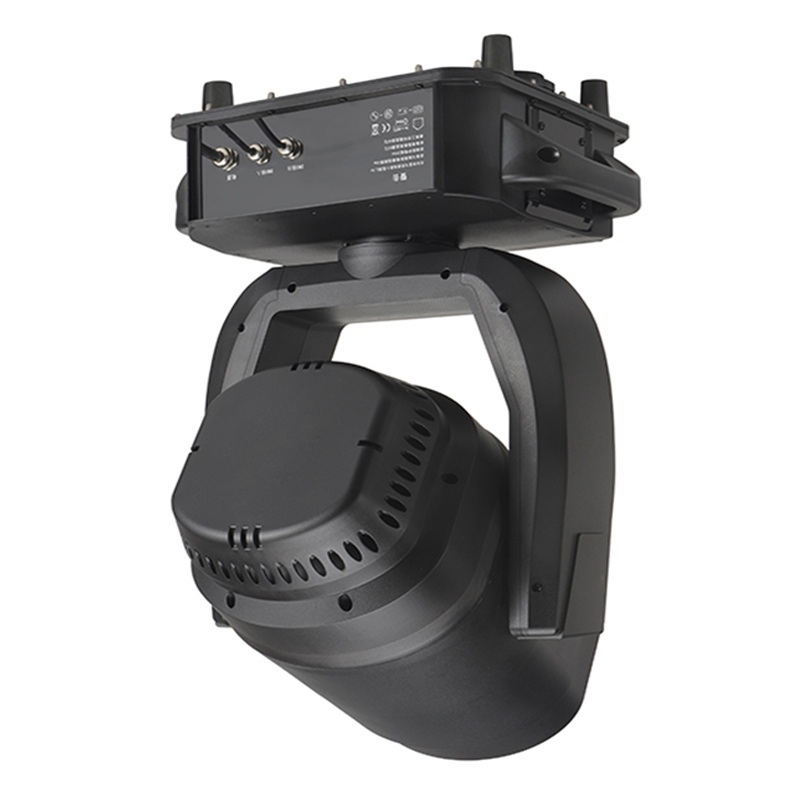
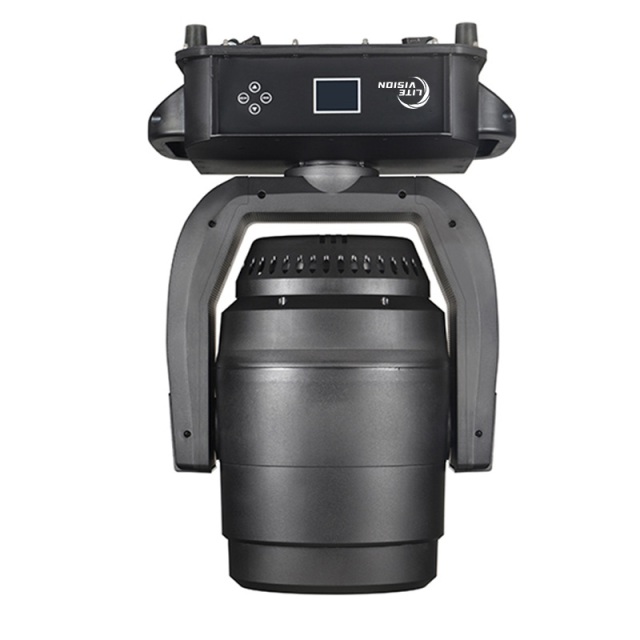
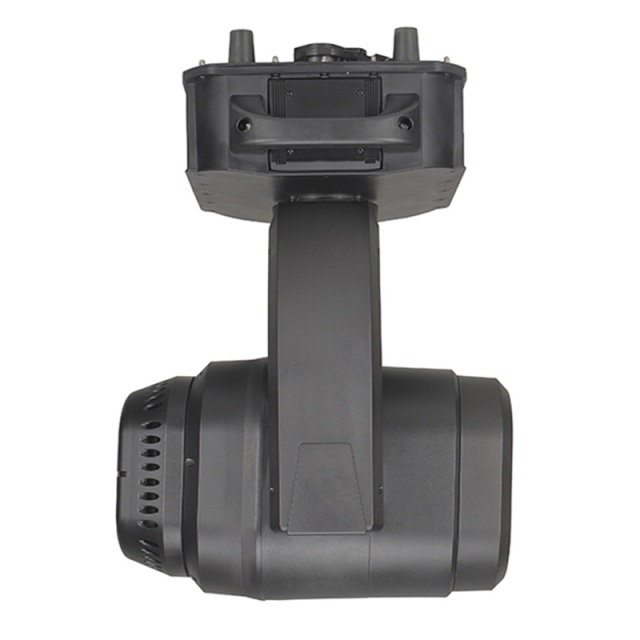
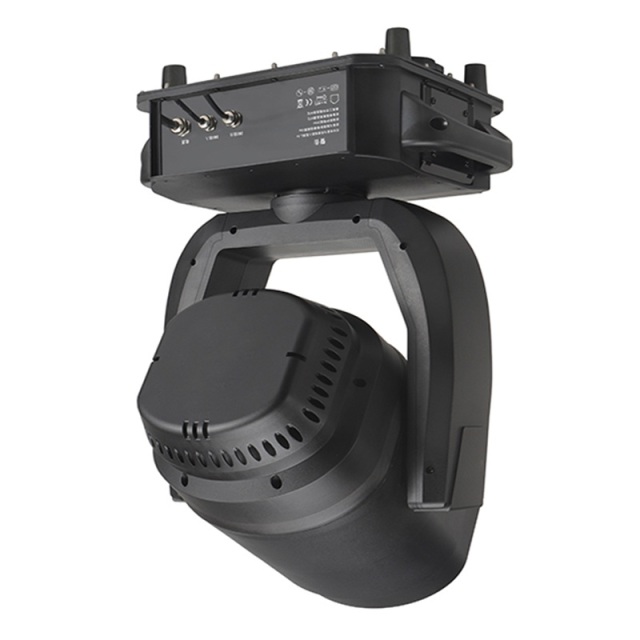
- Fixture dimensions | 456 × 306 × 689 mm Net weight | 33.5 kg Ingress protection | IP55 — dust-protected, resistant to water jets Input voltage | AC 100–240 V, 50/60 Hz Input power | 691 W Power factor | ≥ 0.98 Housing | Matte black, vented cylindrical head on a U-shaped yoke Mounting | Integrated yoke bracket Cooling | Fan cooling with electronic sensor monitoring
Ordering & Delivery
- Confirm the commercial terms with your sales contact. Warranty period and what it covers, lead time for your quantity, order quantities and volume pricing, payment terms and Incoterm vary by order and destination, so they are quoted per project rather than published as a fixed figure.
- Plan spares with us. As the beam moving head light manufacturer we can put spare lamps and service parts on the same order as the fixtures, which is usually faster and cheaper than ordering them after the first lamp goes down.
- Ask for the current policies. Repair, spare parts and returns are covered by our warranty, repair and spare parts policy and by the returns process for your region — request the current version with your quote so you know what happens if a unit arrives damaged or fails in service.
- Settle packing and freight. Tell us whether the fixtures travel in flight cases or cartons, and confirm shipping terms before dispatch; case configuration changes the freight calculation.
- Lock the dispatch configuration. Before the order leaves our moving head light factory, confirm the channel mode, starting address and menu language you want set, so the fixtures come out of the case ready to hang. As a beam moving head light manufacturer we build two 461 W bodies on the same OSRAM SIRIUS HRI platform: the Archi 461B, and the 461BSW three-in-one. They share a lamp family, a control philosophy and a similar service routine, but they are not interchangeable in a rig. This body keeps a fixed narrow angle and adds an animation wheel and twin 6-facet prisms; the 461BSW adds a zoom range, CMY colour mixing, a rotating gobo wheel and a higher IP rating, and it carries the extra mechanics that come with them. The choice comes down to what the fixture is for. If the beam is the whole job — long throw, aerial effects, façade lines, a fleet where every unit does the same thing — the beam-only body does it with a simpler optical train and less to maintain. If one fixture has to cover aerial looks and stage washing on a tour where truck space and rigging points are tight, the three-in-one earns its price. Plenty of rigs carry both: three-in-ones for coverage, beam-only bodies for the long lines above them. Tell us the show and we will tell you which mix we would hang.
- Specification sheet. The full parameter set for this body, in a form you can drop into a tender document or a dealer catalogue.
- User manual. Set-up, menu structure, addressing, channel mode selection and the routine service tasks.
- DMX channel chart. One chart per channel mode, matched to the firmware revision in the fixture, so the programmer can lay out the show file before the rig goes up.
- Photometric data. Where a project needs it, we can supply a photometric file for lighting design and pre-visualisation, so the beam is modelled against your drawing rather than guessed at.
- Service and spares list. Lamp, filters, fans and the parts we recommend keeping in the case.
- Version control. Every document leaves our moving head light factory with the revision it belongs to; ask for the current set when you order rather than working from an old copy in a tender folder.
Technical Support & Model Matching
More than 30 engineers with an average of 15+ years in professional lighting stand behind every order — the same people who answer your technical questions. Tell us your venue, rigging height, throw distance and existing control setup; we help match models, check protocol and channel fit, and build a package that works as one system. If a fixture misbehaves on site, we work through the fault with you and sort out spares. Installation and commissioning guidance come with the order. Founded in 2016, exporting since 2022, LITEVISION serves buyers in more than 80 countries from offices in the USA, Taiwan, Mexico and China.
FAQ
Can I change the beam angle once the fixture is on the truss?
No — the angle is fixed by the optical train and there is no zoom to adjust on site. That is deliberate: a dedicated narrow light path is what gives this beam moving head light its density over long throws, and it removes a mechanism that could drift in transport. If your design needs an angle that can be widened and narrowed from the console, tell us what the show requires and we will point you to the right body in the range.
Can it stay outside for a whole season?
The housing is rated IP55, which covers dust and water jets — the conditions a fixture meets on a covered stage, under a roof edge or on a façade bracket. It is not built for immersion or standing water, so mount it where rain drains away from the head and keep the vents clear. For a permanent outdoor moving head light installation, check local electrical and structural requirements before you fix the bracket, and talk to us about the position if it takes driving rain head-on.
What do I need on the console to run it?
Any DMX512 desk will drive it, which is what most buyers expect from a DMX moving head light. Beyond that, Art-Net is supported and wireless DMX512 is available as an option, and RDM lets the console address and poll the fixture without a climb. Plan the channel mode before you patch: the compact mode is enough for colour, gobo and movement, and the wider modes add the animation wheel, the prisms and frost.
Can I fit my own gobos?
The wheel is a fixed 18-pattern wheel plus white, supplied as built, and it is not offered as a user-swappable or rotating wheel on this body. If your show depends on custom or rotating gobos, say so before you order — that is a different wheel type, and we would rather steer you to the gobo moving head light in the range that takes your artwork than sell you the wrong one.
Is it a sensible fixture for a rental fleet?
Yes, if your work is long-throw beam. As a moving head stage light it is straightforward to brief and to service: one fixed angle, three channel modes, effects that behave the same way on every unit, and a lamp you can hold as a spare. Fleets that also need coverage usually pair it with wash or hybrid bodies rather than trying to make one fixture do everything.
How do I keep colour matched when I re-lamp the rig?
Re-lamp in batches rather than one fixture at a time — lamps age together, and mixing a new lamp with an old one is the usual reason two fixtures read slightly differently. Clean the colour wheel and the front lens at the same time, and check the rig against a reference colour on a white surface before the first show.