Product Overview
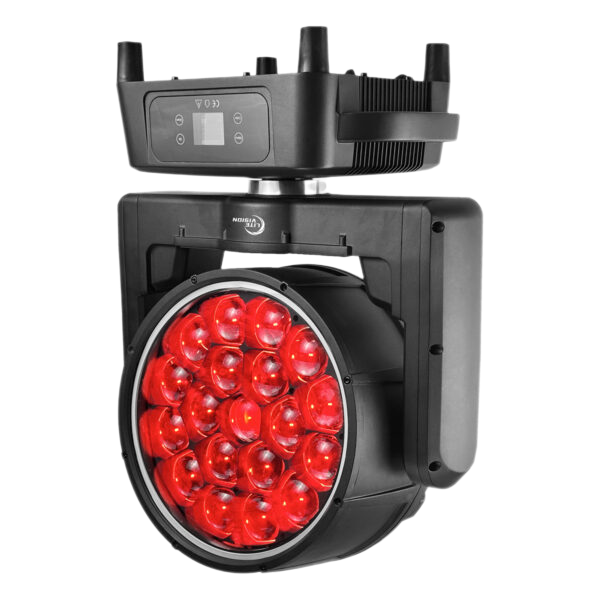
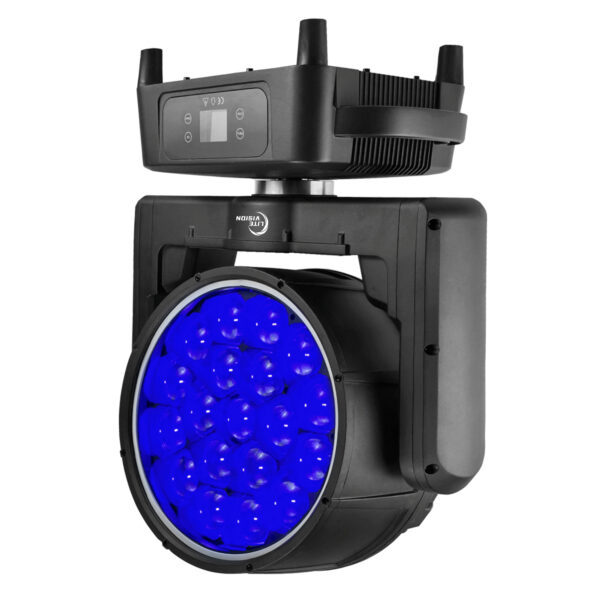
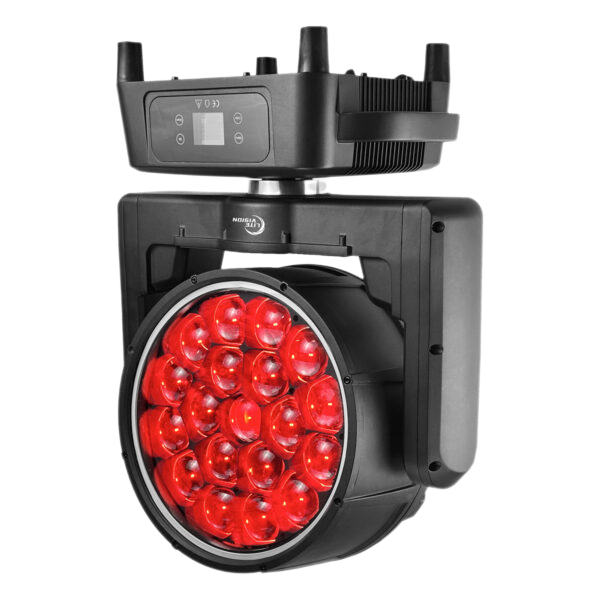
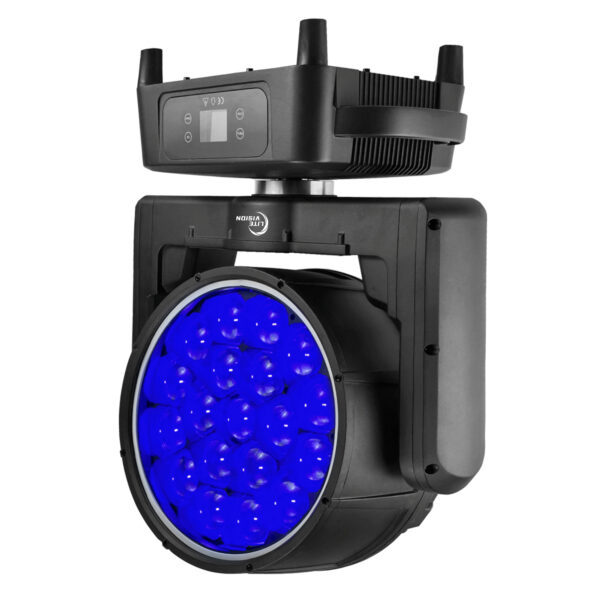
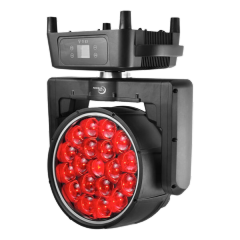
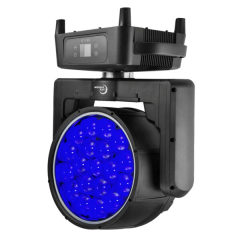
The Ommatea P1940M is a 19 x 40W RGBW bee eye fixture for positions where nobody wants to climb twice. Inside, nineteen OSRAM 40W RGBW LEDs sit behind a PMMA lens array fed by glass light pipes. Zoomed out, the array washes a stage evenly; zoomed in, it throws a tight shaft for aerial work and long distances. Three kinds of buyer end up with this model, and each one wants something different from a moving head wash light supplier. Venues and theme parks choose it where maintenance access is expensive and the fixture has to live with the weather. Festival and touring stages choose it because a sealed housing means rain is an inconvenience rather than a rig-down. Rental desks choose it as the wash-beam that can go out on any job without a backup case behind it.
IP65 Housing & Cooling
The body is magnesium alloy with a fire-proof finish, sealed to IP65. In practice that means the optics and electronics are protected against dust and against water jets from any direction — the rating a waterproof moving head light needs to sit under a roof edge, on a facade bracket or on an outdoor truss through a rainy season.
IP65 is a housing rating, not permission to leave a fixture submerged or to run it with a connector cap hanging open. The seals only do their job when every cable entry is mated or capped, the powerCON TRUE1 and XLR connectors are twisted fully home, and the cables are dressed with a drip loop so water runs off instead of tracking into the socket.
Heat is handled by a regulated cooling system with speed-adjustable fans and overheating protection. The fans run only as hard as the conditions require, which keeps noise down on quieter outdoor events and reduces the dust pulled across the heat sink over a long season.
For a permanent position, plan a rhythm rather than waiting for a fault: wipe the front glass and the lens face each season, check the seals and connector caps before the wet months, and clear the fan intakes while the fixture is already down for inspection. That routine is what keeps an outdoor led stage lighting fixture out of the workshop.
Light Engine & Optics
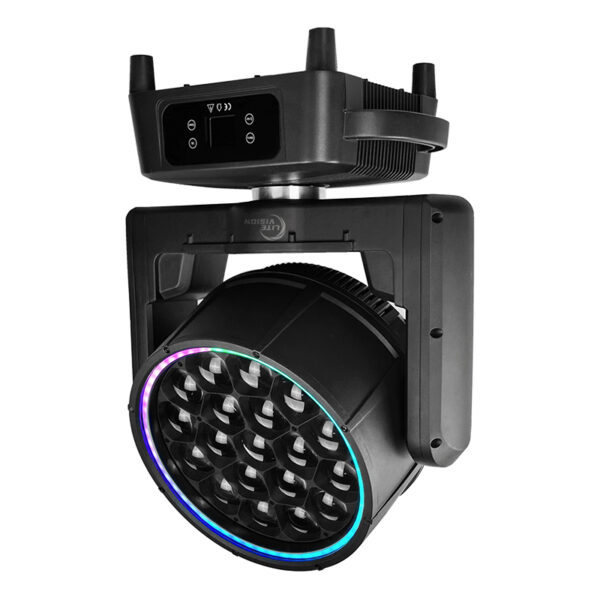
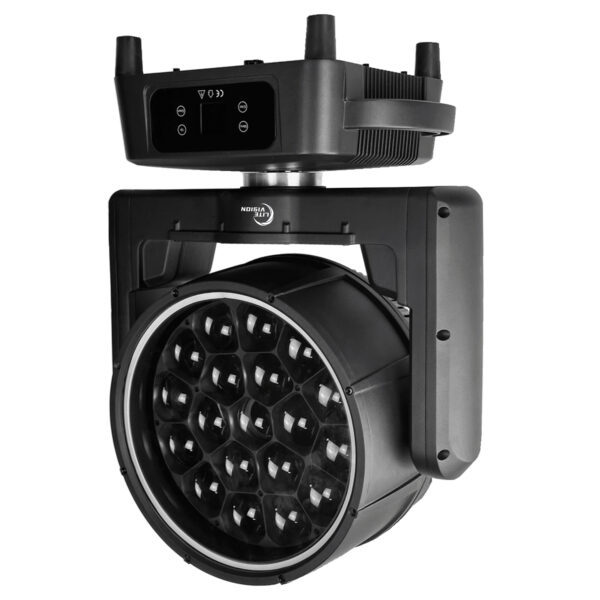
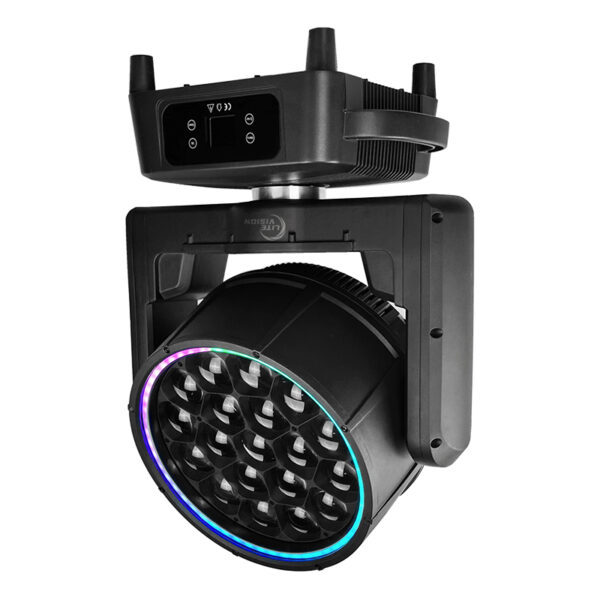
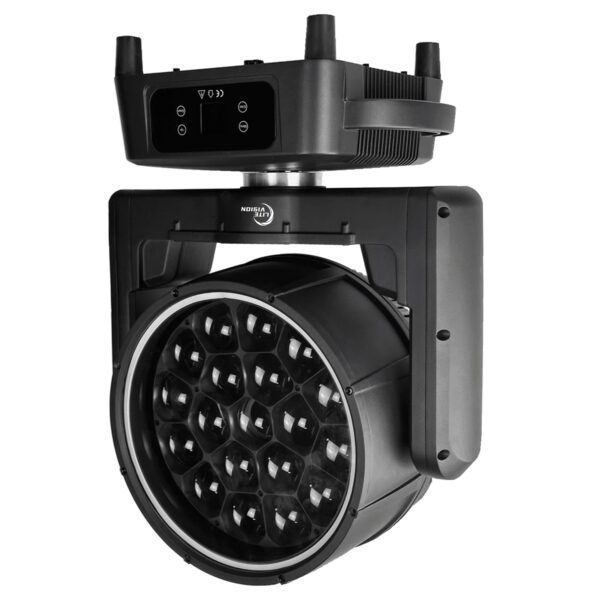
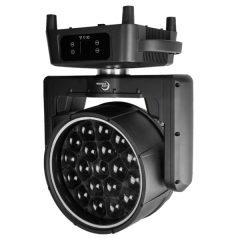
The engine in this led moving head light is nineteen OSRAM 40W RGBW four-in-one LEDs, each individually controllable, mounted behind a glass light pipe and a PMMA lens. The glass rod carries light from each emitter to the lens with high transmission and mixes the four colours before they leave the fixture, so a camera at close range sees one colour rather than separate red, green and blue points at the edge of the beam. Looking into the face, the lenses sit in a honeycomb grid — the bee eye structure that also makes per-lens effects possible.
Zoom runs from 4° to 45°. At the narrow end the array converges into a hard-edged shaft that still reads at the far end of a stadium; opened up it becomes an even led wash light for a stage, a facade or a dance floor. Colour temperature is adjustable from 2500K to 10000K, so the same fixture can sit warm beside tungsten practicals or run daylight-correct on a broadcast position.
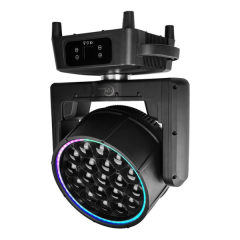
Two details separate this face from a standard wash. The front lens rotates continuously, dragging the beam into a vortex or breaking it into kaleidoscope patterns with no add-on effect. Where a conventional beam moving head light relies on a gobo wheel to break up the shaft, this one does it with the lens itself. Around the lens, an RGB halo ring runs rainbow effects and colour chases on its own channel, giving the fixture a visible edge even when the main beam is closed down.
Control & Channel Modes
- Six channel modes, shallowest to deepest. The lightest mode patches the fixture as a compact led wash light on a crowded universe; the deepest hands over per-lens pixel control, the halo ring and the rotating lens. Choose by how much of the show you actually program rather than by headroom you might never use.
- RDM addressing. Set addresses and read status from the console instead of climbing to the truss — worth having on permanent installs where the fixtures hang over a public area.
- DMX512 and master/slave. A console runs it normally; master/slave keeps a two- or four-unit setup working without one, which covers small venues and temporary bars.
- Magnetic encoder role. Pan and tilt return to their programmed positions precisely after a power cycle, so a cue stack does not drift between shows.
- Flippable OLED menu. The display reads the right way up however the fixture is hung, and it can be flipped so it does not glow through a dark scene.
- Firmware through the DMX port. Updates go in over the data line, without opening the housing or breaking a gasket to reach a service port — the update path a moving head light supplier should be able to provide in the field.
Installation & Rigging
- Fit the mounting bracket or the optional folding clamp, which folds flat so the fixture can be packed and hung without swapping hardware between jobs.
- Hang the fixture, then add a secondary safety bond to the housing even when the primary clamp is rated for the load.
- Run data on the XLR 3-pin in and out connections, or specify 5-pin when you order; leave a terminator at the end of the line and keep data and power runs apart.
- Aim and focus at working height. Run the zoom to both ends of its range — the wide setting for stage coverage, the narrow end when the position is a long-throw beam moving head light — and check both before you lock pan and tilt.
- It is the least glamorous step on any outdoor led stage lighting install and the one that decides whether the seals hold.
Applications
- Theme parks and building facades. Mounted on a structure rather than a touring truss, the sealed body and the halo ring give a permanent colour feature that reads from a distance without nightly handling.
- Outdoor festivals and touring stages. Rain, dust and long days are normal here; a waterproof moving head light housing means a shower is not automatically a rig-down and a wipe-down is usually the whole recovery.
- Stadium and arena positions. Closed zoom for long throws from the back truss, open zoom for field and audience wash, with the halo ring keeping the fixture visible when the beam is tight.
- Rental fleets. One model covering wash, beam and effect duty keeps the truck lighter and the cross-hire list shorter, because fewer jobs need a second fixture type beside it.
- Venues that need outdoor-grade hardware indoors. Open-roof arenas, temporary structures and sports halls where dust and draughts are part of daily life are natural homes for outdoor led stage lighting specification.
- Dealer demonstration rooms. As an led moving head light that covers wash, beam and effects in one body, it fills the gap between a dedicated beam and a pure wash on a showroom floor.
Specifications
| Power supply | AC 100–240V, 50/60Hz |
| Power consumption | 850W |
| Light source | OSRAM 19 x 40W RGBW 4-in-1 LED, individually controlled |
| Average LED life | 50,000 hours |
| Colour temperature | 2500–10000K |
| Zoom range | 4°–45° |
| Pan / Tilt | 540° / 216° |
| DMX channels | 21 / 35 / 78 / 92 / 97 / 43 |
| Control protocols | DMX512, RDM, master/slave |
| Dimming and strobe | 4 dimming curves; 1–25Hz strobe, random and pulse |
| Housing | Magnesium alloy, fire-proof, IP65 |
| Connectors | Seetronic powerCON TRUE1; XLR 3-pin in/out (5-pin optional) |
| Display | 1.77 inch OLED with display flip |
| Net weight | 19 kg |
Ordering & Delivery
- Send the quantity, the destination market and the mounting position — facade, mast, roof edge or truss — so the quotation matches how exposed the installation will be.
- Confirm the connector option when you order: XLR 3-pin is standard and 5-pin is available, and the folding clamp is ordered with the fixture rather than assumed.
- Ask for the current production schedule and lead time for your quantity before a show date is committed to it.
- Confirm the minimum order quantity and any volume steps that apply to this model.
- Confirm payment terms, trade terms and the port of departure with your sales contact.
- Agree the warranty period and the scope of cover, and how a quality claim is handled if a unit arrives with a fault.
- Ask for the compliance documents your market requires; these are issued per destination and per order.
- Ask for the specification sheet, channel chart and photometric file for the firmware revision on your units, and keep them with the show file. Ordering repeat batches from the same moving head light supplier keeps that revision aligned — and as a moving head wash light supplier for this model, we can reissue the chart for units bought in a later season.
- Document | What it covers Specification sheet | Electrical, optical and mechanical data for this model User manual | Menu tree, addressing, channel mode setup and service notes DMX channel chart | Function map for each of the six channel modes Photometric data | Zoom range measurements for design and project paperwork Fixture library file | Profile for consoles and previsualisation software Firmware revision | The build loaded on your units, matched to the channel chart
Technical Support & Model Matching
More than 30 engineers with an average of 15+ years in professional lighting stand behind every order — the same people who answer your technical questions. Tell us your venue, rigging height, throw distance and existing control setup; we help match models, check protocol and channel fit, and build a package that works as one system. If a fixture misbehaves on site, we work through the fault with you and sort out spares. Installation and commissioning guidance come with the order. Founded in 2016, exporting since 2022, LITEVISION serves buyers in more than 80 countries from offices in the USA, Taiwan, Mexico and China.
FAQ
Can the fixture be left outdoors through a full season?
An outdoor moving head light has to earn that position, and this one is rated IP65: dust-tight, and protected against water jets from any direction. Rain, hose-down cleaning and the humidity swings of an outdoor season sit inside that rating. Immersion does not, and neither does a fixture running with a connector cap open — the seals only work when every cable entry is mated or capped and the cables are dressed with a drip loop. On coastal or dusty sites, put the seals and the front glass on a seasonal check rather than waiting for a fault to appear.
Can the individual LEDs be controlled separately?
Yes. All nineteen of the 40W RGBW LEDs are addressable one by one, so the face can run pixel chases, colour gradients and pattern macros as well as acting as a single wash. The deeper channel modes expose that control; the shallower ones fold the array back into a straightforward led moving head light that still uses the full zoom and the halo ring. If pixel effects are part of the plan, settle that before the show file is written, because the mode you patch decides how much of the face you can reach.
Which channel mode should I start with?
Pick by what the show actually uses. A position that only needs colour, zoom and dimming — a typical led wash light job on a facade or a dance floor — does not need the deepest mode taking channels out of the universe. Add depth when the halo ring, the rotating front lens or per-lens work is part of the design. The chart for each of the six modes travels with the fixture, so a programmer can compare them before deciding.
How far will it throw, and how wide can it go?
The zoom covers 4° to 45°, and both ends are usable. Closed down it produces a hard-edged shaft that holds together over long distances from a back truss or a mast — the job a dedicated beam moving head light would normally take on. Opened up, the same unit fills a stage, a facade or a field with even colour. The useful check is at the actual trim height: run the zoom to both ends on site before pan and tilt are locked.
What does it take to keep the fixture weather-tight?
Seals, caps and cable dressing, checked on a rhythm. A waterproof moving head light is only as sealed as its open ports, so unused powerCON and XLR sockets stay capped, mated connectors are twisted fully home, and cables hang in a drip loop so water runs off instead of tracking into the socket. Wipe the front glass and the lens face each season, look over the gaskets while the fixture is already down, and clear the fan intakes of dust and pollen.
Will units from a later batch match the ones I already own?
Same model, same channel chart, same firmware revision. As a moving head wash light supplier we can send the chart and the revision that match the units you already run, so a new batch patches into the existing show file instead of needing a second set of cues. Note the revision you are running when the next order is placed so the build can be matched to it.