Product Overview
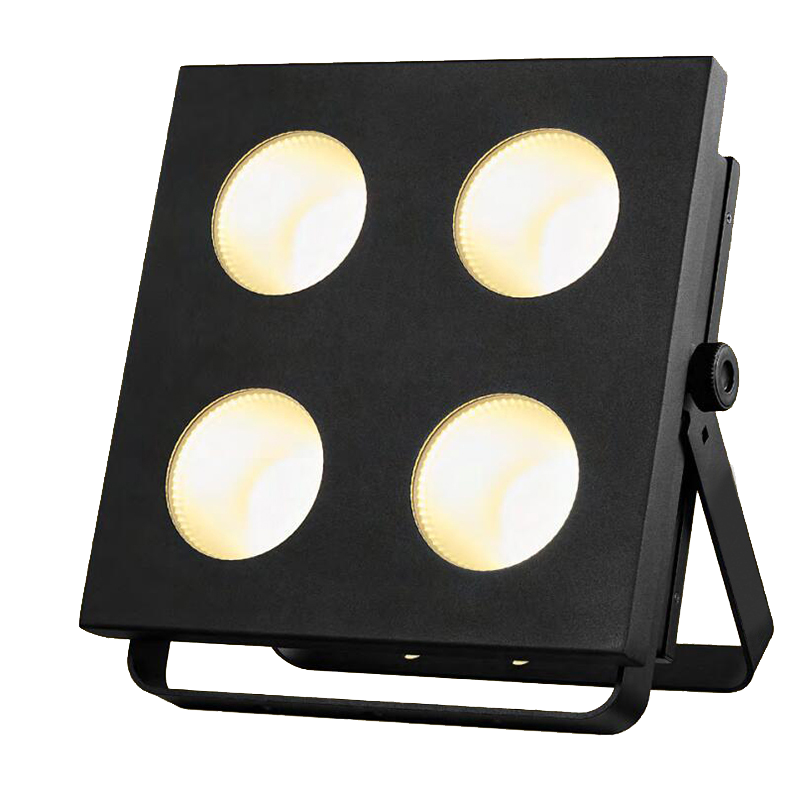
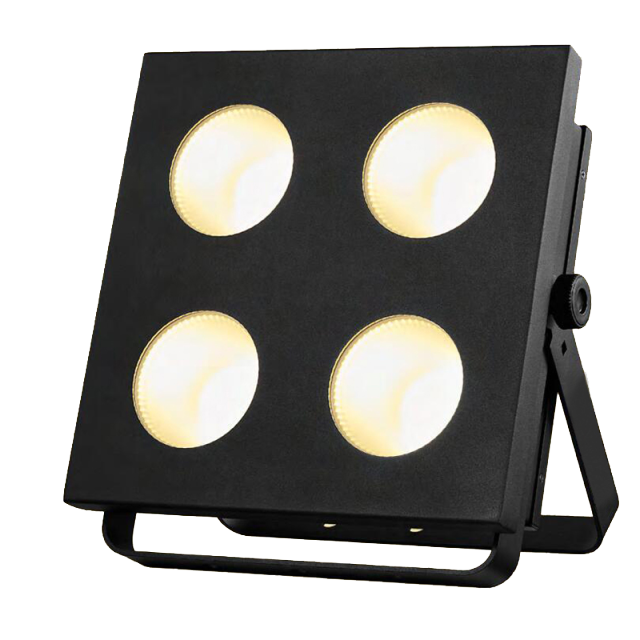
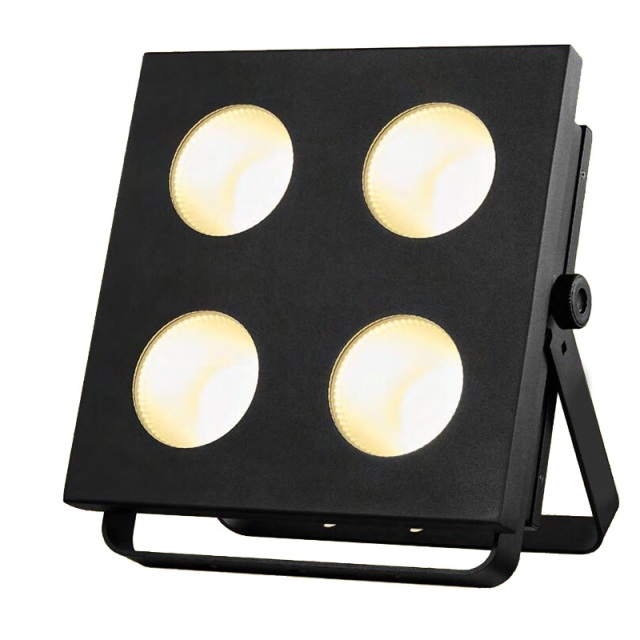
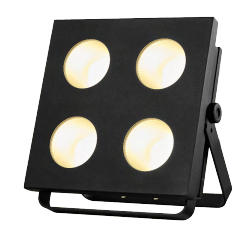
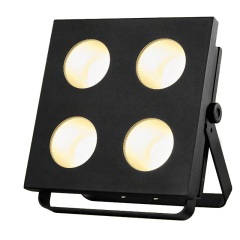
It is COB LED stage lighting with one clear job: white light on the people in the room — the audience, the front rows, a set wall — rather than another coloured effect on the stage. On a front truss it reads as a wide LED wash light; dropped low, it becomes the blinder that hits on the chorus. Most rooms use it where a row of par cans or an older tungsten blinder used to hang. One housing now covers the audience wash, the front light and the cue hits that used to take three different fixtures and a gel frame each. Because each of the four cells is addressed separately, the face is never just one flat block of white. A chase can run across it, warm and cool can alternate, or two cells can sit on the audience while two hold the stage front — the look is built in the console, not inside the fixture. Rental companies, theatres, school halls and TV studios buy it for the same reasons: a metal housing that takes being trucked, a control set that suits a full console or a small room, and one fixture type covering two jobs.
Light Source & Colour Temperature
- Four 100W COB emitters on one face, 400 W maximum — one housing where a venue used to hang a row of LED par light units. That is COB LED stage lighting doing the work of several fixtures at once.
- Warm white at 3200K — for rooms that still feel like tungsten, where house light, practicals and older fixtures blend with it without a colour-correction gel.
- Cool white at 5600K — matches a camera's daylight balance and sits comfortably next to other white LED stage lighting on the rig.
- CRI Ra≥90 — skin tones, costumes and set dressing keep their colour in photographs and on camera, which matters more than raw output in a room full of people.
- Both whites on the same face — when neither extreme suits the scene, blend them into a neutral in-between instead of choosing sides.
- Over 50,000 hours of rated LED life — no lamp stock to carry and no lamp change mid-run, which is the difference between a fixture that stays in the air and one that keeps coming down.
Optics, Dimming & Strobe
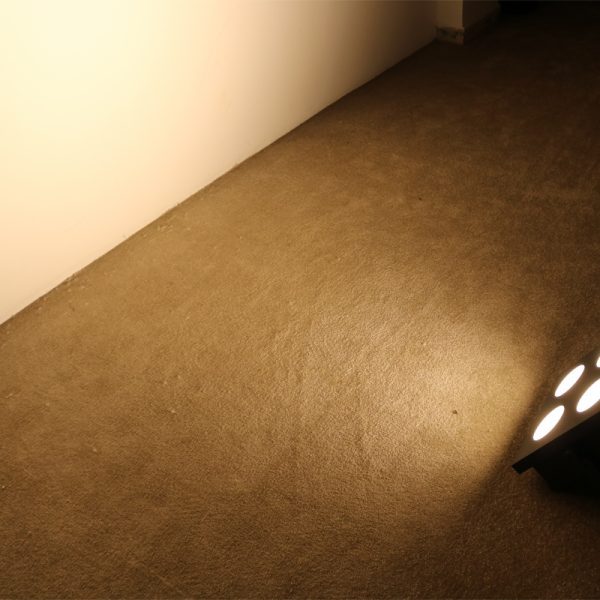
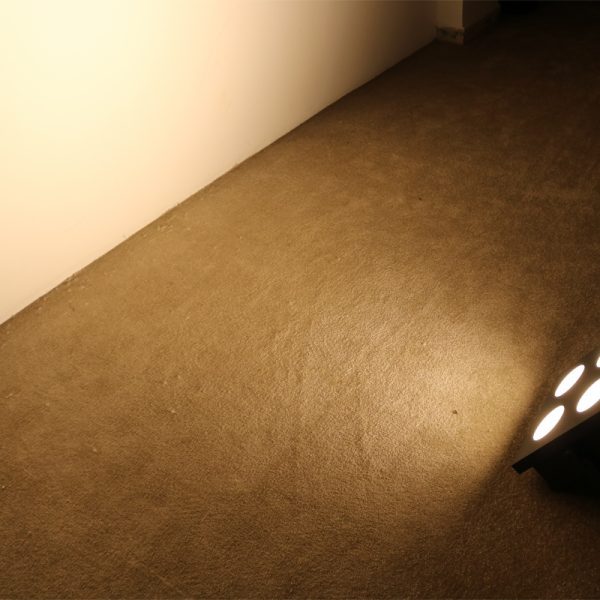
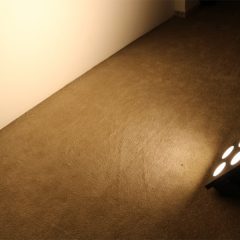
A 30 degree beam angle gives a wide, soft field rather than a tight shaft — the right shape for washing a stage front, a set wall or the first rows of an audience from a normal front-truss height.
Dimming is linear from 0 to 100%, so a slow fade stays smooth right down to blackout and the fixture follows the console curve rather than stepping down in visible jumps.
Strobe runs from 1 to 30 Hz and is set from the desk: a slow pulse under a ballad, hard hits on a drop, and everything between from the same LED strobe light.
The refresh rate is 11,700 Hz and the output is quoted as 100% flicker-free for film and TV cameras, which is what keeps banding and rolling bars out of the edit at high frame rates or short shutter angles. For any white LED stage lighting position that ends up in shot, it is the number that decides whether the fixture can stay where it is.
Power, Control & DMX
| Specification | Detail |
|---|
| Input voltage | AC 100–240 V, 50/60 Hz |
| Max power | 400 W |
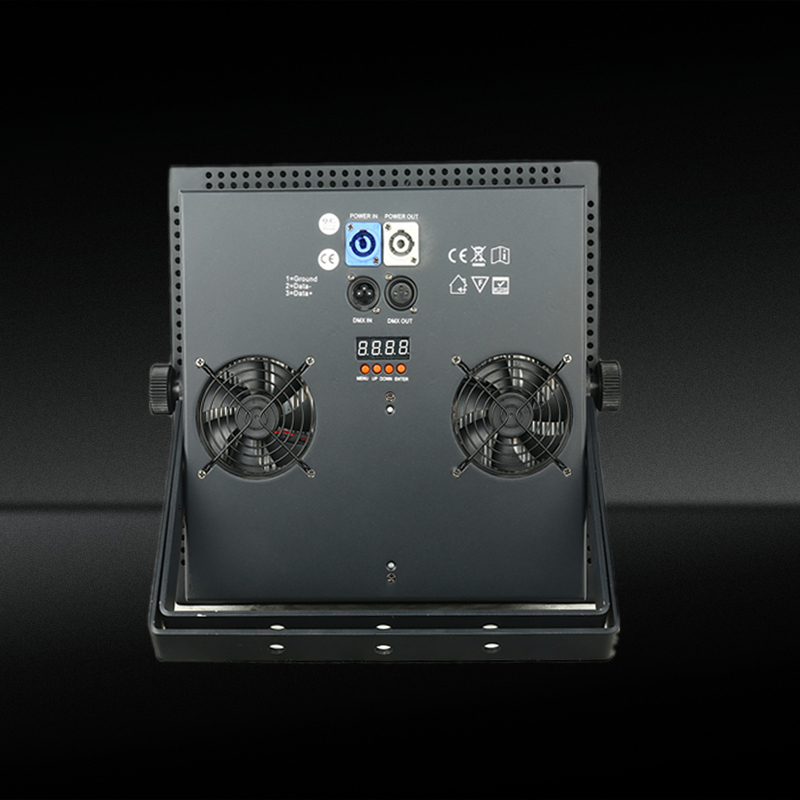
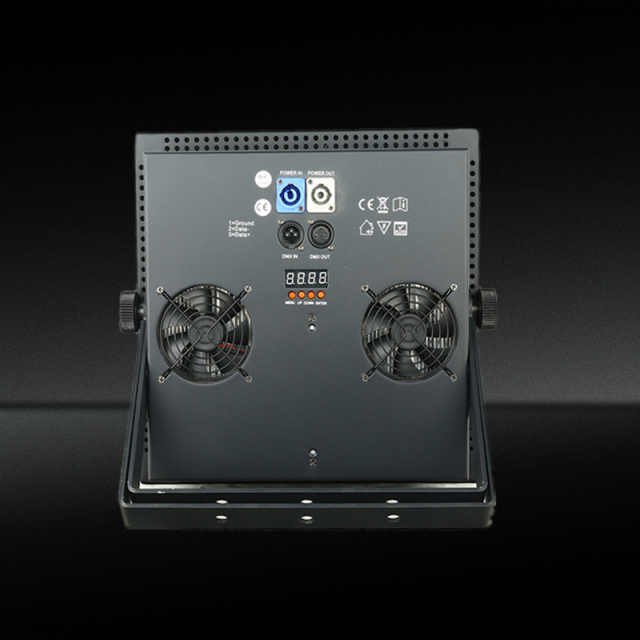
| Power input | Powercorn connector |
| Power link | Power in and power out sockets for daisy-chaining |
| Control protocol | DMX512, standard DMX lighting control from any console |
| DMX channels | 8 CH, single colour |
| Control modes | DMX512, master/slave, auto run, stand-alone, sound active |
| On-board menu | Digital display with Menu, Up, Down and Enter keys |
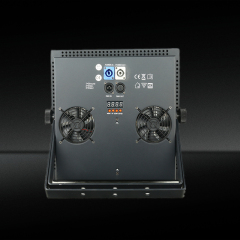
| DMX connection | DMX in and DMX out on the rear panel |
Installation & Cabling
- Pick the position first — front truss for audience light, a low stand for an up-light, or a floor position as a stage-side wash. The bracket tilts, so one fixture covers all three.
- Mount it on a clamp or a stand and lock the side knobs by hand. Check the clamp's rated load against the fixture's weight before anything goes above head height.
- Fit a secondary safety bond whenever the fixture is flown — normal practice for anything over the audience.
- Run power along the truss: Powercorn in from the supply, Powercorn out to the next unit. Add up the load before you keep chaining.
- Daisy-chain the DMX — console out to the first fixture's DMX in, DMX out to the next, and so on down the line. One DMX controller then drives the whole run.
- Set the address on the rear menu and check it against the patch before doors.
- Leave an air gap behind the fixture. Both fans sit on the rear panel and need room to move air when units are flown close together.
Blinder Effects & Cell Control
- Individual cell control — address the four emitters separately and run chases, ripples or alternating warm and cool across the face instead of one flat block of white.
- Classic blinder hits — full output on the accents, black between them. It is also the quickest LED strobe light cue you can add without another fixture on the truss.
- Warm and cool as two cues — change the mood of a scene by switching whites on the same unit, with no gel swap and no second fixture to focus.
- Front-wash duty — the same unit works on a truss as a broad LED wash light across the stage, so a small venue covers two jobs with one fixture type.
- A straight swap for a row of LED par light units — the same coverage on the stage front with fewer cables and nothing to re-lamp.
- Programmed in the desk, not the fixture — the looks live in your show file and travel to the next venue with the rest of the rig.
Cooling, Environment & Physical Data
| Specification | Detail |
|---|
| Cooling | Two low-noise fans |
| IP grade | IP20, indoor use |
| Working temperature | -10 °C to 40 °C |
| Housing material | Metal, aluminium alloy |
| Housing colour | Black |
| Light size | 350 x 350 x 117 mm |
| Net weight | 5 kg |
| Gross weight | 7 kg |
| Carton, 1 pc | 42.2 x 16.7 x 46.5 cm |
| Carton, 4 pcs | 71.5 x 44 x 49 cm |
Ordering, Delivery & Documentation
- Confirm the brief first — how many units, which console or DMX controller will run them, and whether they go into a rental fleet or a fixed installation. As an LED strobe light supplier we quote against that brief, so quantities, spares and documentation match the job.
- Ask your sales contact for current order quantities and production lead time. Both are quoted per project and confirmed on your order.
- Payment terms and Incoterms are agreed with your sales contact at quotation stage.
- Ask for the documentation your team works from — spec sheet, DMX lighting control chart, user manual and photometric data — and we will confirm what is available for this model.
- Market compliance documents are handled per destination: tell us the country the fixtures are going to and we will confirm which certificates and test reports can be issued for this model.
- Warranty cover, spare parts and the route for a damage or fault claim are set out in the quotation; read them alongside the order confirmation.
- Packing follows your shipping plan — single cartons or four-unit cartons, plus pallet or export case requirements for the destination.
Technical Support & Model Matching
More than 30 engineers with an average of 15+ years in professional lighting stand behind every order — the same people who answer your technical questions. Tell us your venue, rigging height, throw distance and existing control setup; we help match models, check protocol and channel fit, and build a package that works as one system. If a fixture misbehaves on site, we work through the fault with you and sort out spares. Installation and commissioning guidance come with the order. Founded in 2016, exporting since 2022, LITEVISION serves buyers in more than 80 countries from offices in the USA, Taiwan, Mexico and China.
FAQ
Can I run it from the console I already have?
Any desk with a DMX512 output will address and dim it — the fixture takes standard DMX lighting control and nothing proprietary. Patch your DMX controller to DMX in, take DMX out to the next unit, and set the address on the rear menu. If there is no operator at all, auto run, stand-alone, master/slave and sound active modes let you set a look and leave it running.
Will it flicker when it is filmed?
No. The refresh rate is 11,700 Hz and the output is quoted as 100% flicker-free for film and TV cameras, which keeps banding and rolling bars out of the edit at high frame rates and short shutter angles. The same fixture also gives you an LED strobe light cue from 1 to 30 Hz, set from the console. Cameras and blinders usually fight each other; this COB LED stage lighting is one of the cases where they do not.
Warm white or cool white — do I have to choose?
Both are on the fixture: 3200K warm white and 5600K cool white, addressed separately, so you choose per cue rather than per order. Warm suits tungsten-lit interiors, house light and cabaret seating; cool suits camera white balance and a crisp, neutral look; blending them gives you the in-between. On a white LED stage lighting rig, that is a scene change without a gel swap.
Can it be used outdoors?
The rating is IP20, so it is an indoor fixture — theatres, halls, studios, clubs and covered stages. Rain, dust and long sun exposure sit outside its working environment. If your calendar mixes indoor work with open-air shows, say so when you enquire: as an LED strobe light supplier we also build weather-rated models, and the honest answer may be a different fixture rather than a cover.
Can one fixture cover the audience and the stage front?
Within its output, yes. Aim it at the audience for a blinder cue, then re-aim it as an LED wash light across the stage — the 30 degree field is wide enough to do both in a small-to-mid room. It is the role a row of LED par light units used to fill, without the extra cabling or the gel.
How many can I put on one power circuit?
Each unit draws up to 400 W at full output, and how many fit on a circuit depends on the supply voltage and the rating of the cable and connectors feeding it. Work that out with your electrician before the rig goes up; if it helps, send us the power plan and we will check it against the fixture's draw.