Product Overview
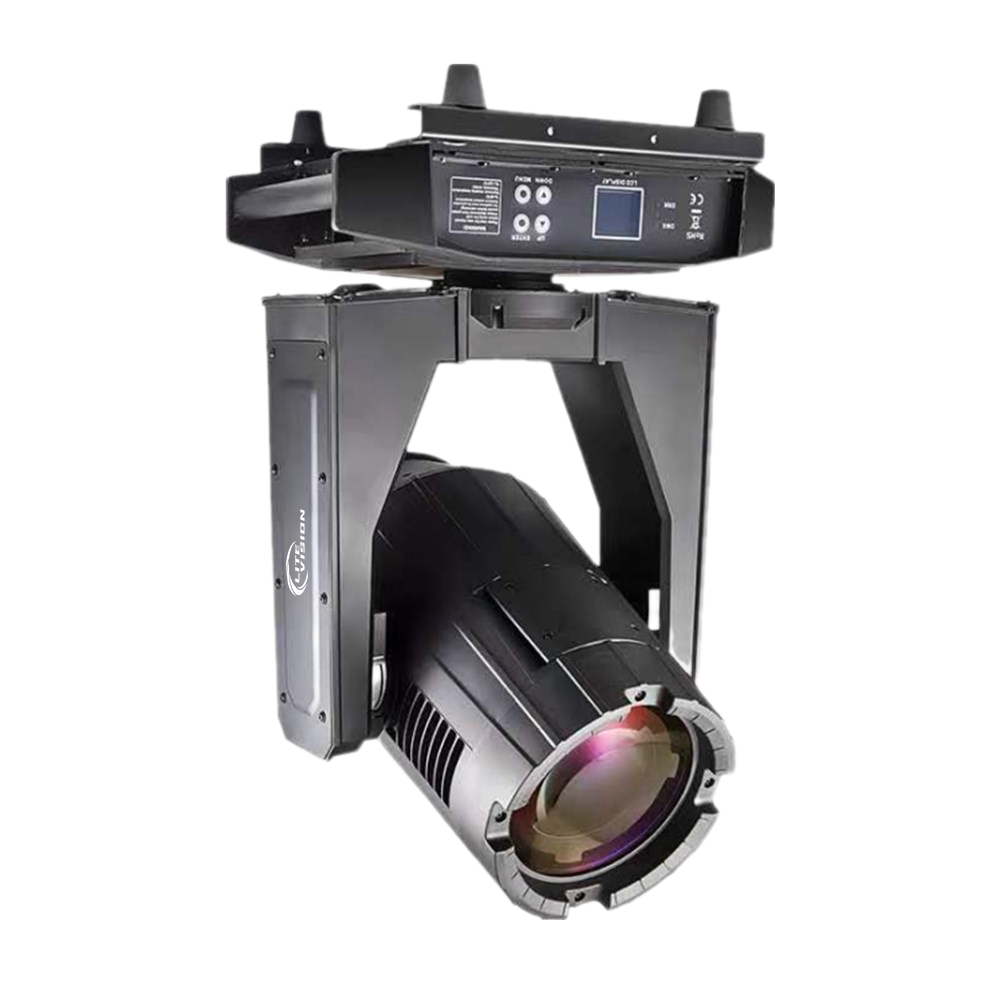
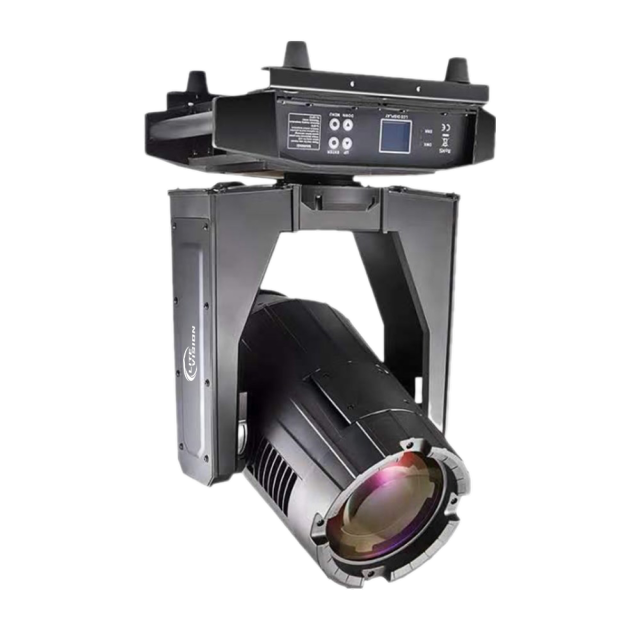
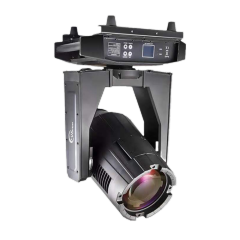
The Archi 490B is a 461W OSRAM beam moving head light built to be installed outdoors and left in place. A narrow, hard-edged beam, a full gobo wheel and a colour wheel sit inside one sealed housing, so a façade, a bridge or a theme-park structure can carry a moving beam show that would otherwise be limited to an indoor stage.
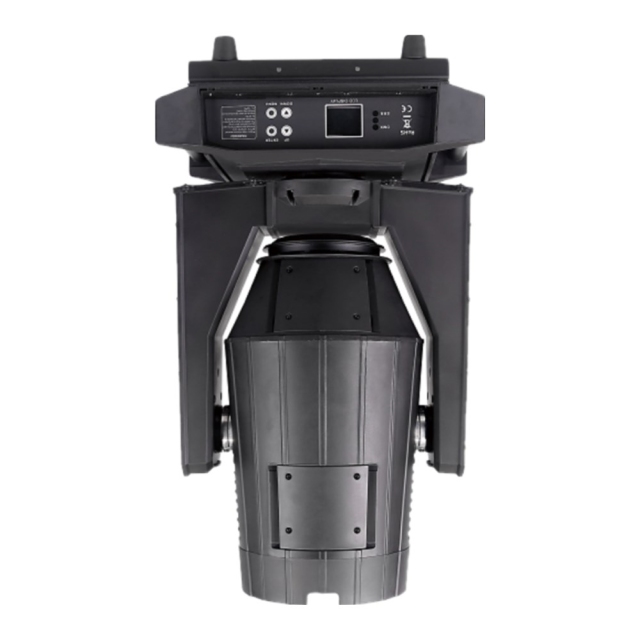
Sealing is what makes the difference. As a waterproof moving head light it is rated for exterior mounting, with the head, yoke and rear panel forming one housing rather than an indoor unit dropped into a weather box and relying on the enclosure alone.
This outdoor DMX moving head light is built for permanent positions: landmark and building faces, theme-park show structures, plazas, waterfronts and venue exteriors where the cue has to be readable from the far side of a crowd.
Where a site previously ran a static exterior projector, or an indoor beam under a cover, this unit puts movement, patterns and colour changes directly into the outdoor rig — one fixture on the bracket instead of two layers of equipment.
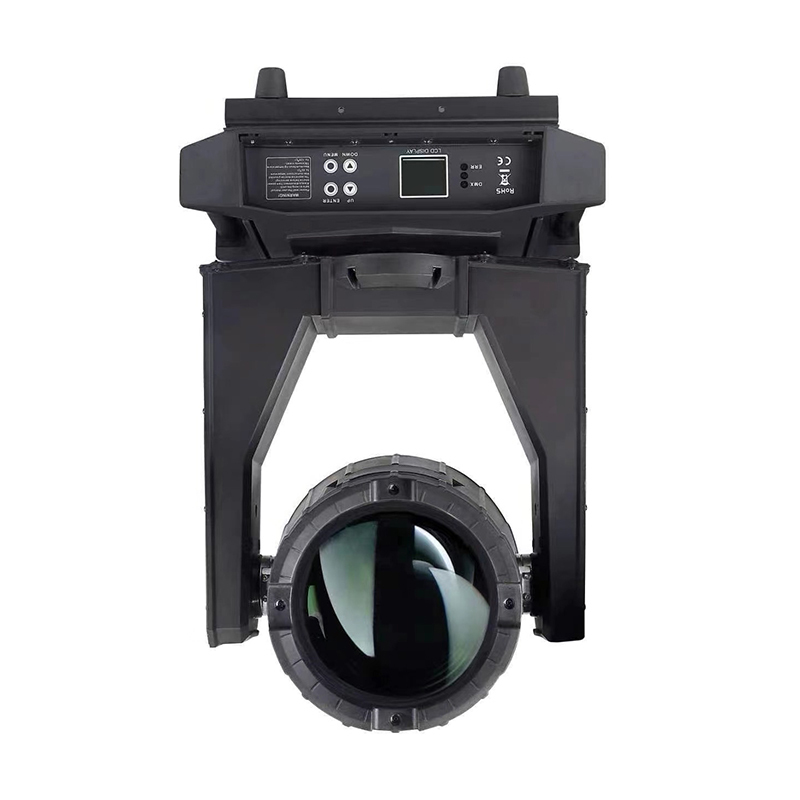
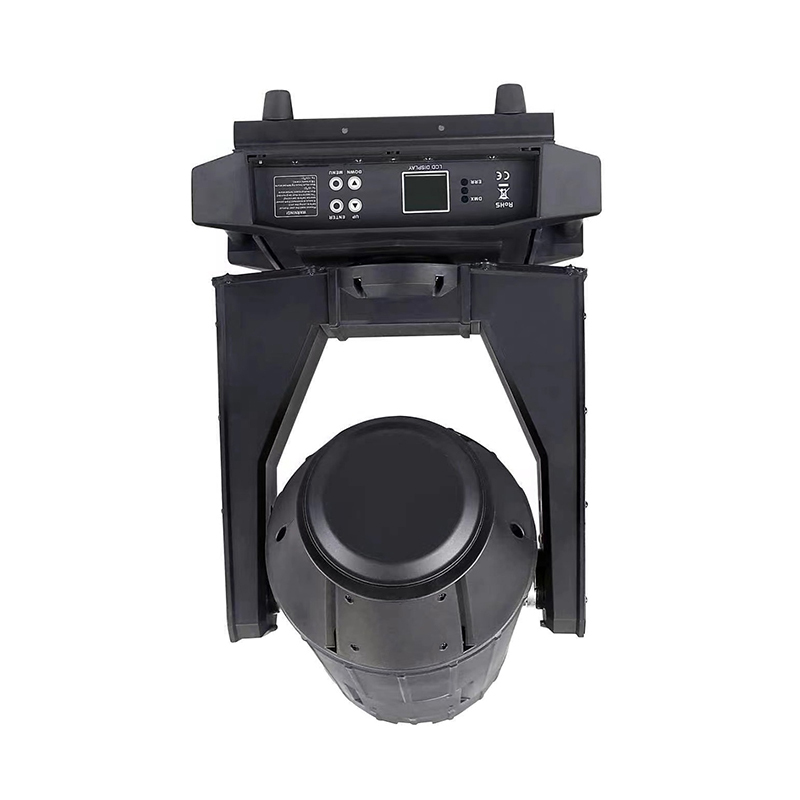
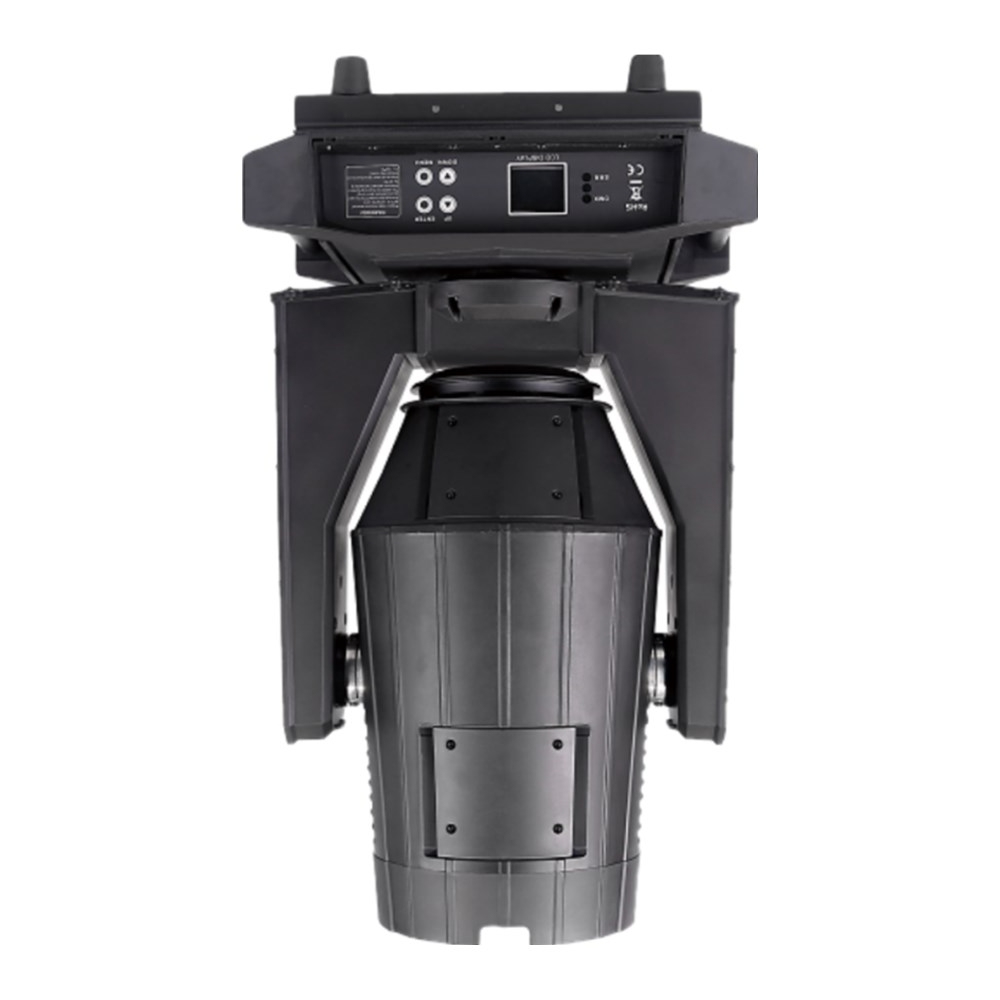
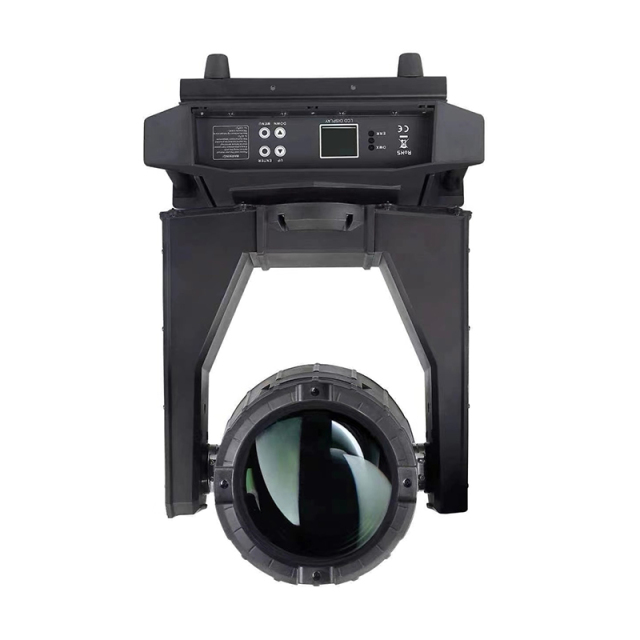
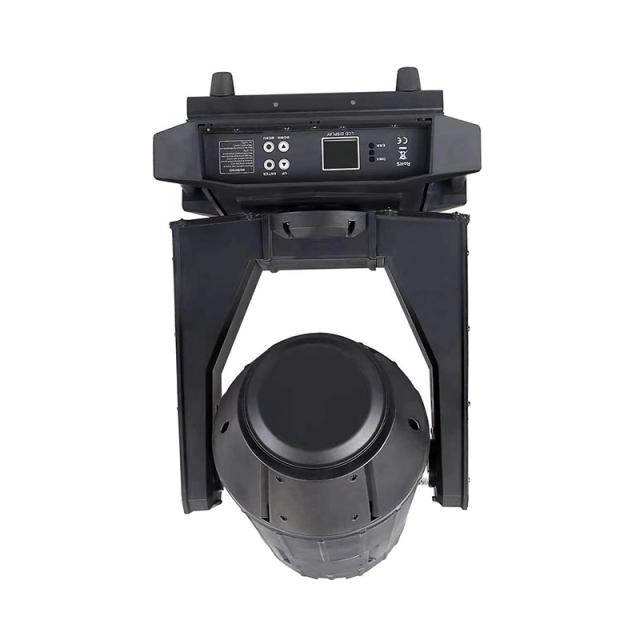
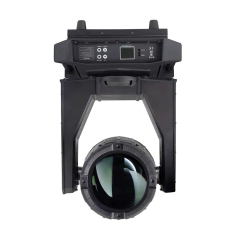
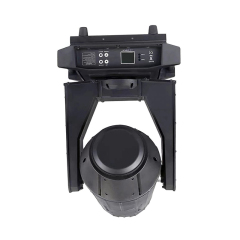
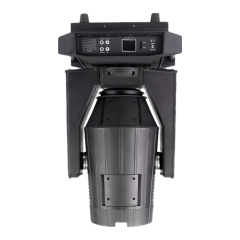
It belongs to the Archi outdoor family alongside the wash bars and the city-colour units, so beam, wash and flood for a single scheme can come from one range. Every unit is finished in matte black on a yoke-mounted head, with the menu and connectors on the rear panel where an installer can reach them.
Specifications
| Model | Archi 490B |
|---|
| Light source | OSRAM 461W discharge lamp |
| Colour temperature | 8000K |
| Power consumption | 650W |
| Input voltage | AC 110–240V, 50/60 Hz |
| Beam angle | 1.9–3° |
| Lens | JIAMIJI optical lens |
| Control | 16 channels; DMX512, master/slave and auto modes |
| Ingress protection | IP55 |
| Net weight | 25 kg |
| Gross weight | 28 kg |
| Fixture size | 418 × 378 × 620 mm |
| Carton size | 49 × 41 × 77 cm |
Optical System & Effects
- An overheat protection circuit watches the head so a long show in high ambient heat does not push the lamp or the electronics past their limits. Linear focus. Rack the focus until the pattern edge is crisp at the actual throw distance; on a moving head beam light the focus setting is what decides whether a gobo reads as a shape or a blur at the far end of the throw. Stackable prisms. Two sets are offered — 8-facet plus 16-facet, or 8-facet plus 8-facet — and both rotate in either direction at variable speed. Superimpose them and the single beam opens into a fan of secondary beams for aerial cues and wide structural work. 0–100% linear frost. Frost softens the beam edge where the fixture is working on a surface at closer range and a hard circle would read as a spotlight rather than as part of the architecture. Strobe up to 13 flashes per second. Random and pulse functions run alongside the steady rate, which is what turns an otherwise static exterior look into an accent for a show moment without adding another fixture type. 0–100% linear dimming. Fades run smoothly from black to full, so a beam can come up gradually with a music cue or with a building's own lighting timeline instead of snapping on. Pan 540°, tilt 250°, 16-bit with electronic correction. Movement is quick enough to keep a cue on the beat, and the correction returns the head to its programmed position after a knock, a power interruption or a maintenance visit.
Gobo System
Seventeen gobos plus white on one wheel. Every pattern rotates continuously and can also shake in place, so this gobo moving head light covers slow architectural movement and sharp accent hits from a single wheel rather than needing two fixture types on the structure.
Rotation for atmosphere, shake for impact. A slow rotation turns a pattern into a moving texture travelling across a façade; the shake function snaps the same gobo back and forth for a harder, rhythmic cue. Both are driven from the console, so one moving head beam light can hold a calm look for most of the evening and change character for the show moment.
One pattern at a time. Because the gobos sit on a single wheel, a look uses one pattern plus the white position. Plan cue lists that change gobos between sections rather than trying to stack them, and keep a plain white cue ready for the moments when the architecture should read clean.
White as a working position. The white slot is where the fixture returns for a plain beam cue, and it is the cleanest way to check aim, focus and colour alignment on site before a show — a reference position that makes a later service visit quicker.
Color System
- Fourteen colours plus white on the main wheel. The palette on this DMX moving head light carries the saturated keys exterior schemes usually ask for — deep blues and greens for water and glass, magenta and red for event nights — with white kept for beam-only cues.
- A 6-in-1 colour plate alongside it. The extra plate extends the range beyond what the main wheel holds on its own, which matters when a single unit has to cover a scheme with several distinct scenes.
- Deep blue and green for water and glass. On waterfronts, glass façades and pools the saturated end of the wheel is what stays visible at distance; a softer wash colour disappears against a lit background where these still hold.
- Amber and straw for stone and heritage. Warm tones sit better against sandstone, brick and older masonry, and they read as illumination rather than decoration on buildings where the architecture is the point.
- Colour behind a gobo. On a gobo moving head light, running a colour under a rotating pattern tints the texture to match the scheme, which on a fixed exterior is the difference between a pattern that looks applied to the building and one that belongs to it.
- Colour changes as the evening develops. Because the wheel moves on cue, one unit can take a landmark from a cool architectural look early on to a warmer, more saturated show look later — the same logic that makes a beam moving head light useful across a set, applied to a building.
Installation, Rigging & Commissioning
- Confirm the fixing point and the approach. A head and yoke of this size needs a mounting point rated for it and enough clearance to swing through pan and tilt without meeting the structure — the aim envelope is wider than the body's footprint, so confirm the mounting envelope with the waterproof moving head light supplier before the steelwork is fixed.
- Hang and set the base orientation. On this waterproof moving head light the yoke lets the fixture sit the right way up for the throw; set the base so the beam reaches the surface without the tilt running to its end stop, which leaves margin for adjustment on the first night.
- Wire to the supply shown on the rating label. Confirm the circuit and its protection with the site electrician, and leave a service loop at the fixture rather than a taut cable pulled straight into the connector.
- Run data and address each unit in sequence. A DMX moving head light is only as reliable as its addressing, so check that every head responds before you come down; on a long exterior run the last unit on the chain deserves the same attention as the first.
- Set the control mode for the position. Where a console is present the units run on DMX; positions with no desk can be set to master/slave or auto so the installation still has movement.
- Check the weather path before the first wet night. Glands seated, connectors sealed, a drain loop in the cable and nothing resting against the head that could hold water — on a moving head beam light that runs all year, this is the check that keeps the sealing doing its job.
- Commission at the real throw, after dark. Set focus and gobo choice against the actual surface rather than on a bench, record the positions and save the show so a later service visit can restore the look.
Technical Documentation
| Specification sheet | Full electrical, optical and physical data for this model |
| User manual | Menu structure, addressing and day-to-day operation |
| DMX channel table | The 16-channel map used for patching and cue building |
| Photometric data | Beam angle and illuminance information for previz and tender packs |
| Fixture library file | Profile for the console or previz software your programmers run |
| Outline drawing | Dimensions and mounting envelope for rigging and structural plans |
| Compliance documents | Test reports and declarations for the markets we ship to |
| Spare parts list | Lamp and service parts with references for planned maintenance |
Ordering & Delivery
- Fix the configuration first. Quantity and prism set decide what goes into production, so say up front which purpose the order serves — a permanent façade scheme and an outdoor event stage are specified and packed differently. Agree the commercial terms with your sales contact. Warranty period and what it covers, the return and quality-claim process, minimum order quantity and volume tiers, payment terms and trade terms are set per order — ask for each of them in writing with the quotation. Confirm the production and delivery schedule. Lead time depends on quantity and configuration, so ask for the schedule against your own batch and destination port rather than working from a general figure. Plan the receiving end. Two people to handle a carton of this size, a dry space to open it, and a check of every unit against the packing list before anything goes up on the structure. Plan service before you need it. As a waterproof moving head light supplier we should be able to tell you where the lamp and the service parts come from and how a repair is handled, so ask for the parts list and the service route for your region before the units ship.
Technical Support & Model Matching
More than 30 engineers with an average of 15+ years in professional lighting stand behind every order — the same people who answer your technical questions. Tell us your venue, rigging height, throw distance and existing control setup; we help match models, check protocol and channel fit, and build a package that works as one system. If a fixture misbehaves on site, we work through the fault with you and sort out spares. Installation and commissioning guidance come with the order. Founded in 2016, exporting since 2022, LITEVISION serves buyers in more than 80 countries from offices in the USA, Taiwan, Mexico and China.
FAQ
How far will the 1.9–3° beam carry on a large structure?
The narrow end of the range concentrates the output into a tight column, which is why this beam moving head light is normally mounted well back from the surface rather than close to it. How far it stays readable depends on the ambient light on site and on the surface colour, so the honest answer is a night test at your own throw distance — ask us as a waterproof moving head light supplier and we will work through the geometry with you rather than quote a blanket figure.
Can this outdoor moving head light run with no lighting console?
Yes. On a desk it takes 16 channels over DMX512, and where no console is present the fixture can run in master/slave or auto mode, so a small exterior installation still gets movement and pattern changes. Set the mode and the address before the unit goes up, because those menus are on the rear panel.
What is the difference between the 8+16 and the 8+8 prism set?
Both sets give you two prisms that rotate in either direction at variable speed and can be superimposed. The 8+16 combination builds a denser, wider fan of secondary beams, which suits aerial cues and large structure work; 8+8 keeps a more symmetrical pair of beams, which reads better on a tighter façade. Tell your sales contact which one the scheme needs when the order is placed.
Is IP55 enough for a permanent position in a hot, humid or coastal climate?
The sealing is rated for exterior mounting and covers the head, yoke and rear panel as one housing. What keeps a waterproof moving head light at that standard over years is the routine around it: glands and connectors checked after each wet season, a drain loop left in the cable, and nothing resting against the head that can trap water. For coastal or heavy-dust sites, send us the location and we will tell you what additional checks make sense.
Which gobos are suitable for a building rather than a stage?
Patterns that stay legible at distance beat fine detail every time — hard-edged geometric shapes, radial breakups and linear textures survive a long throw where intricate gobos dissolve into a smudge. On a fixed exterior, run the rotation slowly and reserve the shake function for the few minutes of the evening that need it, so the effect still feels like an event. This gobo moving head light carries 17 patterns plus white, so there is room to pick one for the main look and one as a change of pace.